
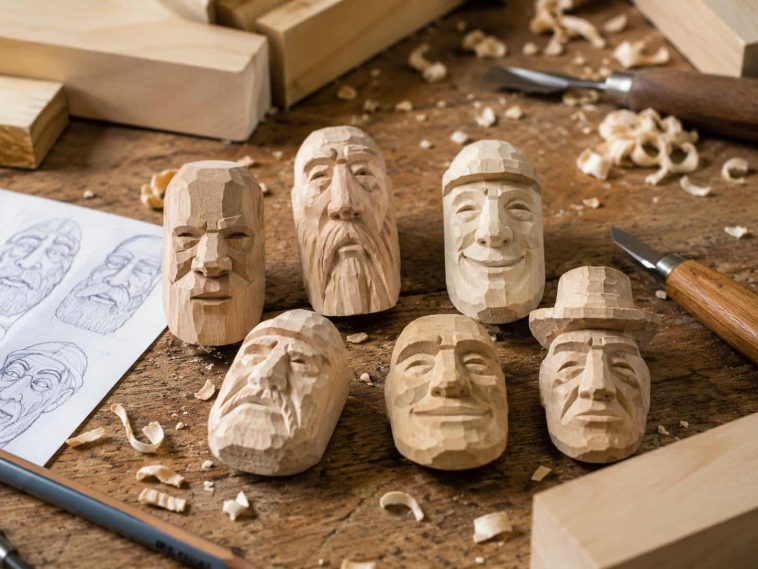
Carving faces in wood can feel intimidating when you’re just starting out. Eyes, noses, mouths, cheeks, wrinkles, expressions — it sounds like a lot to figure out all at once, and it’s easy to assume you need years of practice before you’re “ready” to carve a face.
Here’s the good news: beginner face carving does not have to start with realistic portraits. Simple cartoon faces, gnome faces, Santa faces, sleepy faces, wood spirits, and funny expressions are far easier places to begin, and they’re just as satisfying to finish.
In this guide, you’ll find 15 easy wood carving face patterns for beginners that let you practice facial features one step at a time, without jumping straight into complicated realistic carving. Each pattern below breaks down what makes it beginner-friendly, what it’s best for, and a quick tip to help you get a cleaner result on your first attempt.
Quick note: This article is a beginner-friendly pattern idea roundup, not a full step-by-step carving class. Start with simple shapes, soft carving wood, and bold features before trying tiny realistic details. If you want a deeper walkthrough of expressions and technique, check out how to carve expressive faces in wood.
Why Face Carving Feels Hard for Beginners
Faces are tricky because small changes make a big difference. A slightly deeper eye socket, a longer nose, or a crooked mouth can completely change the expression — sometimes in ways you didn’t intend. That sensitivity is exactly what makes faces feel harder than, say, carving a spoon or a simple animal shape.
But that same sensitivity is also what makes face carving so much fun. Every face ends up with its own personality, even when it doesn’t come out exactly as planned. A slightly lopsided smile or an oversized nose often turns into the most charming part of the piece.
Beginner-friendly advice: Start with big features — simple eyes, chunky noses, basic mouths, rounded cheeks, and cartoon-style expressions. Work in soft wood like basswood so you’re fighting the material less and learning the shapes more. If you’re still deciding what to carve out of, the best wood for beginner carving breaks down your options in more detail.
Tools You May Need for Wood Carving Face Patterns
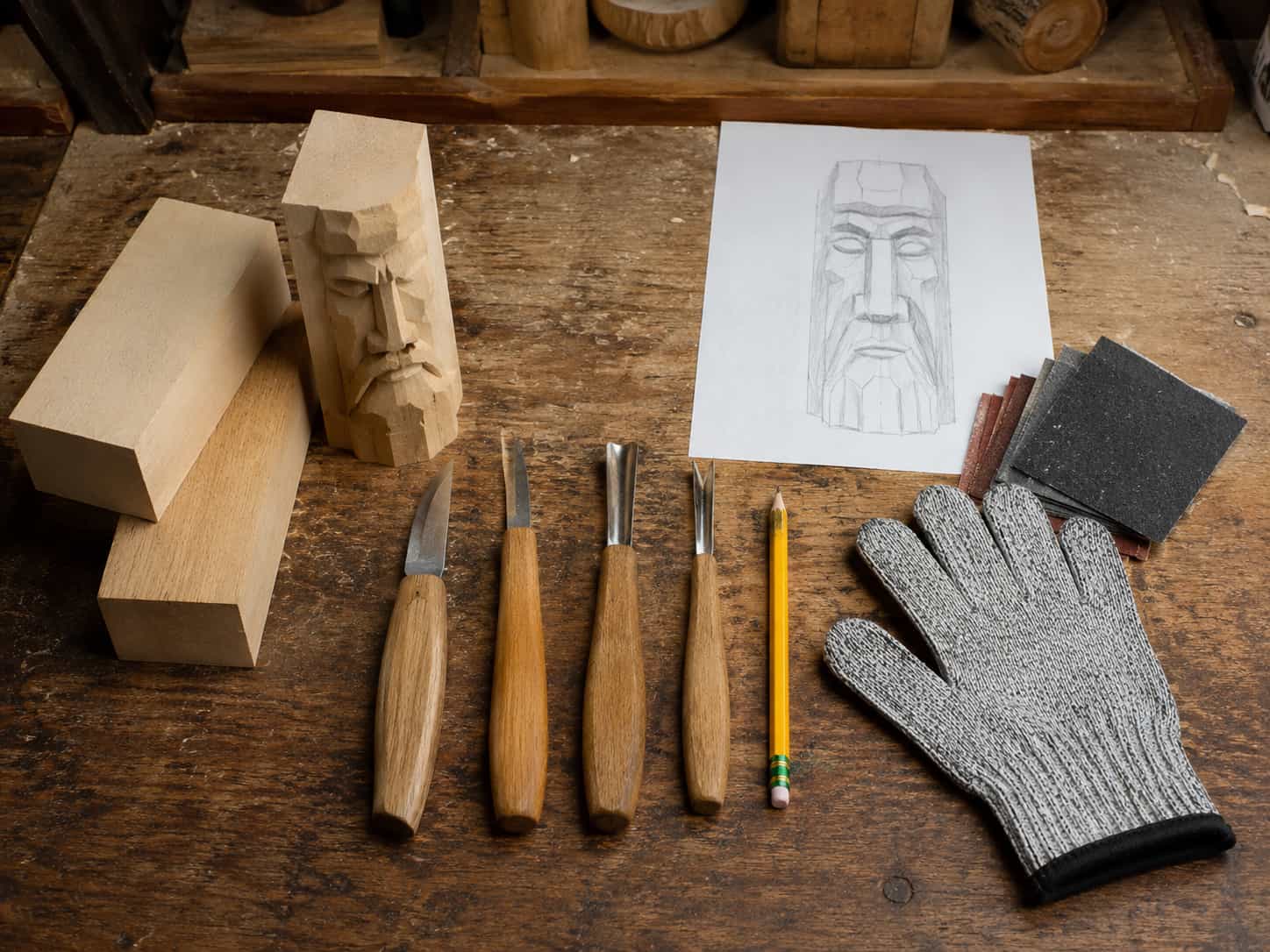
Most beginner face patterns don’t require a huge tool collection. A small, focused kit will carry you through all 15 patterns below.
Basic tools:
- Carving knife
- Detail knife
- Small gouge
- V-tool
- Pencil
- Carbon paper or graphite paper
- Sandpaper
- Cut-resistant glove
- Clamp or bench hook
- Optional: Dremel rotary tool
Quick safety note: Face carving often involves small cuts around the eyes, nose, and mouth, so take your time. Wear a cut-resistant glove, secure the wood when needed, and avoid forcing the blade. Shallow cuts are easier to control than deep, rushed cuts — you can always remove more wood, but you can’t put it back.
If you’re building out your kit, wood carving tools for beginners covers the essentials, and the Dremel wood carving guide is worth a look if you want to add rotary detailing later on.
Best Wood for Beginner Face Carving
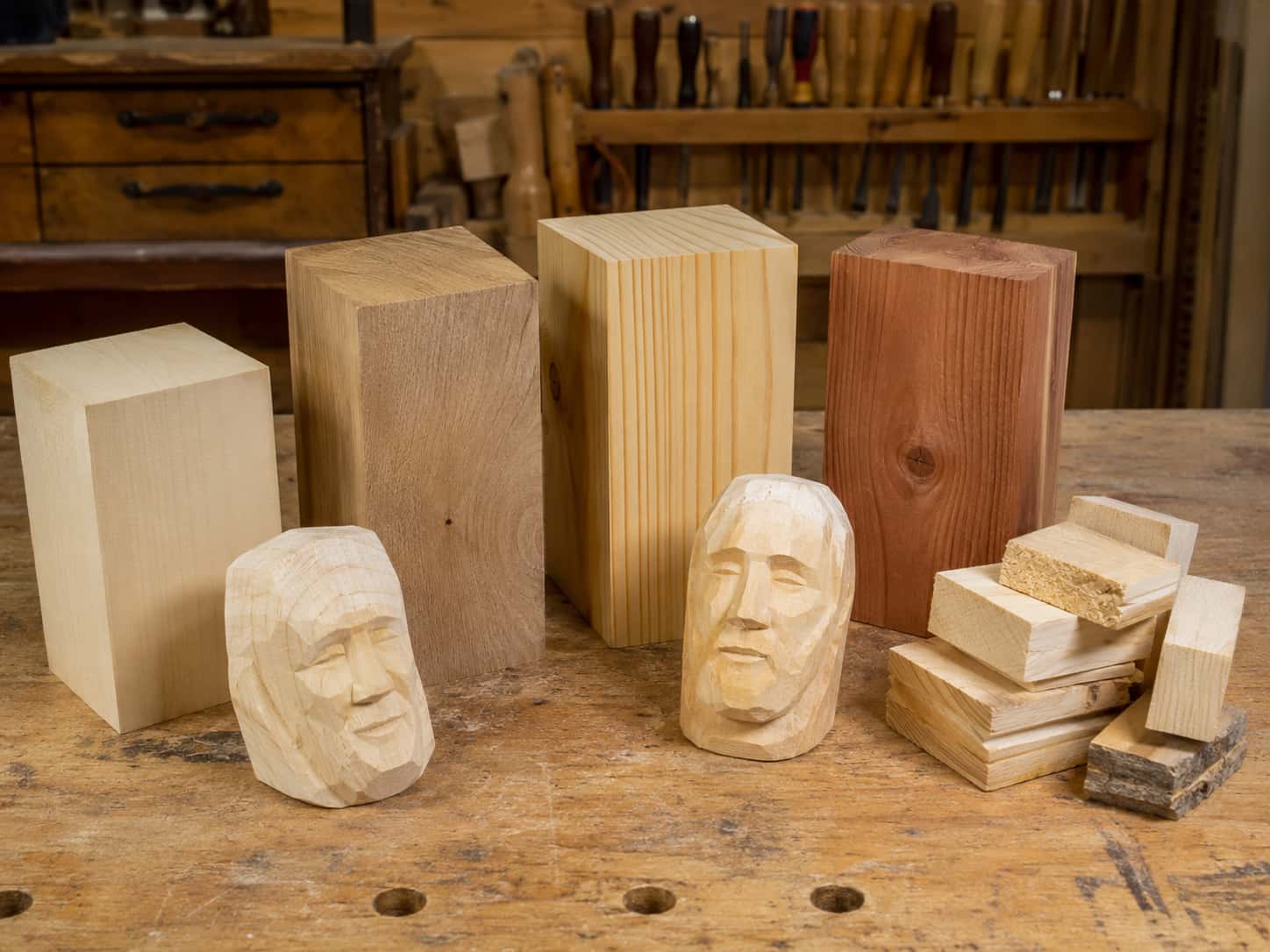
The wood you choose matters just as much as the pattern you pick. Some woods are forgiving and let small mistakes blend in; others fight back at every cut.
Basswood is the best choice for beginner face carving because it’s soft, easy to cut, and forgiving. It holds fine detail without requiring a lot of force, which matters a lot when you’re carving something as feature-sensitive as a face.
Butternut is soft, warm-looking, and good for rustic faces, especially ones like wood spirits or bearded gnomes where a little grain texture adds character instead of getting in the way.
Pine is easy to find at any hardware store, but the grain can sometimes fight your knife, especially around tight curves like eye sockets and nostrils.
Cedar works for rustic faces and outdoor-style carvings, but it can split if the details get too thin, so it’s better suited to bolder, chunkier patterns.
Scrap softwood is good for practice, but avoid treated, knotty, or very hard wood — knots in particular love to show up right where you’re trying to carve an eye.
For your first few wood carving face patterns, basswood is usually the easiest and least frustrating choice. Once you’re comfortable with the basic shapes, branching out into butternut or cedar for seasonal pieces is a natural next step.
Quick Comparison Table: Easy Wood Carving Face Patterns
| Face Pattern | Best For | Difficulty |
|---|---|---|
| Simple Smiling Face | First practice face | Easy |
| Cartoon Old Man Face | Exaggerated features | Easy–Medium |
| Gnome Face | Holiday decor | Easy |
| Santa Face | Christmas carving | Easy–Medium |
| Wood Spirit Face | Classic carving practice | Medium |
| Simple Mask Face | Relief carving | Easy |
| Sleepy Face | Expression practice | Easy |
| Angry Face | Eyebrow practice | Medium |
| Happy Cartoon Face | Playful carving | Easy |
| Wizard Face | Beard and nose practice | Medium |
| Pumpkin Face | Seasonal carving | Easy |
| Animal-Inspired Face | Cartoon animal practice | Easy–Medium |
| Simple Bearded Face | Beard texture practice | Medium |
| Simple Female Face | Soft expression practice | Medium |
| Funny Face | Confidence-building | Easy |
15 Easy Wood Carving Face Patterns for Beginners
1. Simple Smiling Face Pattern
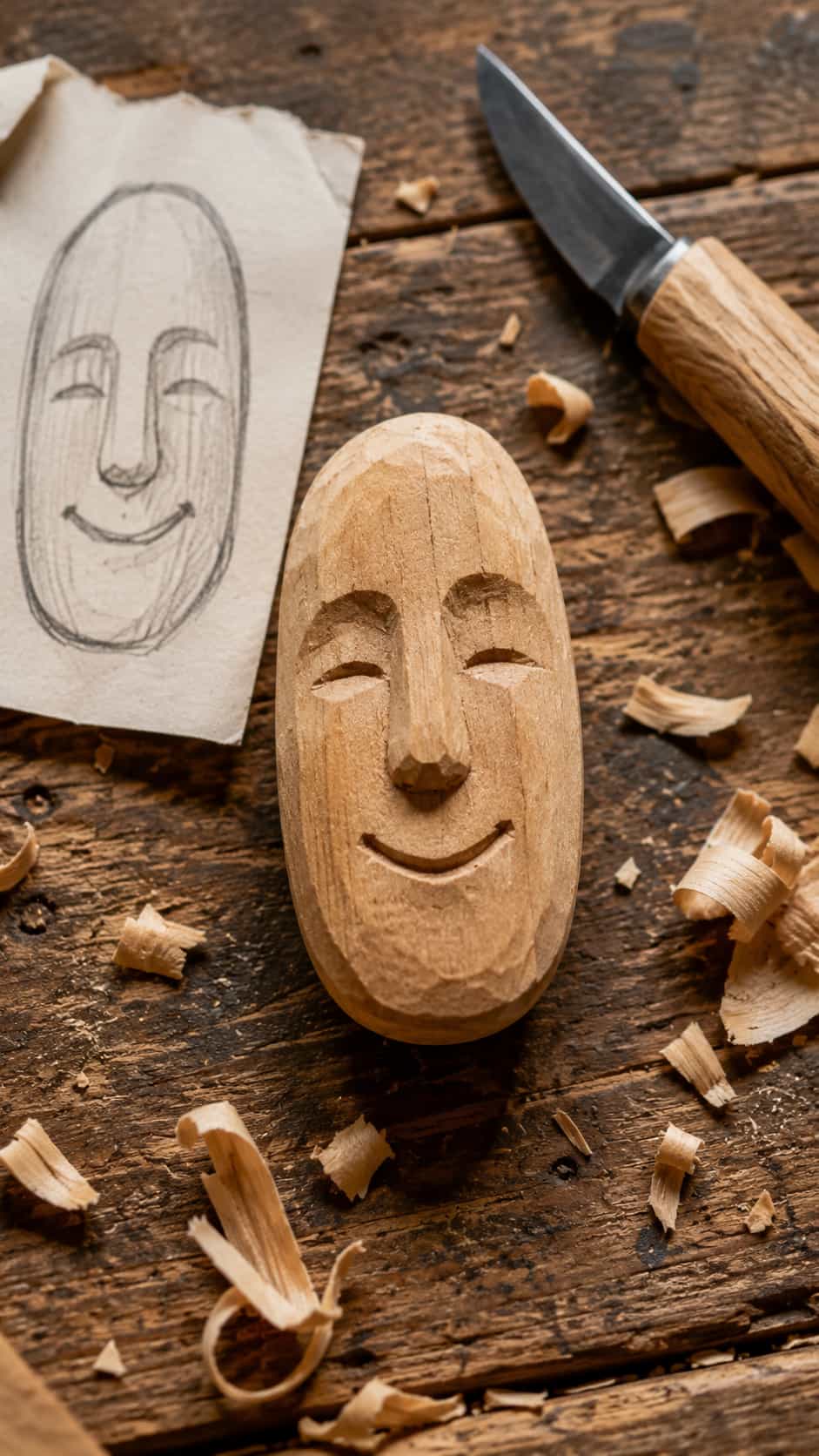
A simple smiling face is the best place to start because it teaches the basic layout of a face: two eyes, one nose, one mouth, and how they sit in relation to each other. Keep the eyes shallow, the nose rounded, and the smile soft. This pattern is less about detail and more about proportion, which is the skill you’ll lean on for every other face on this list.
Best for: First face carving practice Difficulty: Easy Beginner tip: Draw the face in pencil before making any cuts. Erasing a pencil line is free; fixing a wrong cut is not.
2. Cartoon Old Man Face Pattern
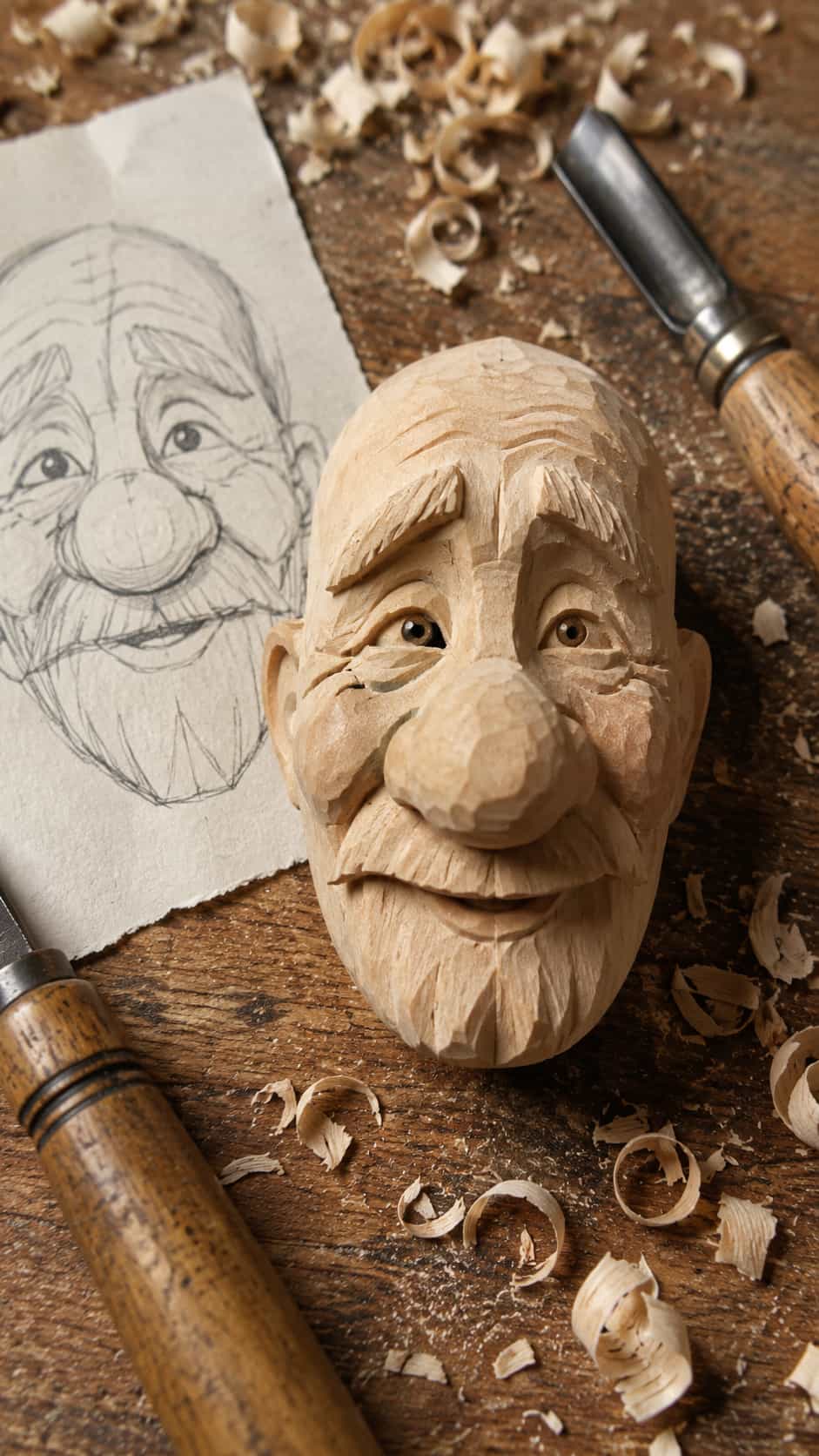
An old man face is beginner-friendly because wrinkles, big noses, and uneven features actually help the design look more expressive. You don’t need perfect symmetry here — in fact, a little asymmetry usually makes the face look more alive.
Best for: Learning exaggerated features Difficulty: Easy–Medium Beginner tip: Make the nose large and the eyes simple. The bigger the nose, the more “character” the face reads as having.
3. Gnome Face Pattern
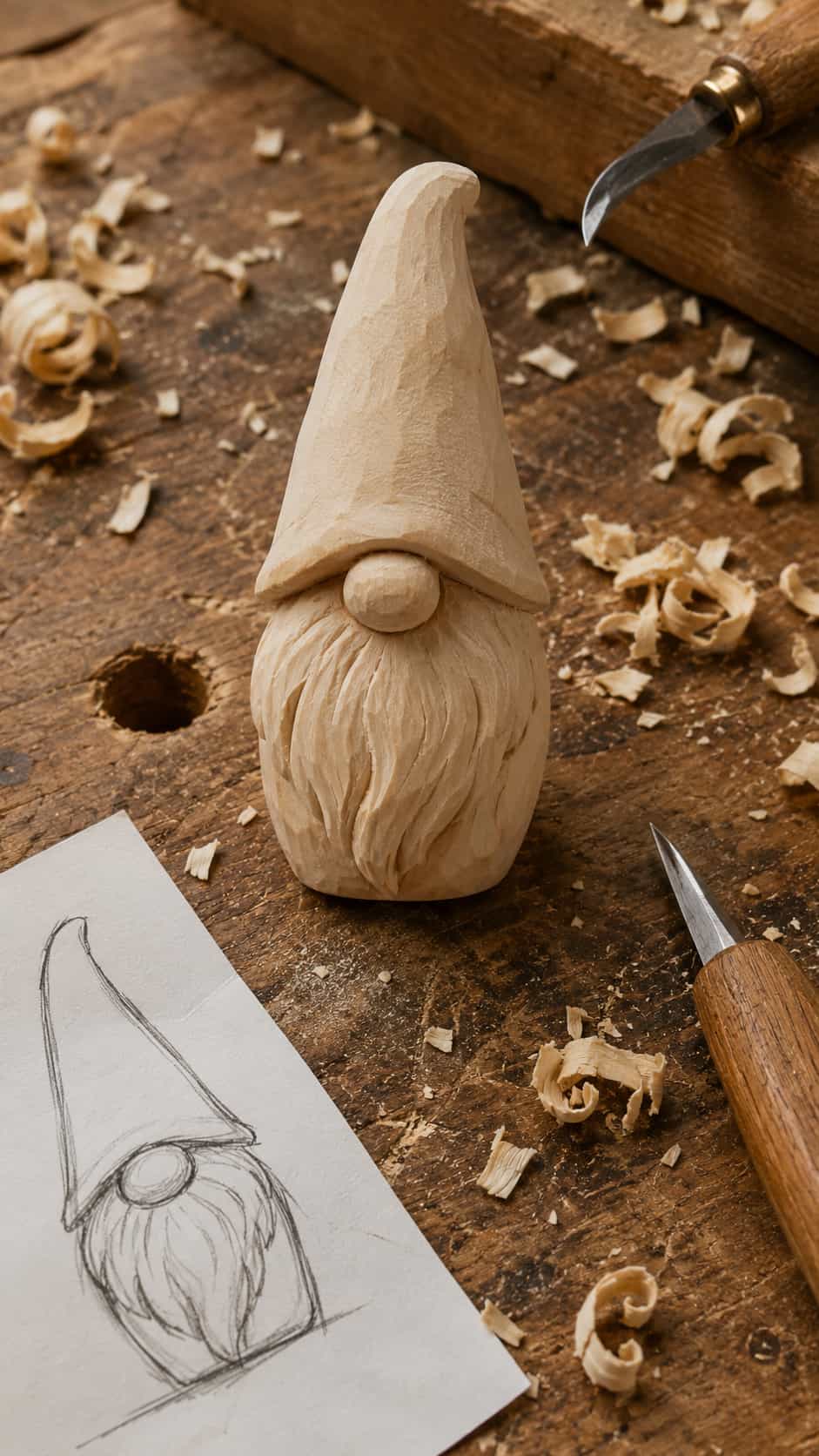
A gnome face is perfect for beginners because most of the design is just a tall hat, a round nose, and a beard. The eyes can be hidden under the hat brim, which sidesteps one of the hardest parts of face carving entirely.
Best for: Holiday decor, gifts Difficulty: Easy Beginner tip: Let the nose and beard do most of the work — you can build an entire gnome face around those two shapes alone. For more variations, see 25 free wood carving patterns for beginners.
4. Santa Face Pattern
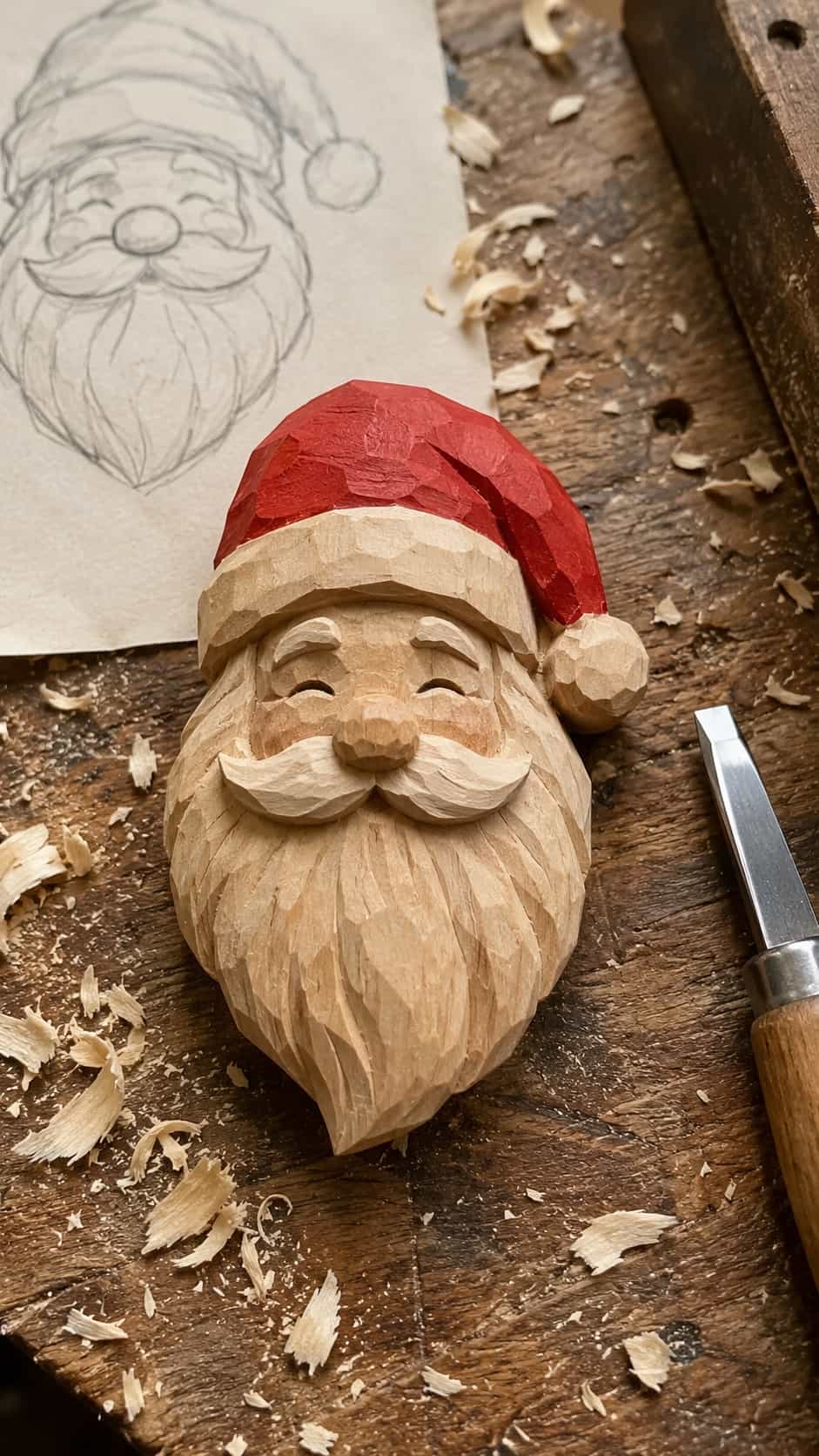
A Santa face is great for seasonal carving. The hat, beard, round nose, and mustache create an instantly recognizable face without needing any realistic detail. It’s essentially a gnome face with a different hat and a rosier cheek.
Best for: Christmas carving, ornaments, gifts Difficulty: Easy–Medium Beginner tip: Keep the beard chunky instead of carving tiny hair lines. Fine beard texture is a skill you can add once you’ve carved a few of these.
5. Basic Wood Spirit Face Pattern
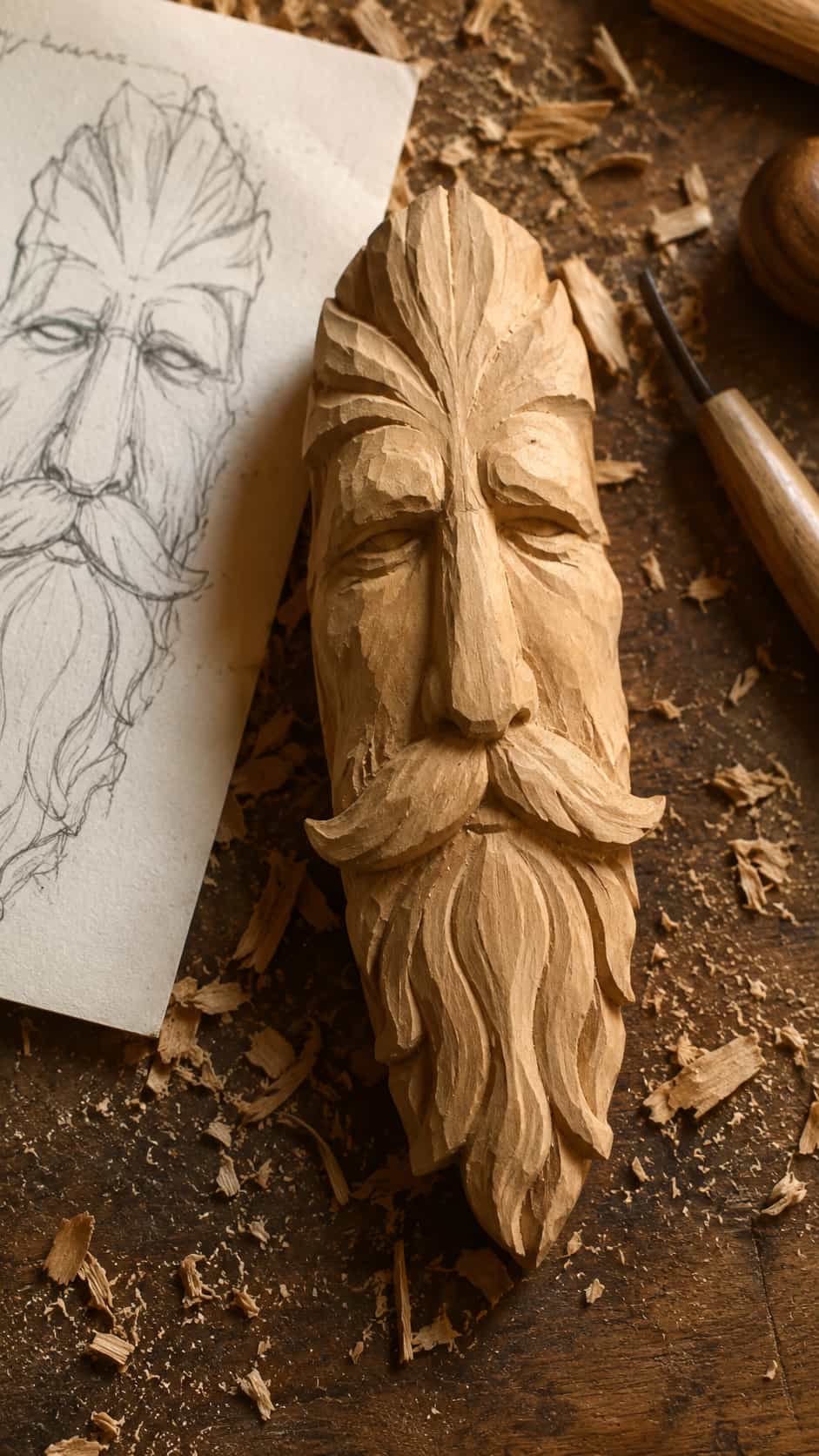
A wood spirit face is a classic carving pattern with a long nose, deep brow, mustache, and flowing beard. Beginners should start with a simple version instead of a highly detailed one — the classic wood spirit look is achievable long before the fine detailing is.
Best for: Classic face carving practice Difficulty: Medium Beginner tip: Start with the brow, nose, and beard as three main shapes. Block those in first, then refine.
6. Simple Mask Face Pattern
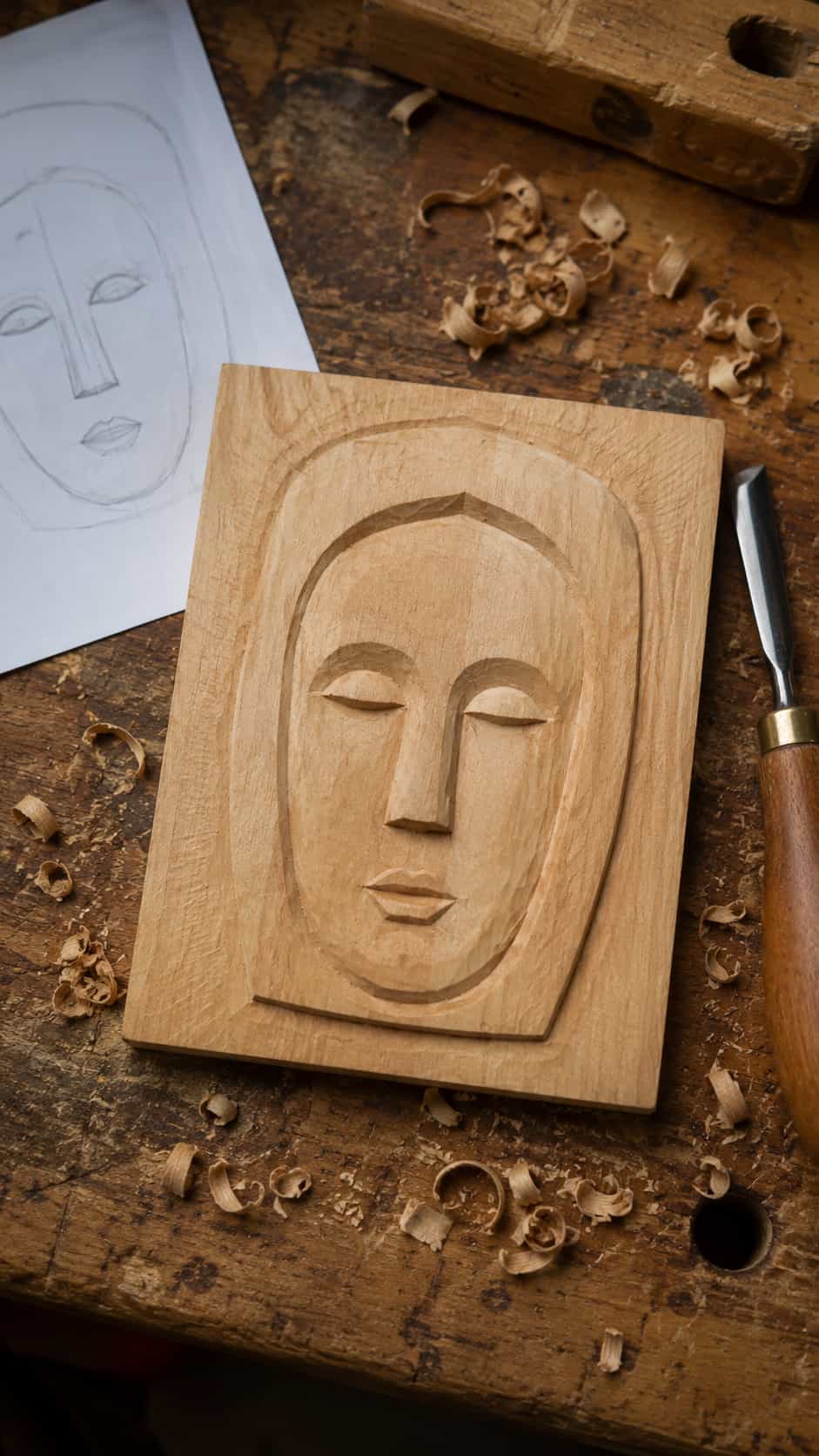
A mask-style face works well on flat boards or small panels. You can carve shallow eyes, a simple nose, and a small mouth without worrying about a fully rounded head, which makes this one of the more forgiving patterns on this list.
Best for: Relief carving, wall decor Difficulty: Easy Beginner tip: Keep the face flat and bold. Depth is your enemy here — shallow, confident cuts read better than deep, timid ones.
7. Sleepy Face Pattern
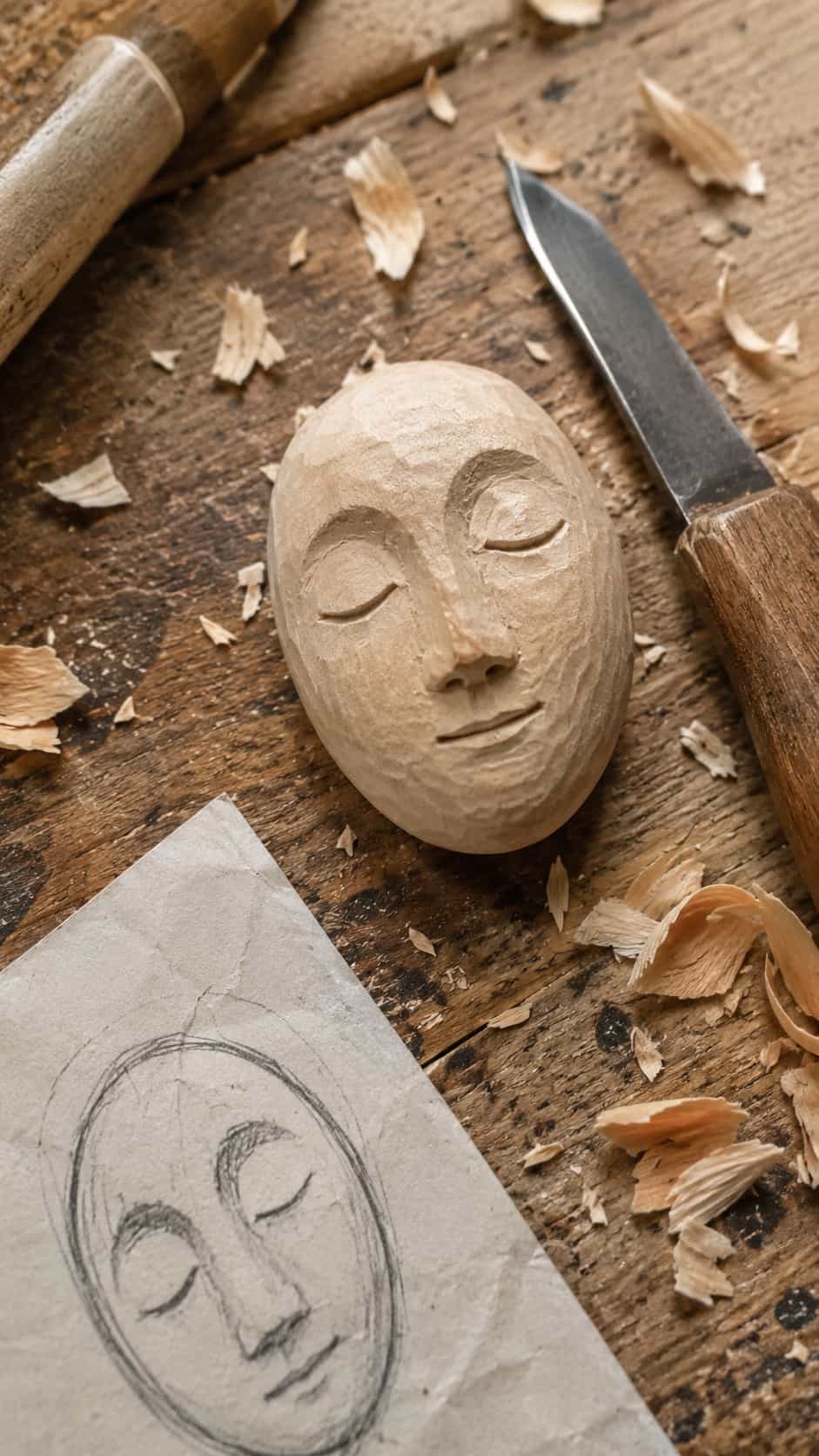
A sleepy face is easy because closed eyes are much simpler than open eyes. Two curved lines, a soft nose, and a small relaxed mouth are enough to sell the expression, and there’s no eyelid or pupil detail to worry about.
Best for: Expression practice Difficulty: Easy Beginner tip: Use curved lines for closed eyes instead of carving deep eye sockets. A single confident stroke usually looks better than several shallow ones.
8. Angry Face Pattern
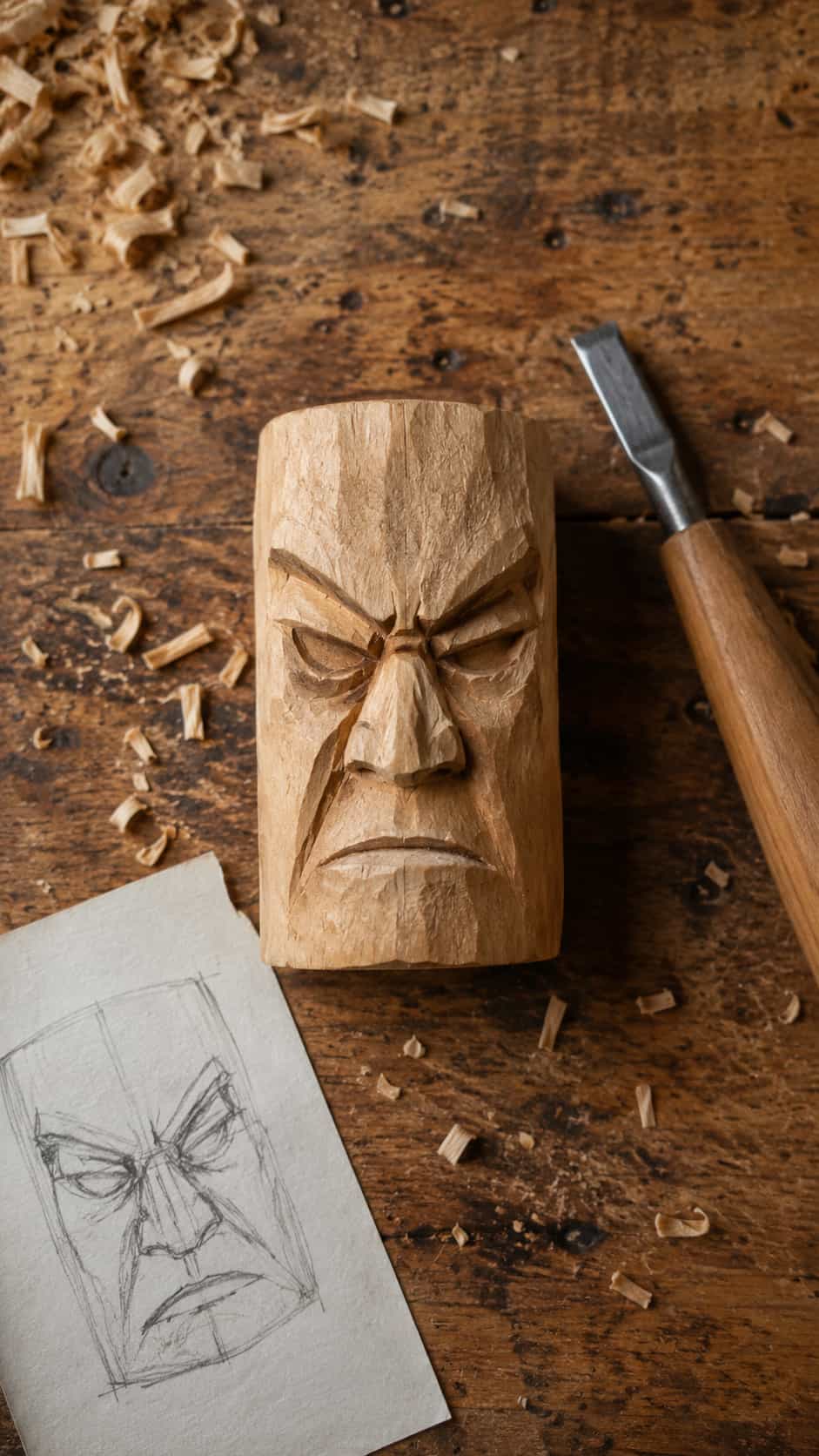
An angry face teaches how much eyebrows change an expression. Slanted brows, a strong nose, and a straight mouth can make the whole face look serious without adding many extra details — proof that expression comes from a few key lines, not dozens of small ones.
Best for: Eyebrow and expression practice Difficulty: Medium Beginner tip: Focus on the brow angle before carving the mouth. Get the eyebrows right and the rest of the face will follow.
9. Happy Cartoon Face Pattern
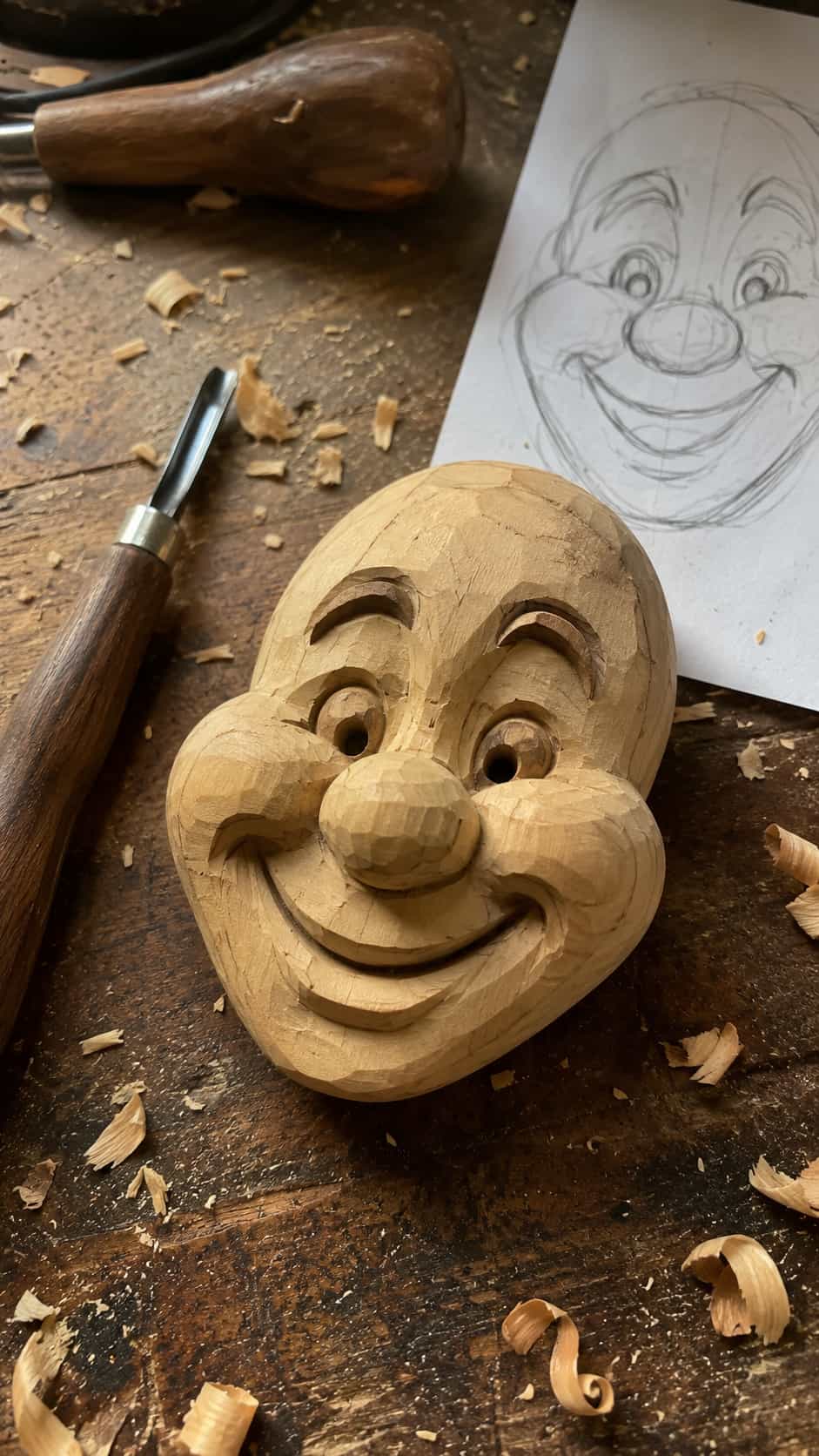
A happy cartoon face is forgiving because the features can be oversized and playful. Big cheeks, simple eyes, and a wide smile make this pattern beginner-friendly, and there’s a lot of room for personal style.
Best for: Cartoon carving, kids’ decor Difficulty: Easy Beginner tip: Use large shapes instead of tiny details. Cartoon faces read best when the features are bold and simplified.
10. Wizard Face Pattern
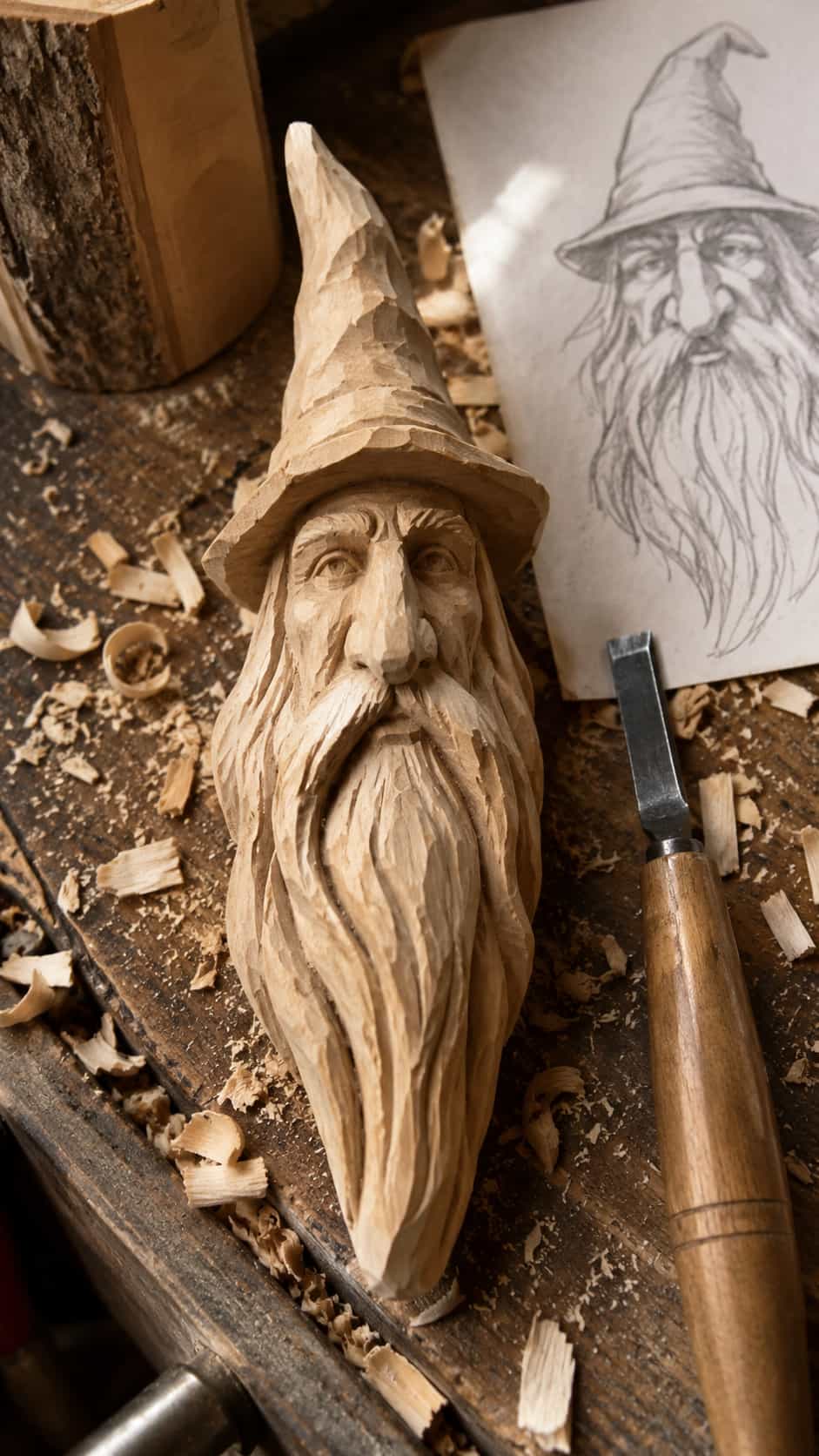
A wizard face is fun because the long beard, pointed hat, and big nose make the design recognizable right away. It’s similar to a gnome face but usually a little more dramatic, with a longer beard and a taller hat.
Best for: Fantasy carving, beard practice Difficulty: Medium Beginner tip: Keep the beard flowing in a few large sections rather than many small strands — you can always add texture later.
11. Pumpkin Face Pattern
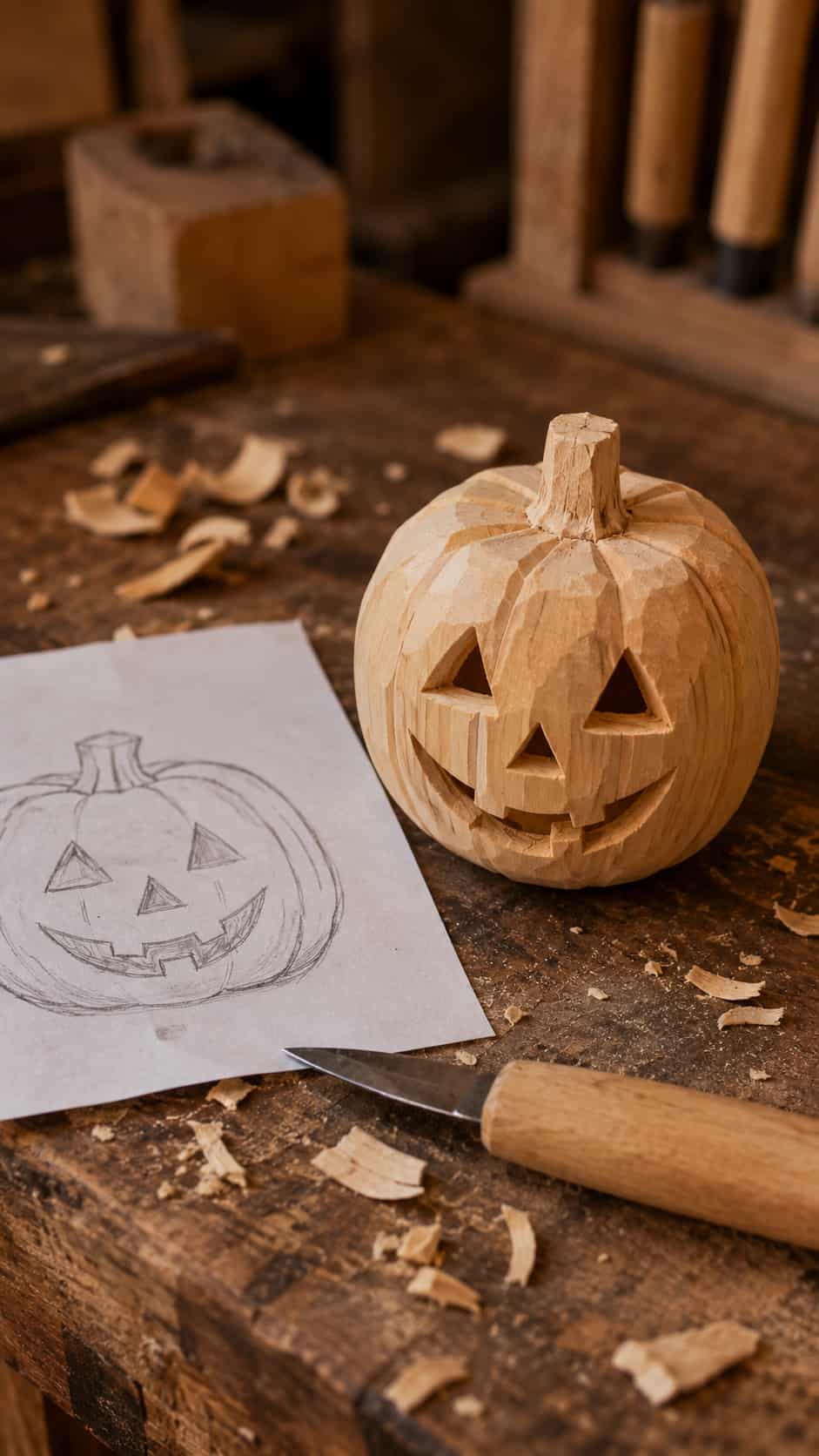
A pumpkin face is one of the easiest seasonal face patterns on this list. Triangle eyes, a simple nose, and a carved smile make it perfect for beginners, and it translates well whether you’re carving a real pumpkin shape or a round piece of wood.
Best for: Fall decor, Halloween carving Difficulty: Easy Beginner tip: Start with bold shapes and avoid tiny teeth. Big, simple triangles carve cleaner than small jagged ones.
12. Animal-Inspired Face Pattern
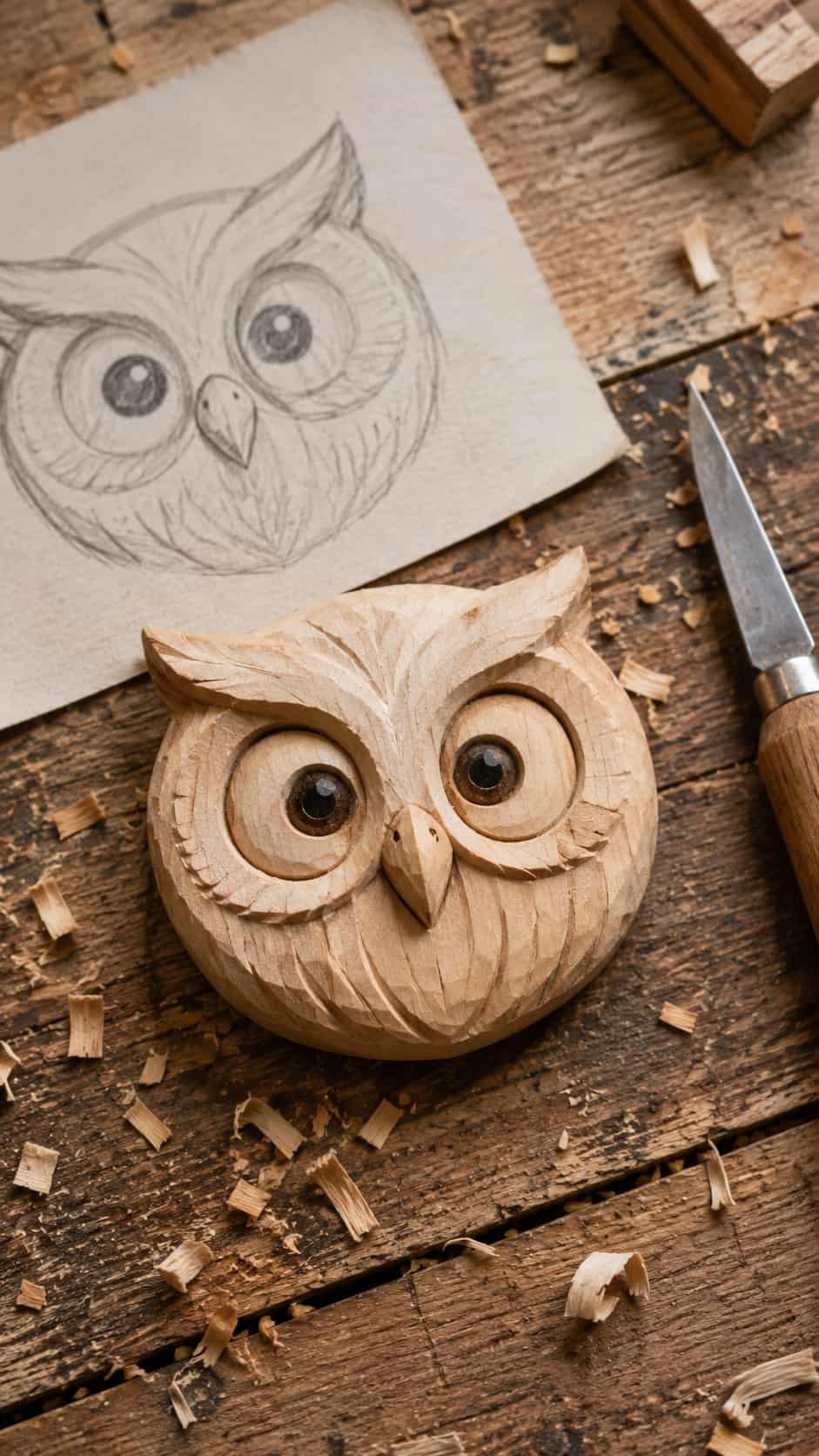
This can be a simple bear, owl, cat, fox, or dog face. Keep it cartoon-style instead of realistic, and pick one animal per piece rather than trying to blend features. Animal faces are great for practicing symmetry and simple expression at the same time.
Best for: Animal carving practice Difficulty: Easy–Medium Beginner tip: Choose one strong feature, like owl eyes, fox ears, or a bear nose, and let that feature anchor the whole design. For more ideas, see animal wood carving ideas.
13. Simple Bearded Face Pattern
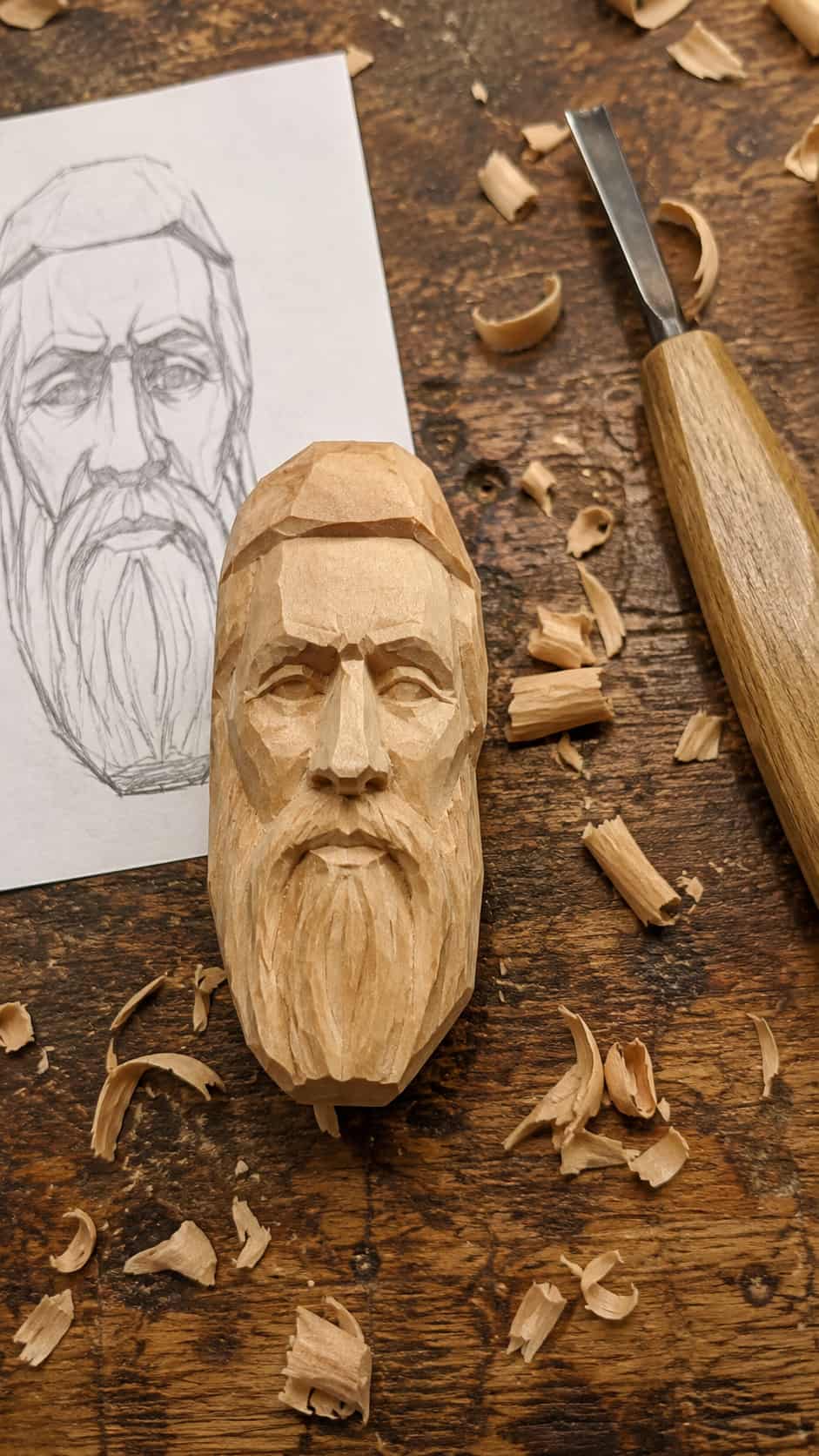
A bearded face is great because the beard hides the jaw and lower face, which are often tricky for beginners to shape cleanly. A brow, nose, mustache, and beard are enough to create real character, and the beard forgives a lot of unevenness underneath it.
Best for: Beard texture practice Difficulty: Medium Beginner tip: Carve the beard in large sections before adding small texture lines. Block in the overall shape first, detail second.
14. Simple Female Face Pattern
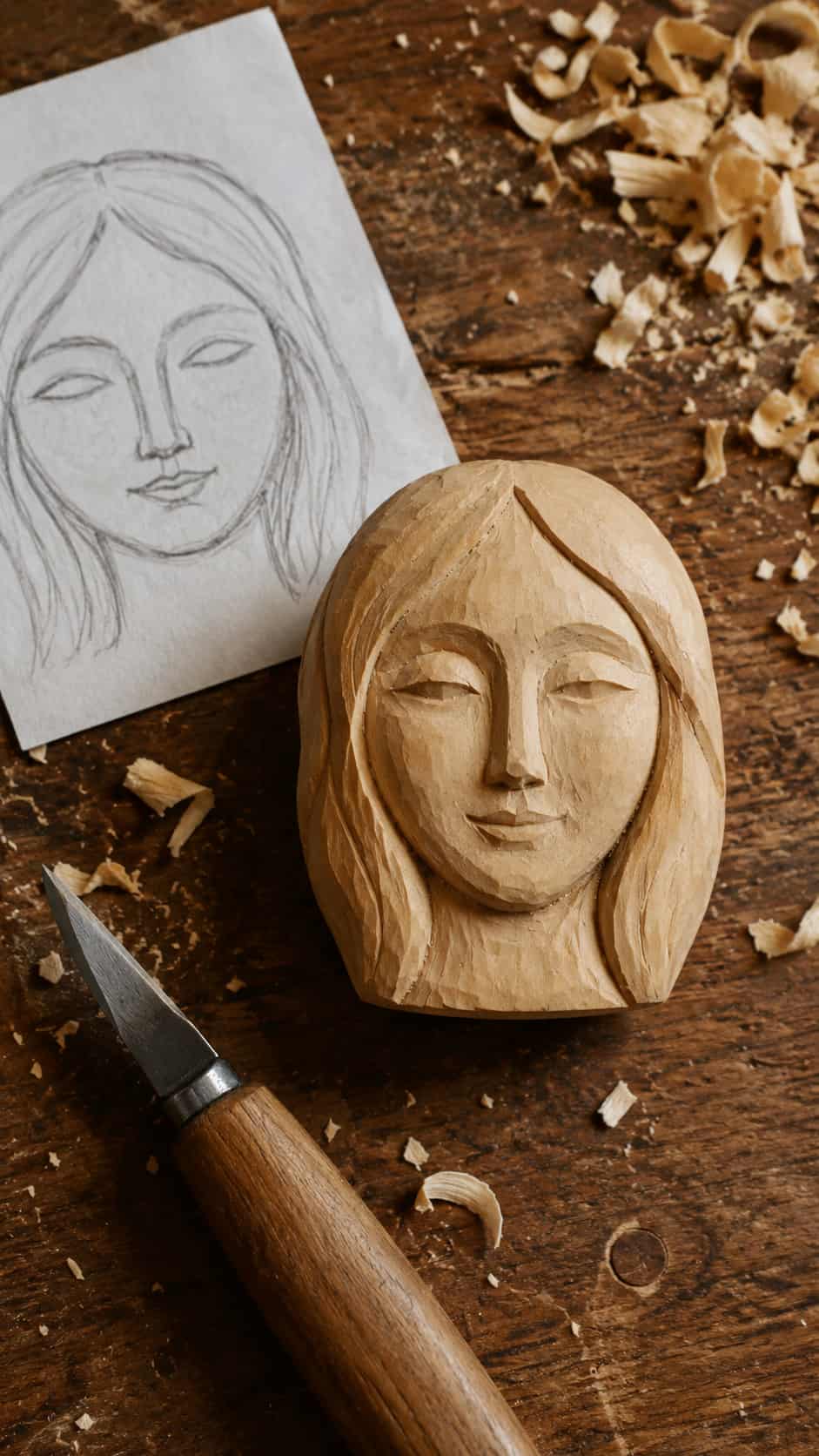
A simple female face can be carved with soft features — shallow eyes, a small nose, and a gentle mouth. Keep the style folk-art or cartoon-inspired instead of realistic, since realistic proportions are much harder to get right consistently.
Best for: Soft expression practice Difficulty: Medium Beginner tip: Focus on smooth curves and avoid tiny facial details. Softness comes from rounded transitions, not sharp lines.
15. Funny Face Pattern
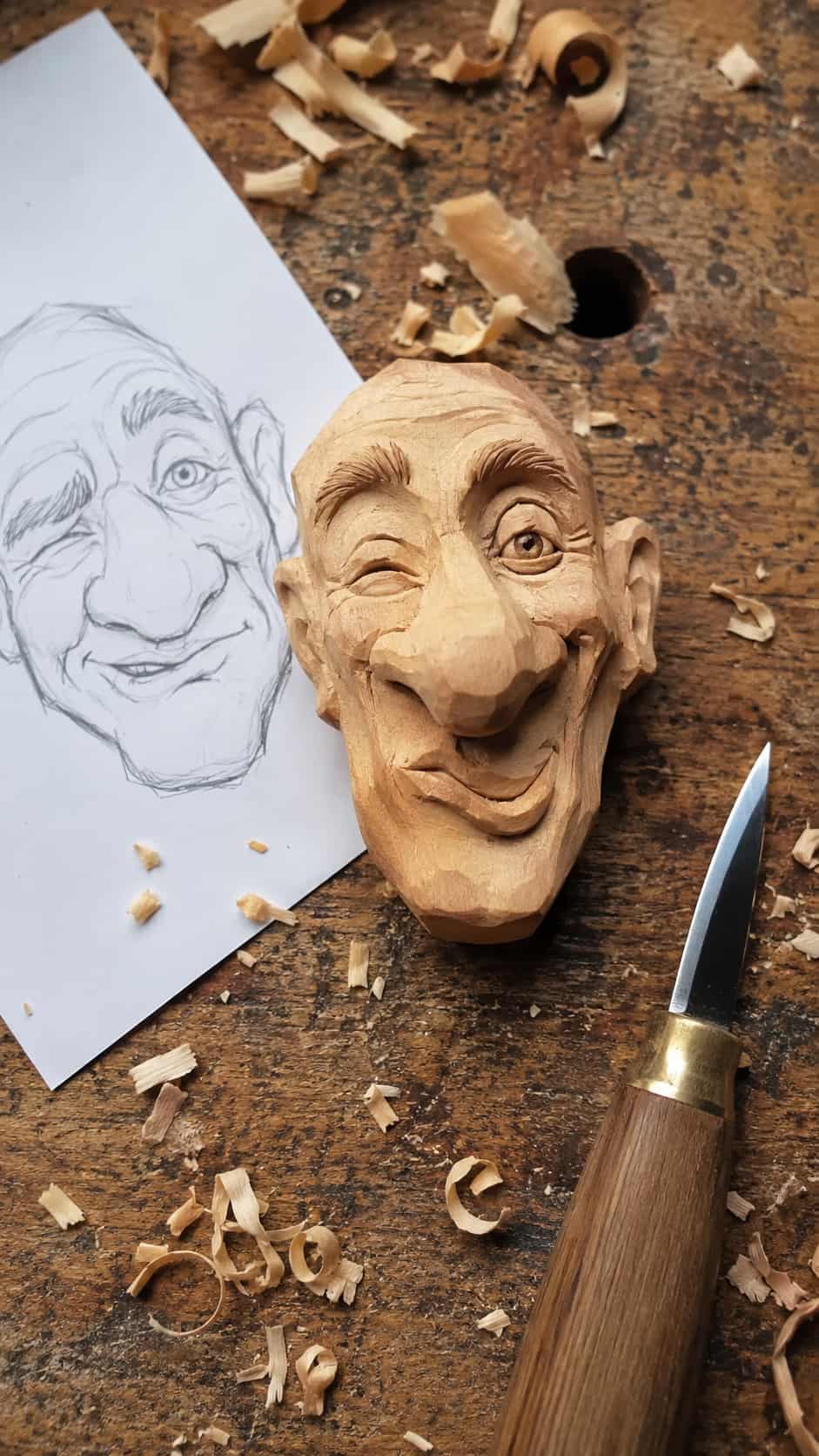
A funny face is perfect for beginners because mistakes often make it better. Uneven eyes, a crooked smile, or an oversized nose can turn into personality instead of a problem, which makes this a low-pressure pattern to end on.
Best for: Practice, confidence-building Difficulty: Easy Beginner tip: Don’t chase perfection. Make it expressive, not exact.
Best Wood Carving Face Patterns for Absolute Beginners
If you’re not sure where to start, begin with these:
- Simple smiling face
- Gnome face
- Sleepy face
- Pumpkin face
- Funny face
- Simple mask face
- Happy cartoon face
These use simple shapes and don’t require realistic detail, which makes them the least frustrating entry point into face carving.
Best Face Patterns for Seasonal Projects
If you’re carving with a holiday or season in mind, these options work especially well:
- Santa face
- Gnome face
- Pumpkin face
- Wood spirit face
- Wizard face
- Animal-inspired face
- Funny face ornaments
These are great for Pinterest because seasonal carving projects are visual and saveable — they tend to get pinned well ahead of the actual holiday.
How to Transfer a Face Pattern Onto Wood
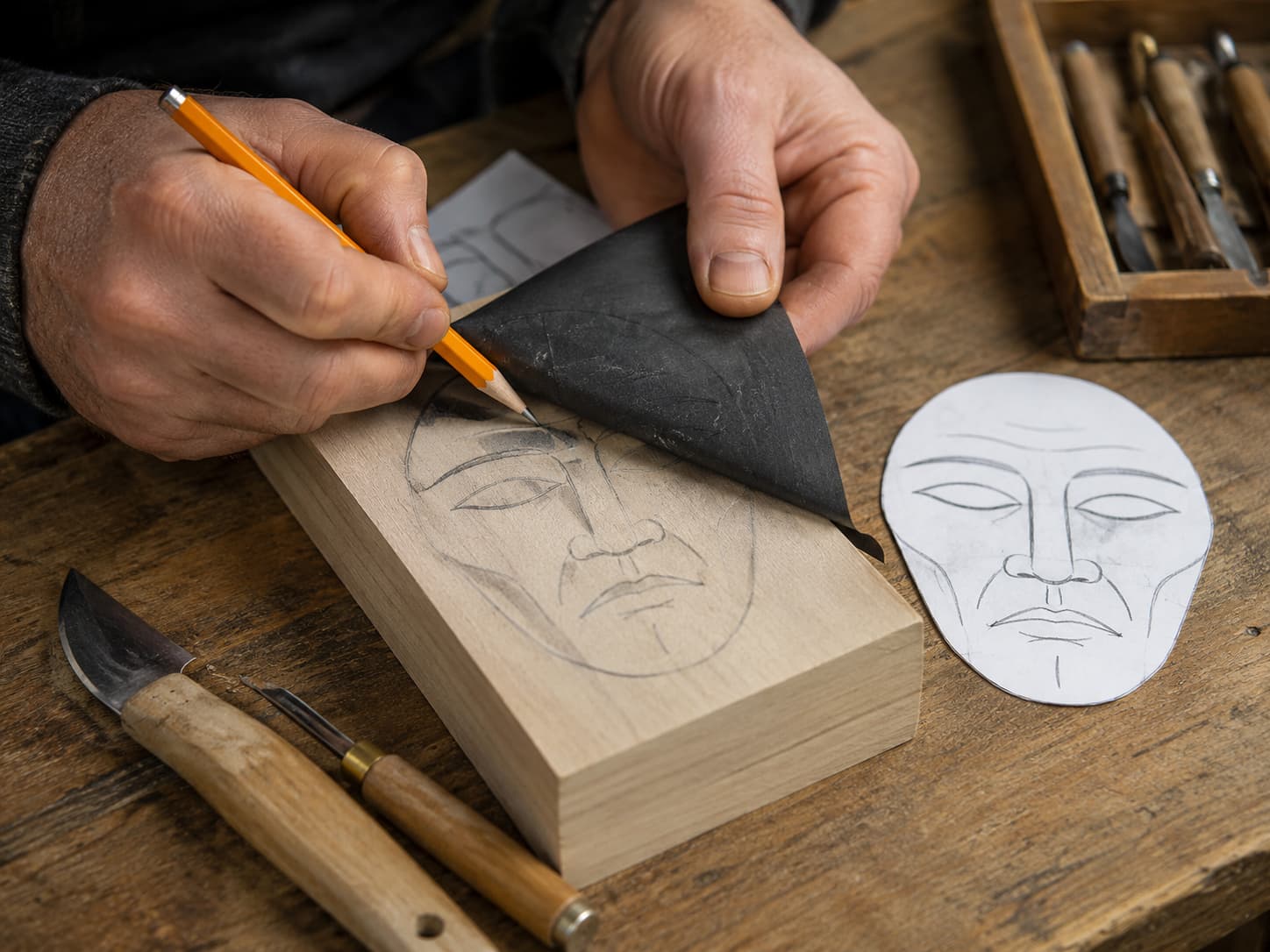
Pencil sketch — Best for simple cartoon faces and funny faces where precision isn’t critical.
Graphite paper — Best for printable face patterns with more detail, since it transfers exact lines onto the wood.
Tape and trace — Good for flat boards and relief carving where the wood surface is already smooth.
Light Dremel outline — Optional for relief-style faces, especially if you already know how to use a rotary tool safely.
Start with a larger face pattern before trying small ornaments. Tiny faces look cute, but they’re much harder to carve cleanly, since there’s less room to correct a slip.
Common Beginner Mistakes to Avoid
Starting too realistic. Realistic faces are hard. Start with cartoon, folk-art, or exaggerated faces first, and save portrait-style carving for once you’re comfortable with proportion.
Making the eyes too small. Tiny eyes are difficult to carve and easy to ruin. Bigger, simpler eyes are more forgiving for beginners.
Carving too deep too early. Remove small amounts of wood at a time. You can always go deeper, but you can’t put wood back once it’s gone.
Ignoring the nose shape. The nose is usually the center of the face and the feature your eye goes to first. Keep it simple, rounded, and bold rather than rushing it.
Forgetting safety. Use sharp tools, wear a cut-resistant glove, secure the wood, and keep your hands out of the carving path at all times.
Want More Beginner Wood Carving Ideas?
If you enjoyed these wood carving face patterns, you may also like:
- How to Carve Expressive Faces in Wood: A Beginner’s Guide
- 25 Free Wood Carving Patterns for Beginners
- 21 Easy Animal Wood Carving Ideas for Beginners
- Best Wood for Beginners to Carve
- Dremel Wood Carving for Beginners
- 25 Easy Whittling Projects for Beginners
Face carving is a fun skill to practice, but it’s only one small part of woodworking. If you also want full project plans for furniture, home decor, outdoor builds, shop projects, and beginner-friendly woodworking ideas, a larger plan library can be helpful.
That’s where Ted’s Woodworking Plans may be worth checking out if you like having measurements, diagrams, and cut lists ready before you build.
See what’s included in Ted’s Woodworking Plans here.
FAQ About Wood Carving Face Patterns
What is the easiest face to carve in wood? The easiest face to carve is a simple cartoon face with large eyes, a rounded nose, and a basic smile. Gnome faces and sleepy faces are also beginner-friendly since they hide or simplify the trickiest features.
What wood is best for carving faces? Basswood is usually the best wood for beginner face carving because it’s soft, easy to cut, and forgiving of small mistakes.
Are wood spirit faces good for beginners? Simple wood spirit faces can be good for beginners, but avoid highly detailed versions at first. Start with a basic brow, nose, mustache, and beard, then build up detail over time.
Do I need a Dremel to carve faces in wood? No. You can carve beginner faces with a carving knife, detail knife, small gouge, and V-tool. A Dremel is optional for people who prefer rotary carving or fine relief details.
How do beginners practice carving facial expressions? Start by changing one feature at a time. Eyebrows, eyes, and mouth shape make the biggest difference in expression, so isolate one variable per practice piece instead of changing everything at once.
Final Thoughts
Wood carving face patterns are a great way to build confidence because every face teaches you something different. A simple smile teaches layout, a gnome teaches nose and beard shape, a Santa face teaches seasonal character, and a wood spirit face introduces classic expression carving.
Start simple. Keep the features bold. Avoid tiny realistic details at first. Once you can carve a few basic faces, slowly add wrinkles, eyebrows, mustaches, beards, and more personality.
The goal isn’t to carve a perfect face on your first try. The goal is to carve a face that makes you want to try another one.