
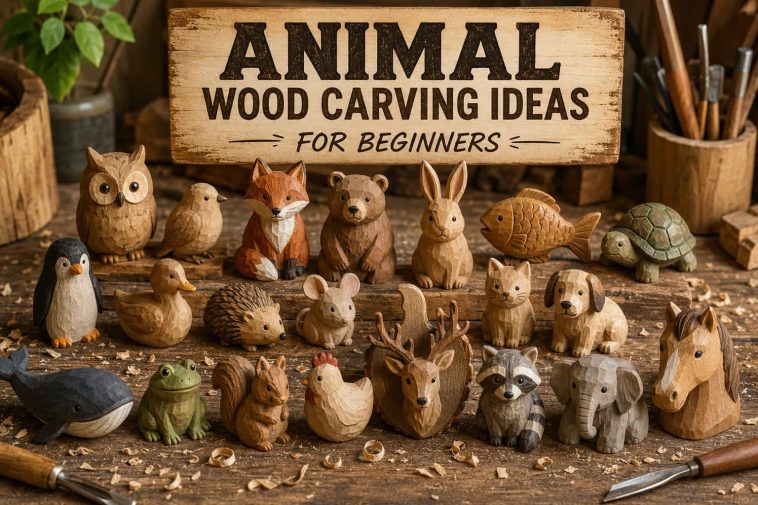
Animal wood carvings are some of the most fun projects you can start with as a beginner. Animal wood carving projects are small, cute, full of personality — and you do not need to carve perfect details to make them look good.
Sometimes all it takes is a simple rounded shape, a pair of carved eyes, and two tiny ears to bring a little wooden owl or bear to life.
If you are just getting started with wood carving, animals are also a fantastic way to practice the basics. You get to work on rounding corners, shaping curves, carving simple faces, adding light texture, and sanding smooth edges — all on a small, manageable project that you can finish in one sitting.
In this guide, you will find 21 easy animal wood carving ideas for beginners — from tiny birds and owls to foxes, bears, rabbits, fish, turtles, and more. Start with the simplest shapes first, then work your way up to animals with a little more detail.
For those looking for inspiration, animal wood carving offers countless ideas to explore. Whether you’re interested in simple shapes or more detailed designs, there’s an animal wood carving project waiting for you.
Quick Beginner Tips Before You Start
Before you pick up your carving knife, keep these simple guidelines in mind.
Start with simple shapes. Choose animals that are built from basic forms — ovals, cones, cylinders, rounded blocks. A beginner owl or fish is much more achievable than a realistic horse or eagle.
Use soft wood. Basswood is the best choice for beginner animal carving. It is soft, smooth, and easy to shape without fighting the grain. Pine can work in a pinch, but it can be trickier to get clean cuts.
Keep the details minimal. Do not try to carve every feather, fur line, or tiny facial feature on your first few projects. Focus on the overall shape first. Details can come later.
Sand the finished piece. Sanding is the secret weapon that makes beginner carvings look clean and finished. Even a rough-looking carving can look great after a good sanding.
Practice safe carving. Always carve away from your body, keep your knife sharp, and wear a cut-resistant glove on the hand holding the wood.
If you are completely new to carving, check out Wood Carving for Beginners before jumping in — it covers everything you need to know to get started safely.
Tools You Will Need for Beginner Animal Carving
You do not need a big tool collection to carve animals. A small beginner setup handles most of these projects just fine.
Basic tools to have:
- Carving knife — your main shaping tool
- Detail knife — for small features like eyes and ears
- Small gouge — helpful for scooping and hollowing
- Pencil — for sketching your shape before you carve
- Sandpaper — 120 to 220 grit for smoothing the finished piece
- Cut-resistant glove — protects the hand holding your wood
- Basswood blocks or blanks — soft and beginner-friendly
- Wood finish, oil, or beeswax — to protect and seal the final carving
Optional but useful:
- V-tool for adding fur or feather texture lines
- Small carving files for tight areas
- Wood burner for eyes and fine details
- Acrylic paint for colorful animals like penguins, foxes, and raccoons
For a full breakdown of what to buy first, visit Beginner Woodworking Tools to see what is actually worth getting when you are just starting out.
Best Wood for Animal Carving
Basswood is the go-to choice for beginner animal wood carving. It is soft, cuts cleanly, holds detail well, and is easy to find as small blanks or blocks. If you are only buying one type of wood for animal wood carving to start, this is it.
Pine is affordable and available at any hardware store, but it can have knots and grain changes that make it harder to carve cleanly. Fine for simple flat silhouettes, but not ideal for small 3D animals.
Cedar smells wonderful and has beautiful color, but it can be prone to splitting. Better once you have a little experience under your belt.
Scrap wood can work for simple animal silhouettes — especially flat projects like fish, birds, or deer heads. Check your workshop offcuts before buying anything new.
21 Easy Animal Wood Carving Ideas for Beginners
1. Simple Wooden Owl
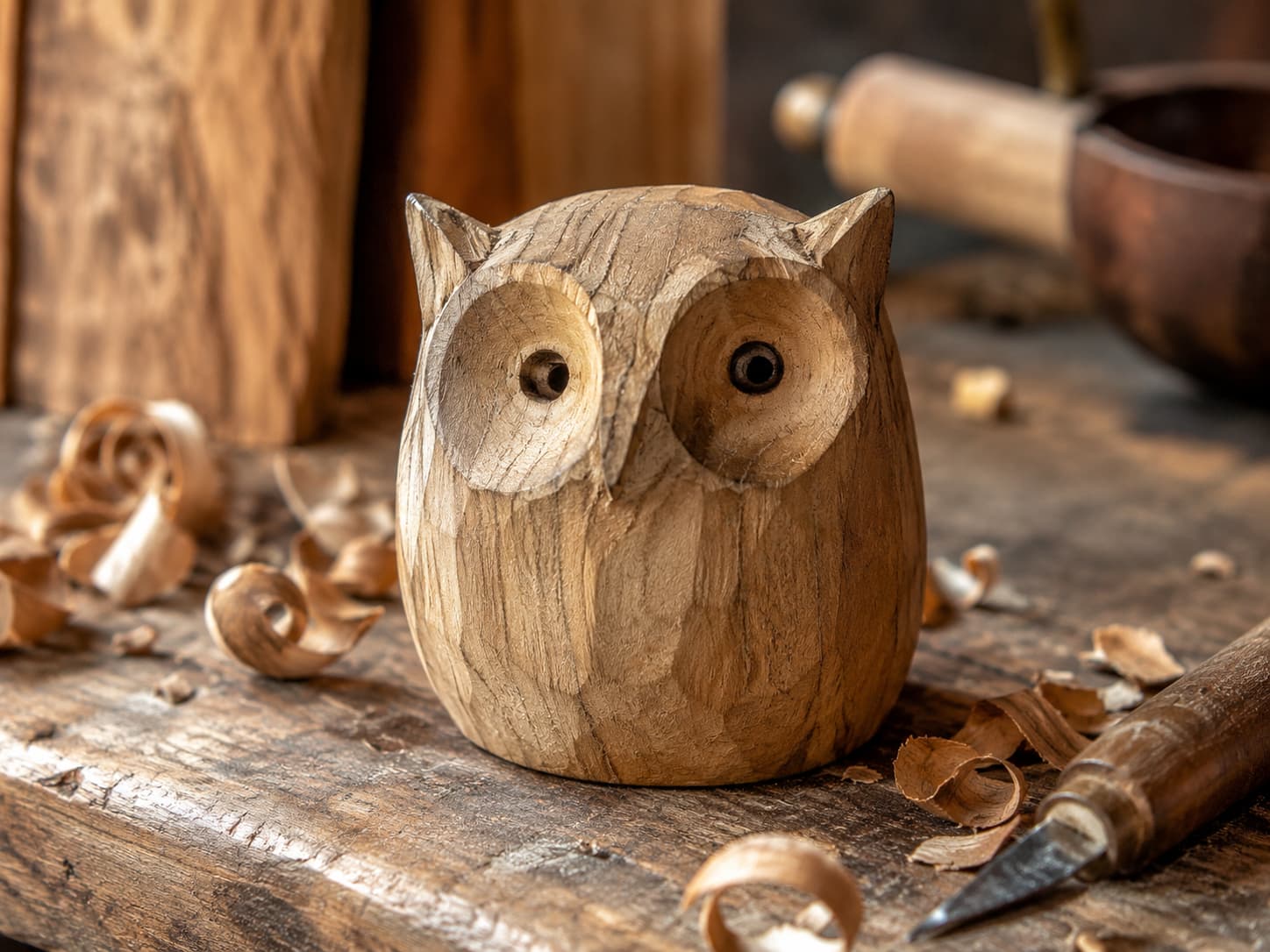
The simple owl is one of the best first animal carving projects you can try. The shape is forgiving — a chunky rounded body, two small ear points at the top, and two large eyes. That is really all you need.
Difficulty: Easy Best for practicing: Rounded shapes, eye carving, minimal texture Beginner tip: Keep the body chunky. Do not try to carve individual feathers on your first owl — focus on the overall shape and let the eyes do the work.
2. Tiny Wooden Bird
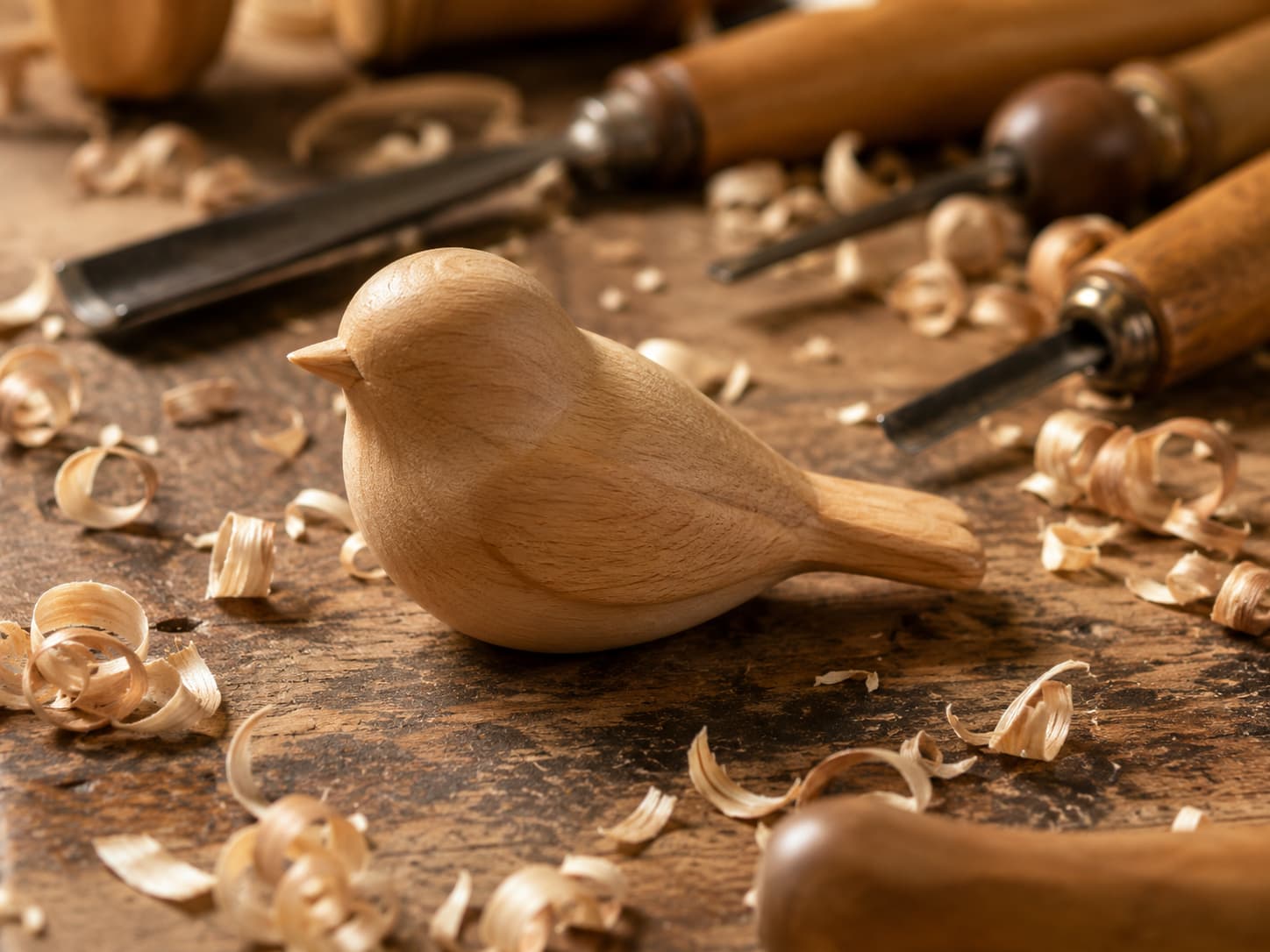
A small sitting bird can be carved from one basic oval shape. Add a tiny beak, a rounded body, and a simple tail, and you have yourself a charming little carving. This project is excellent for learning smooth curves.
Difficulty: Easy Best for practicing: Curves, beak shaping, sanding smooth surfaces Beginner tip: Skip the legs entirely. A simple sitting bird with no legs is easier, faster, and actually looks great on a shelf.
3. Cute Wooden Fox
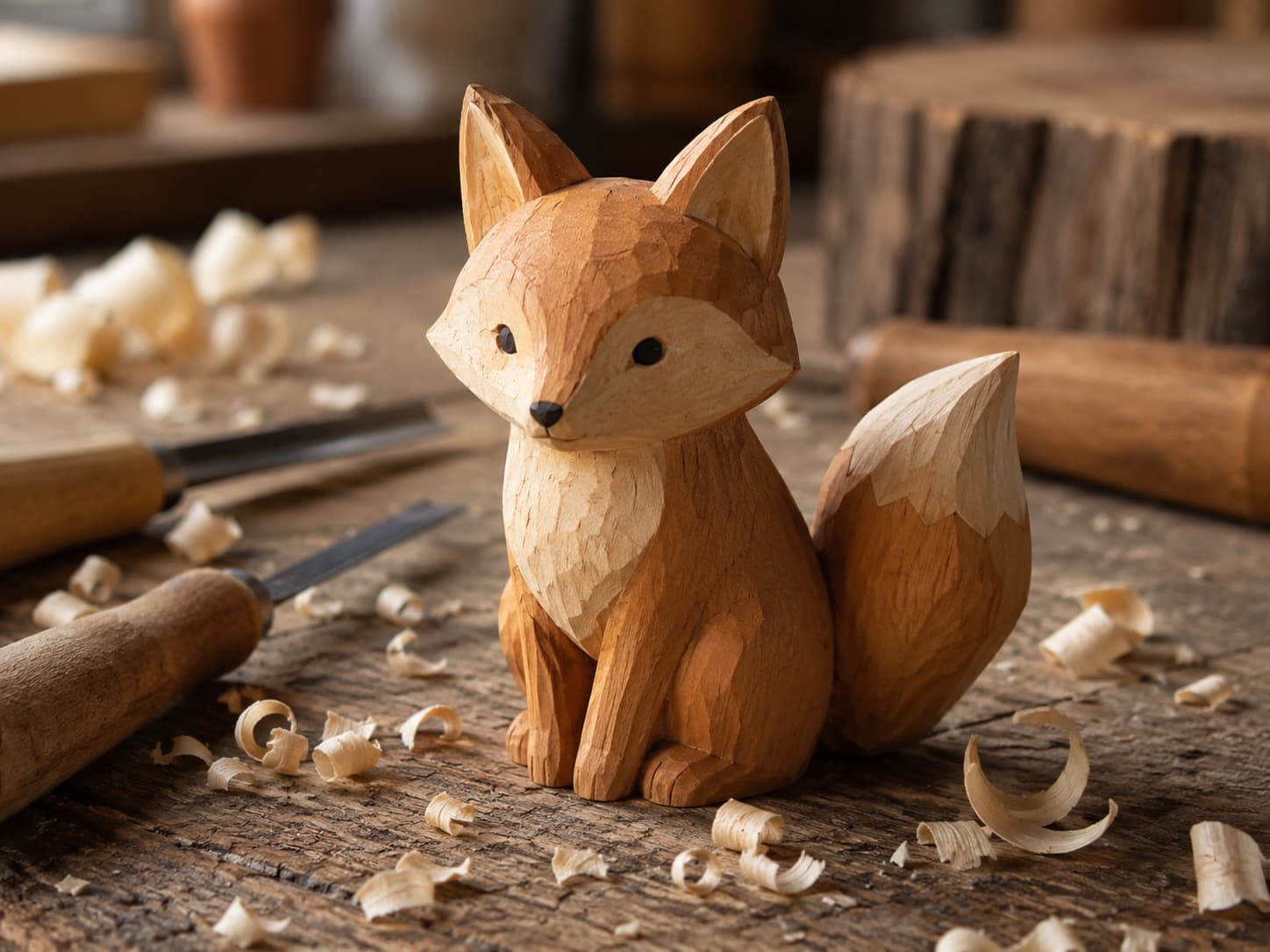
A fox is a great beginner animal because the pointed ears and fluffy tail make it instantly recognizable — even if the rest of the body is simple. Focus on getting the face shape right and let the ears and tail carry the piece.
Difficulty: Easy to medium Best for practicing: Pointed ears, tail shape, simple face Beginner tip: Make the tail oversized and cartoonish. It looks better than a realistic tail and it is much easier to carve.
4. Small Wooden Bear
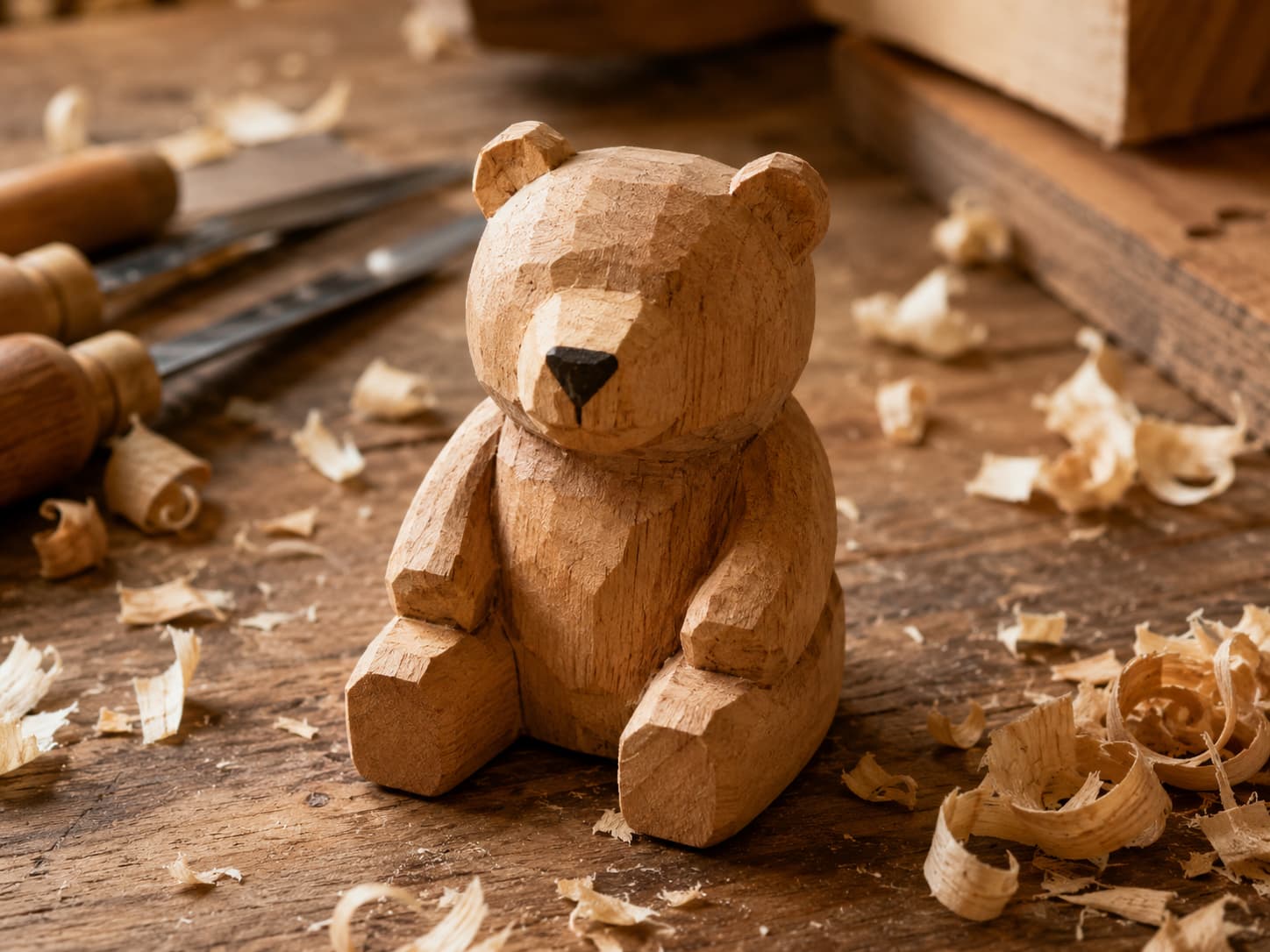
A beginner bear works best as a chunky sitting or standing shape. Round the head, add two small stubby ears, and keep the arms and legs simple blocks. Nobody is judging you for a round little bear with short legs.
Difficulty: Easy Best for practicing: Rounded body shapes, head and ear placement Beginner tip: A sitting bear is far easier than a standing bear. Save the standing pose for after you have done a few carvings.
5. Wooden Rabbit
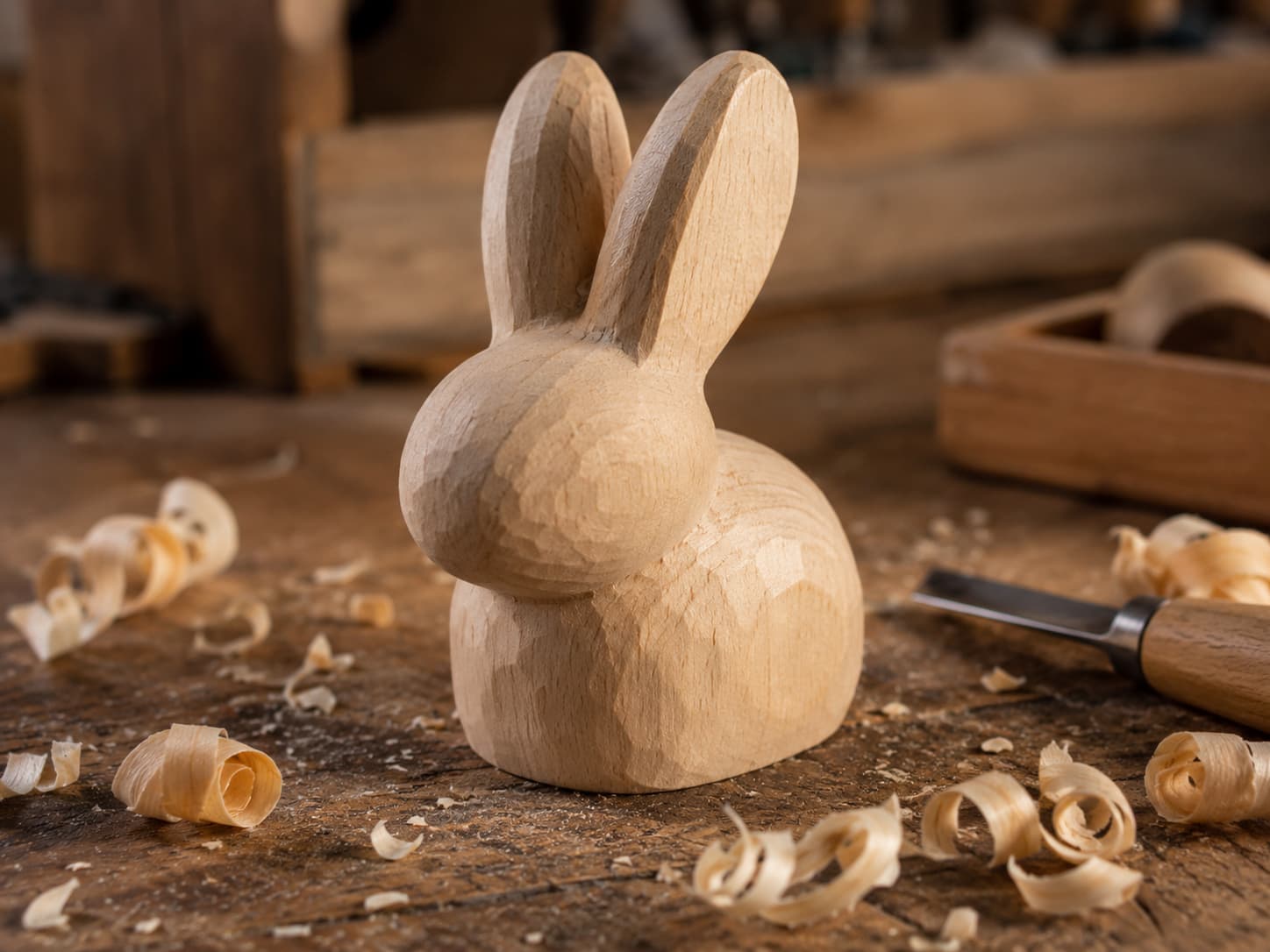
The rabbit is perfect for beginners because the long ears make it recognizable no matter what the body looks like. Start with a simple rounded body and add two tall ears on top to create your animal wood carving.
Difficulty: Easy Best for practicing: Long ears, rounded body, smooth sanding Beginner tip: Keep the ears thick and chunky so they do not snap while you are shaping them. Thin ears are a beginner trap.
6. Simple Wooden Fish
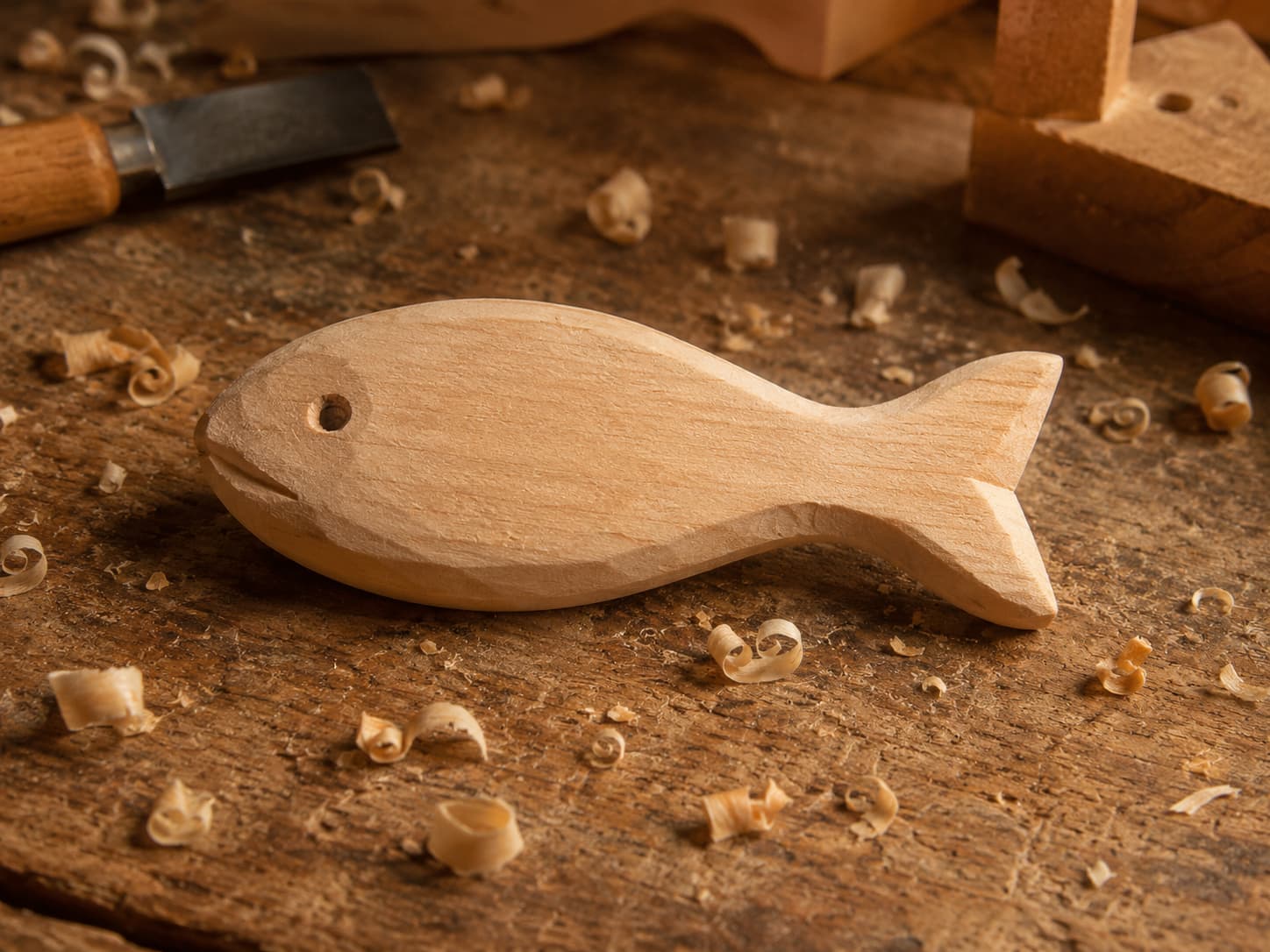
A fish is one of the easiest animal wood carvings you can make. You can carve it as a flat silhouette or a small 3D shape — either way it looks great and takes very little time.
Difficulty: Very easy Best for practicing: Simple outlines, tail shaping, clean edges Beginner tip: Start with a flat fish before you try a fully rounded 3D fish. Get comfortable with the basic shape first.
7. Little Wooden Turtle
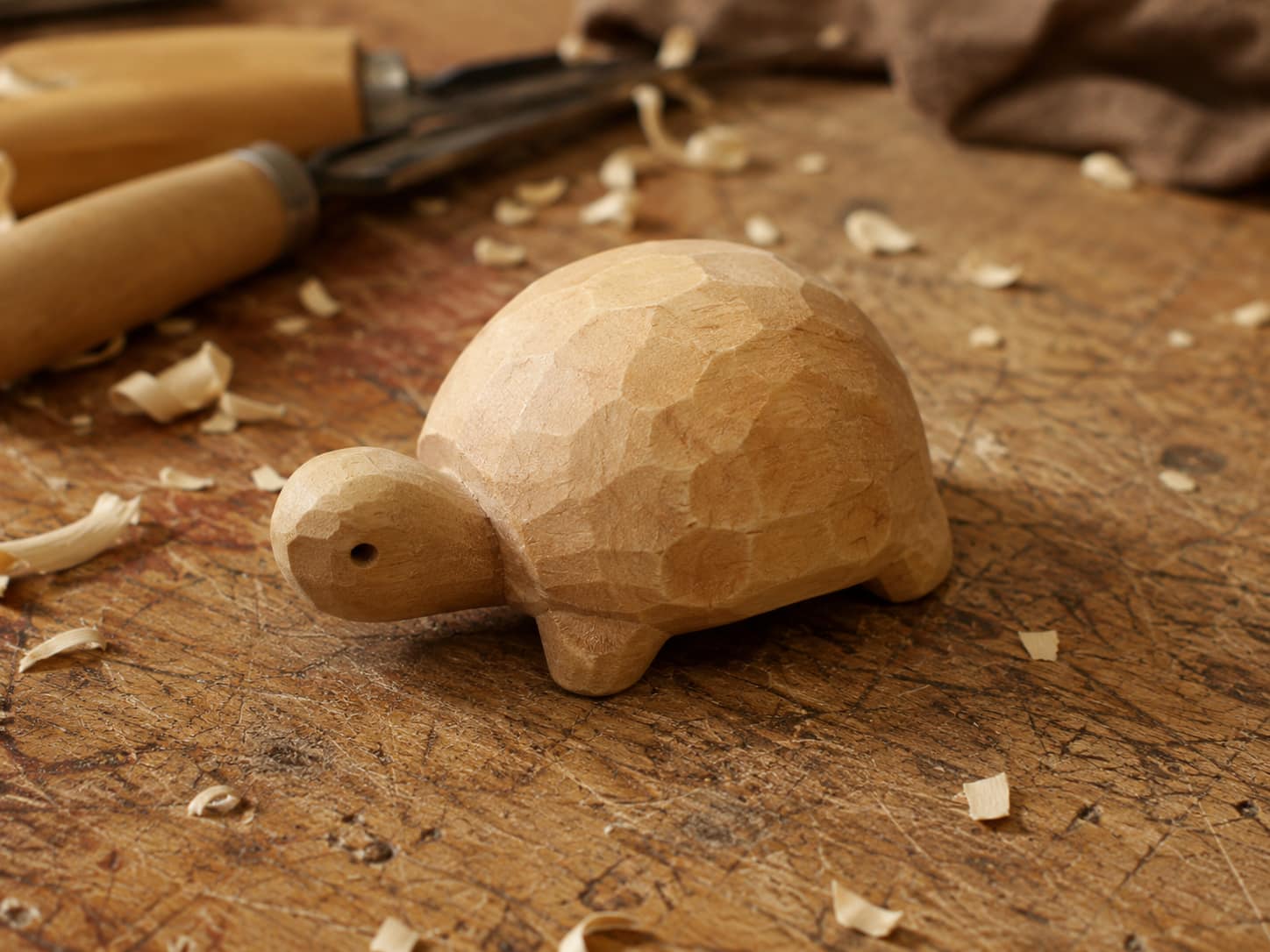
A turtle is a fun beginner project because the shell gives you the perfect surface to practice adding texture. The body stays simple while the shell becomes your main focus.
Difficulty: Easy Best for practicing: Shell texture, small head and leg shapes Beginner tip: Make the shell large and domed to keep things manageable. A big rounded shell with minimal legs is still clearly a turtle.
8. Beginner Penguin
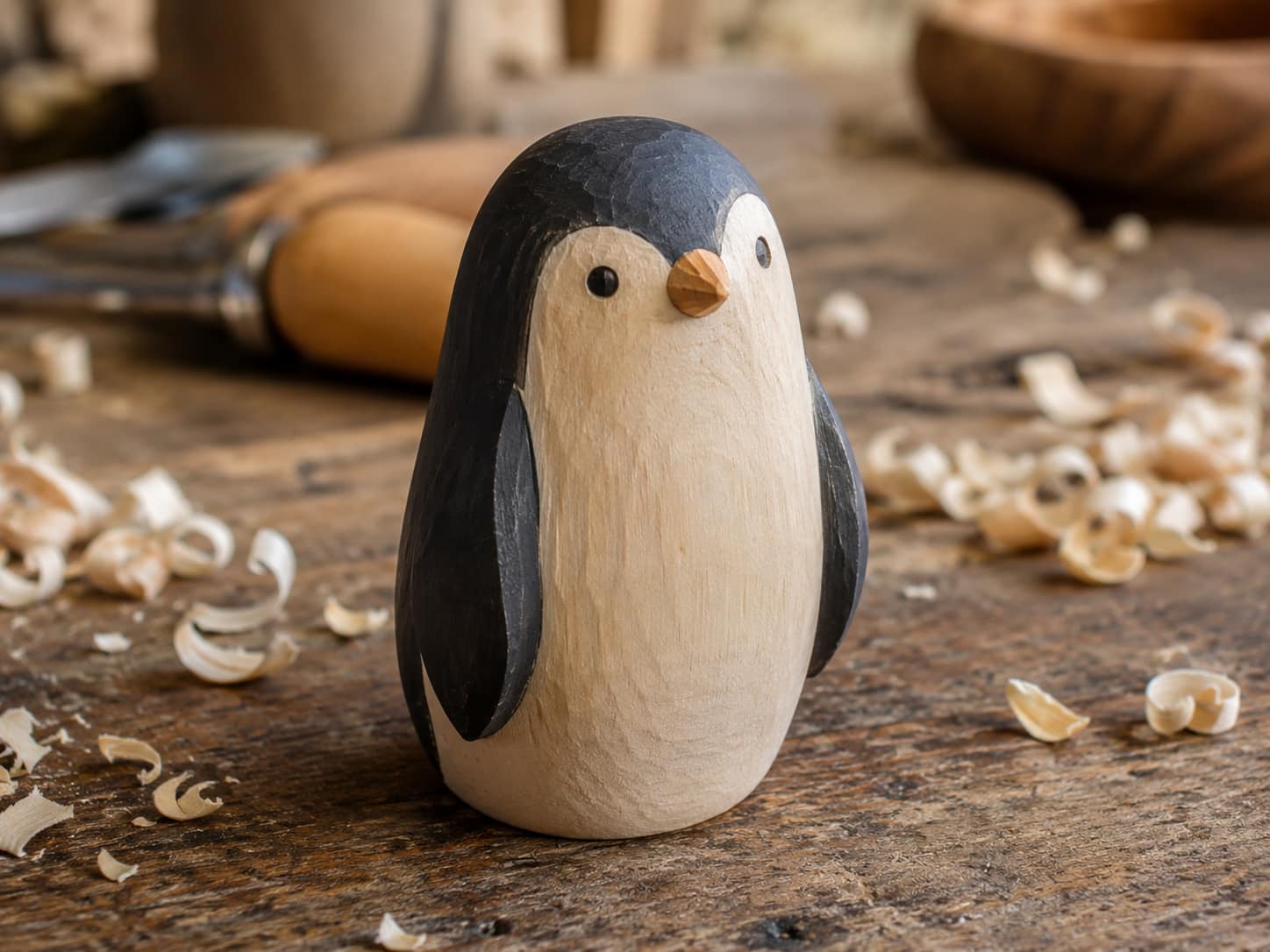
A penguin has a simple upright oval shape that is ideal for first-time animal wood carving. Carve a smooth rounded body with two small wing shapes on the sides and a tiny beak at the front.
Difficulty: Easy Best for practicing: Upright forms, smooth sanding, beak detail Beginner tip: Do the black-and-white coloring with acrylic paint after carving if you want it to look more finished. Paint does a lot of the work for you.
9. Wooden Duck
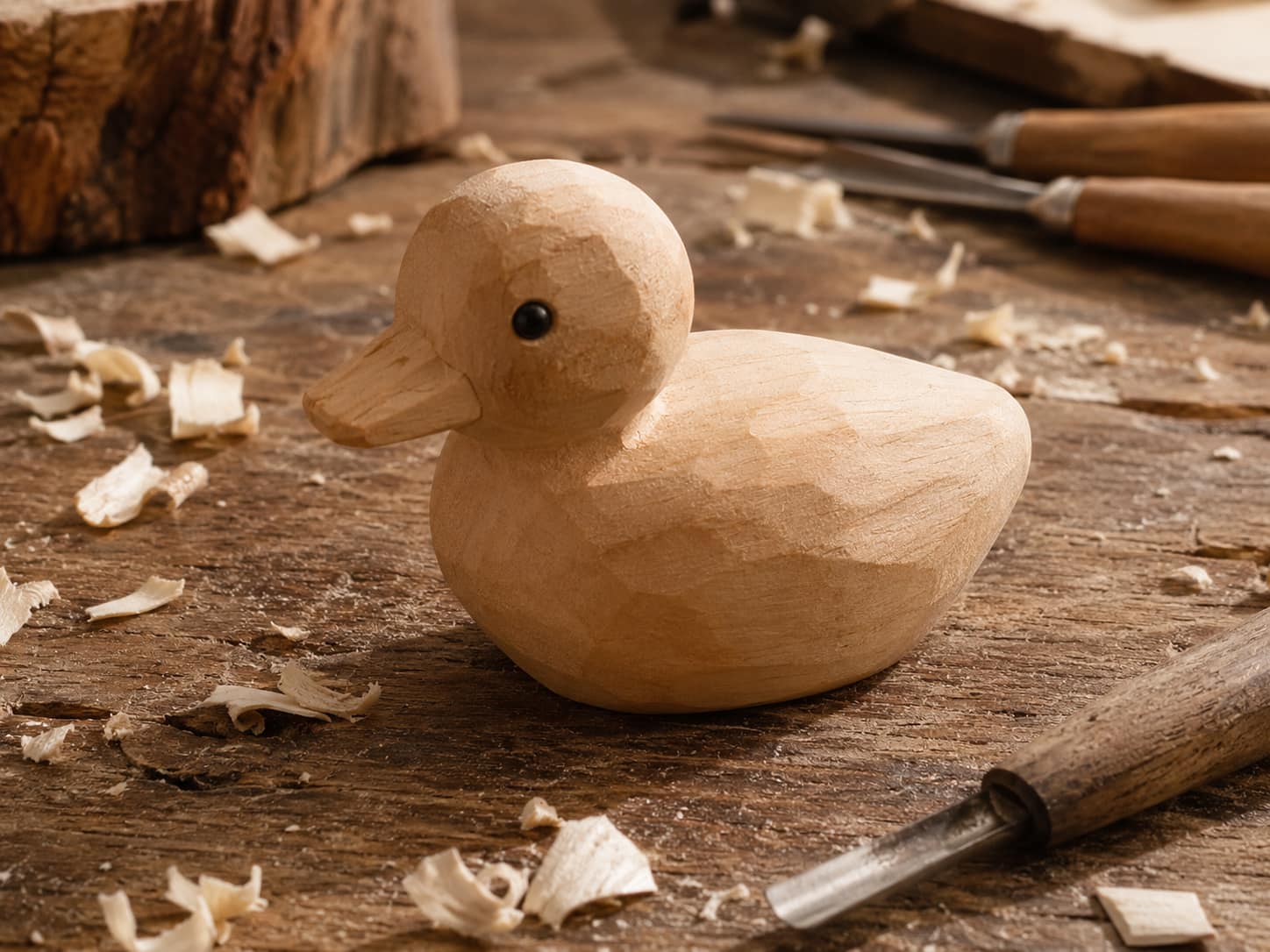
The wooden duck is a classic beginner carving for good reason. The basic shape is a rounded body, a small rounded head, and a flat beak — nothing complicated.
Difficulty: Easy to medium Best for practicing: Beak shaping, body curves, head-to-body proportion Beginner tip: Keep the beak thick and rounded so it does not break off. A thin beak on a beginner carving is a recipe for frustration.
10. Small Hedgehog
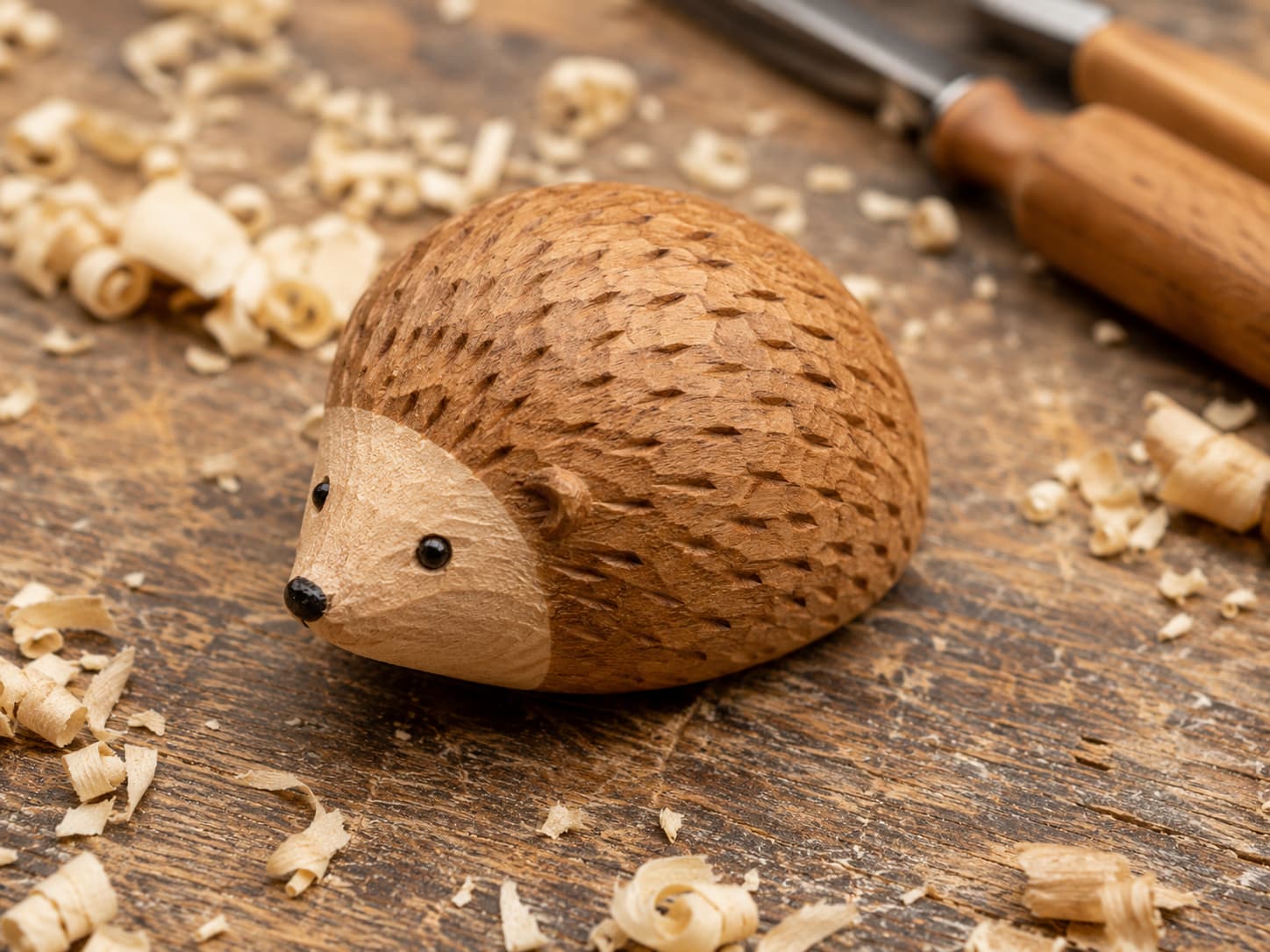
A hedgehog is a cute carving that lets beginners practice adding texture in a very manageable way. The body is just a simple oval. Then you add shallow lines or dots across the back for the spikes.
Difficulty: Easy Best for practicing: Texture, light detail work Beginner tip: Use shallow lines for the spikes rather than deep cuts. You want the look of texture, not deep grooves.
11. Tiny Mouse
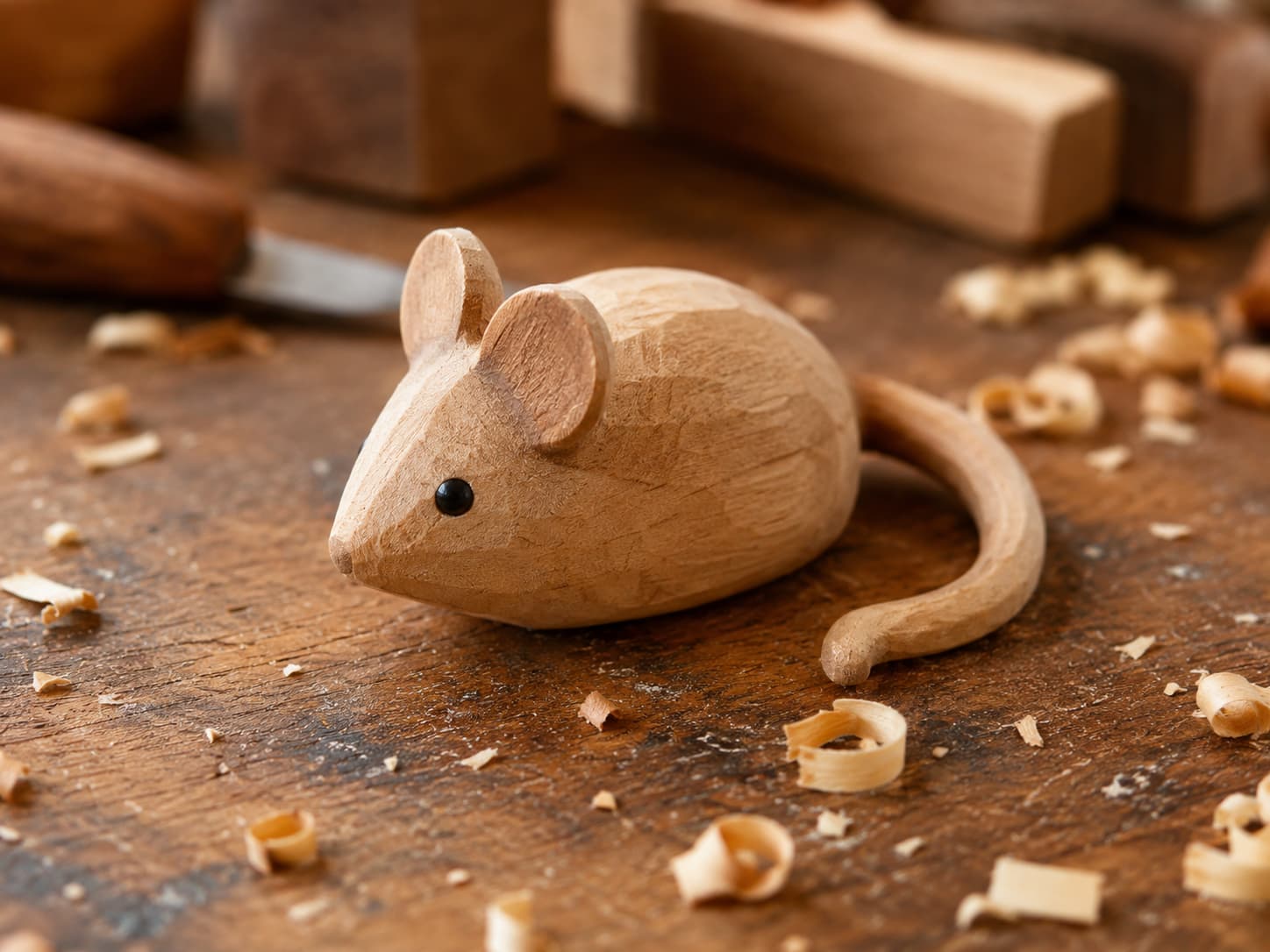
A tiny mouse is a quick and satisfying whittling project — small rounded body, two round ears, and a curved tail. It can be done in an afternoon.
Difficulty: Easy Best for practicing: Small rounded shapes, ear placement Beginner tip: Instead of carving a separate thin tail, incorporate the tail into the base of the piece as a small curved shape. It looks good and will not snap off.
12. Wooden Cat
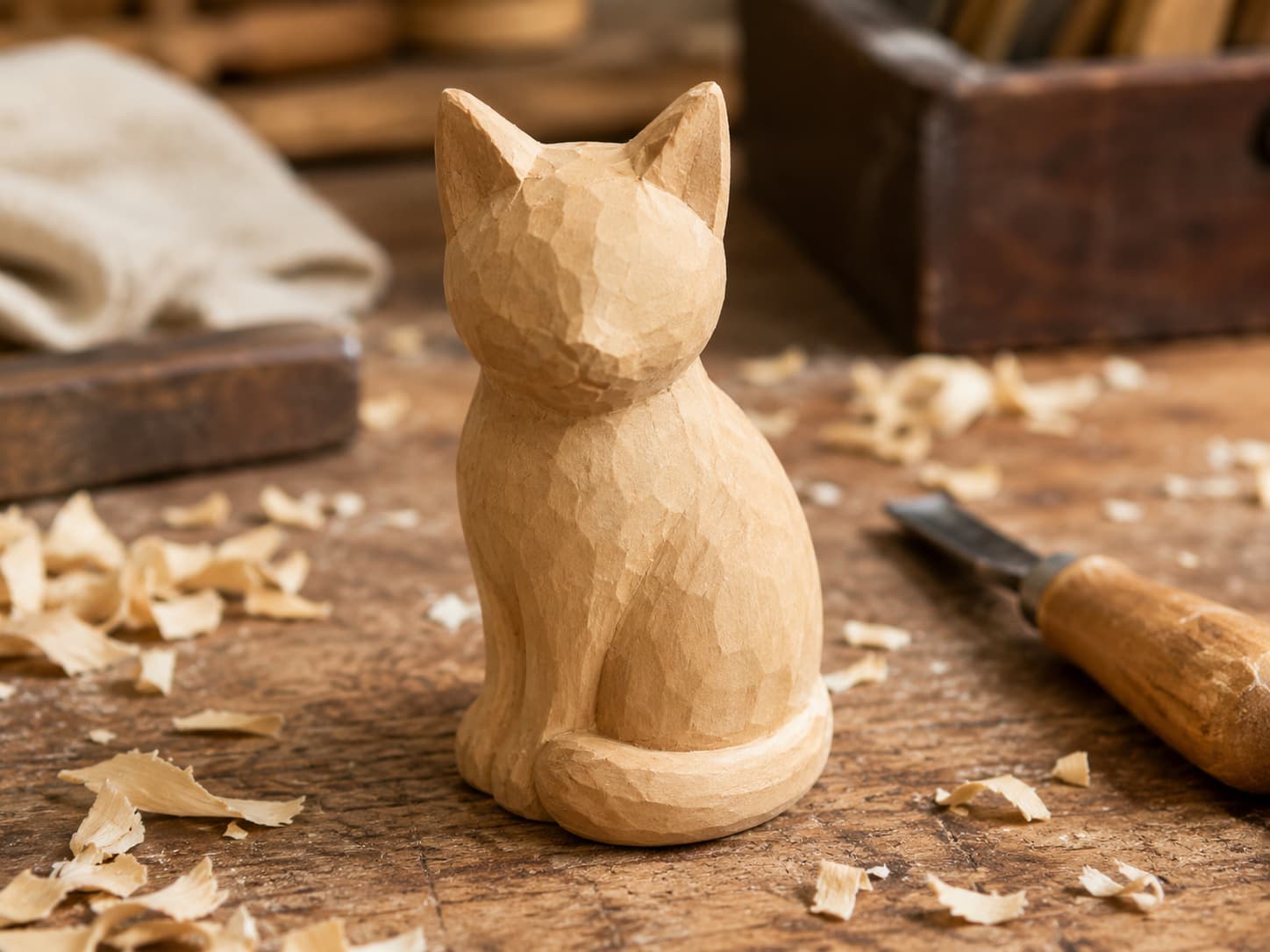
A sitting cat can be kept very simple if you focus on the silhouette — pointy ears, a rounded body, and a tail curled around the base. Even a basic shape reads instantly as a cat.
Difficulty: Easy Best for practicing: Silhouette, pointed ears, tail placement Beginner tip: A sitting cat is much easier than a standing or walking one. Keep the pose simple.
13. Simple Wooden Dog
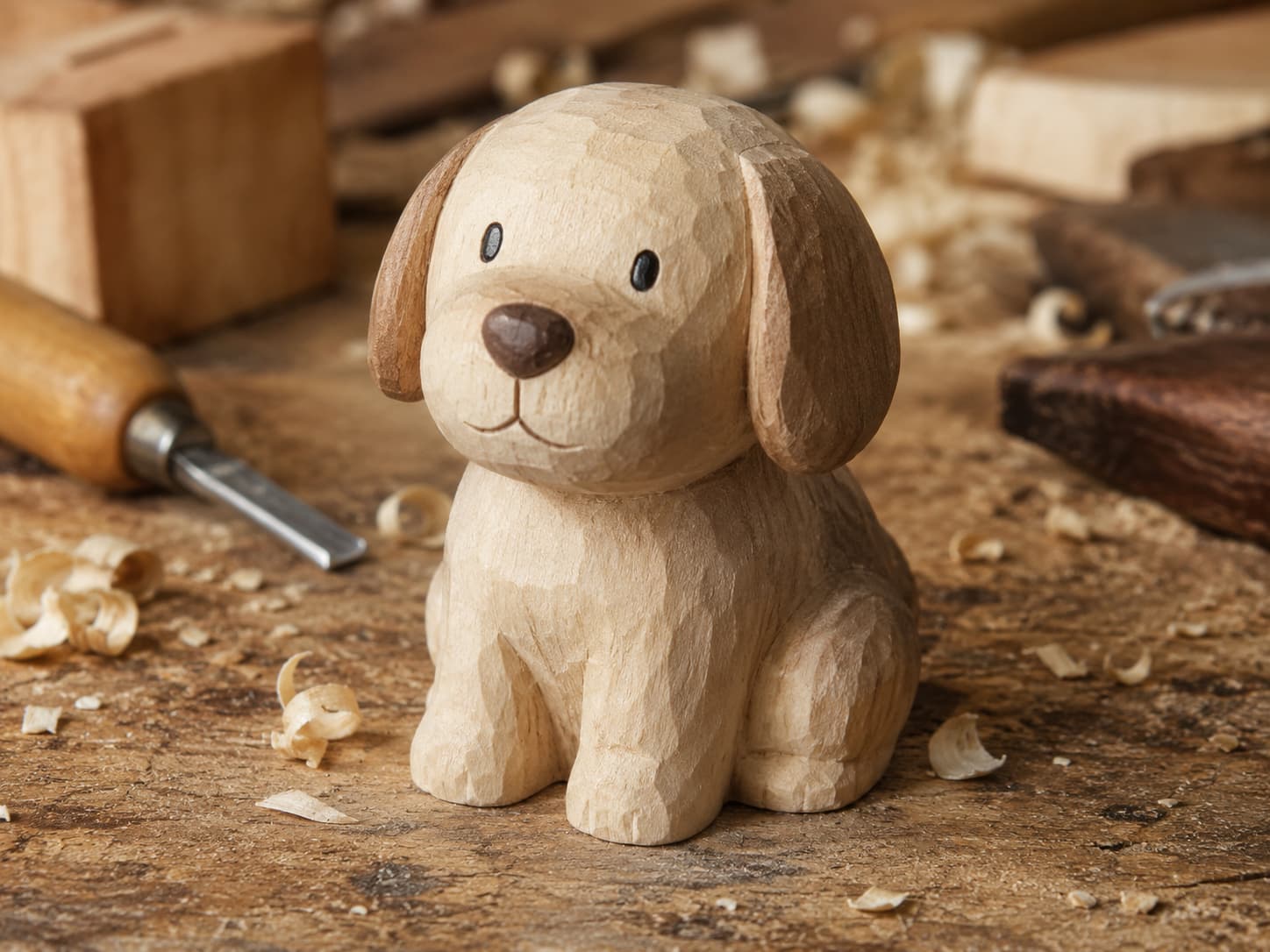
A small dog carving is beginner-friendly as long as you keep it in a cartoon style rather than a realistic breed. Focus on floppy ears, a rounded nose, and a simple pudgy body.
Difficulty: Easy to medium Best for practicing: Floppy ear shapes, nose detail, body proportion Beginner tip: Go with floppy ears instead of pointed ones. They are easier to carve and look more charming.
14. Wooden Whale
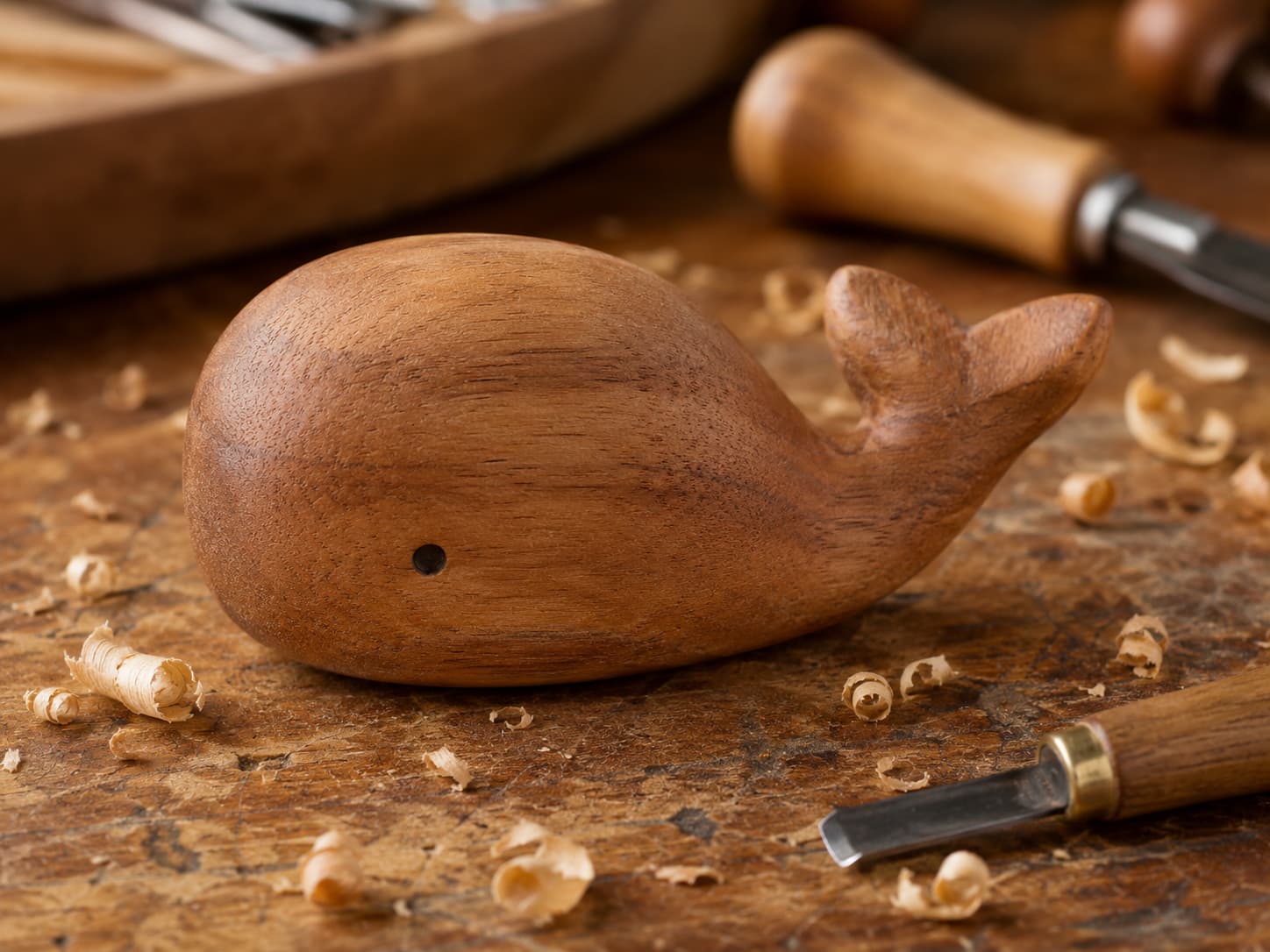
The whale might be the most beginner-friendly of all 3D animal carvings. The body is smooth, the tail is simple, and the finished piece looks elegant with very little effort.
This simple whale is one of the best projects for new animal wood carving enthusiasts. Its smooth curves are forgiving and lend themselves well to experimentation.
Difficulty: Very easy Best for practicing: Smooth curves, tail shape, sanding technique Beginner tip: This is the perfect project to practice your sanding. A beautifully sanded whale with a beeswax finish looks like a professional piece.
15. Small Wooden Frog
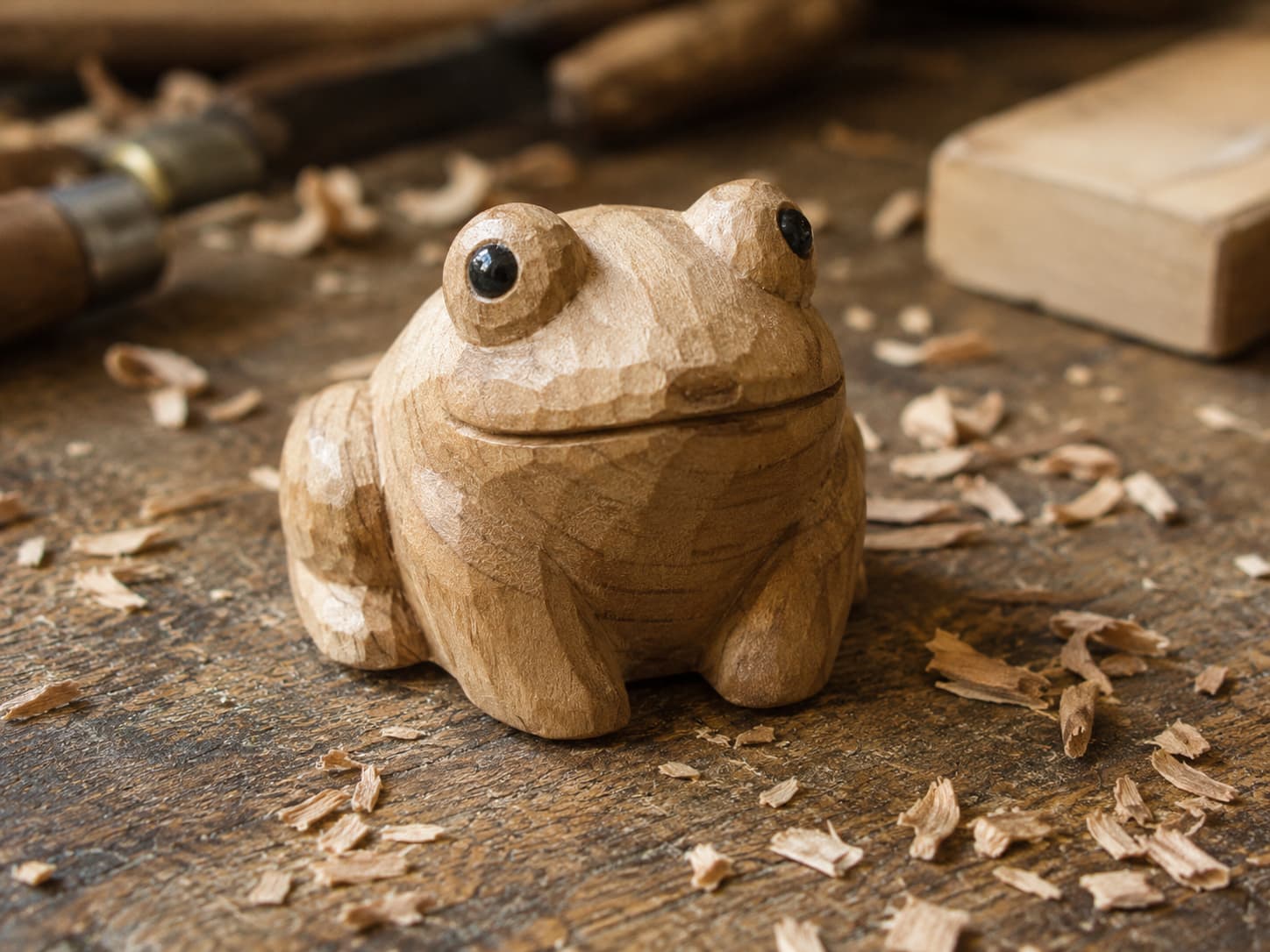
A frog is a fun project because the eyes sit on top of the head, which is an easy and satisfying detail to carve. Keep the body squat and round.
Difficulty: Easy Best for practicing: Eye placement, rounded compact forms Beginner tip: Carve the frog sitting still rather than jumping. It is much simpler and the round sitting shape comes together quickly.
16. Simple Squirrel
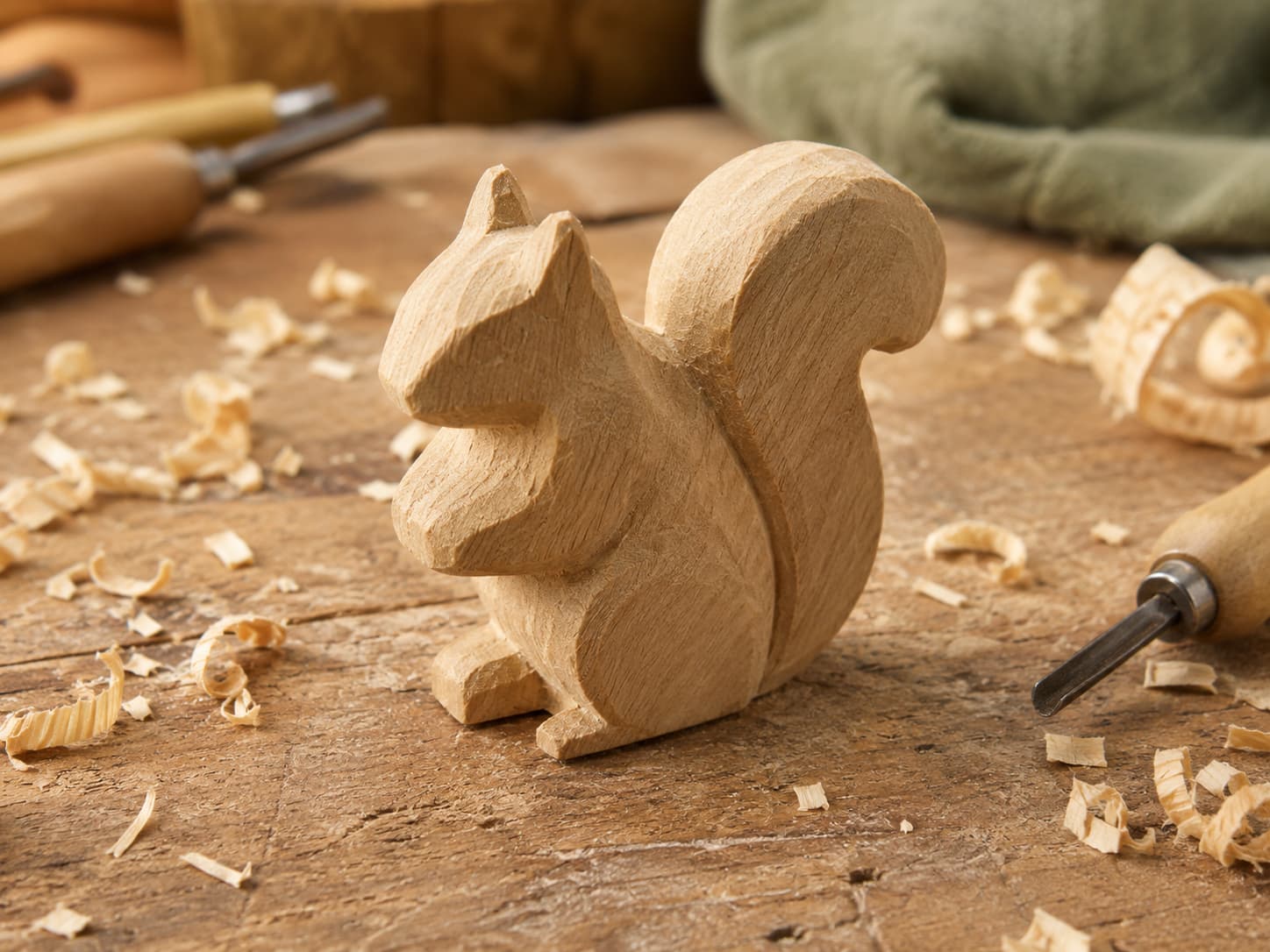
A squirrel is slightly more detailed than some of the others on this list, but still very manageable for a beginner if you make the tail big and simple. The tail is what makes a squirrel a squirrel.
Difficulty: Medium beginner Best for practicing: Large tail shape, body proportions Beginner tip: Keep the tail attached to the body rather than carving it free-standing. It adds strength and makes the whole piece more durable.
17. Wooden Chicken
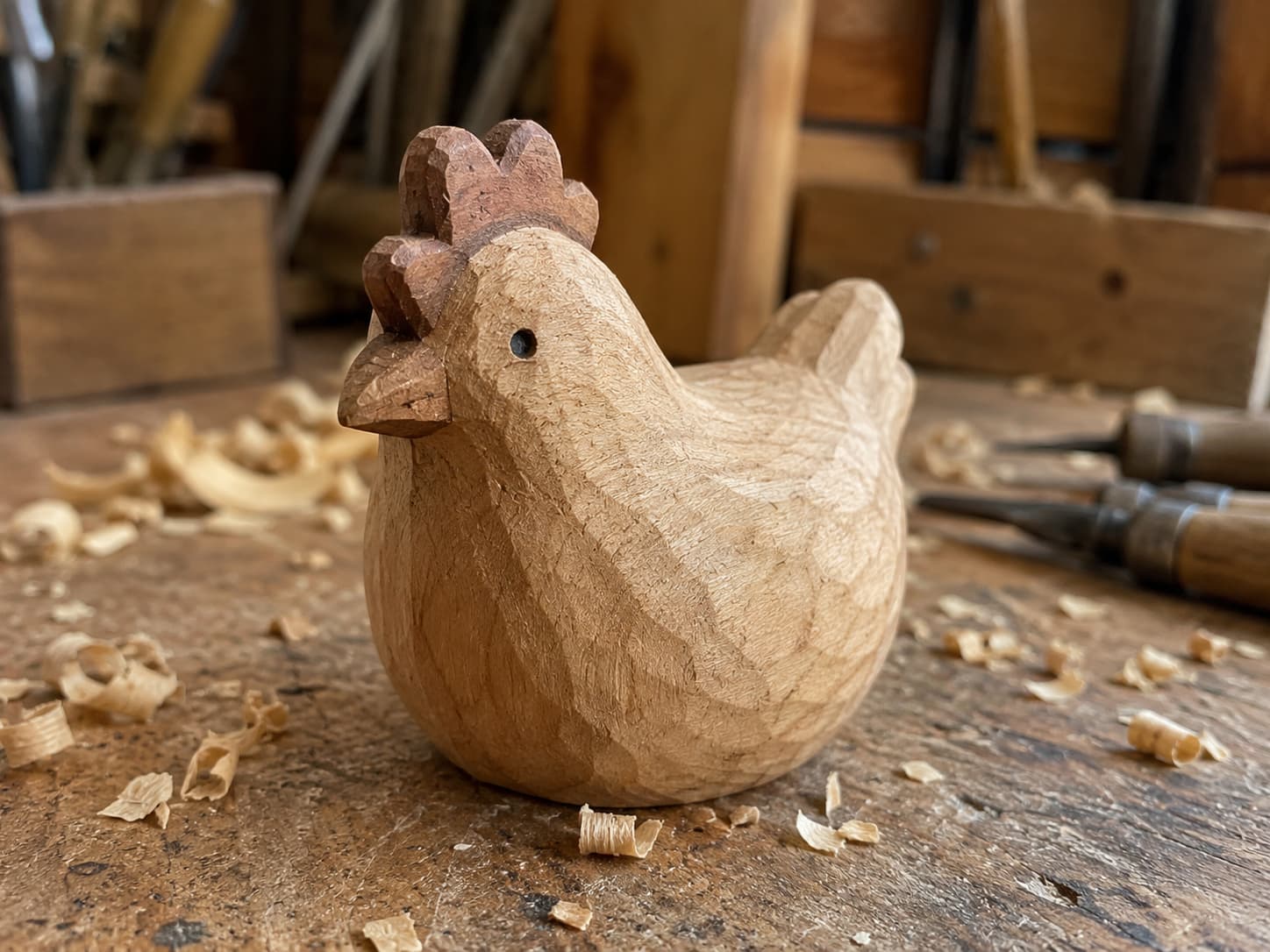
A chicken makes a great little farmhouse-style decoration. Carve a rounded body, add a small head, a chunky beak, and a simple comb on top.
Difficulty: Easy Best for practicing: Small facial details, beak and comb shaping Beginner tip: Make the comb simple and chunky instead of trying to carve thin individual points. Thick and simple always wins for beginners.
18. Deer Head Silhouette
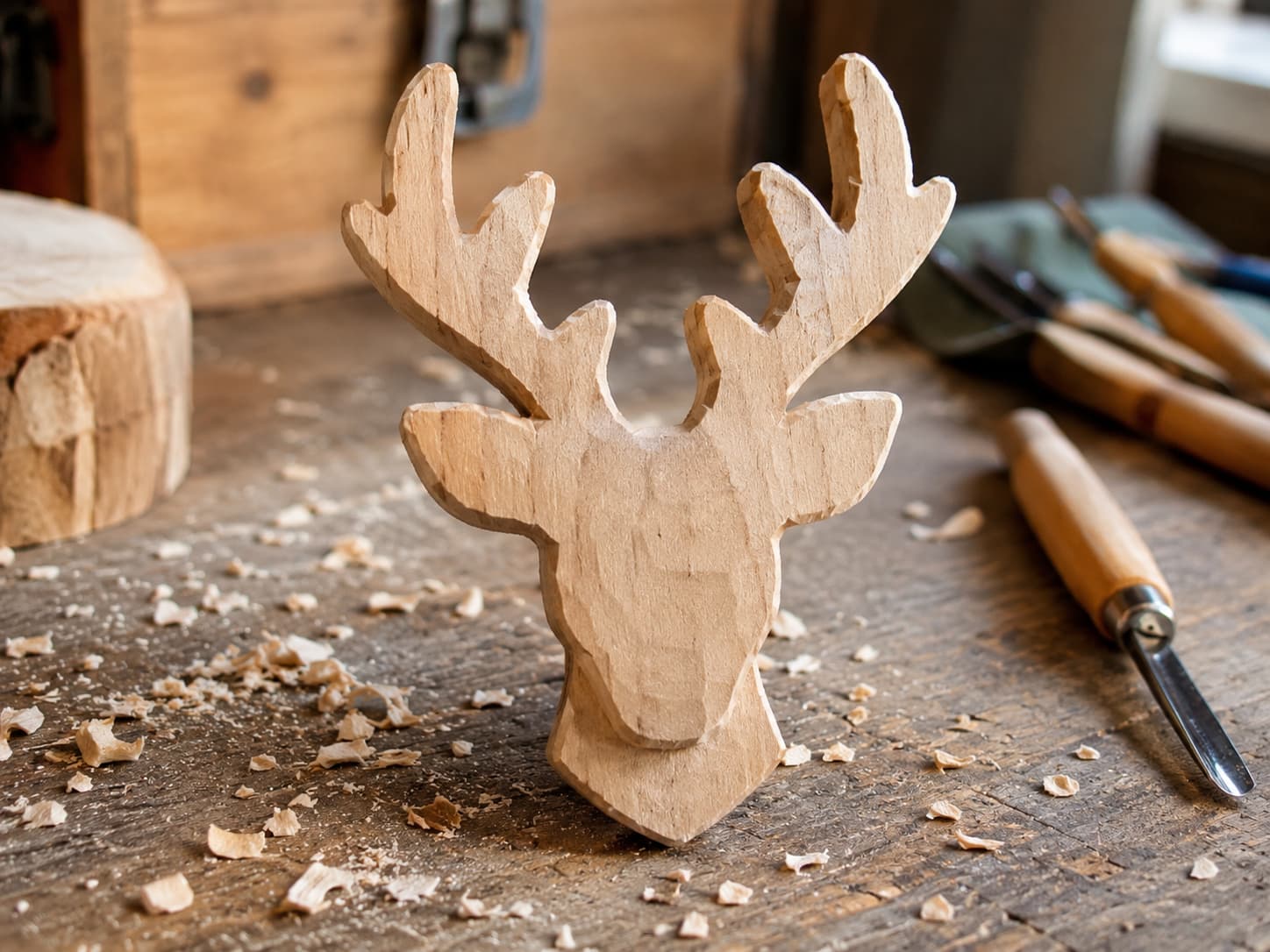
A flat deer head silhouette is a much more achievable version of a deer carving for beginners. It works beautifully as a small wall decoration or an ornament.
Difficulty: Easy to medium Best for practicing: Flat carving, outline shaping, antler detail Beginner tip: Keep the antlers thick and simple. Thin antler branches are fragile and frustrating — chunky ones look just as good.
19. Small Raccoon
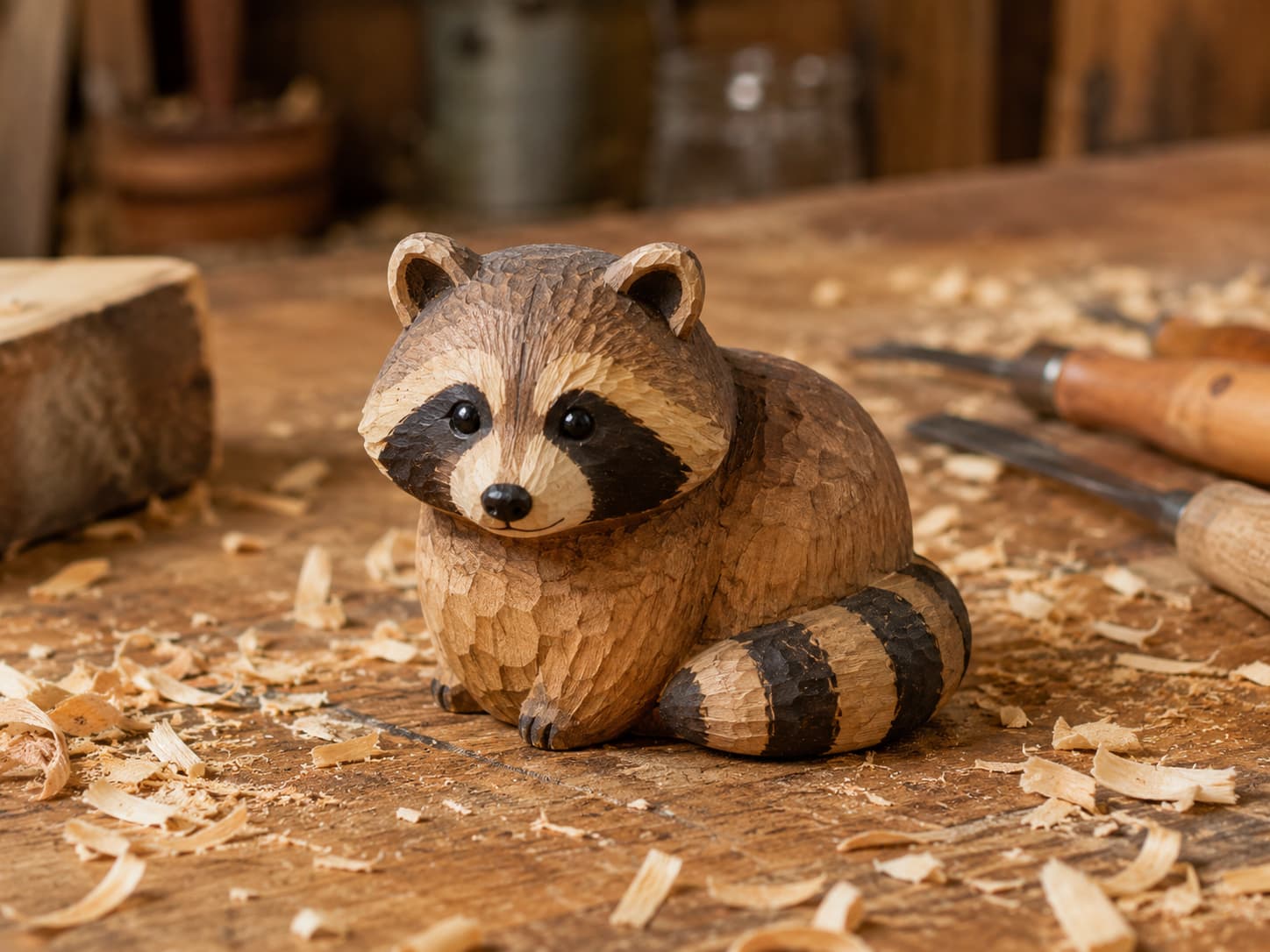
A raccoon is a fun woodland carving with a lot of personality. The face mask can be carved lightly or just painted on after sanding, and the ringed tail is a satisfying detail to work on.
Another fun animal wood carving project is a small raccoon. With its distinct face mask and ringed tail, this carving has a lot of character.
Difficulty: Medium beginner Best for practicing: Face details, rounded ears, tail shape Beginner tip: Use paint for the mask rather than trying to carve deep facial lines. It looks cleaner and is much easier.
20. Simple Elephant
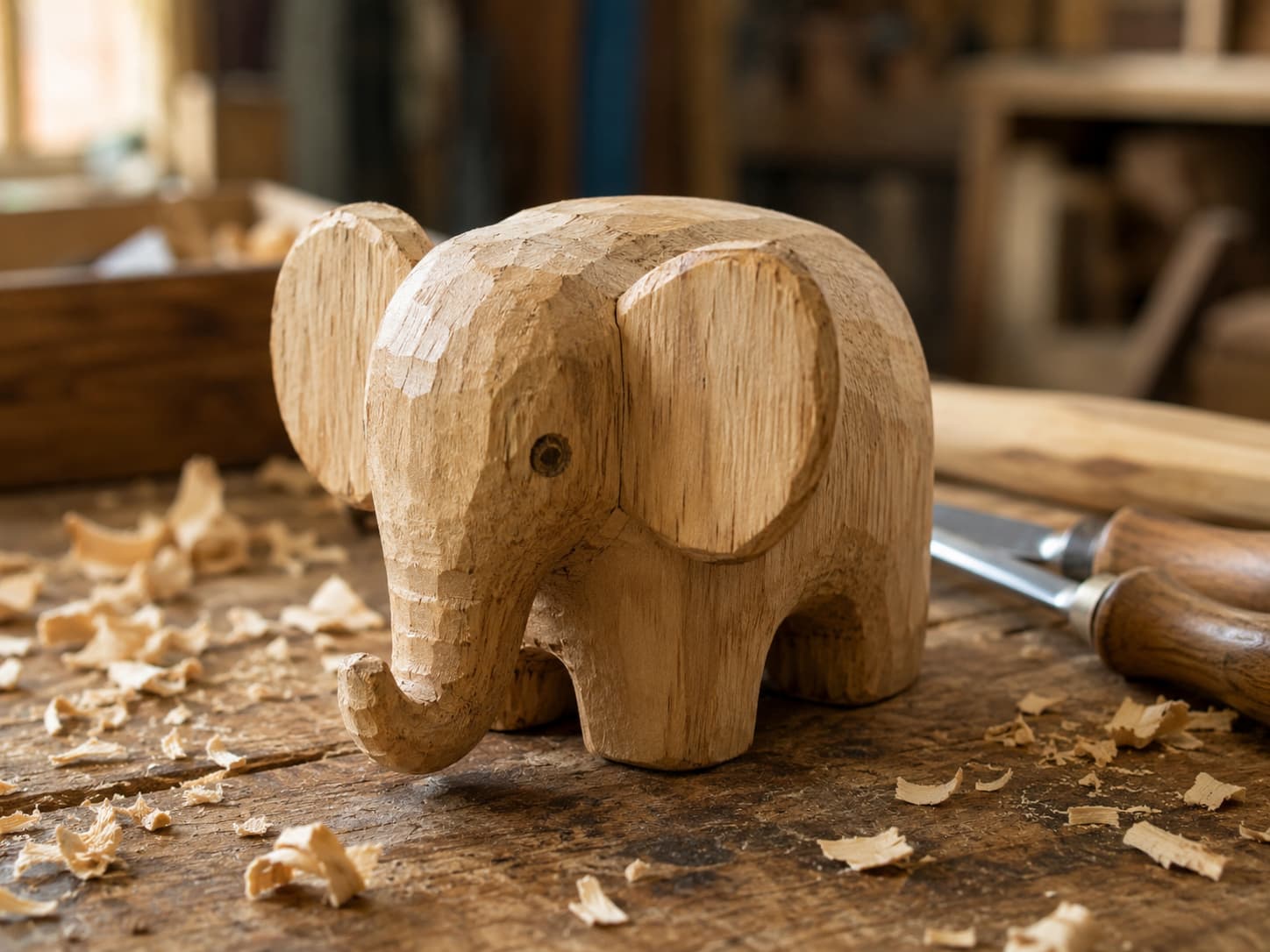
An elephant is recognizable from just two things — the trunk and the ears. Keep the body rounded and chunky, make the ears wide and flat, and give it a short thick trunk that curves slightly at the end.
Difficulty: Medium beginner Best for practicing: Large ear shaping, trunk carving Beginner tip: Never make the trunk too thin. A thin trunk will snap. Keep it short and thick and the carving will hold up fine.
21. Horse Head
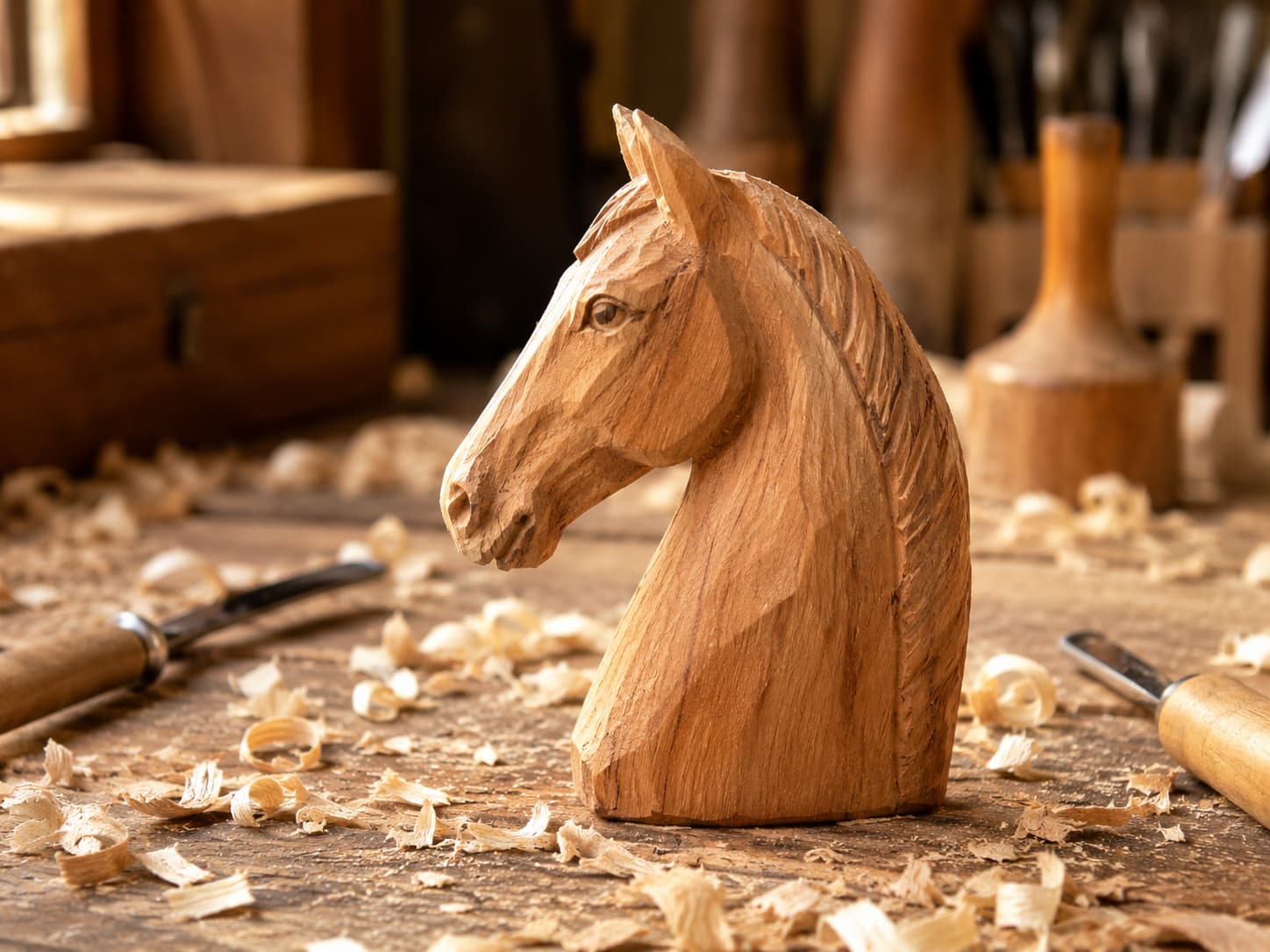
A horse head carving is a satisfying step up once you have done a few simpler animals. It works best as a small bust or a flat side-profile silhouette rather than a fully 3D horse.
Difficulty: Medium Best for practicing: Head shape, mane texture, profile carving Beginner tip: Start with a side-profile horse head. A flat silhouette is far more forgiving than trying to carve a realistic 3D horse head on your first attempt.
Easiest Animal Carvings to Start With
If you are completely new to carving, start with these five projects before moving on to anything more detailed:
- Wooden fish — simple flat shape, no delicate parts
- Wooden whale — smooth curves, great for sanding practice
- Simple owl — chunky and forgiving
- Tiny bird — one basic oval, easy finish
- Little turtle — simple body, fun texture practice
These five shapes are forgiving, quick to finish, and will teach you the core skills you need for every other project on this list.
Best Animal Carvings to Give as Gifts
Some of these beginner carvings make genuinely lovely handmade gifts — especially if you sand them well and finish them with oil or beeswax.
Gift-friendly ideas to carve:
- Owl — great for desk decor or a nature lover
- Cat or dog — perfect for pet owners
- Rabbit — a sweet spring or Easter gift
- Whale — beautiful for coastal or minimalist decor
- Fox or bear — perfect for cabin or woodland home decor
- Small bird ornament — a charming handmade Christmas gift
For more ideas on what to carve for others, check out Small Wood Projects That Sell and DIY Wood Gift Ideas.
How to Finish Your Animal Wood Carvings
Once your carving is shaped and sanded, you have a few options for finishing it.
Animal wood carving can also include various finishes to enhance the final look. From natural oils to acrylic paints, your projects can reflect your personal style.
Natural oil finish — lets the wood grain show through beautifully. Great for owls, bears, and whales.
Beeswax finish — gives the piece a soft, smooth, handmade feel. Easy to apply and looks wonderful.
Acrylic paint — the best choice for animals that need color, like penguins, foxes, raccoons, cats, and chickens. You can add all the small details with paint that would be tricky to carve.
Wood burning — use a wood burner to add eyes, fur texture, feather lines, or shell patterns. It gives carvings a more detailed and finished look without requiring advanced carving skills.
For more finishing tips, visit Wood Burning for Beginners to see how to add great details to your finished carvings.
Common Beginner Mistakes to Avoid
Choosing an animal that is too detailed. There is no shame in starting with a fish or an owl. Save the realistic eagle for later.
Making thin parts too early. Ears, tails, trunks, and legs can snap when they are too thin. Keep them chunky and thick while you are learning.
Skipping sanding. This is the step most beginners rush through — and it makes the biggest difference. Take the time to sand properly.
Carving against the grain. Pay attention to which direction the wood grain runs and carve with it rather than against it to avoid chipping.
Trying to make it perfect. Beginner animal carvings are supposed to look handmade. The small imperfections are part of the charm.
FAQ
What is the easiest animal to carve from wood? A fish, whale, owl, or simple bird is usually the easiest place to start. The shapes are basic, the proportions are forgiving, and you do not need many small details to make them recognizable.
What wood is best for beginner animal carving? Basswood is the best option for beginners. It is soft, smooth, and cuts cleanly without fighting you.
Can beginners carve animals with only one knife? Yes. Many of the simple animals on this list can be carved with a single sharp carving knife. A detail knife and small gouge add options, but they are not required for basic projects.
Are animal wood carvings good for kids? Carving with sharp tools requires adult supervision and proper safety gear. For younger kids, painting pre-cut wooden animal blanks or sanding pre-shaped pieces is a safer and still very fun option.
Animal wood carving is a great way to unleash creativity and improve your skills, whether you’re a beginner or looking for ways to refine your technique.
Should I paint animal wood carvings? It depends on the animal. Paint works beautifully for penguins, foxes, raccoons, cats, dogs, and chickens. A natural oil or beeswax finish looks better on owls, bears, birds, and whales where you want the wood grain to show.
Want More Plans and Projects? This Resource Makes It Easy
If you are serious about building your carving and woodworking skills, one of the most helpful things you can do is get your hands on a solid collection of patterns and project plans.
Ted’s Woodworking Plans includes over 16,000 woodworking plans with detailed step-by-step instructions, cut lists, and diagrams — including carving patterns and small project plans that are perfect for beginners. Instead of hunting for ideas one at a time, you get a huge library to pull from whenever you want to start something new.
If you are working with a smaller shop setup or limited tools, The Ultimate Small Shop is also worth a look. It is built specifically for woodworkers who want to do great work without a full garage of equipment.
Both are solid resources to have in your corner as you keep building your skills.
Start Carving Your First Animal This Weekend
Animal wood carving is one of the best ways to practice real skills while making something fun, small, and display-worthy. Start with a fish, an owl, a bird, or a whale — then work your way up to a fox, raccoon, elephant, or horse head as your confidence grows.
The goal is not perfection. The goal is to learn how to shape wood, smooth curves, add small details, and enjoy the process.
Save this list of 21 easy animal wood carving ideas for beginners, pick the one that feels most fun, and get carving this weekend.
Remember, each animal wood carving project will teach you something new. Enjoy the process and let your creativity shine as you explore this rewarding craft.