
If you’ve spent any time searching “free woodworking plans” online, you already know the problem. You end up with fifteen browser tabs open, half the diagrams are blurry, none of the measurements match, and you still don’t know if the project is actually doable with the tools sitting in your garage.
That’s usually the point where Ted’s Woodworking Plans shows up in your search results, promising over 16,000 plans for a one-time price. And honestly? That number alone is enough to make anyone suspicious. Sixteen thousand plans sounds like either the best deal in woodworking or a scam wrapped in a PDF.
So I looked closely at the offer, the project categories, the beginner-friendly claims, the pros and cons, and the common complaints people should know about before buying. The goal here is simple: to figure out whether Ted’s Woodworking Plans is actually useful for beginners, or whether it is just another woodworking product with a big promise and mixed expectations.
There’s also the trust question, which honestly matters more than most reviews admit. Anytime a product promises a huge number — 16,000 plans! — it’s reasonable to wonder if you’re getting 16,000 genuinely useful builds, or a padded count made up of duplicate templates and filler. That was one of the first things I wanted to figure out.
Here’s the honest breakdown.
What Is Ted’s Woodworking Plans?
If you’re brand new, I’d still start with simple woodworking projects for beginners before jumping into larger furniture builds. Small shelves, boxes, planters, and basic benches teach you the same core skills without making you feel like you accidentally signed up for a carpentry exam.
Ted’s Woodworking Plans is a massive digital library of woodworking project blueprints, created by Ted McGrath, a woodworking instructor and carpenter. The pitch is simple: instead of piecing together free plans from random forums and YouTube comments, you get one organized library covering everything from small beginner crafts to full furniture builds and outdoor structures.
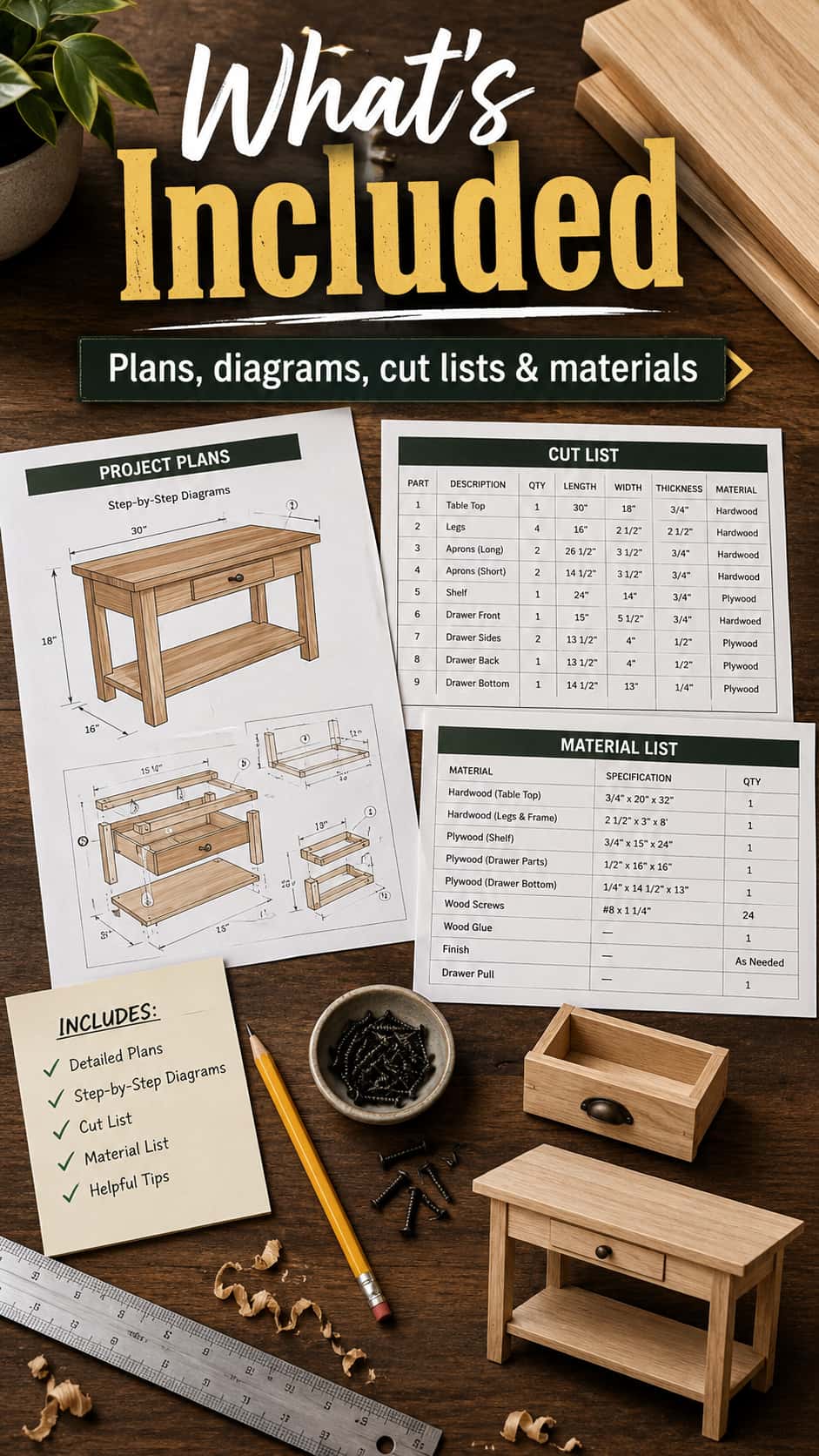
The plans come as downloadable PDF files, and most include:
- Step-by-step diagrams
- Materials lists with suggested dimensions
- Estimated cutting lists
- Notes on tools needed
It’s not a single ebook you read cover to cover. It’s more like a searchable database you dip into whenever you need a plan for a specific project — which is honestly the format that makes the most sense for how most of us actually build things. Nobody sits down and reads a woodworking encyclopedia front to back. You go looking for “how do I build a bookshelf” and want the plan, not a lecture.
Want to see the current offer and what’s included? You can check Ted’s Woodworking Plans here.
What’s Included — The Breakdown
This is where the “16,000 plans” number actually starts to make sense, because it spans a huge range of categories. Here’s what you’ll find inside:
Furniture projects — Tables, chairs, bookshelves, dressers, beds, and storage furniture. This is the category most beginners gravitate toward first, since furniture builds tend to have the clearest payoff (a coffee table you can actually use beats a decorative shelf nobody needed).
Outdoor and garden projects — Planters, benches, sheds, pergolas, birdhouses, and outdoor storage. If you’ve been eyeing a deck box or a simple outdoor bench build, this category alone justifies a good chunk of the library.
Toys and kids’ projects — Wooden toys, puzzles, rocking horses. Smaller in scope, which makes them genuinely great beginner-difficulty projects if you want to practice technique without committing a full weekend.
Home decor and small crafts — Wall art, shelving, decorative boxes, and smaller accent pieces. These tend to use less material and are forgiving if you mess up a cut.
Larger structural builds — Sheds, gazebos, and bigger outdoor structures for anyone ready to level up past small projects.
Each plan is generally rated by difficulty, so you’re not accidentally opening a plan that assumes you already own a table saw, a planer, and five years of joinery experience. That difficulty labeling is honestly one of the more beginner-friendly touches in the whole package — it’s the difference between confidently picking a Saturday project and guessing your way into a build that’s way over your skill level.
There are also bonus materials bundled in with most versions of the package, typically including guides on woodworking basics, tool usage, and sometimes video content walking through foundational techniques. These bonuses vary depending on the current offer, so it’s worth checking what’s included at the time you purchase.
Pros: What I Liked
The sheer volume genuinely helps beginners avoid decision fatigue. Instead of Googling a new plan every time you want to try something, you have one place to search. That matters more than it sounds like it should — half the battle of getting into woodworking as a hobby is just picking a project and starting.
Plans include actual materials lists. This is a bigger deal for beginners than it seems. A lot of free plans floating around online skip the “here’s exactly what to buy” step, which means you’re standing in the lumber aisle trying to reverse-engineer a cutting list from a photo. Having pre-built materials lists removes a huge chunk of the guesswork.
Difficulty ratings actually match beginner needs. You’re not stuck sorting through advanced joinery projects to find something achievable in a weekend. The beginner-labeled plans tend to stick to straightforward cuts, basic joints, and forgiving tolerances.
One-time cost vs. piecing together paid plans elsewhere. If you’ve ever bought individual plan sets from specialty sites, you know they can run anywhere from $10–$40 each. Getting a library this large for a flat price is a meaningfully better deal if you plan on building more than a handful of projects.
It’s beginner-accessible without being condescending. The instructions assume you’re new, but they don’t waste your time. You get the information you need to start cutting, not a 40-page introduction to what a hammer is.
Searchability makes the size an asset instead of a liability. Once you know how to filter by category and difficulty, the library stops feeling overwhelming and starts feeling like exactly what it’s meant to be — a reference you dip into on your own schedule, not something you’re expected to read start to finish.
Cons: What to Know Before You Buy
I want to be straight with you here, because a review that only lists pros isn’t actually useful.
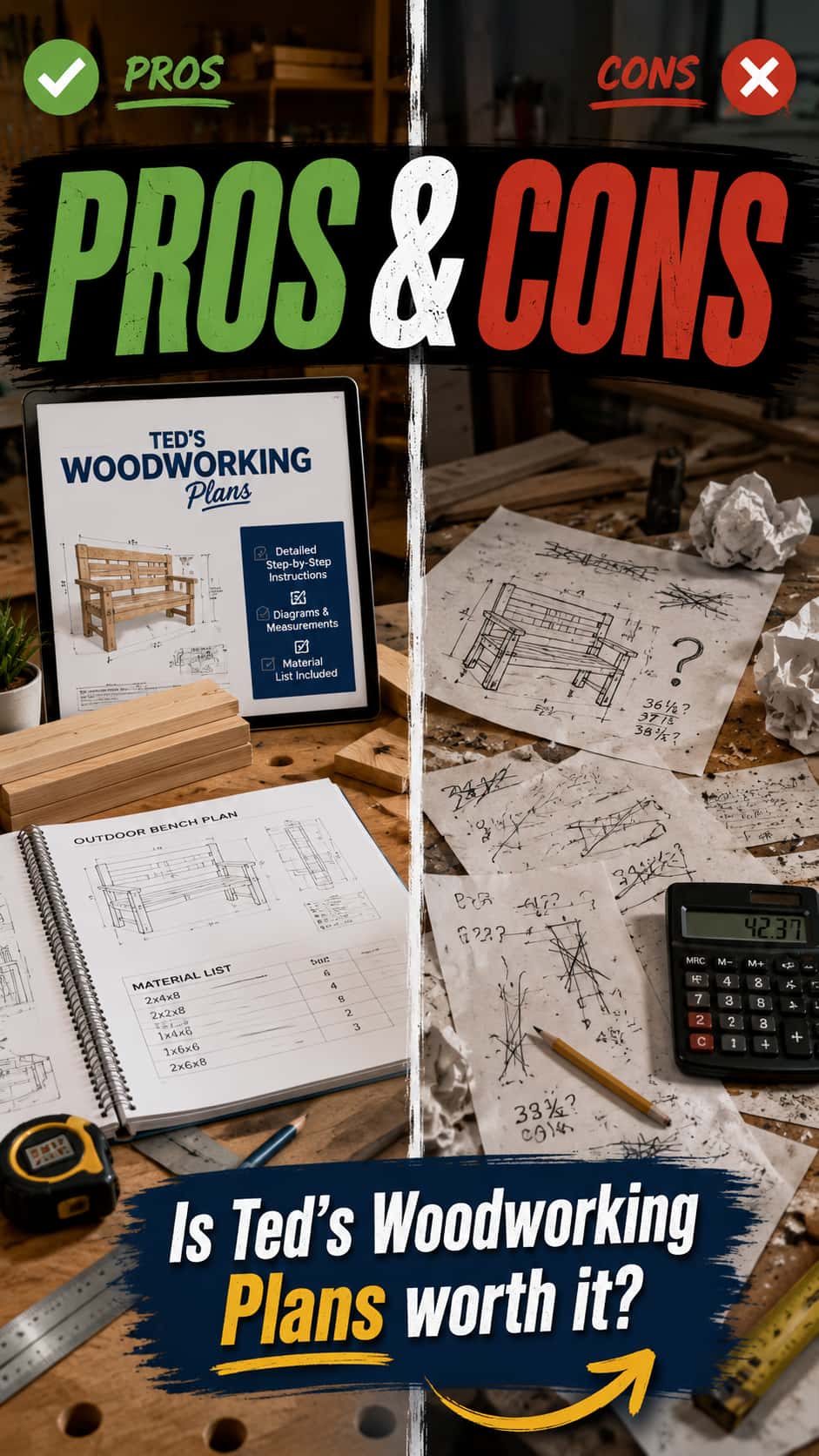
Plan quality isn’t perfectly consistent. With a library this size, some plans are polished and clear, while others feel more like a basic sketch with dimensions attached. It’s not a dealbreaker, but don’t expect every single one of the 16,000 plans to be a professionally rendered diagram.
The sheer size can be overwhelming at first. Ironically, the same “16,000 plans” that’s a selling point can also feel like too much when you first log in. Without a plan for how you’re going to search and filter, it’s easy to open the library, feel decision paralysis, and close the tab. My advice: pick a category first (furniture, outdoor, whatever you’re actually excited about) rather than browsing the whole thing at once.
Some designs are dated. Woodworking fundamentals don’t really change, but a few of the styles reflect older design trends rather than what’s currently trending on Pinterest or in modern farmhouse-style builds. That’s fine if you’re building for function, less fine if you’re chasing a specific aesthetic.
It’s not a substitute for basic tool safety training. The plans assume a baseline comfort with your tools. If you’ve genuinely never touched a circular saw or a drill before, you’ll want to pair this with some basic tool safety resources before diving into your first cut.
You’ll still need to double-check measurements against your own lumber. Standard lumber dimensions can vary slightly by supplier, so even a clear cutting list benefits from a quick double-check against what you’re actually holding before you start cutting. That’s true of pretty much any plan set, not just this one, but it’s worth mentioning for anyone expecting a completely foolproof, zero-adjustment process.
How It Compares to Free Plans
It’s worth addressing the obvious question: why pay for plans when Pinterest and YouTube are full of free ones?
Fair point. But if you’ve actually tried building from free plans before, you’ve probably run into at least one of these:
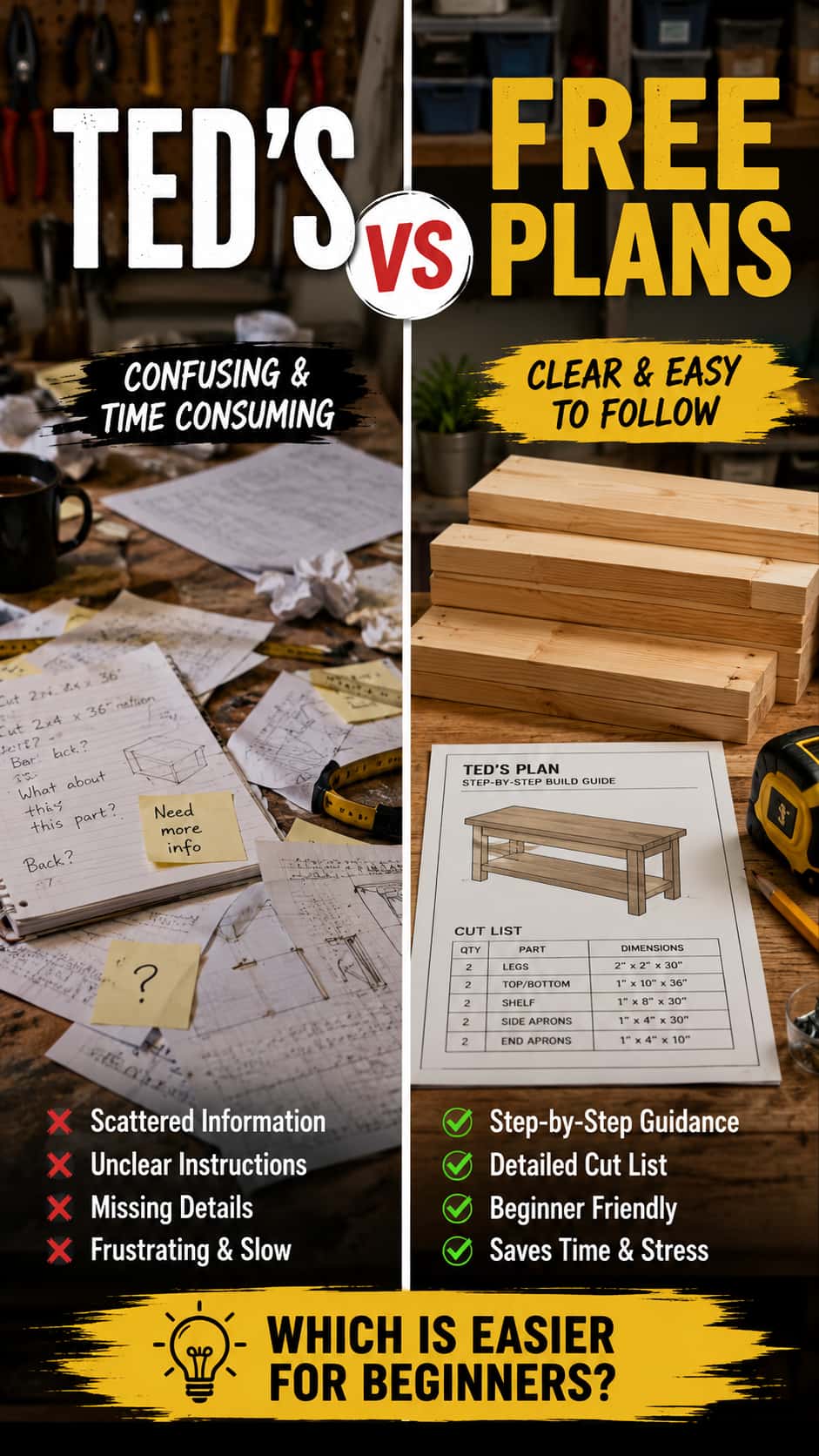
- Missing measurements — a diagram that looks great until you realize half the dimensions aren’t labeled
- Inconsistent formatting — every free plan comes from a different source, so you’re constantly relearning how to read someone else’s notation
- No materials list — you’re left guessing quantities and running back to the hardware store mid-project
- Broken links — free plans hosted on personal blogs or forums have a habit of disappearing entirely
None of that makes free plans useless — plenty of great ones are out there, and I still use them myself sometimes. But there’s real value in having one consistent, organized source instead of stitching together your project from five different websites with five different formatting styles. That consistency is really what you’re paying for, more than any single individual plan.
A Few Beginner-Friendly Projects Worth Trying First
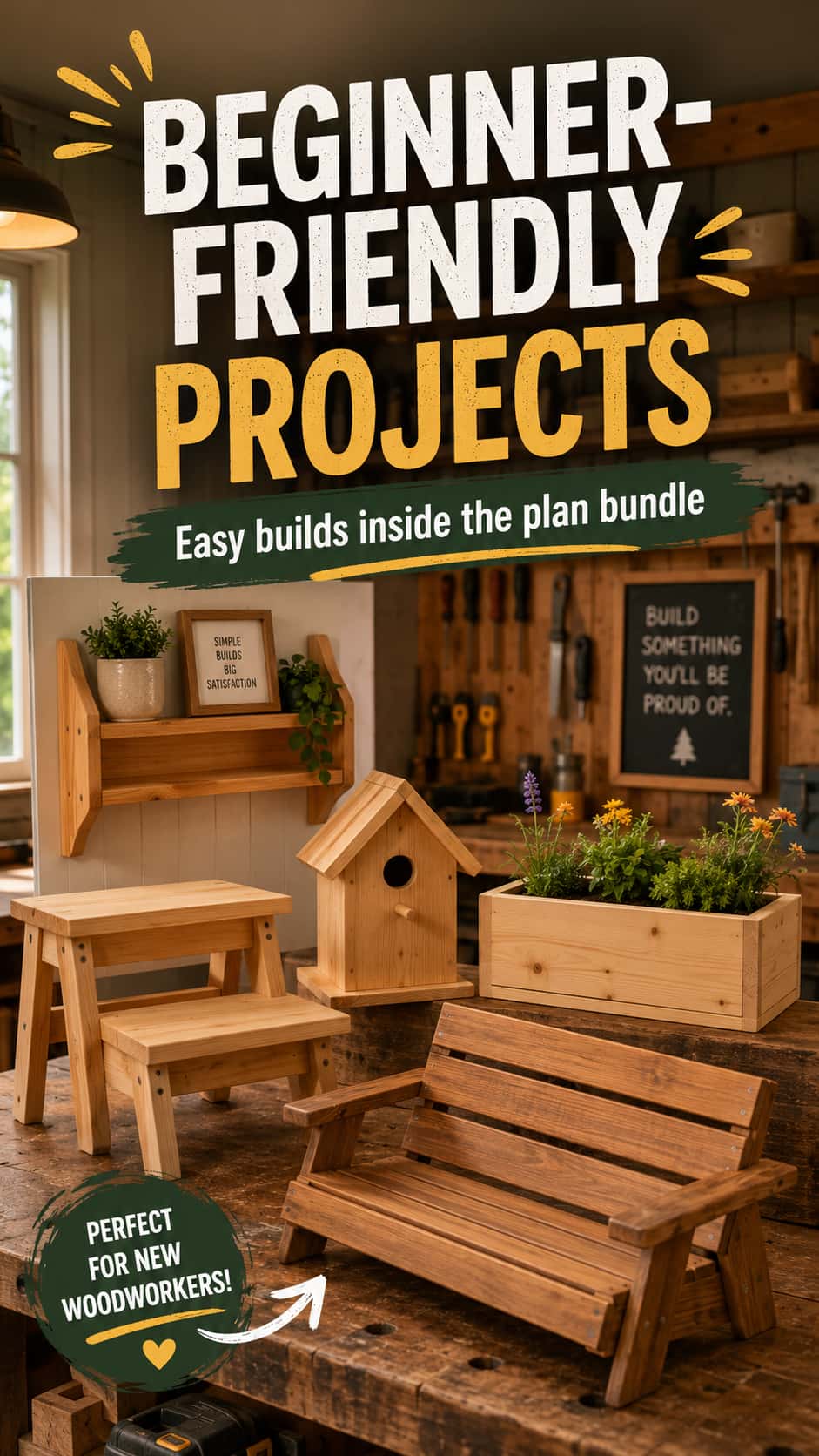
To give you a better sense of what’s actually inside the library, here are the kinds of beginner-difficulty projects that tend to be a good starting point:
Simple outdoor planter box — Minimal cuts, forgiving tolerances, and a project you’ll actually use the same weekend you finish it. Great for testing basic measuring and assembly skills.
Small wall shelf — Teaches you basic leveling and mounting, without requiring more than a handful of boards.
Wooden step stool — A slightly more involved beginner build that introduces simple joinery without demanding advanced tools.
Birdhouse — Small in scale, low material cost, and forgiving if your first few cuts aren’t perfectly straight.
Basic outdoor bench — A step up once you’ve built a little confidence, and a genuinely useful piece once it’s done.
Starting with a few of these before jumping into bigger furniture builds is a good way to get comfortable with the plan format itself — how the diagrams are laid out, how the cutting lists translate to your actual lumber — before you commit a full weekend to something larger.
Is It Worth It for Beginners?
Here’s my honest take: yes, with the right expectations.
If you’re a beginner who wants a big, organized library of projects to pull from — rather than hunting down free plans one at a time — this is a solid value. The beginner-difficulty plans are genuinely approachable, the materials lists save you real time, and the price makes sense if you’re planning to build more than one or two projects over time.
It’s ideal for:
- Weekend DIYers who want structure without a steep learning curve
- Budget-conscious beginners who don’t want to pay per-plan
- Anyone who’s tired of free plans with missing steps or measurements
It’s probably not the right fit for:
- Advanced woodworkers who already have a go-to source for plans
- Anyone expecting every single plan to be a polished, professional diagram
- Someone who hasn’t learned basic tool safety yet (start there first, then come back)
If you fall into that first group — which, if you’re reading a beginner woodworking blog, you probably do — it’s a genuinely useful resource to have in your back pocket.
If you want a large woodworking plan library to browse for beginner projects, you can check out Ted’s Woodworking Plans here.
How to Get Started With Your First Project
Before choosing your first plan, make sure you have a few basic woodworking tools for beginners ready to go. You do not need a fully loaded workshop, but a saw, drill, measuring tape, square, clamps, sander, and safety gear will make almost every beginner project smoother.
If you decide to dive in, don’t start by browsing all 16,000 plans at once (trust me, that’s a fast way to close the tab and never come back).
Instead:
- Pick one category you’re actually excited about — outdoor furniture, a small shelf, a simple toy — anything that gets you motivated to finish it.
- Filter by beginner difficulty first, even if a fancier project is tempting. Building confidence with an easy win matters more than jumping straight to something impressive.
- Gather your materials list before you start cutting. Nothing kills project momentum faster than a mid-build trip to the hardware store.
- Start with basic tools you already own. Most beginner plans are designed around a simple tool setup — a saw, a drill, some clamps — not a fully outfitted workshop.
If you want a low-pressure first project to test the waters, something like a small outdoor planter or a basic shelf is a great place to start before working your way up to bigger furniture builds.
Where to Get It
If this sounds like the kind of resource that would actually get used in your workshop (rather than bookmarked and forgotten), you can check out Ted’s Woodworking Plans here. It’s the same library I referenced throughout this review, and it’s a solid starting point if you want a big collection of beginner-friendly builds without hunting down free plans one at a time.
FAQ
Is Ted’s Woodworking Plans good for total beginners? Yes. The library includes difficulty ratings, and there are plenty of straightforward, beginner-friendly projects that don’t require advanced tools or joinery experience.
How much does it cost? Pricing is a one-time fee rather than a subscription, though the exact amount can vary depending on current promotions. It’s generally positioned to be cheaper than buying individual plan sets elsewhere once you factor in more than a couple of projects.
Do I need expensive tools to use these plans? No. Most beginner-difficulty plans are built around basic tools — a saw, a drill, clamps, and measuring tools. More advanced plans may call for additional equipment, but you’re not required to start there.
Can I access the plans on mobile or tablet? Since the plans are delivered as downloadable PDFs, you can generally view them on any device that opens PDF files, including phones and tablets, which makes it easy to pull up a plan right in the workshop.
Is there a refund policy? Refund policies can vary by offer, so it’s worth checking the current terms at the time of purchase rather than assuming a blanket policy.
Final Thoughts
At the end of the day, Ted’s Woodworking Plans isn’t a magic shortcut to becoming a master carpenter overnight. What it is, though, is a genuinely useful shortcut past the most annoying part of getting started in woodworking — the endless hunting for plans that actually make sense.
See the current Ted’s Woodworking Plans offer here.
If you’re a beginner who wants structure, a big project library, and materials lists that save you a few headaches, it’s worth the look. Just go in with realistic expectations about plan quality variance, start with the beginner-rated projects, and you’ll get real value out of it.