
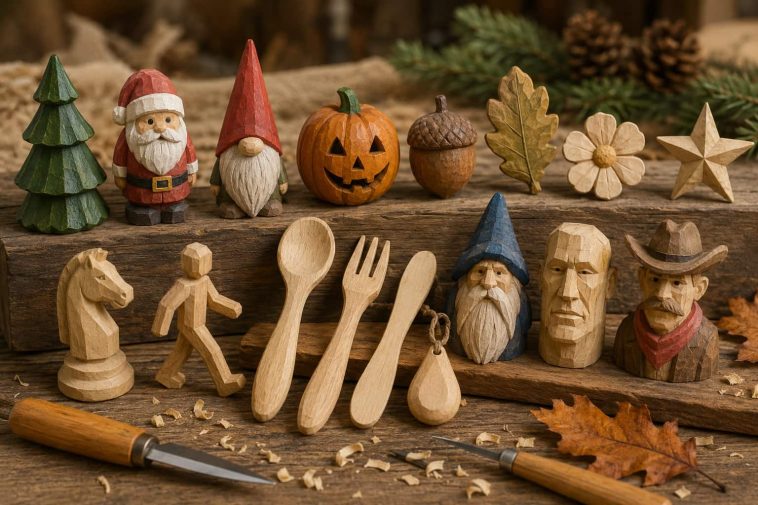
So you’ve picked up a whittling knife, grabbed a stick of basswood, and now you’re staring at it like it owes you something. Been there. The hardest part of starting out isn’t the carving — it’s figuring out what to carve and how to get started with whittling patterns without wasting half your wood on something that ends up looking like a sad potato.
That’s exactly why printable whittling patterns are a game-changer. They give you a clear shape to follow, so you can focus on building your knife skills instead of trying to eyeball proportions from scratch. And the good news? You don’t need to spend a dime to get started. There are genuinely free, printable templates out there — no email signup required (well, mostly).
I’ve rounded up 25 free whittling patterns that are actually beginner-friendly, organized by category, and linked to real sources. Let’s get into it.
Why You Should Start With Patterns (And Not Feel Guilty About It)
Some folks think using a template is “cheating.” Those folks are wrong 🙂
Patterns teach you to read the wood. When you trace a shape and start removing material around it, you learn how grain direction affects your cuts, how deep to go, and when to stop. That’s foundational knowledge you can’t get from just reading about it.
Here’s what patterns do for you as a beginner:
- Build muscle memory for consistent knife pressure and angle
- Reduce wasted wood by giving you a clear target shape
- Boost confidence — finishing a recognizable piece early keeps you motivated
- Speed up the learning curve on proportions and symmetry
Think of patterns as training wheels. You graduate off them eventually — but they get you moving fast.
What You Need Before You Start
Before printing anything, make sure you have the basics covered. You don’t need a lot of gear to start whittling — that’s one of the reasons this hobby is so great.
Essential tools:
- A sharp whittling knife (a Mora 120 or BeaverCraft SK1 are solid beginner picks)
- A cut-resistant carving glove for your non-knife hand — don’t skip this
- Basswood or butternut — both are soft, forgiving woods perfect for beginners (not sure which wood to pick? Check out our full guide Best Wood for Beginners to Carve
- Sandpaper (150-grit and 220-grit) for finishing
- A pencil to trace your printed pattern onto the wood
How to transfer a pattern:
- Print the template and cut around the outline
- Tape it to your wood block
- Trace around it with a pencil or use carbon paper underneath for detail lines
- Remove the paper and start carving to the line
Simple as that. Now, let’s get to the patterns.
Animal Whittling Patterns (Great First Projects)
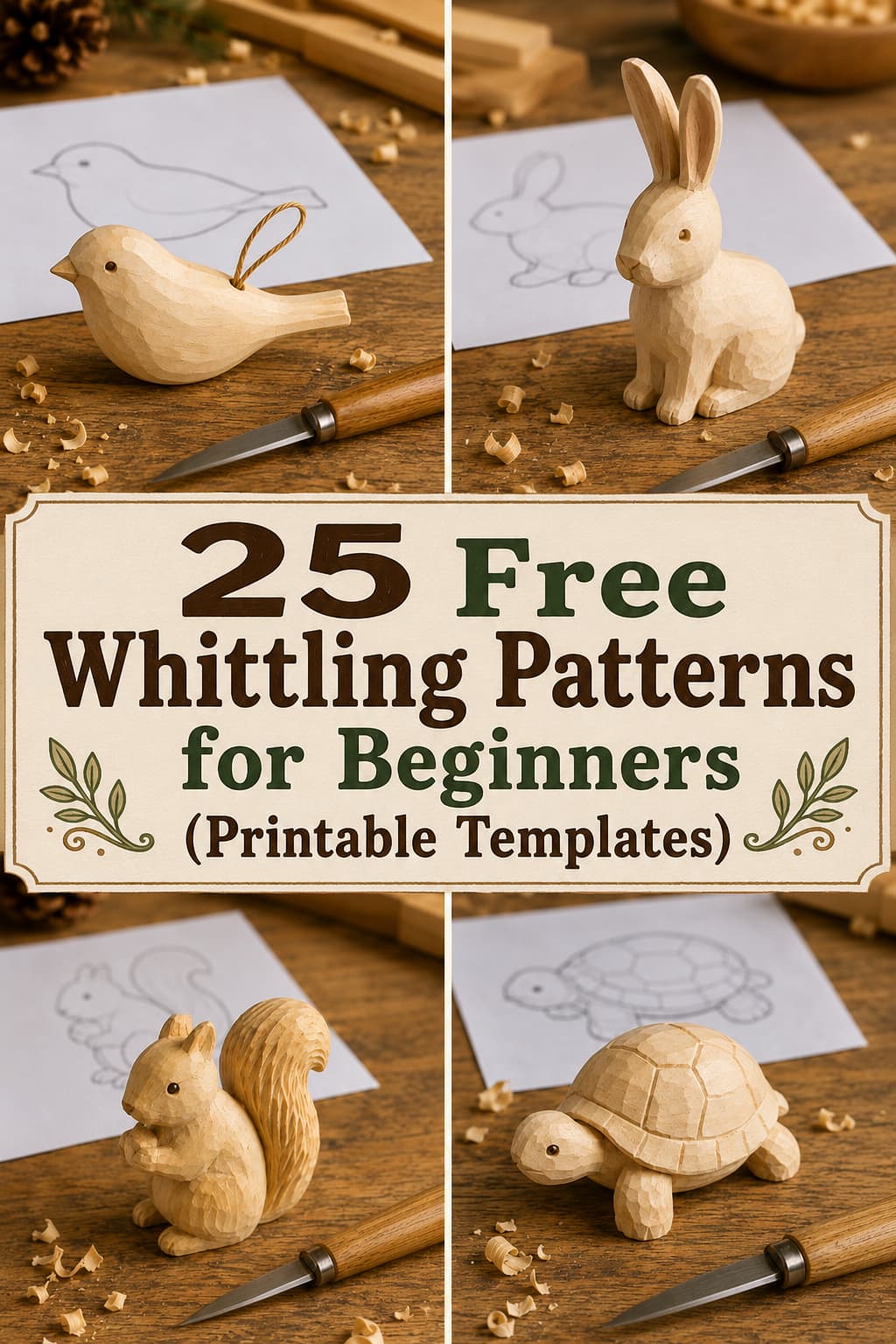
Animals are the classic beginner subject — and for good reason. They’re forgiving on proportions, look impressive when finished, and are endlessly giftable.
If you want even more ideas beyond patterns, our Easy Whittling Projects for Beginners](Easy Whittling Projects for Beginners post has a ton of inspiration to pair with these templates.
1. Simple Whittling Bird
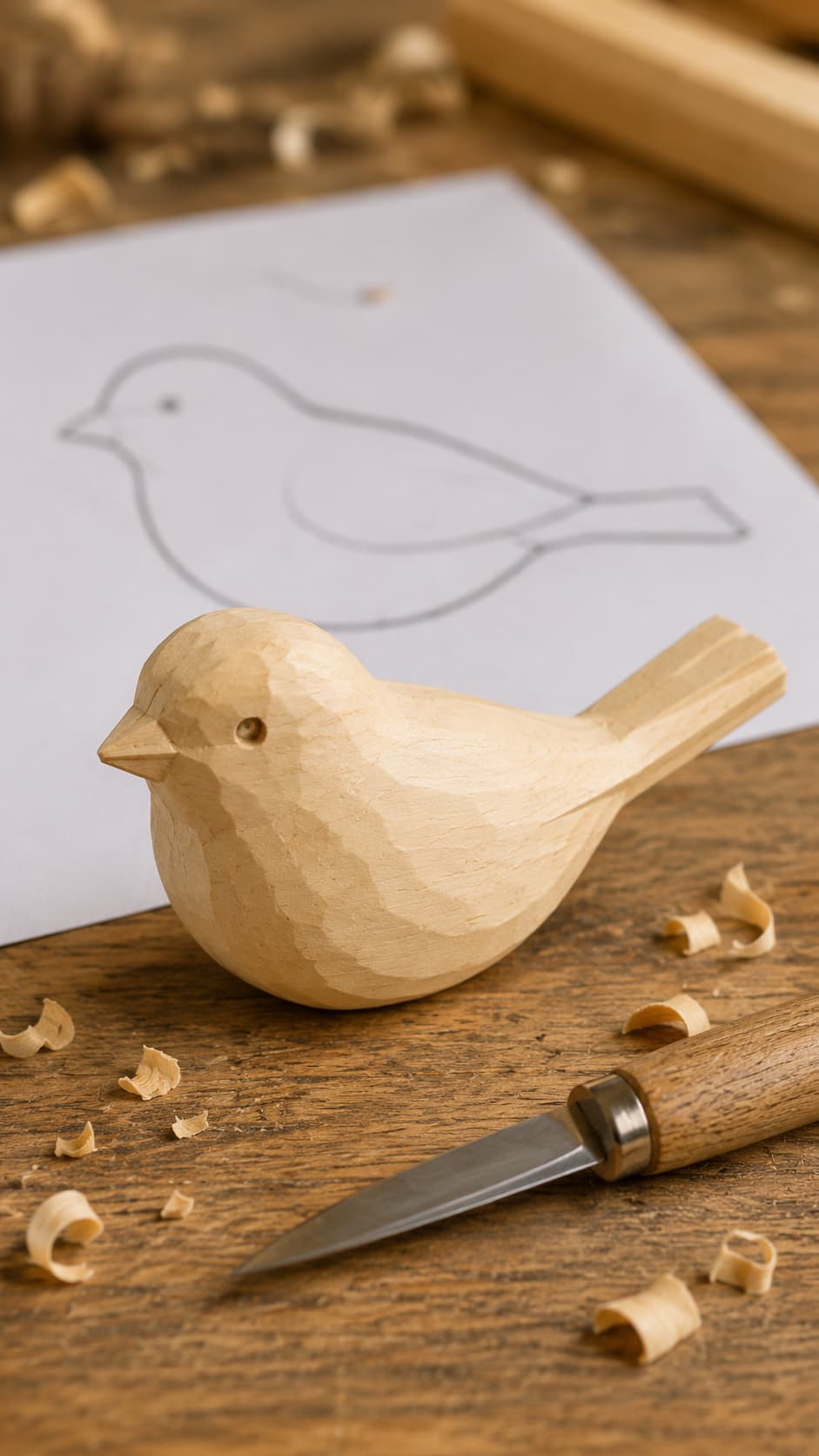
A basic bird silhouette is probably the most recommended first project in the entire whittling world — and for good reason. You practice smooth curves, tapered shapes, and fine detail on the beak and tail without anything too complex.
Where to get it: Carving is Fun has a free bird template with a companion video tutorial. No signup needed.
2. Sitting Fox
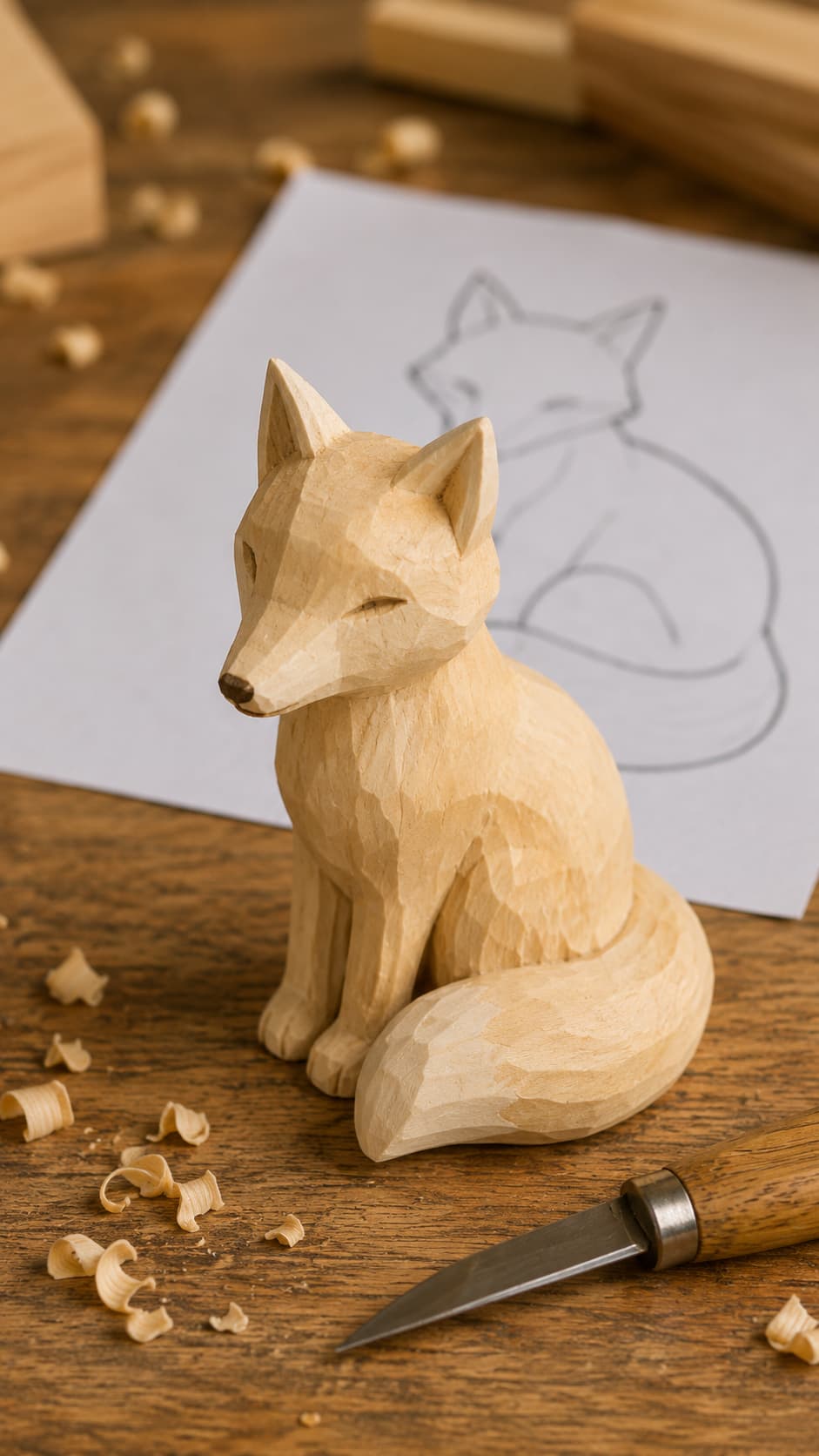
A fox figure introduces you to carving a seated pose — you’ll work on separating the tail from the body and shaping a pointed snout. It’s a step up from a basic bird but still very manageable.
Where to get it: Whittled Lovelies offers beautifully drawn A4 PDF templates including animals. Each one links to a full project tutorial.
3. Rabbit
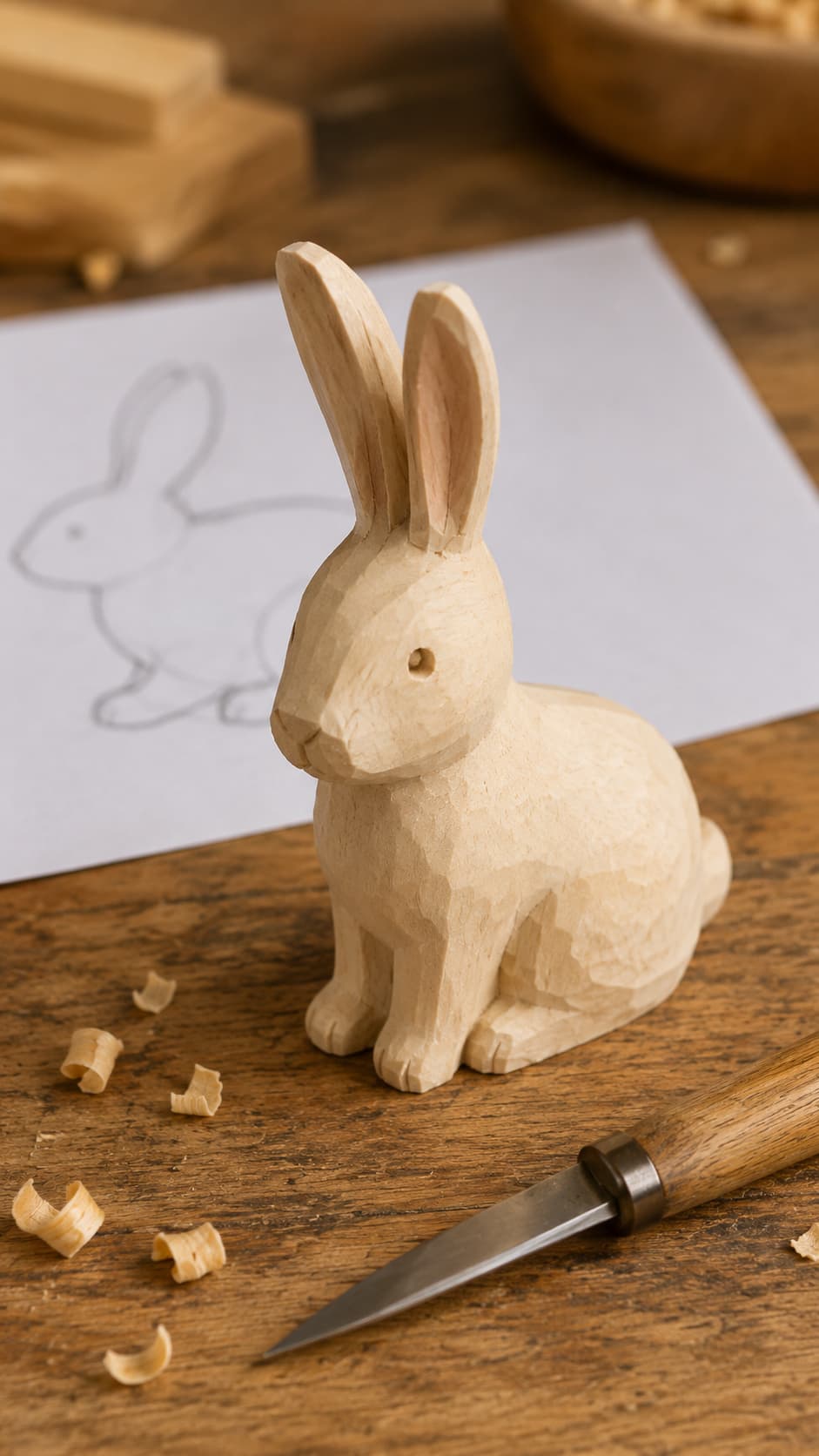
Carving a rabbit is all about smooth curves and getting that rounded body right. The ears are a fun challenge — they’re thin, which means you’ll learn to work carefully near fragile sections of wood.
Where to get it: BeaverCraft Tools has rabbit patterns in their free collection (email signup gets you 150+ patterns — worth it).
4. Squirrel
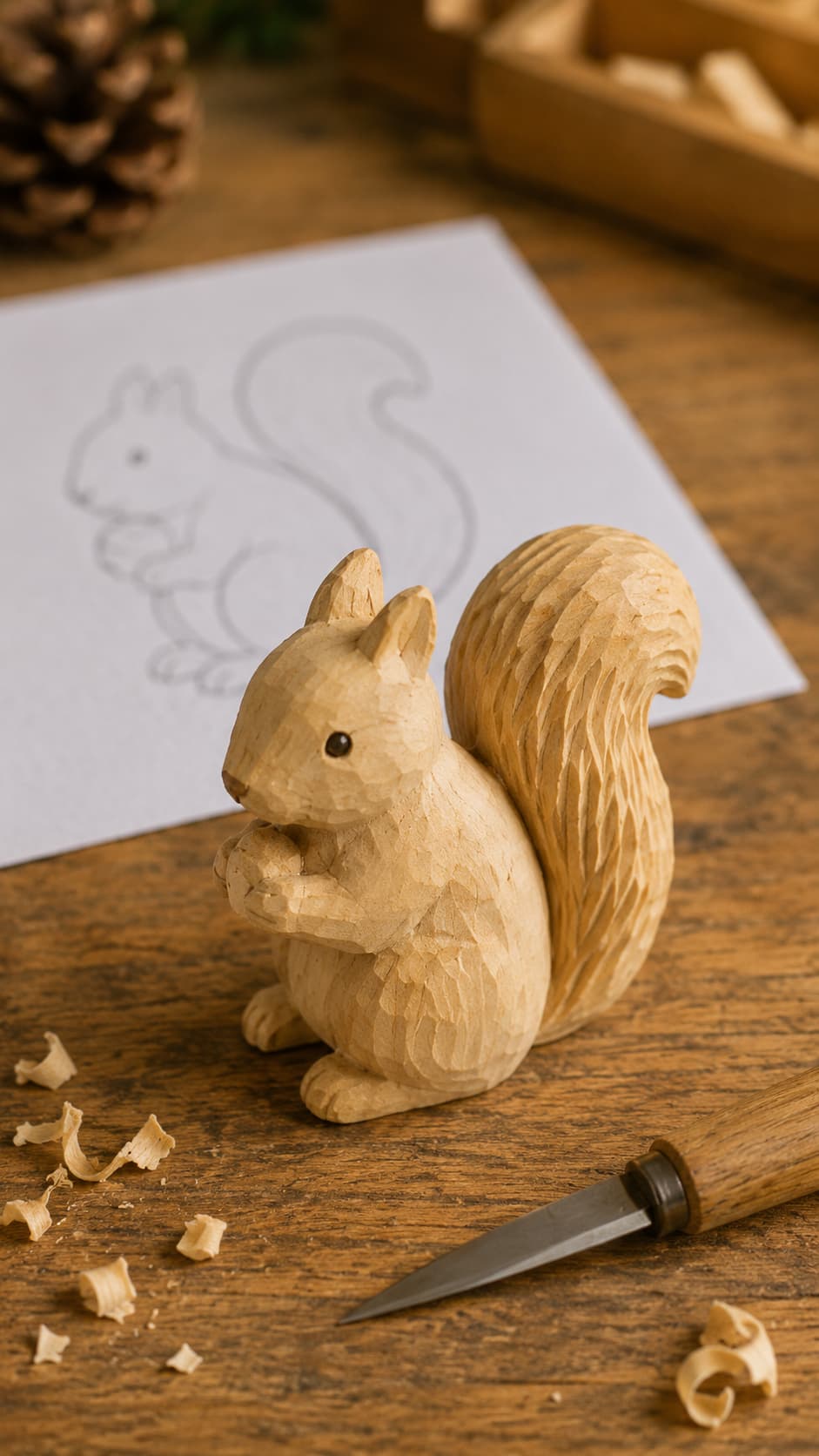
A squirrel teaches you the big bushy tail, which is actually more fun than it sounds. You’ll practice low-relief carving to suggest fur texture without needing specialty tools.
Where to get it: Home Wood Spirit YouTube channel — print the A4 squirrel pattern and follow along with the video.
5. Turtle
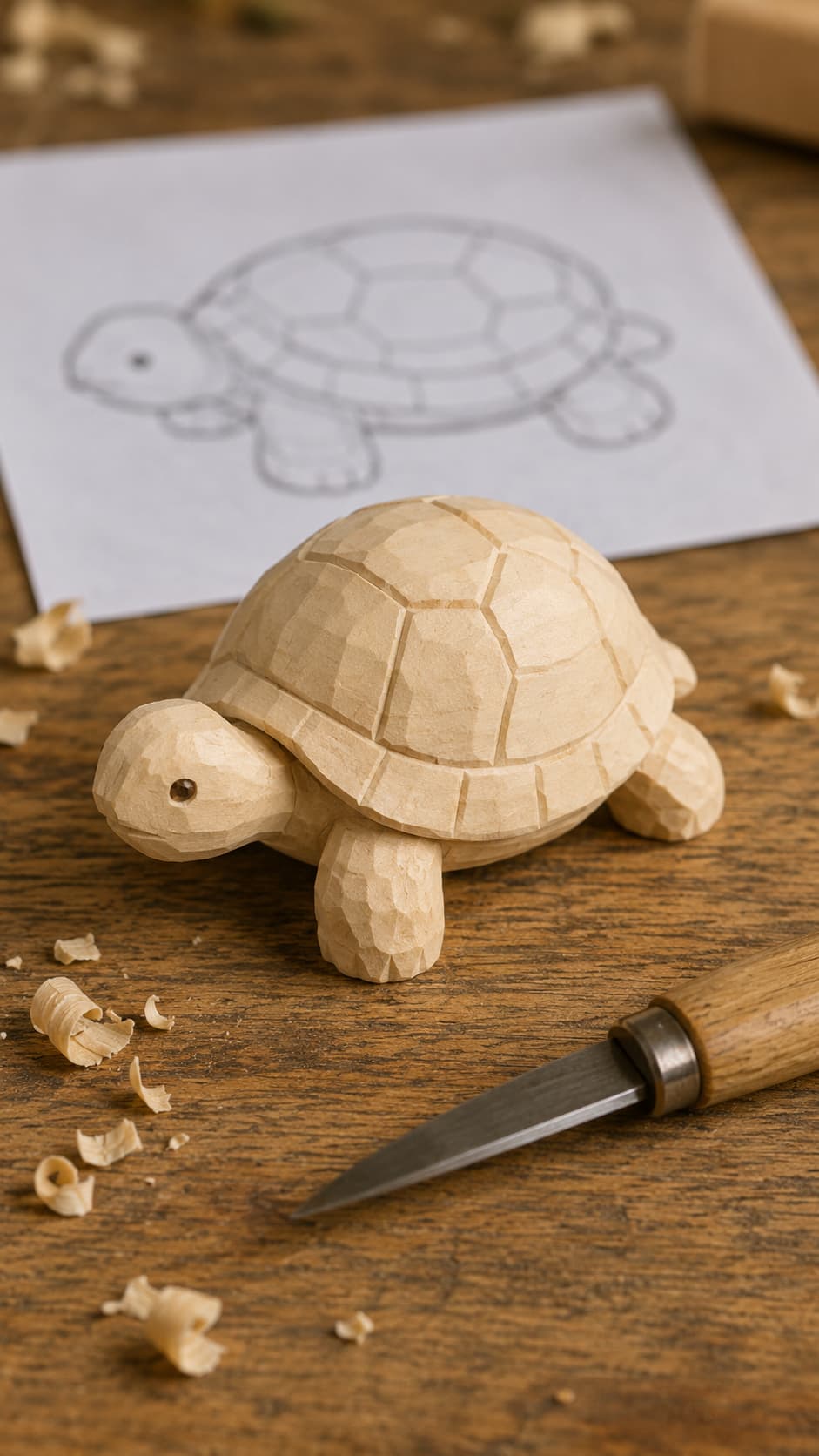
Turtles are underrated as a beginner project. The shell gives you a chance to practice texture carving (those geometric segments), while the body stays simple and blocky. Win-win.
Where to get it: Forged Steel Tools has a beginner turtle template with step-by-step guidance.
6. Labrador Dog “Max”
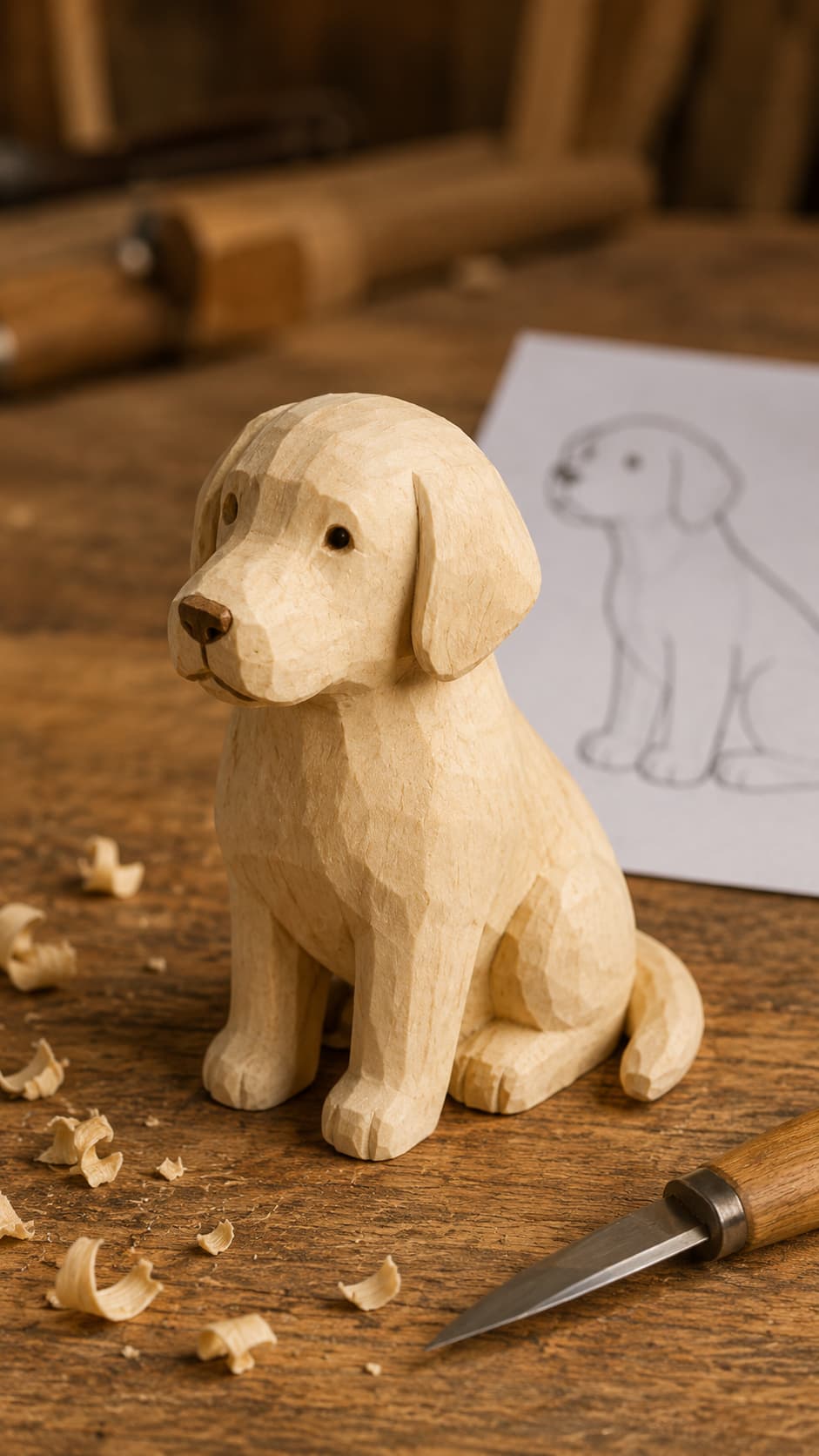
This is one of those patterns that looks way harder than it is. The blocky, sitting dog shape is very forgiving, and the finished piece makes a great gift — people love a carved dog that looks like their pet. FYI, this one has a full video tutorial to go with it.
Where to get it: Home Wood Spirit’s free pattern collection (via the Scribd link above).
7. Small Bird Ornament
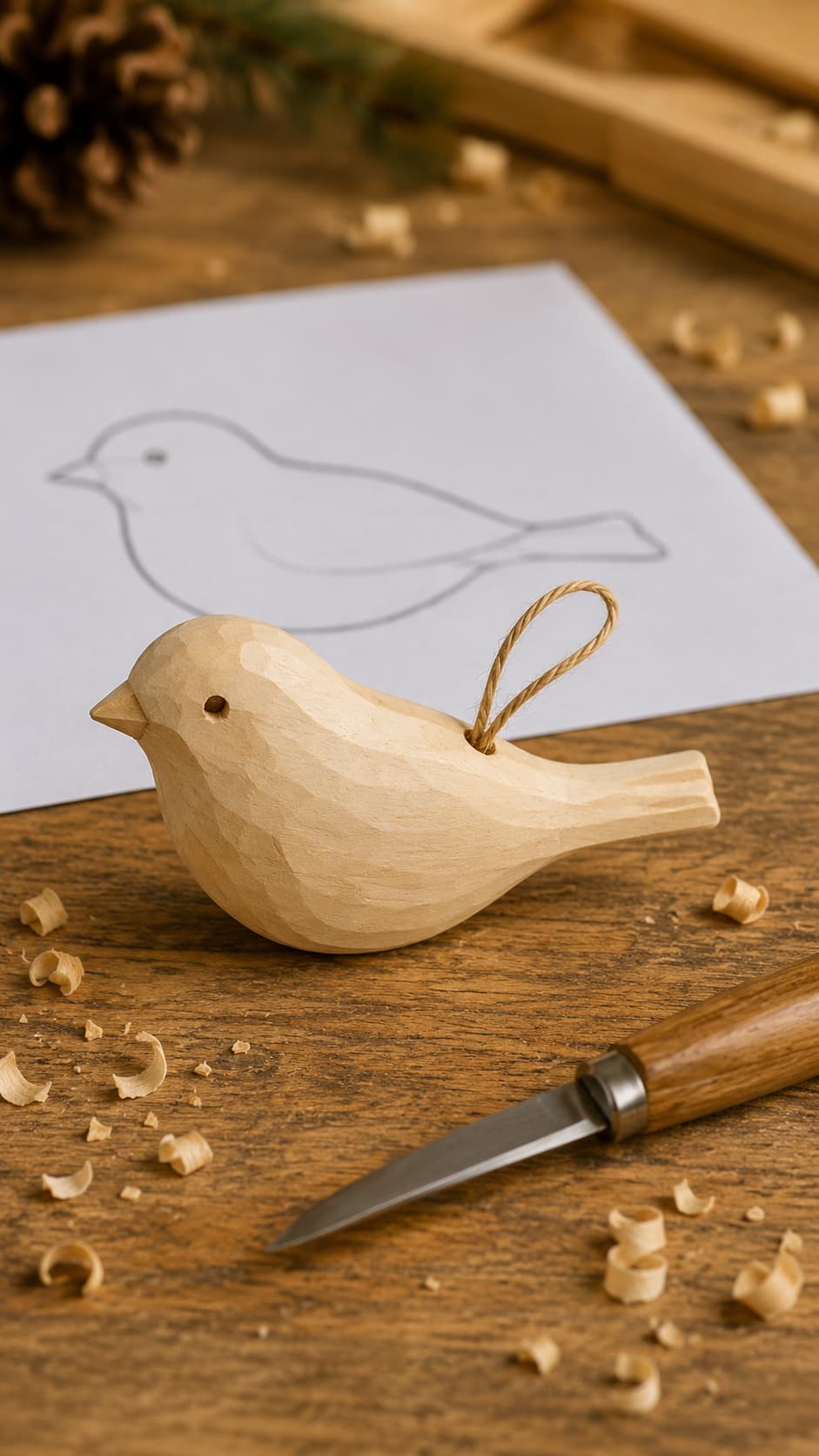
Similar to the basic bird but sized to hang on a Christmas tree or windowsill. These are also great sellers if you ever want to move into selling on Etsy — people go crazy for handmade ornaments.
Where to get it: Carving is Fun templates page — multiple bird sizes available.
8. Fish
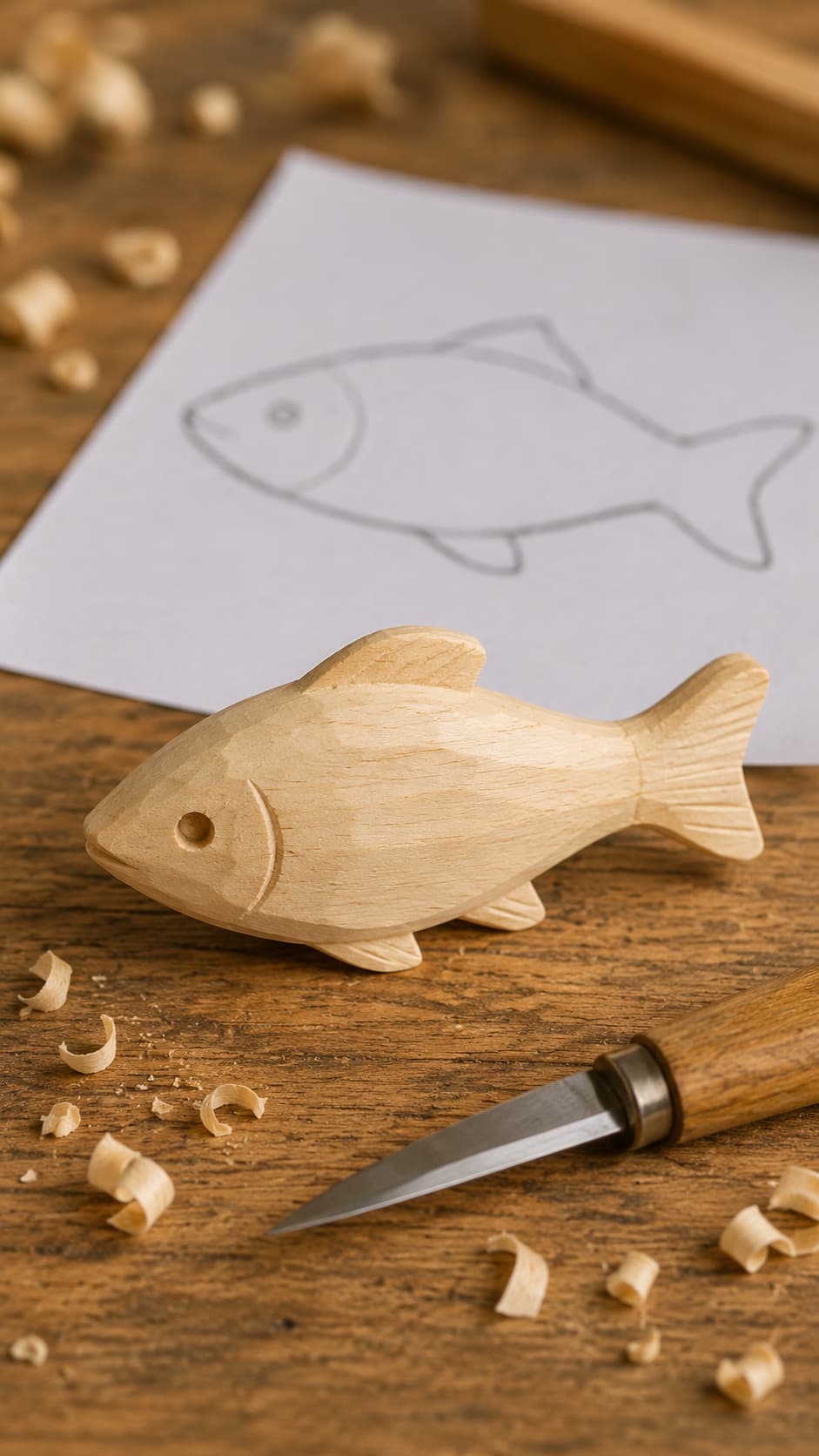
Carving a fish is an excellent exercise in flowing, symmetrical lines. The tapered body and fins teach you directional knife strokes that you’ll use on almost every project after this.
Where to get it: Forged Steel Tools beginner patterns.
Face & Figure Whittling Patterns
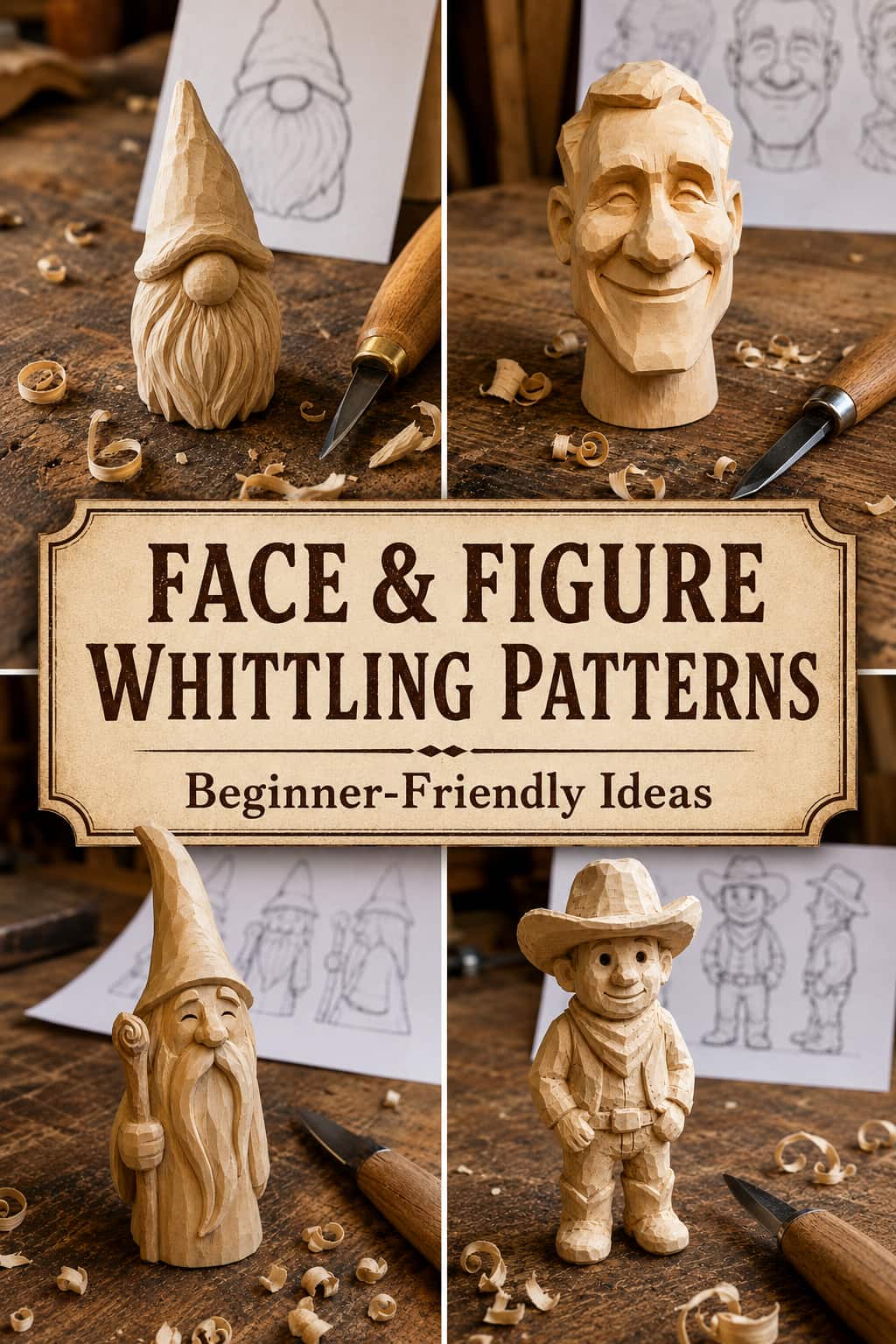
Carving faces feels intimidating — but starting with caricature-style patterns makes it totally approachable. Exaggerated features are actually easier to carve than realistic ones.
Once you’ve practiced with a pattern or two, our guide on How to Carve Expressive Faces in Wood will take your face carving to the next level.
9. Gnome Face
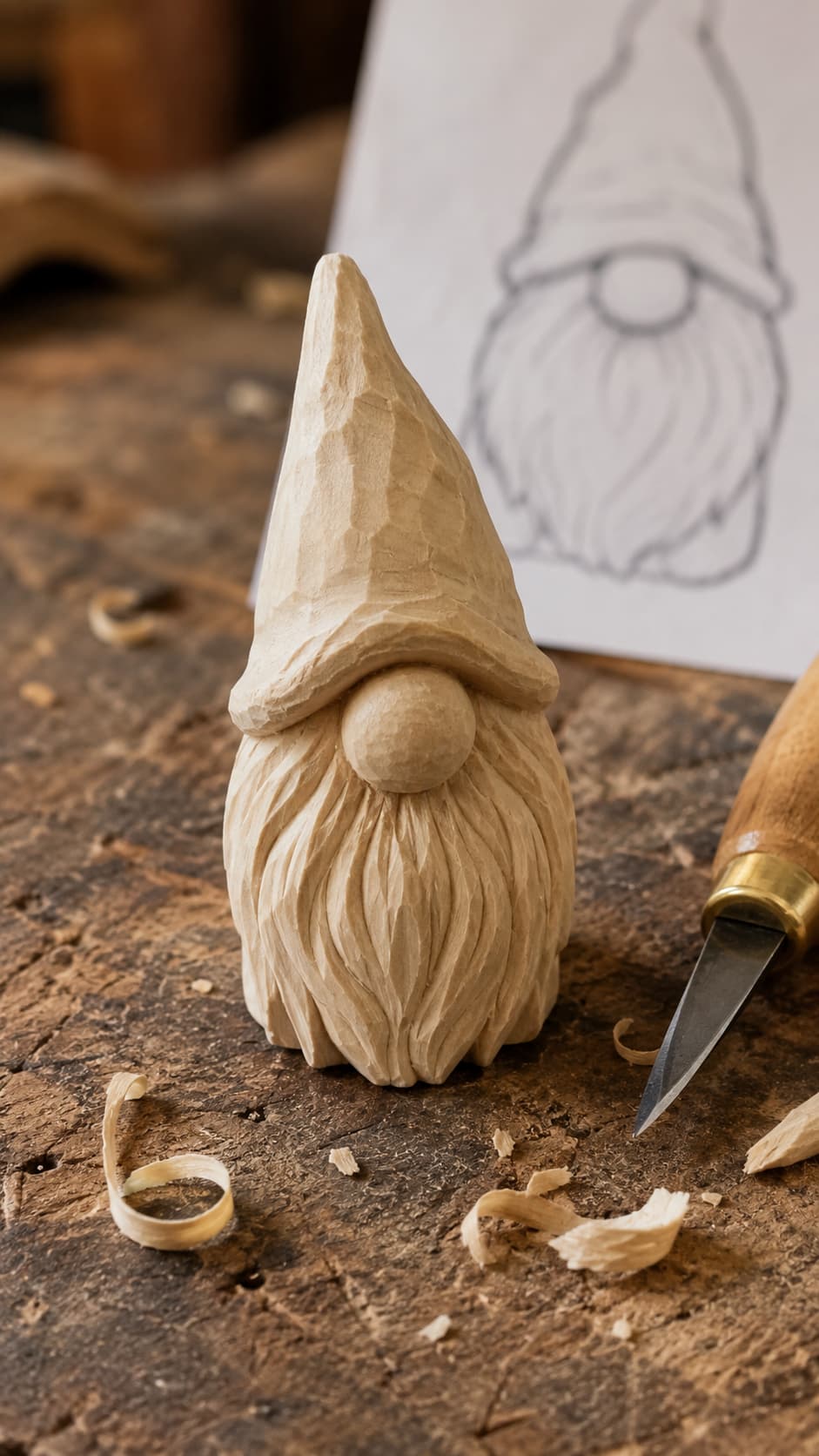
Gnomes are everywhere on Pinterest right now, and carving one is surprisingly fun. The big nose and long beard are forgiving — imperfections just add character to the gnome’s personality 🙂
Where to get it: Woodcarving Illustrated has a free gnome pattern PDF — direct download, no signup.
10. Simple Human Head (Caricature Style)
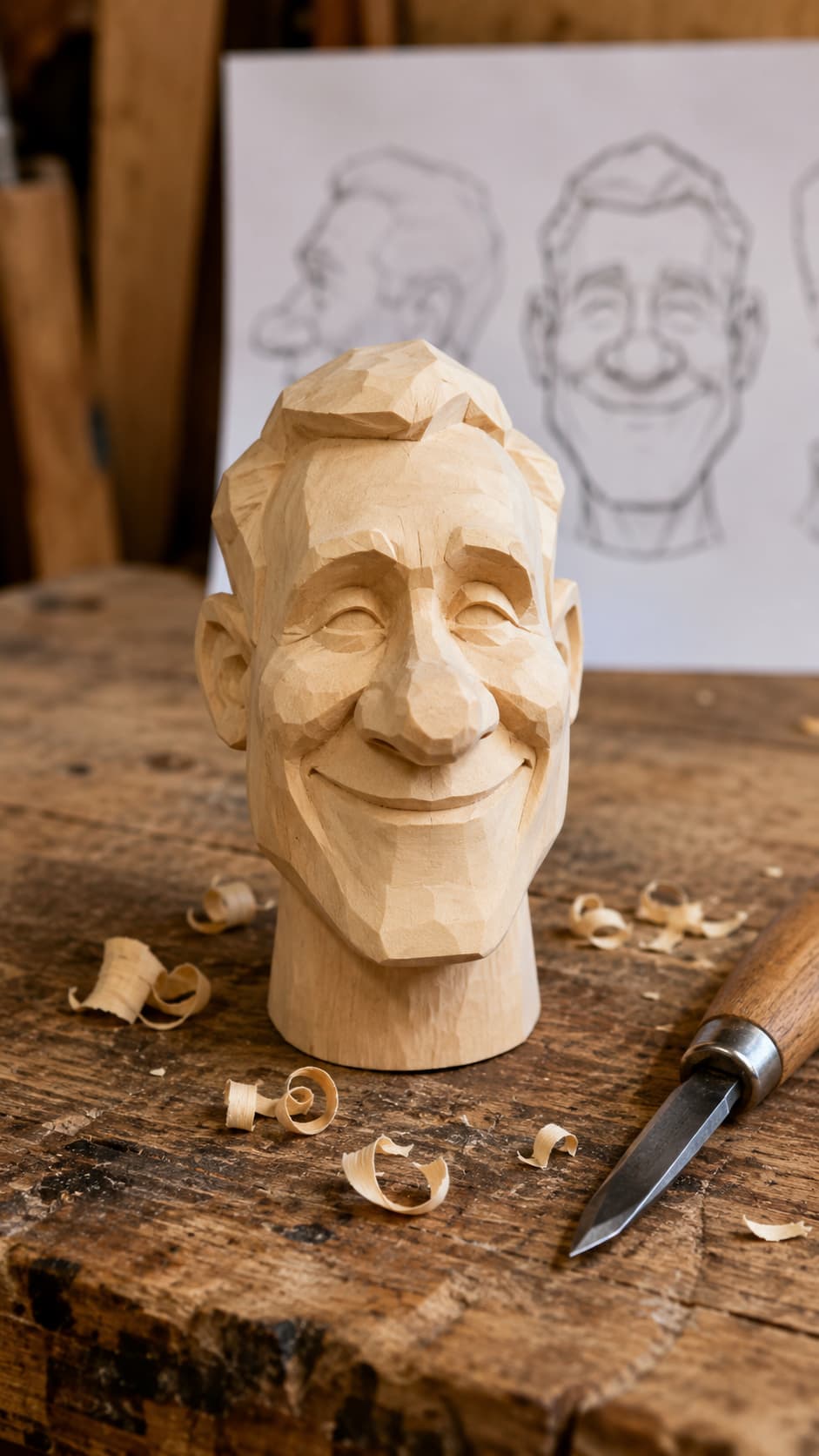
This is a classic carving subject and a real skill-builder. You’re learning planes of the face — forehead, cheekbones, chin — which is the foundation of all face carving. Go slow, take thin slices.
Where to get it: Home Wood Spirit’s pattern pack includes a human head template. Great for total beginners because the video shows every cut.
11. Wizard “Elric”
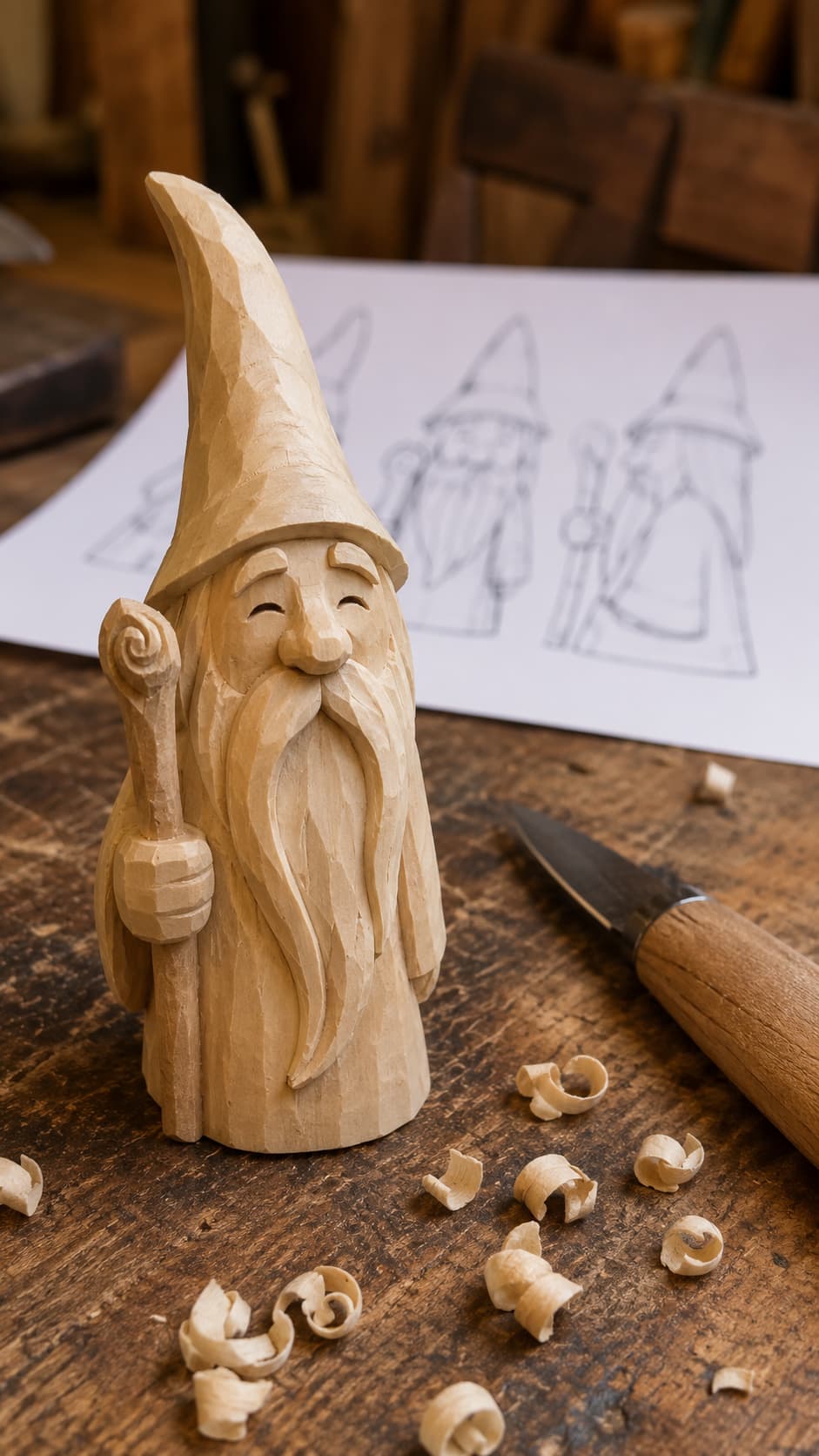
A wizard character with a pointy hat and long beard — what’s not to love? The hat brim is a great exercise in undercutting, and the beard texture is fun to add with a V-tool or just your knife tip.
Where to get it: Home Wood Spirit’s free patterns (A4 print, A4 redraw method).
12. Santa Claus
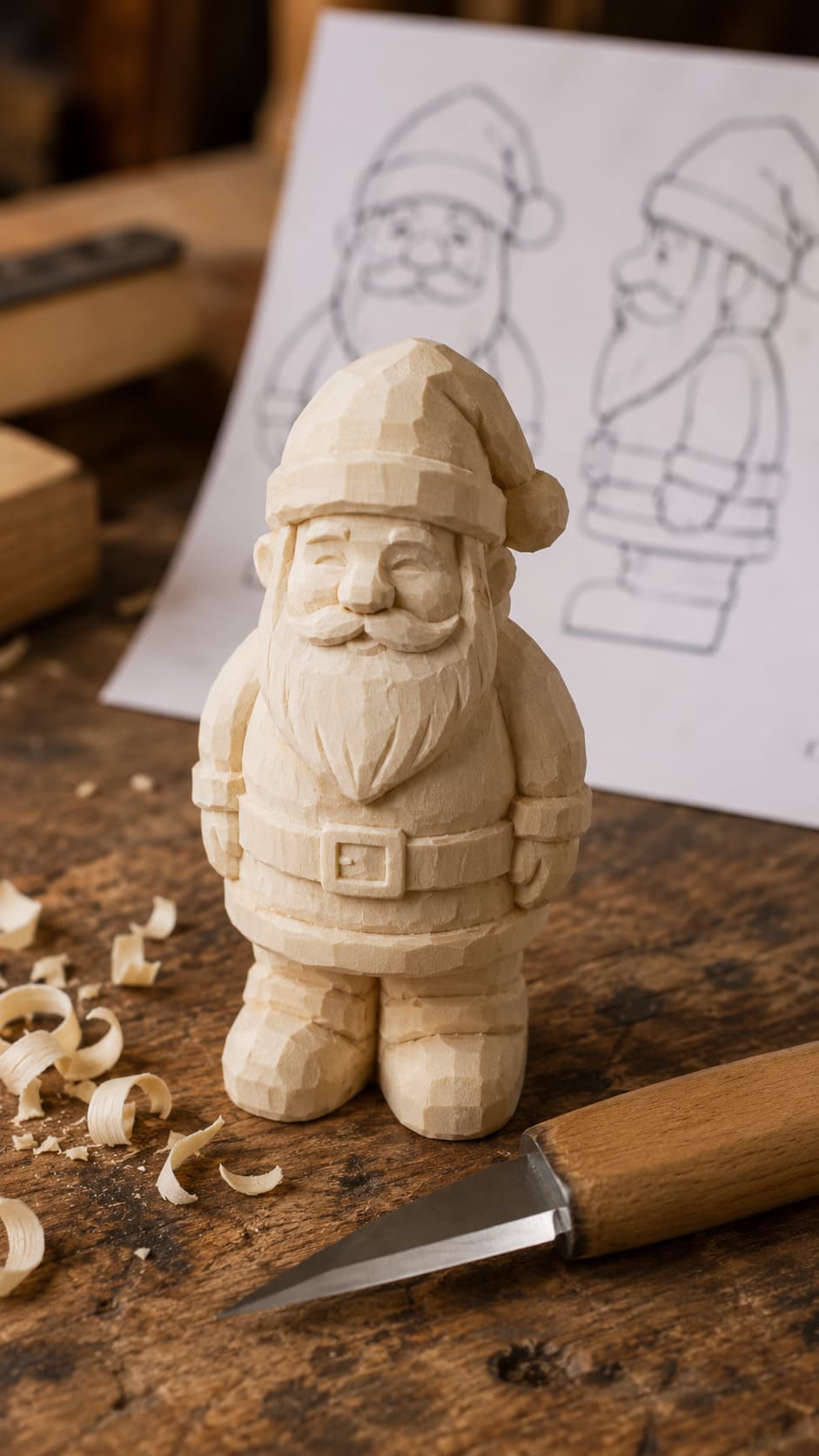
If you’re carving in the fall or winter, a Santa is the project everyone will ask you to make. The round belly, belt, and boots give you lots of distinct sections to work through systematically.
Where to get it: Scott Carvings has a free PDF with 15 patterns including a Santa — full instructions included.
13. Cowboy Caricature
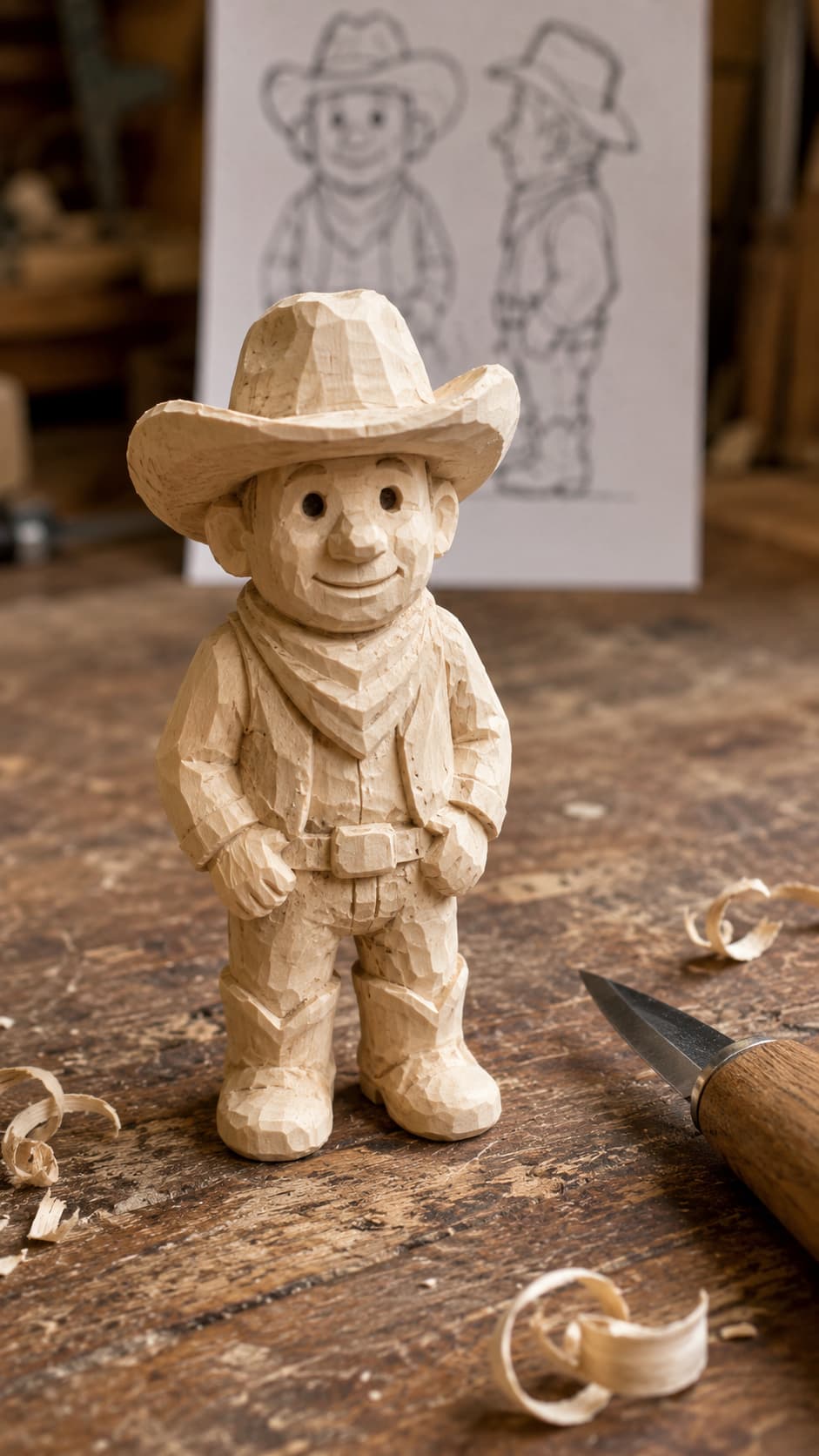
A cowboy with a hat brim and boots is a fantastic intermediate-beginner project. The hat especially teaches you to carve crisp, flat planes — a technique you’ll use constantly.
Where to get it: Central Texas Woodcarvers Club — free patterns page, no signup.
Functional Project Patterns
Not everything has to be decorative! These patterns produce items you can actually use — and they make fantastic gifts.
14. Wooden Spoon (Simple)
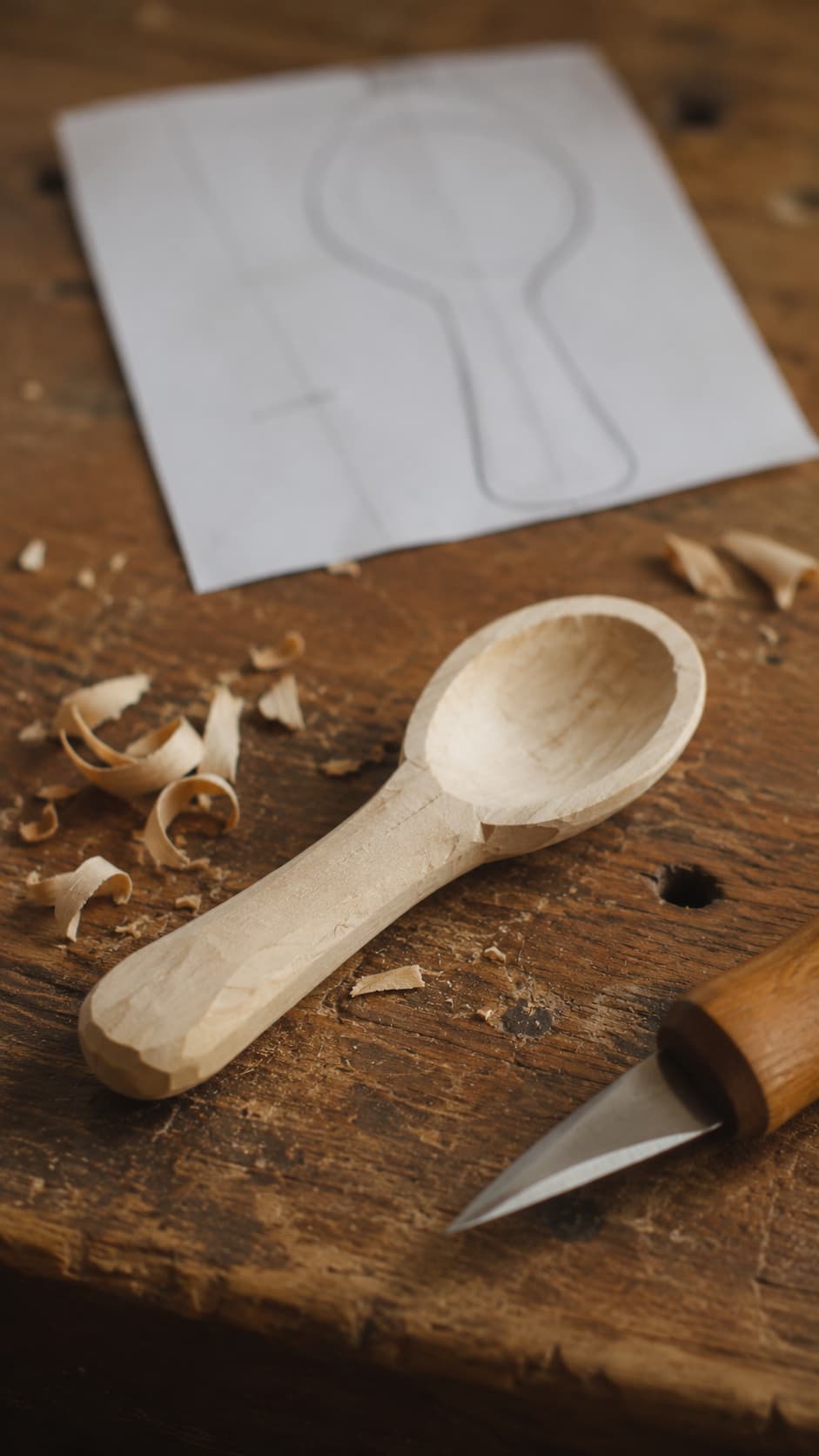
Carving a wooden spoon is a rite of passage. IMO, it’s also the most satisfying beginner project because you end up with something genuinely useful. Start with a short-handled dessert spoon — less leverage = more control.
Where to get it: BeaverCraft Tools has multiple spoon patterns from simple to complex. The beginner spoon template is clean and easy to follow.
15. Wooden Fork
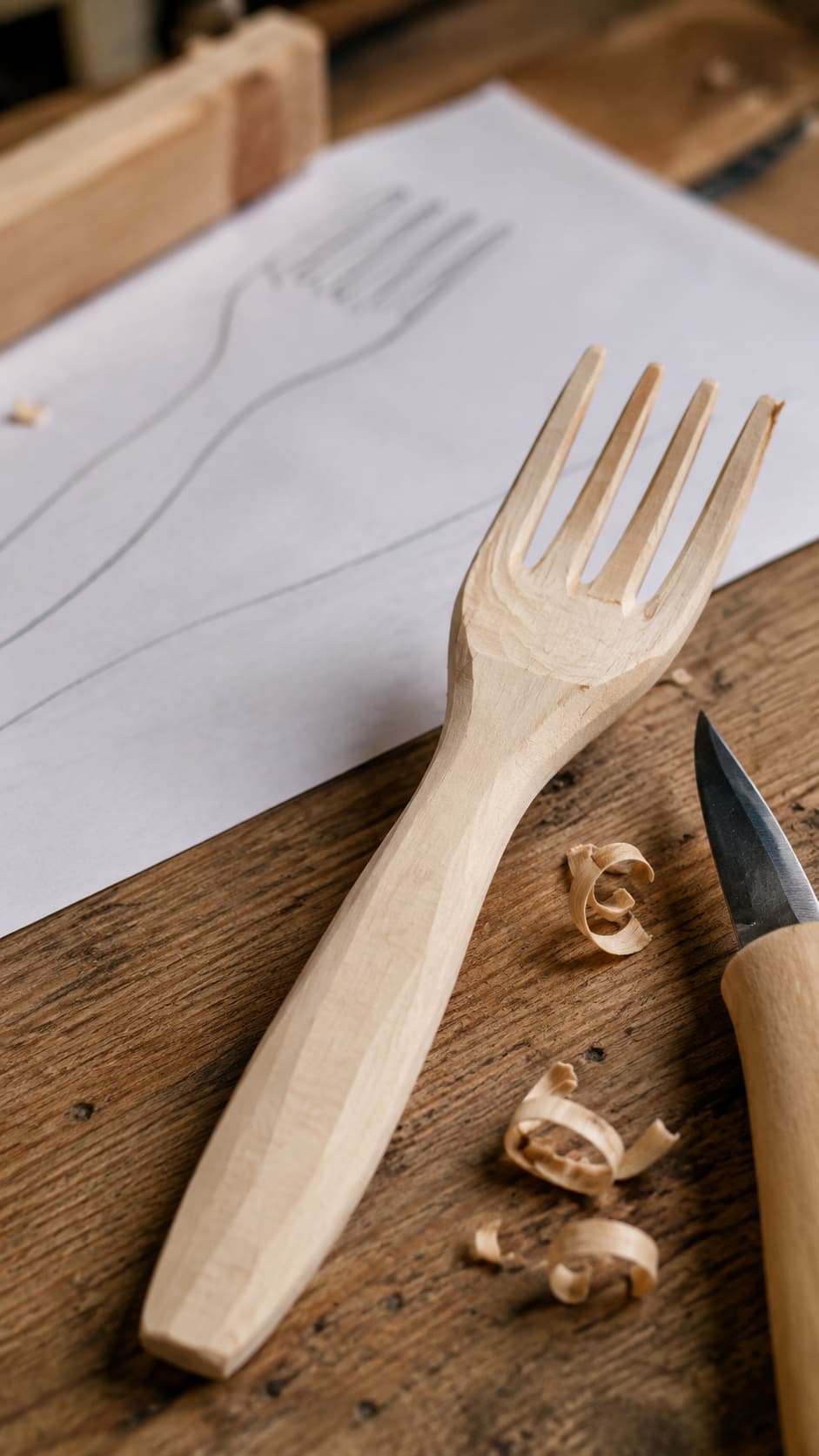
Same skill set as the spoon, but the tines add a fun challenge. Use a narrow knife to separate them and a folding saw to remove the bulk between tines before carving.
Where to get it: Home Wood Spirit’s pattern collection includes a wooden fork template.
16. Small Butter Spreader
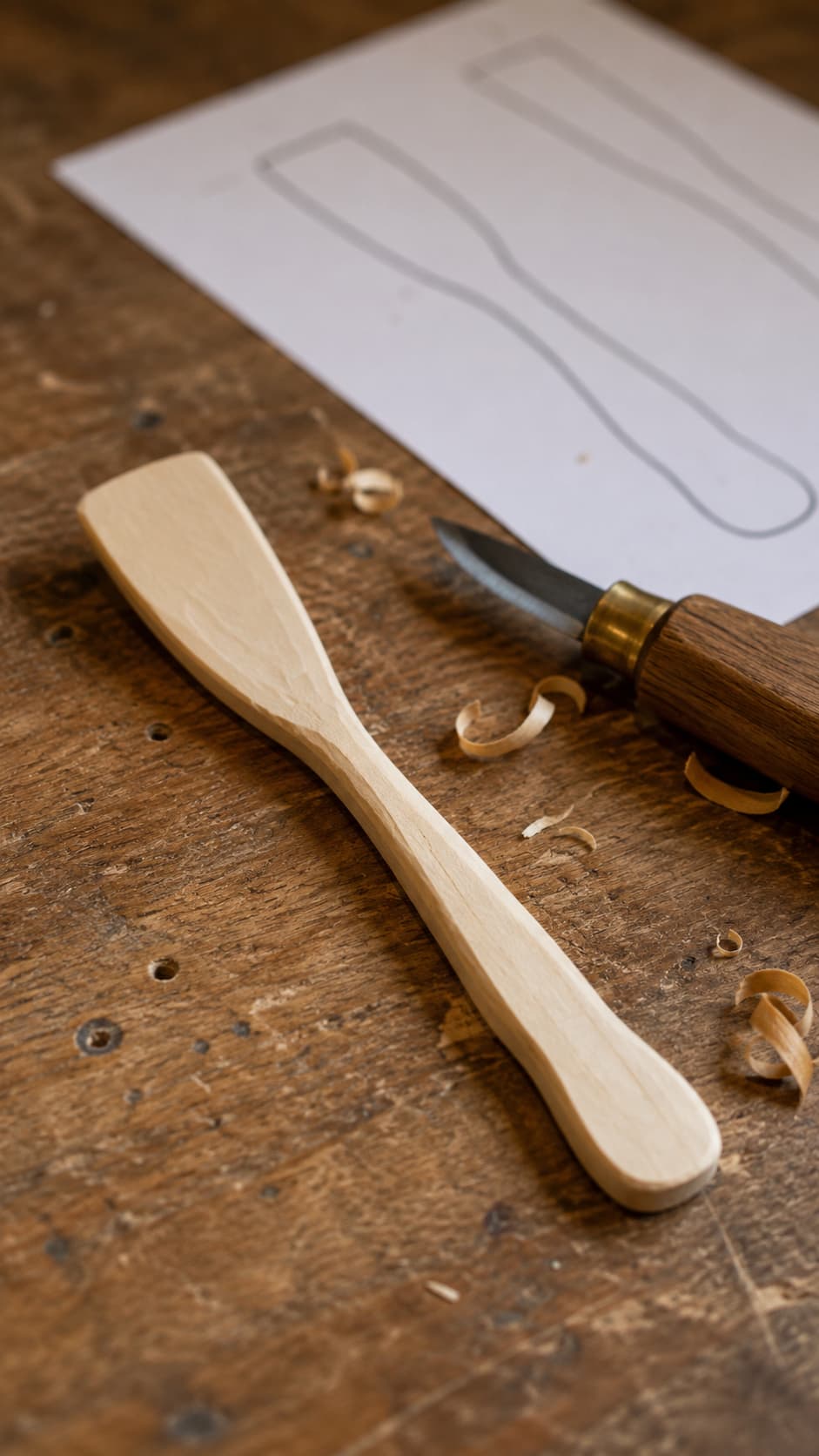
Tiny, quick, and useful. A butter spreader is a great project to make in batches — carve 6 in an afternoon and you’ve got holiday gifts sorted. The thin paddle shape is excellent for practicing controlled, thin cuts.
Where to get it: BeaverCraft’s spoon/utensil patterns work perfectly scaled down.
17. Wooden Pendant / Teardrop Shape
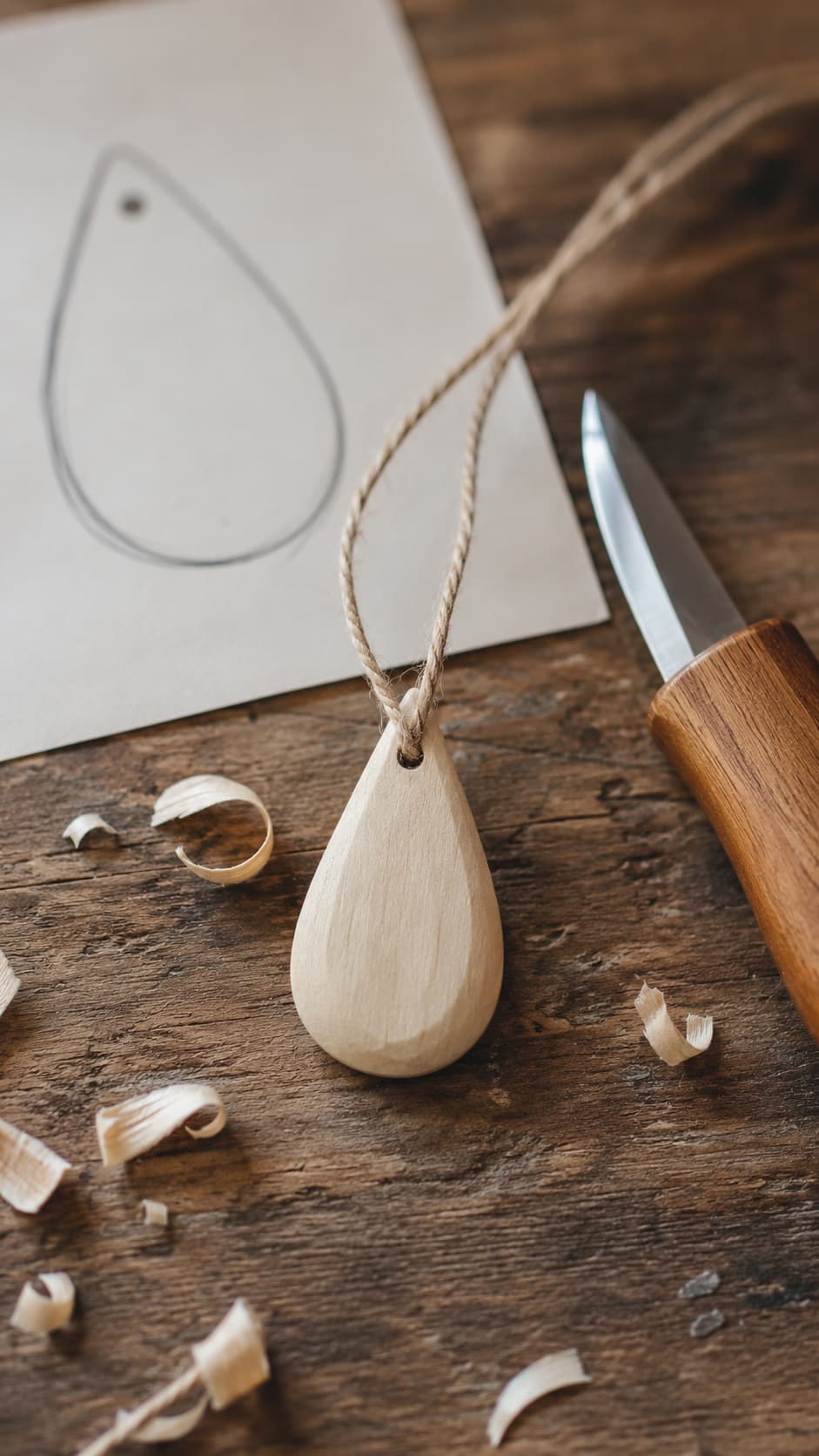
A simple teardrop or leaf-shaped pendant teaches you to work in miniature — precision over power. Sand it smooth, drill a small hole, add twine and you’ve got a wearable piece. These also sell well on Etsy, just saying.
Where to get it: Whittled Lovelies has pendant templates with PDF downloads.
Seasonal & Holiday Whittling Patterns
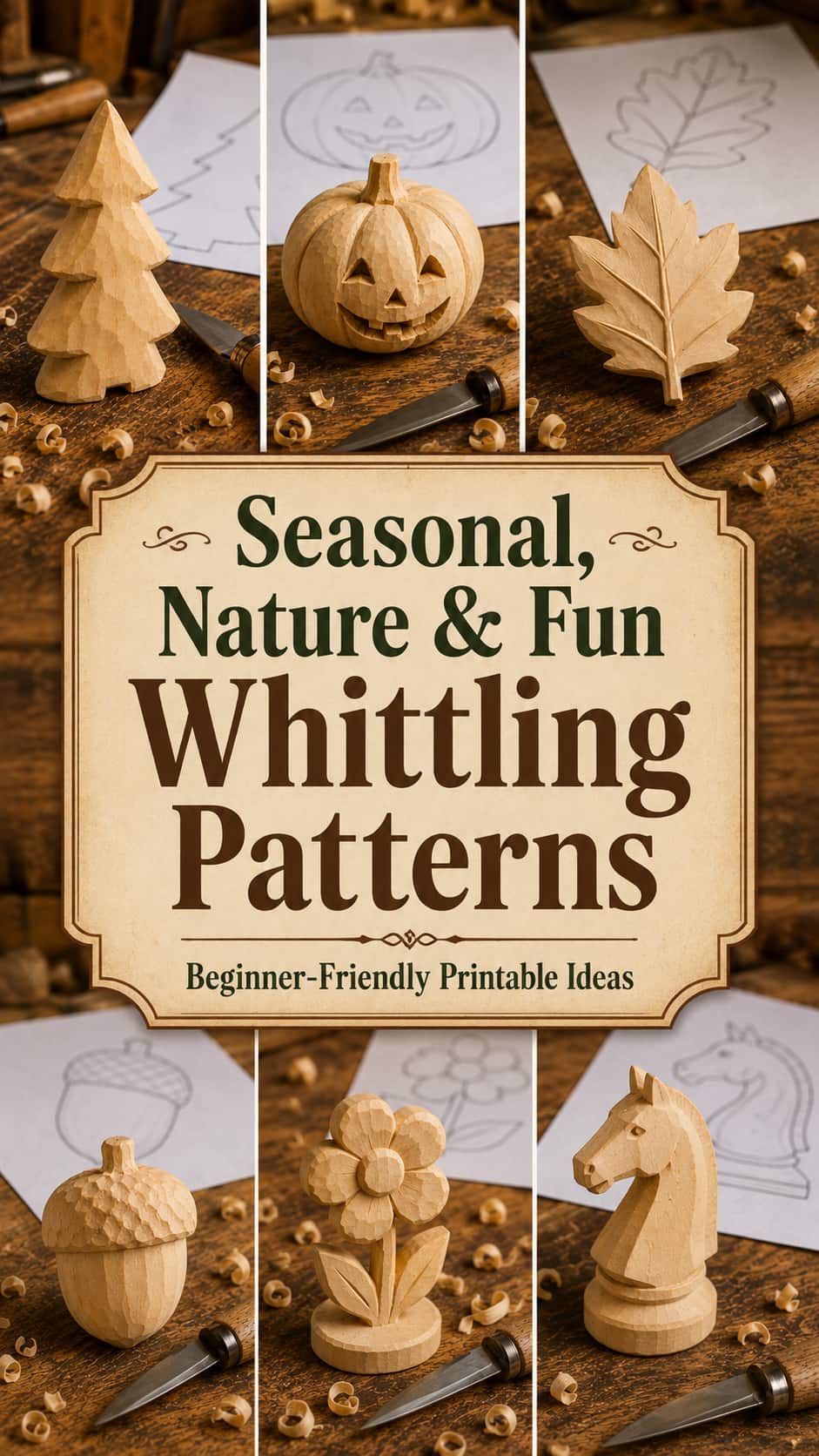
Seasonal projects are Pinterest gold. Pin them in September and watch the traffic roll in through December.
18. Christmas Tree (Simple Silhouette)
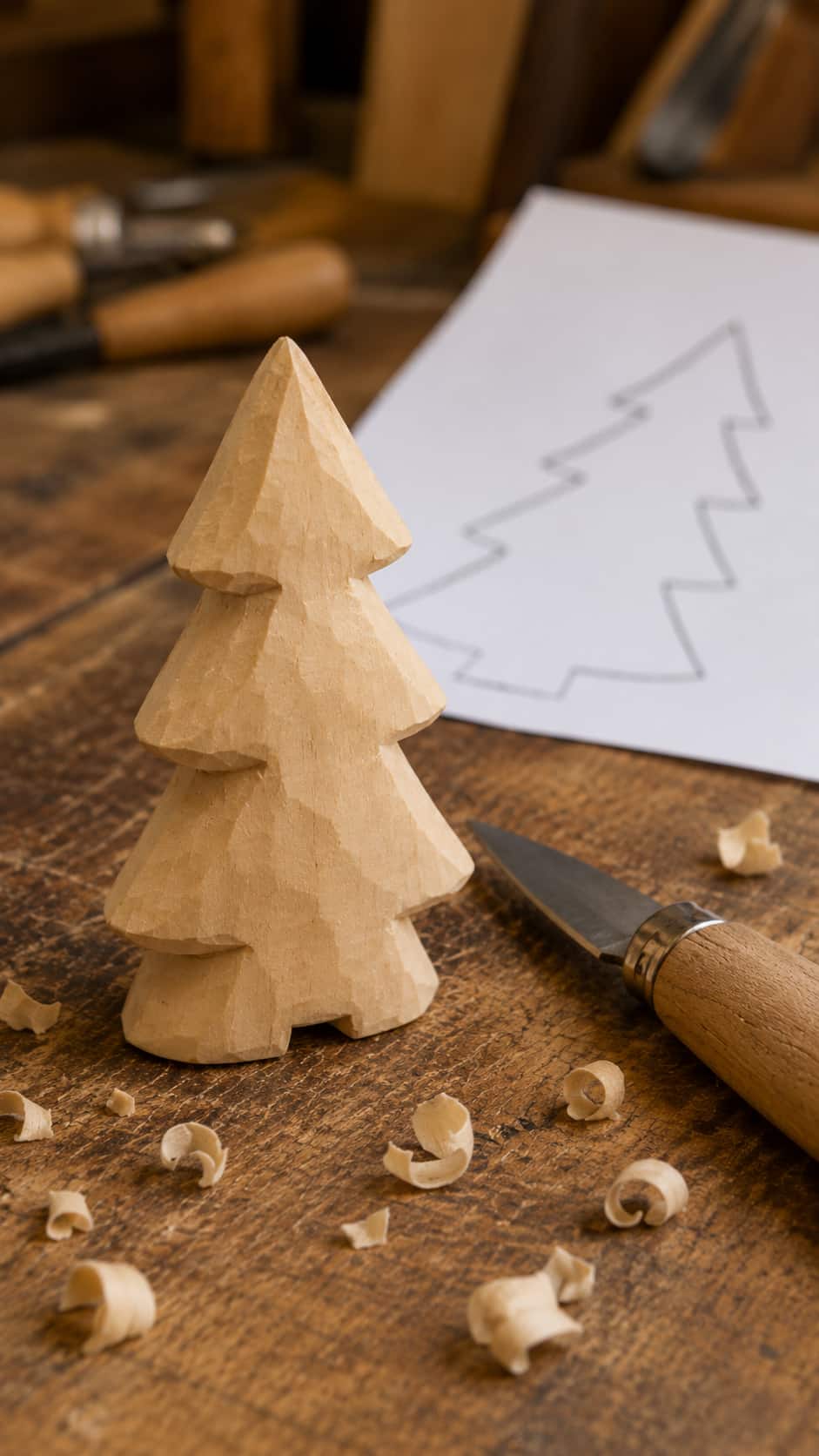
A chunky, stylized Christmas tree cut from a flat piece of wood is the perfect first seasonal project. It’s basically just removing triangles — very approachable. Add a little notch at the bottom so it stands on its own.
Where to get it: Deep Woods Ventures — free patterns page with holiday options.
19. Pumpkin Caricature
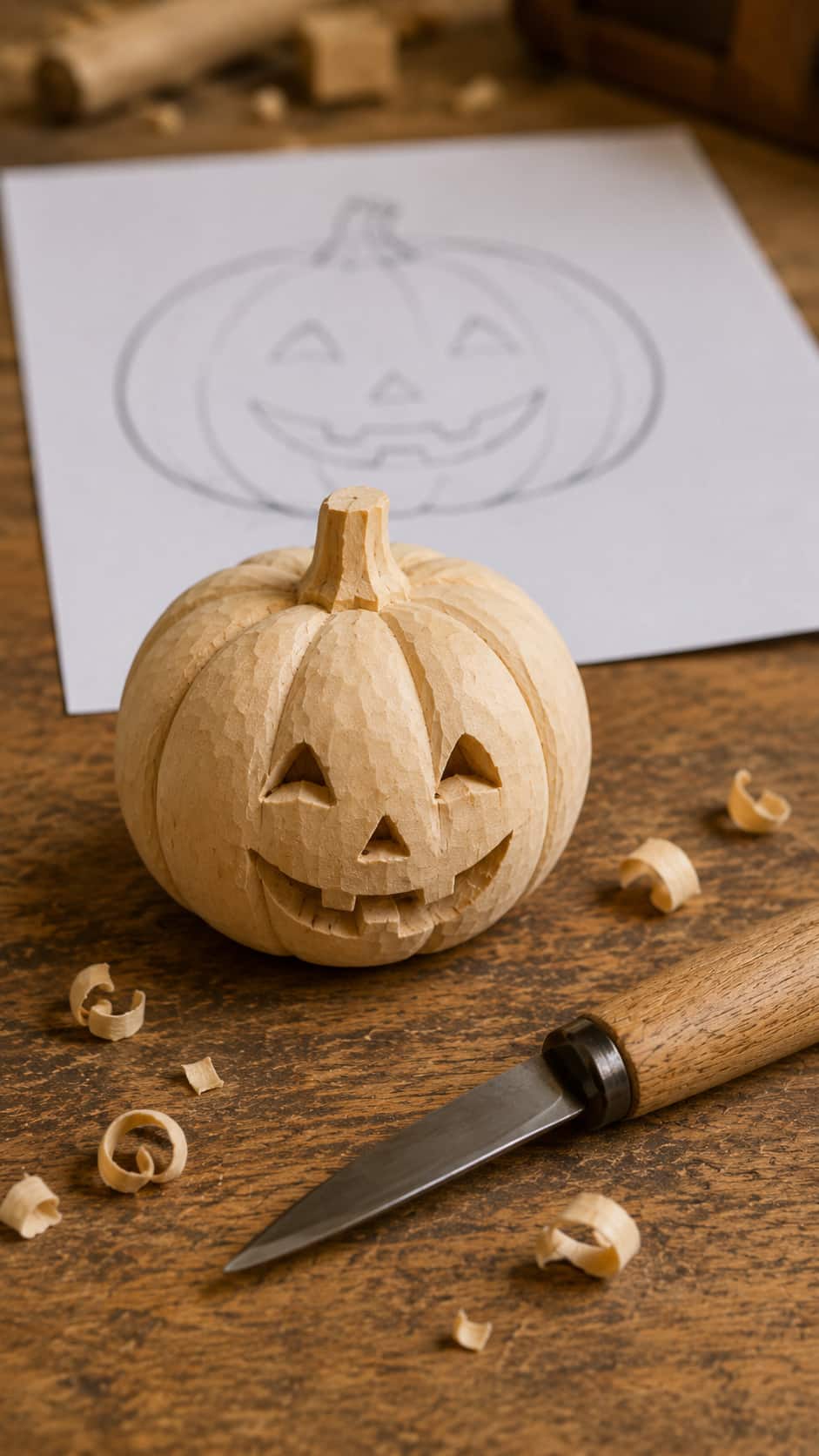
A fat little carved pumpkin face is quick, fun, and great for October content. The rounded shape is beginner-friendly, and carving the face is great practice for chip carving techniques.
Where to get it: Woodcarving Illustrated — check their free seasonal patterns.
20. Simple Star
A five-pointed star carved in the round or as a flat ornament. Excellent for practicing your stop cuts — you need clean, crisp angles to make the points sharp and defined.
Where to get it: Available from BeaverCraft’s free pattern collection.
Nature & Botanical Whittling Patterns
21. Leaf Shape
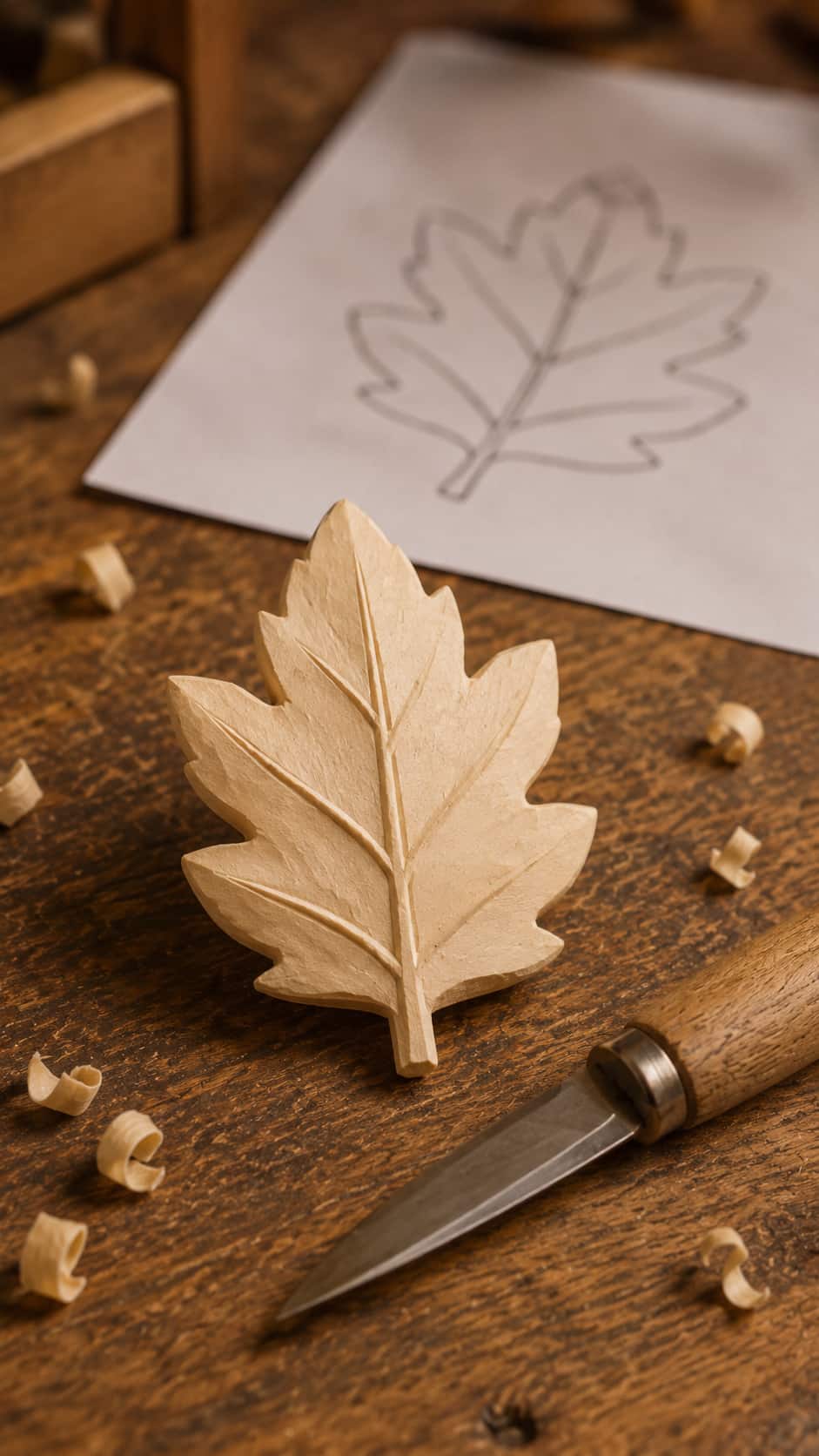
Carving a leaf teaches you flowing, organic lines and how to suggest the central vein and side veins with your knife tip. Pick a big simple leaf like a maple or oak for your first try.
Where to get it: Whittled Lovelies has several beautiful botanical patterns in their free PDF collection.
22. Acorn
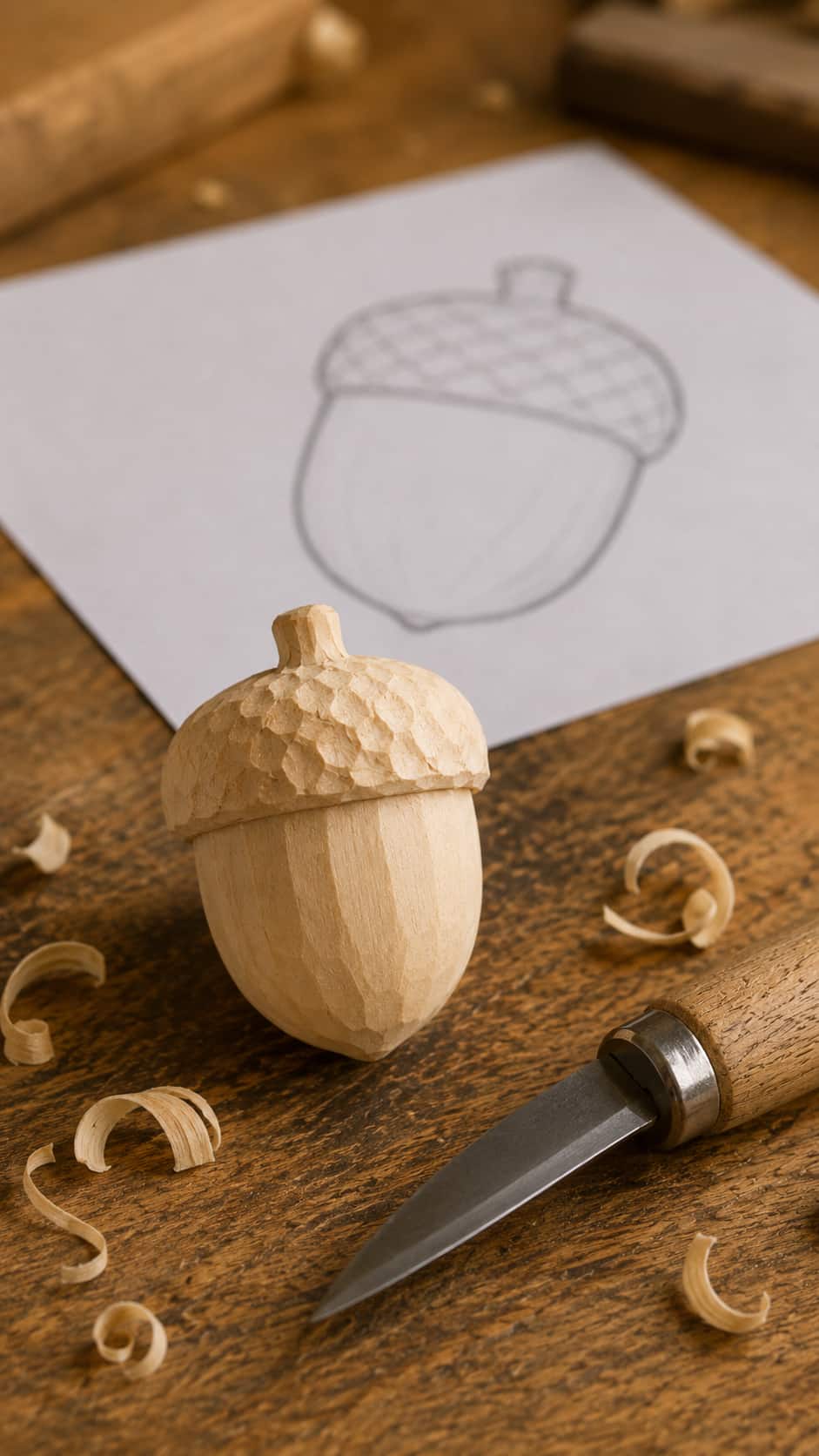
Small, chunky, and satisfying to finish in one sitting. The textured cap is done with a series of tiny stop cuts — it’s repetitive in the best way, almost meditative.
Where to get it: Carving is Fun templates page.
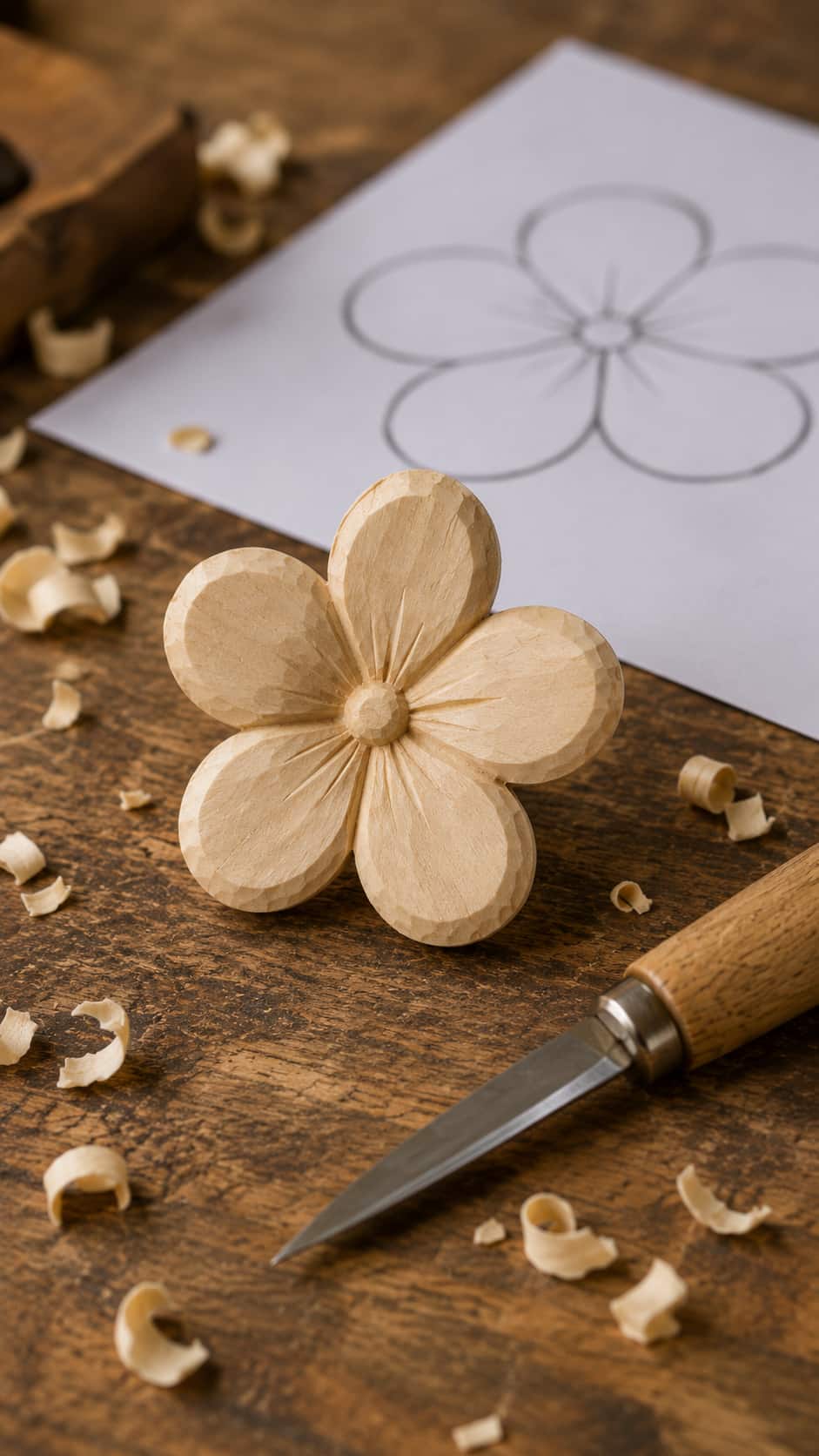
23. Flower (Simple 5-Petal)
A carved flower — either in relief or fully in the round — is gorgeous and far less difficult than it looks. Start flat and work your way to adding depth to each petal.
Where to get it: Home Wood Spirit’s pattern pack includes a flower template.
Fun & Quirky Whittling Patterns
24. Chess Knight (Horse Head)
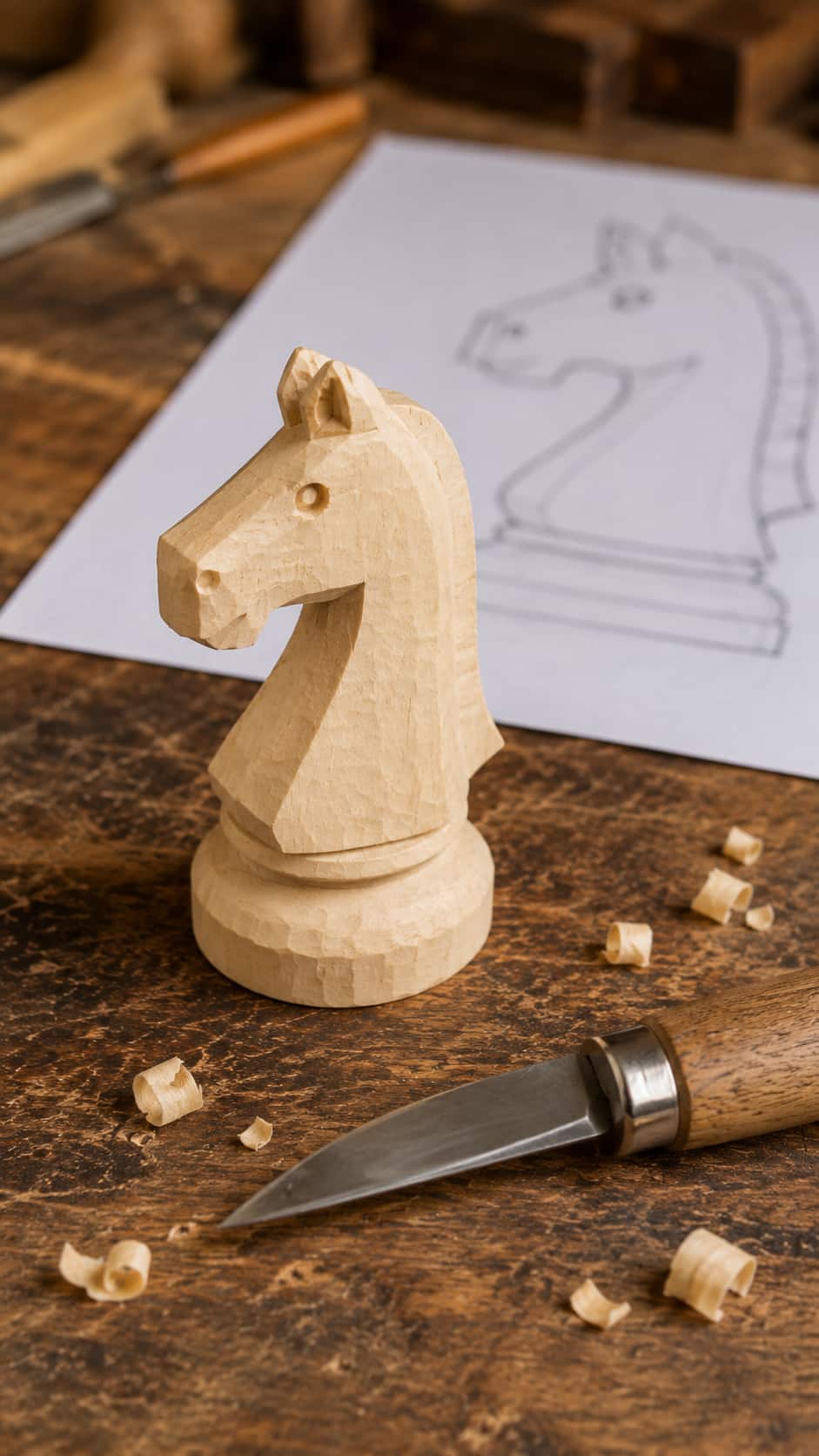
Yes, this sounds advanced — but the pattern simplifies the horse head into a blocky caricature form that’s very achievable with a few basic cuts. It’s a great confidence-builder and looks genuinely impressive on a shelf.
Where to get it: Home Wood Spirit’s free A4 patterns include a chess knight. Print, trace, and follow the video tutorial.
25. Stick Figure “Walking Man”
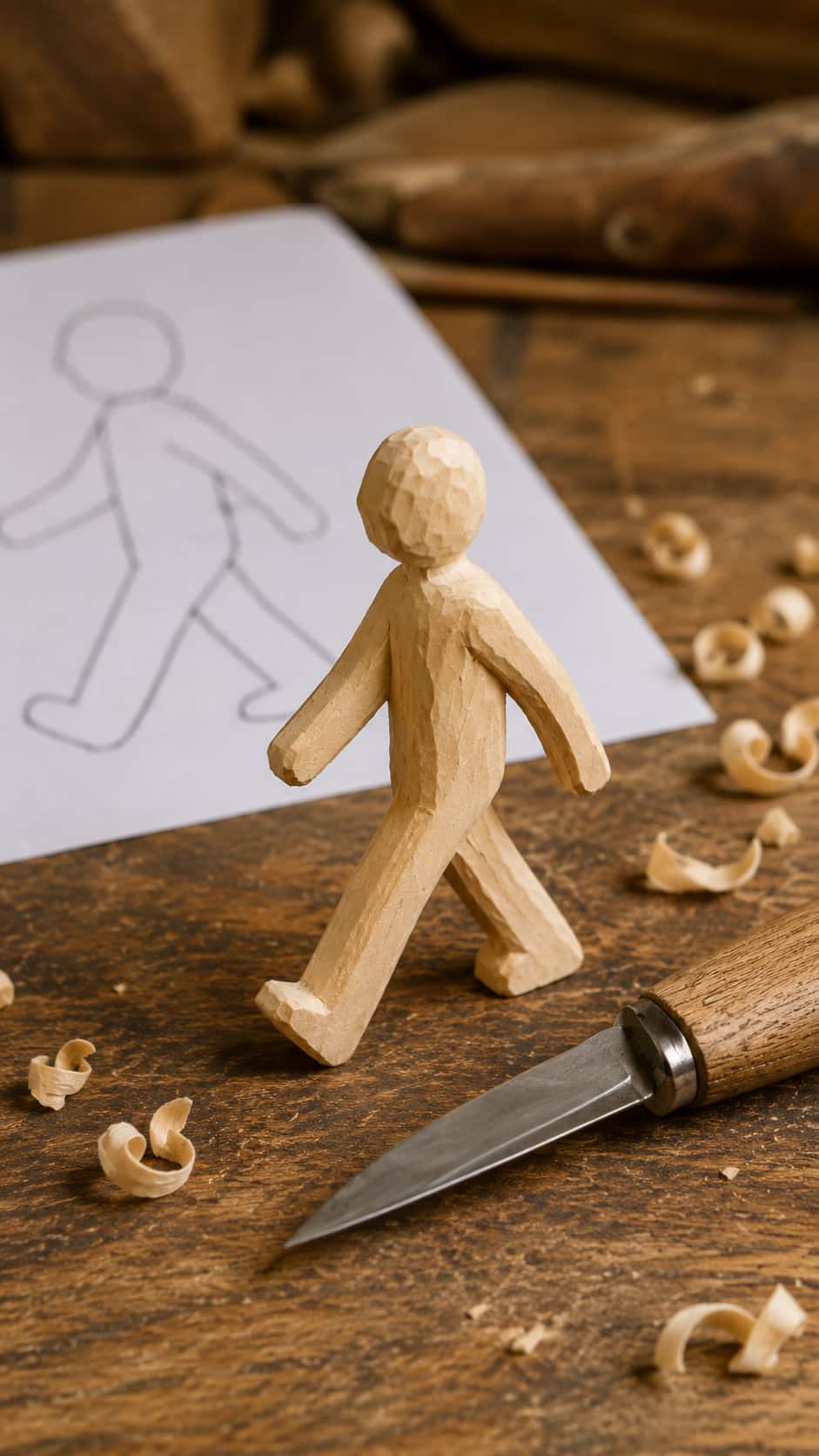
Super simple, super fun. A stylized walking figure carved from a stick or branch is one of the oldest whittling projects in existence. Branches naturally suggest the arms and legs — you just refine the form. Great for whittling on the go with just a pocket knife.
Where to get it: Sketch your own or use the simple humanoid outlines from Carving for Everyone.
Tips for Using Printable Whittling Patterns
Okay, you’ve got your patterns — now let’s make sure you actually get good results with them.
Scale matters. Most templates are designed for A4 or Letter paper. Before printing, check whether the pattern matches your wood block size. You can resize in your PDF viewer — just don’t stretch it unevenly or your proportions will go sideways.
Transfer methods that actually work:
- Carbon paper — the most reliable. Lay it between the pattern and wood, trace over the lines, lift and carve.
- Graphite rub — scribble graphite on the back of the printed pattern, flip it onto your wood, and trace the front. Transfers nicely.
- Cut and trace — cut out the silhouette and trace directly with a pencil. Simple and accurate for basic shapes.
Work from big to small. Always remove large chunks of waste wood first to get close to your overall silhouette, then refine details. Don’t try to carve a bird’s beak before you’ve shaped the body.
Grain direction is everything. Carving with the grain is smooth. Carving against it causes tearout. When in doubt, test a small cut first to see which direction the wood wants to go.
Ready to Level Up Beyond Free Whittling Patterns?
Free patterns are a fantastic starting point — they’ll keep you busy for months. But once you get comfortable, you’re going to want more variety, more complexity, and more detailed instructions. If you’re looking for your next challenge, check out our roundups of the 10 Best Wood Carving Projects and Ideas for Beginners and the 14 Best Dremel Wood Carving Projects both are packed with projects that pair perfectly with the patterns in this list.
That’s where Ted’s Woodworking Plans comes in. It’s a massive library of 16,000+ woodworking plans covering everything from beginner carving projects to full furniture builds. The plans come with step-by-step instructions, cut lists, and detailed diagrams — way more structured than hunting for free patterns scattered across the web.
If you’re serious about turning whittling into a real skill (or even selling your work), having a reliable plan library saves you hours of searching and gives you an almost unlimited project queue.
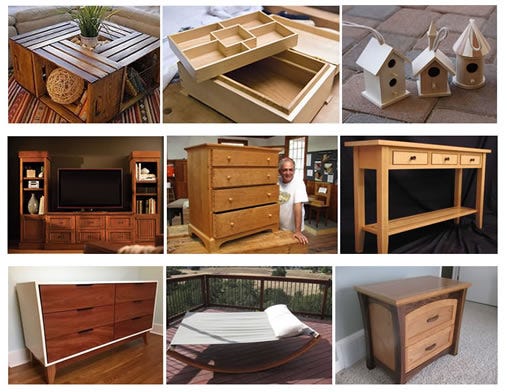
👉 Check out Ted’s Woodworking Plans here — it’s the upgrade that takes you from hobbyist to confident woodworker.
Final Thoughts
Starting with free whittling patterns isn’t a shortcut — it’s a smart strategy. Every experienced carver used references when they were learning. The goal isn’t to prove you can freehand a fox from memory; the goal is to build real skills, finish projects you’re proud of, and keep enjoying the craft.
Print a few of these patterns this weekend. Grab your basswood, put on a movie, and start cutting. You’ll be amazed how quickly things start looking like actual things instead of sad potatoes.
And when you’re ready to go deeper — you know where to find 16,000 more plans. Happy whittling!