
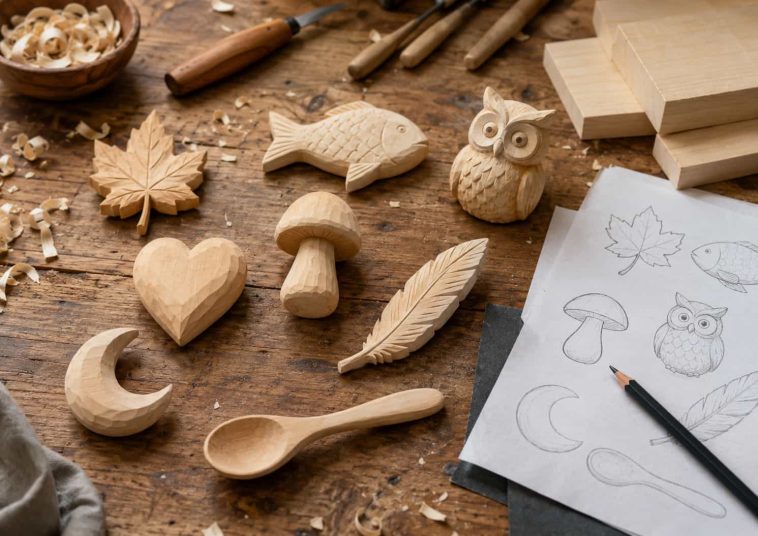
You picked up a knife and a block of wood, and now you’re just… staring at it. Sound familiar? That blank chunk of basswood sitting on your workbench can feel more intimidating than an actual carving project, mostly because you have no idea where to start cutting.
That’s exactly why patterns exist. A good pattern gives you a clear shape to follow instead of leaving you to stare down a blank block of wood like it owes you money :). I remember my first attempt at freehand carving a bird — it came out looking like a potato with a beak problem. Patterns fixed that overnight.
This article rounds up 25 free wood carving patterns for beginners, covering a mix of styles so there’s something for everyone:
- Whittling patterns for simple knife work
- Relief carving designs for flat panels and signs
- Dremel carving ideas for rotary tool practice
- Small wood carving projects you can finish in an afternoon
- Animal carving patterns that don’t require an art degree
- Decorative beginner projects for gifts and home decor
Quick note: These are beginner-friendly wood carving pattern ideas you can sketch, trace, or turn into printable templates. Always resize the pattern to match your wood blank before cutting or carving.
Before you grab a chunk of wood, it’s worth reading up on Best Wood for Beginners to Carve: The Complete Guide (2026) so you’re not fighting the material on top of everything else.
Why Wood Carving Patterns Help Beginners
Ever tried to carve something with zero plan and ended up with a shape that resembles nothing you intended? Yeah, we’ve all been there. Patterns solve that problem before it starts.
Here’s why patterns are worth using, especially when you’re new to this:
- They give you a clear starting point — no more guessing where to make the first cut
- They help you avoid overcomplicated designs — simple shapes teach real skills
- They make carving less intimidating — a traced outline is way less scary than a blank block
- They are easier to repeat and practice — carve the same pattern three times and watch your control improve
- They work well for printable templates — print, trace, carve
- They help with symmetry — your eye is not as reliable as a printed outline
- They are great for small weekend projects — finish something in a day and actually feel good about it
If you like the idea of starting small, check out 21 Easy Small Wood Carving Projects for Beginners for more ideas beyond this list.
Quick Comparison Table: Best Beginner Wood Carving Patterns
| Pattern Idea | Best For | Difficulty |
| Simple Leaf | Knife control | Easy |
| Wooden Fish | Smooth curves | Easy |
| Small Owl | Animal carving | Easy–Medium |
| Mushroom | Rounded shapes | Easy |
| Feather | Line detail | Medium |
| Flower Relief | Decorative carving | Medium |
| Spoon Pattern | Functional carving | Medium |
| Simple Face | Expression practice | Medium |
Tools You’ll Need for Beginner Wood Carving Patterns
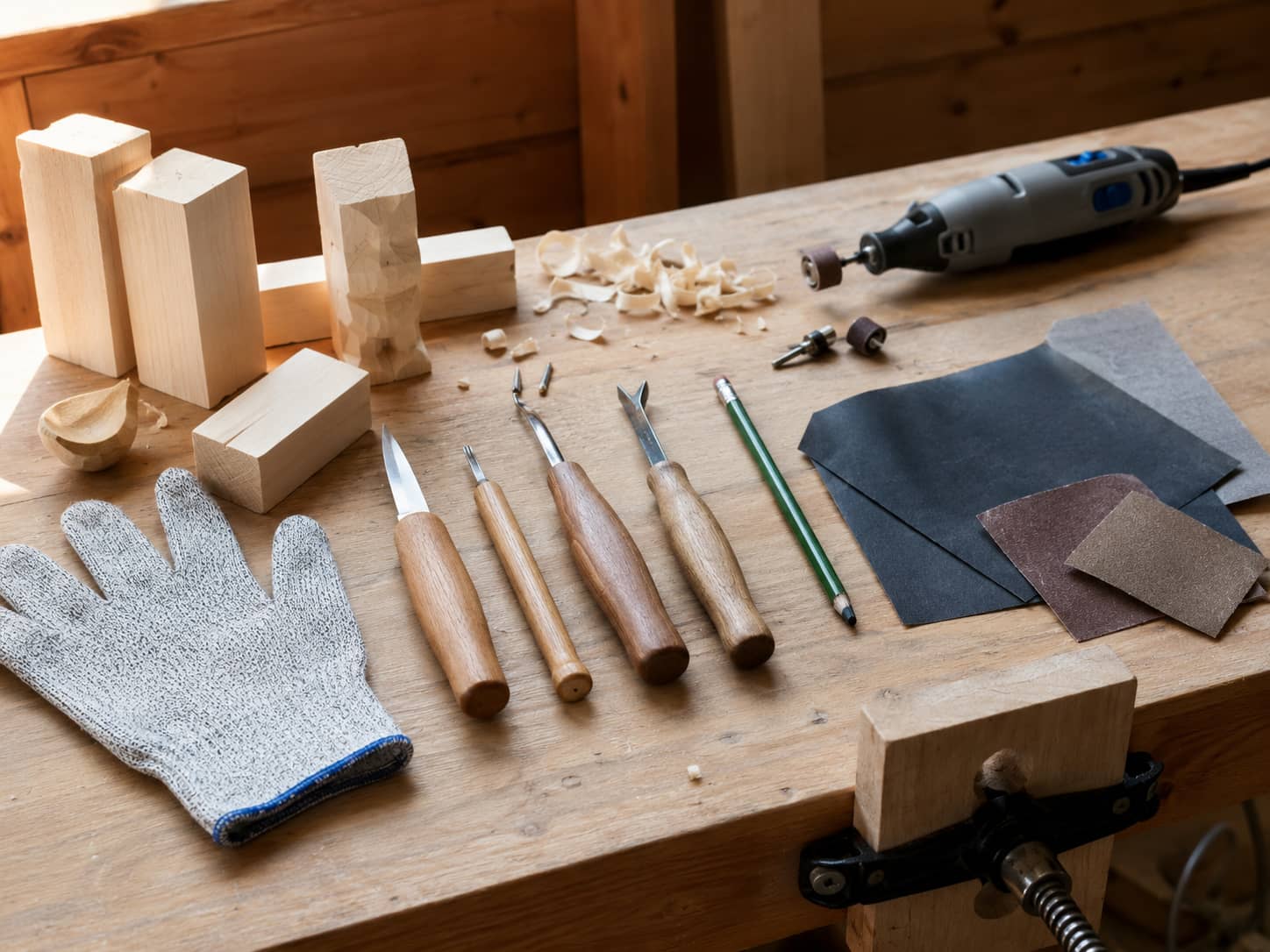
You do not need a giant tool roll to start carving. Most beginners buy way more tools than they actually use in the first month. A handful of basics will get you through nearly every pattern on this list, and you can always add specialty tools once you know what kind of carving you actually enjoy.
Basic tools worth having:
- Carving knife
- Detail knife
- Small gouge
- V-tool
- Pencil
- Carbon paper or graphite paper
- Sandpaper
- Cut-resistant glove
- Bench hook or clamp
- Optional Dremel rotary tool
A sharp carving knife, a pencil, some sandpaper, and a safe work surface can handle plenty of these simple patterns. Everything else can wait until you know what you actually enjoy carving.
Best Wood for Carving Patterns
The pattern only matters if the wood cooperates. Carving a detailed design into the wrong wood is a fast way to get frustrated and give up. Soft, tight-grained wood lets your knife move smoothly, while dense or splintery wood fights you at every turn, no matter how good the pattern is.
Best beginner-friendly woods:
- Basswood
- Butternut
- Pine
- Aspen
- Cedar
- Poplar
Basswood is usually the easiest choice for beginner wood carving patterns because it’s soft, smooth, and forgiving. It holds detail well without fighting back every time your knife changes direction. For a deeper breakdown, take a look at Best Wood for Beginners to Carve: The Complete Guide (2026).
How to Transfer a Wood Carving Pattern Onto Wood
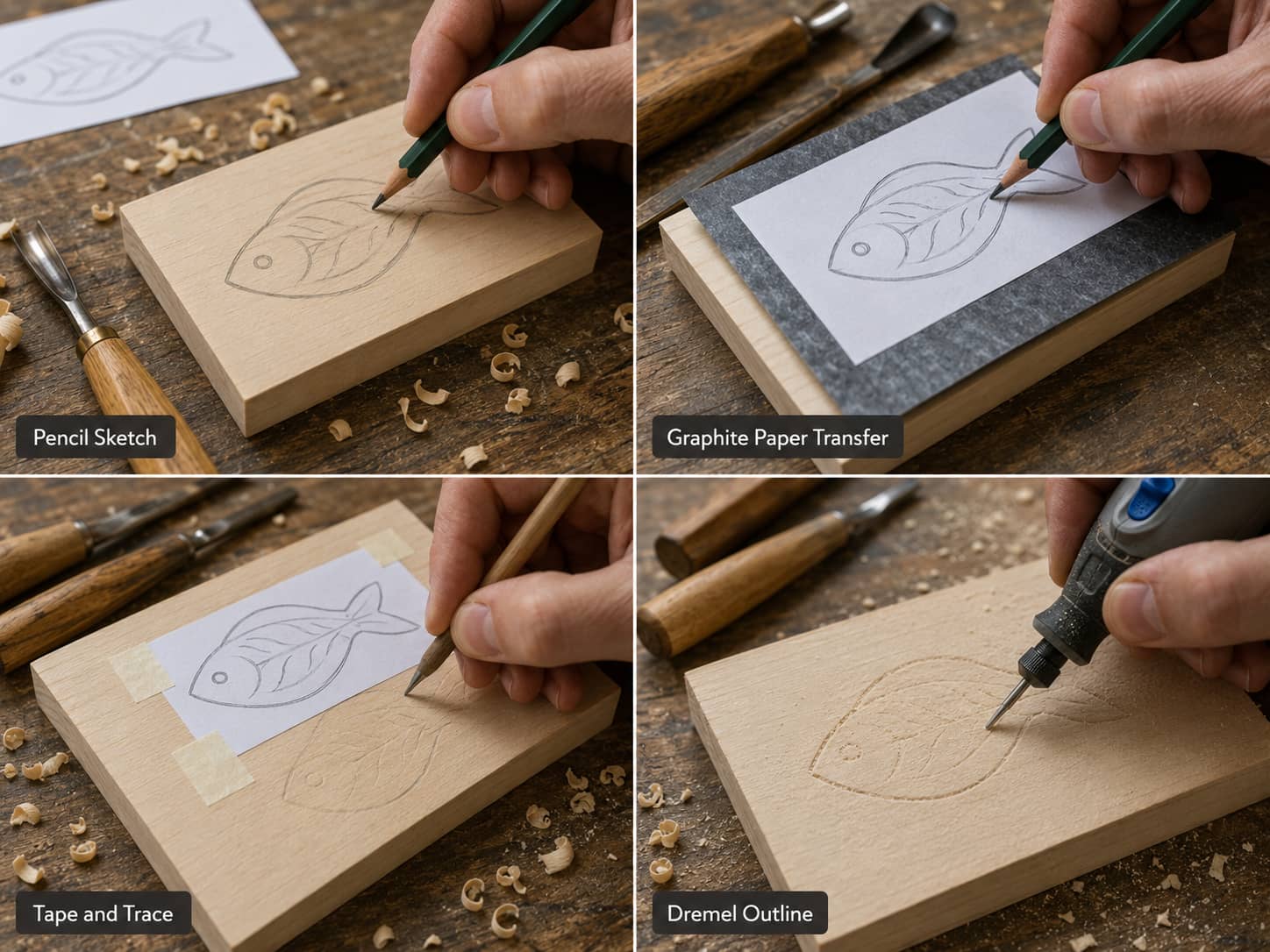
Getting the pattern from paper to wood matters just as much as the carving itself. Here are four simple methods, depending on the project. Pick the one that matches your pattern’s complexity — simple shapes barely need a method at all, while detailed relief work benefits from a more precise transfer.
Method 1: Pencil Sketch
Best for very simple shapes like leaves, fish, hearts, and mushrooms. Just draw it freehand or lightly trace it onto the wood. Since these shapes don’t need perfect symmetry, a rough pencil outline is honestly all you need to get started.
Method 2: Graphite Paper Transfer
Best for printable patterns and more detailed outlines. Place the graphite paper between your printed pattern and the wood, then trace over the lines. Press firmly but evenly with a pencil or ballpoint pen so the whole outline transfers, and check your work against the original before you set the paper aside.
Method 3: Tape and Trace Method
Best for small flat blanks and relief carving. Tape the pattern directly to the wood and trace through the paper with a pencil or stylus. This method works especially well on lighter woods like basswood or pine, where the indentation from tracing leaves a faint, followable line even before you add pencil marks.
Method 4: Dremel Outline Method
Best if you want to lightly trace lines with a rotary tool before carving deeper. This works well for relief patterns where you want a visible guide that won’t rub off. Use a fine engraving bit at low speed for this step — you’re marking a path, not doing the actual carving yet.
Safety note: Keep your pattern simple at first. Tiny details look cute on paper but can become annoying very quickly on wood.
25 Free Wood Carving Patterns for Beginners
Here’s the full list. Some of these will feel easy right away, and others will test your patience a little — that’s kind of the point.
1. Simple Leaf Pattern
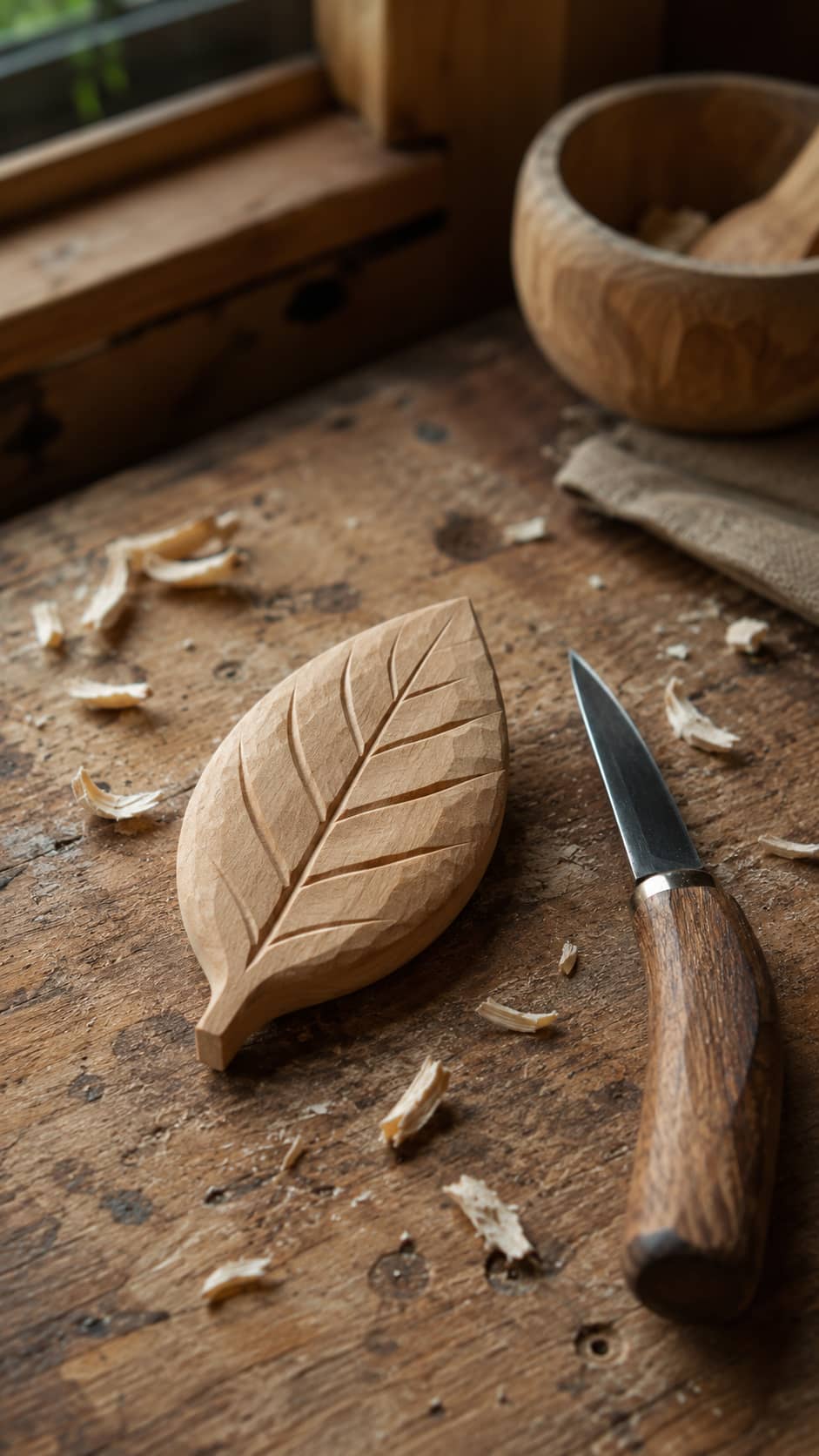
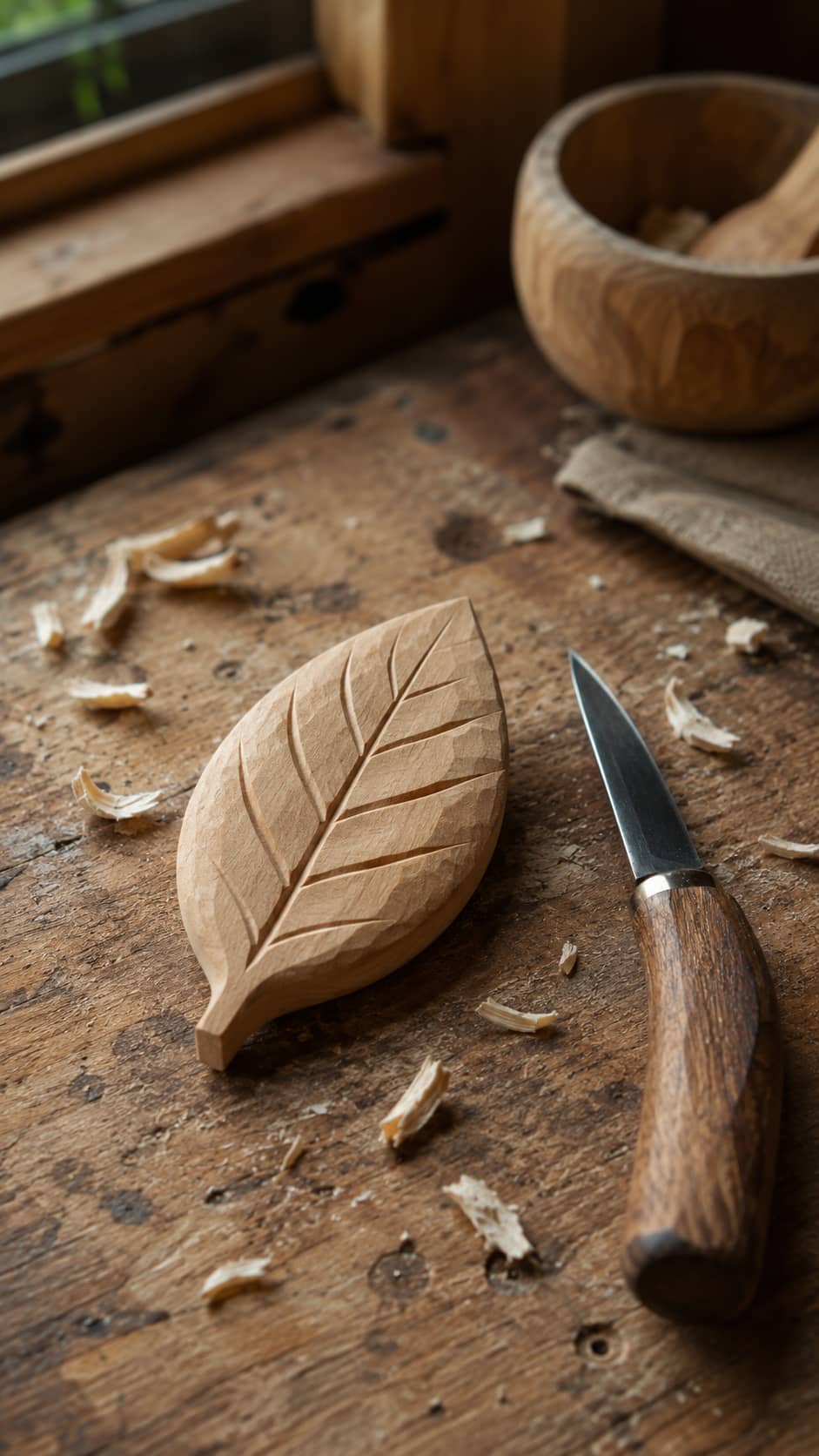
A leaf is one of the easiest wood carving patterns for beginners because it teaches basic curves, center lines, and shallow cuts. You’re basically learning how your knife handles direction changes without worrying about a complicated silhouette. Most leaves forgive small mistakes too, since real leaves are never perfectly symmetrical anyway.
- Best for: Knife control, relief carving
- Difficulty: Easy
- Beginner tip: Start with a large leaf shape before trying small veins.
2. Basic Wooden Fish Pattern
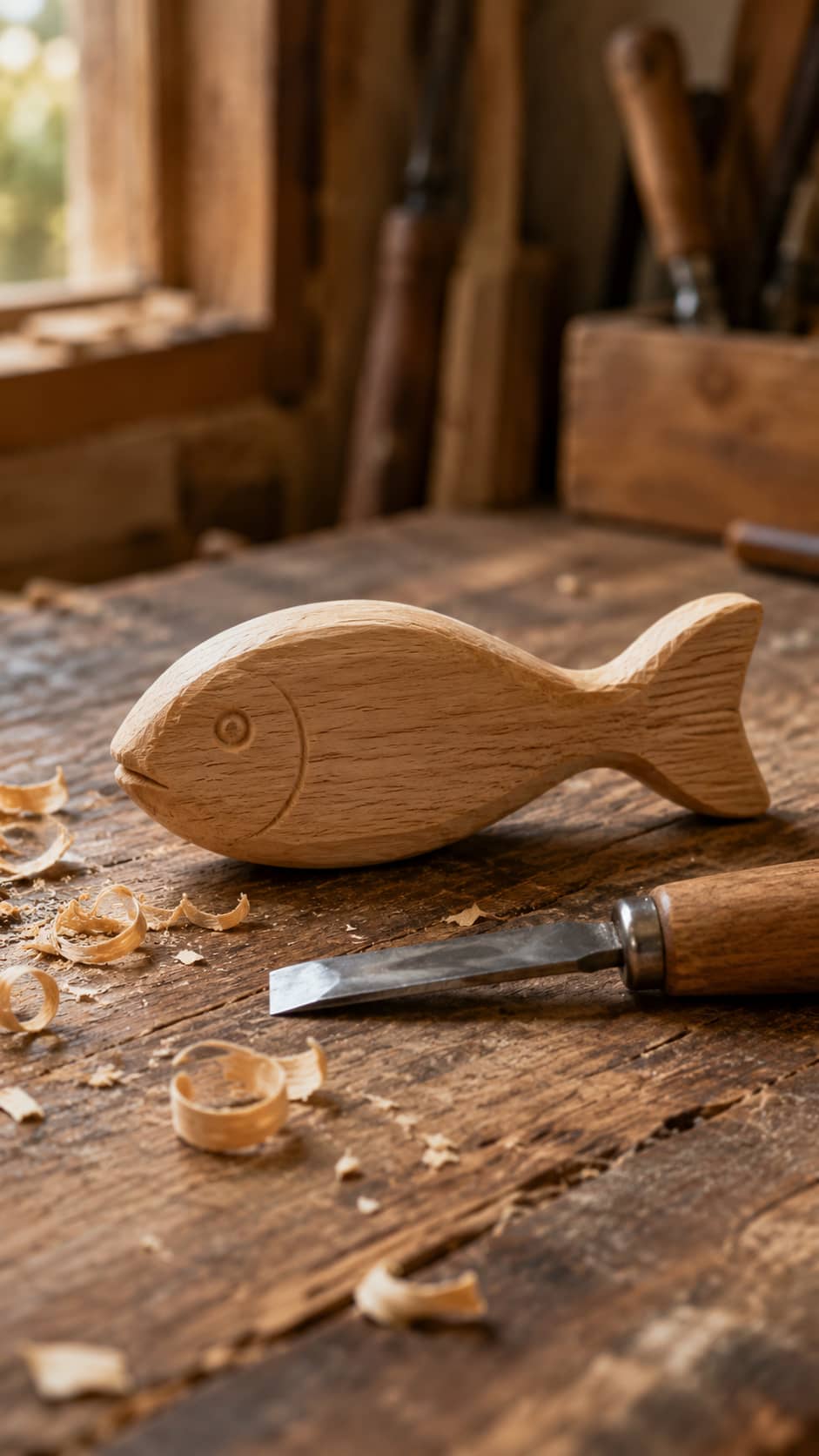
A fish shape is simple, smooth, and very forgiving. The body is mostly one long curve with a tail, which means you spend most of your time carving flowing lines instead of sharp corners. It’s a great pattern for practicing how to keep your cuts even along a long surface, and you can add scale lines later once the basic shape feels comfortable.
- Best for: Whittling, small wood carving
- Difficulty: Easy
- Beginner tip: Keep the tail chunky so it does not break.
For more animal ideas, check out 21 Easy Animal Wood Carving Ideas for Beginners.
3. Small Owl Pattern
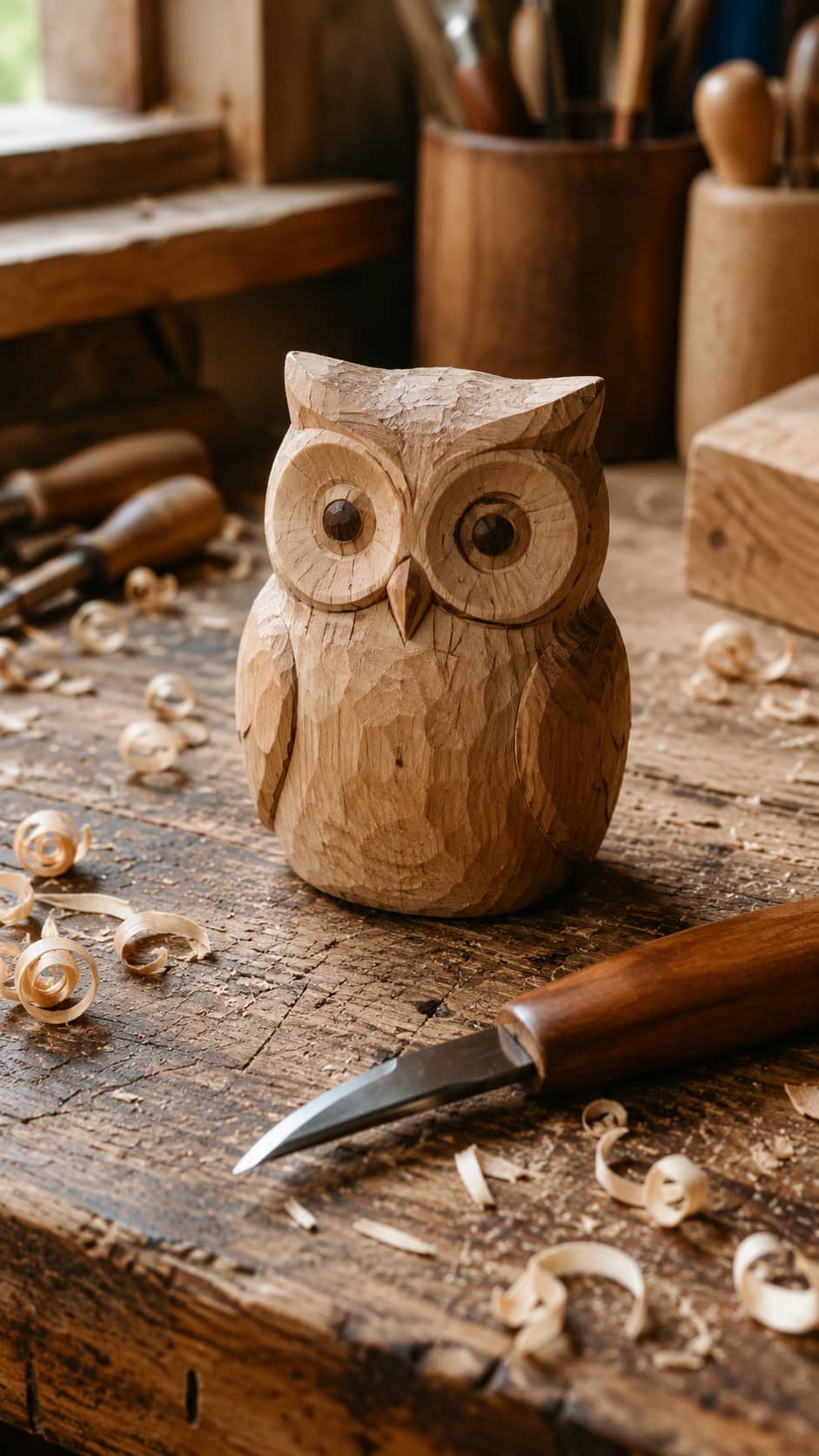
A simple owl pattern works well because the shape can be rounded and cute without needing too much detail. Owls are mostly a body, two big eyes, and a beak, so the overall silhouette does most of the work for you. That makes this a great confidence-builder before you move on to animals with more complicated proportions.
- Best for: Animal carving
- Difficulty: Easy–Medium
- Beginner tip: Use large circles for the eyes and a tiny triangle for the beak.
4. Mushroom Pattern
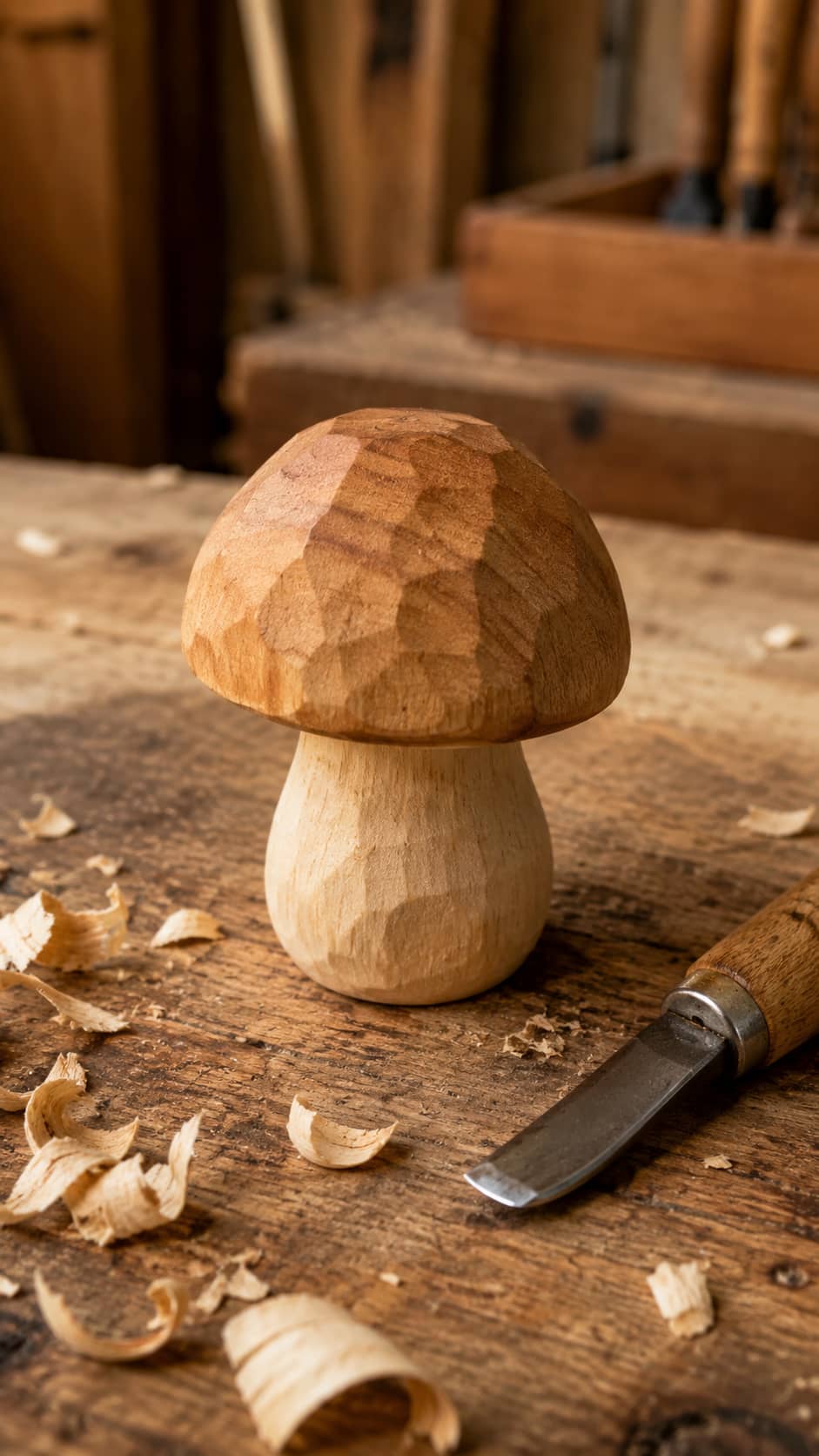
A mushroom is perfect for beginners because it uses rounded shapes and does not need perfect symmetry. Real mushrooms are lopsided and weird-looking half the time, so there’s basically no way to “mess up” the shape. This pattern is also a nice way to practice rounding over edges smoothly, which is a skill that carries into almost every other project on this list.
- Best for: Whittling, rustic decor
- Difficulty: Easy
- Beginner tip: Make the cap slightly oversized for a fun handmade look.
5. Wooden Heart Pattern
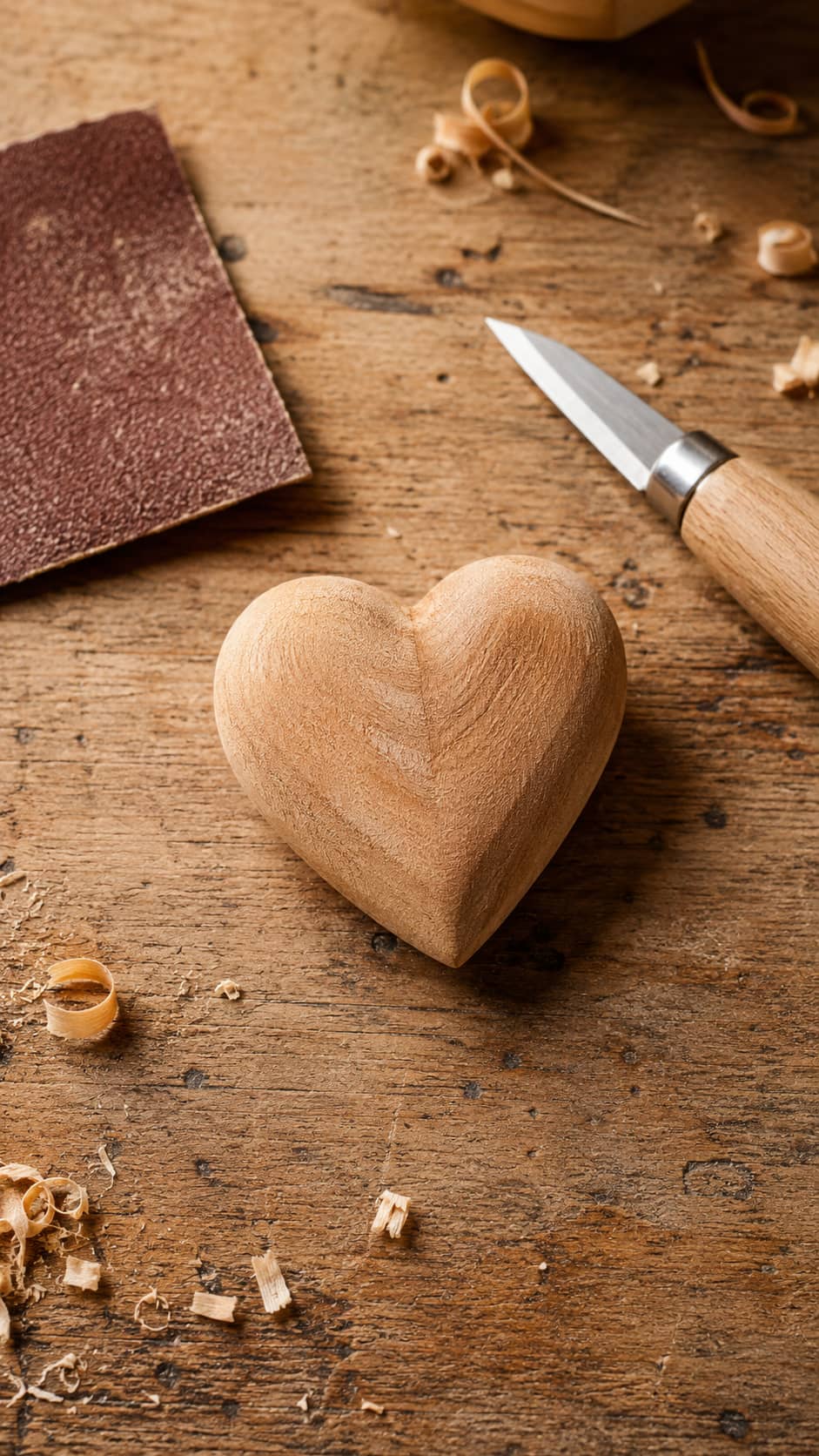
A heart pattern is simple, giftable, and great for practicing smooth edges. There’s no tricky anatomy to worry about, so you can focus entirely on getting clean, even curves on both sides. It also makes a genuinely nice small gift once it’s sanded and finished, which is a satisfying reward for such a low-stress carve.
- Best for: Gifts, ornaments, beginner practice
- Difficulty: Easy
- Beginner tip: Sand the edges well so the shape feels soft and finished.
6. Simple Feather Pattern
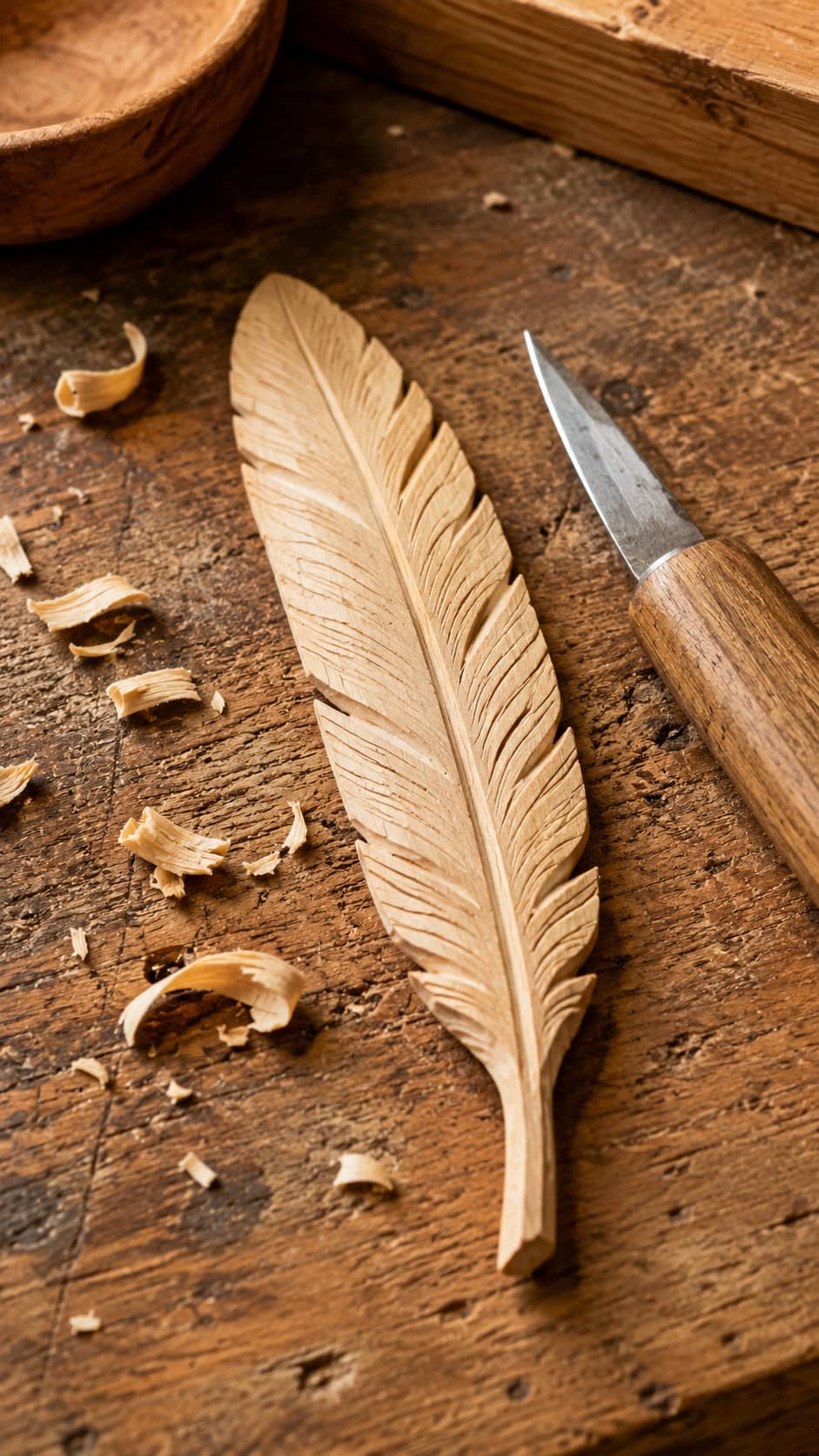
A feather pattern teaches long flowing lines and shallow detail cuts. It looks more advanced than it actually is, mostly because the repeated angled lines create the illusion of real texture. Once you get the rhythm of the cuts down, this pattern goes a lot faster than it looks like it should.
- Best for: Detail carving, decorative pieces
- Difficulty: Medium
- Beginner tip: Carve the center line first, then add light angled cuts.
7. Tiny Bird Pattern
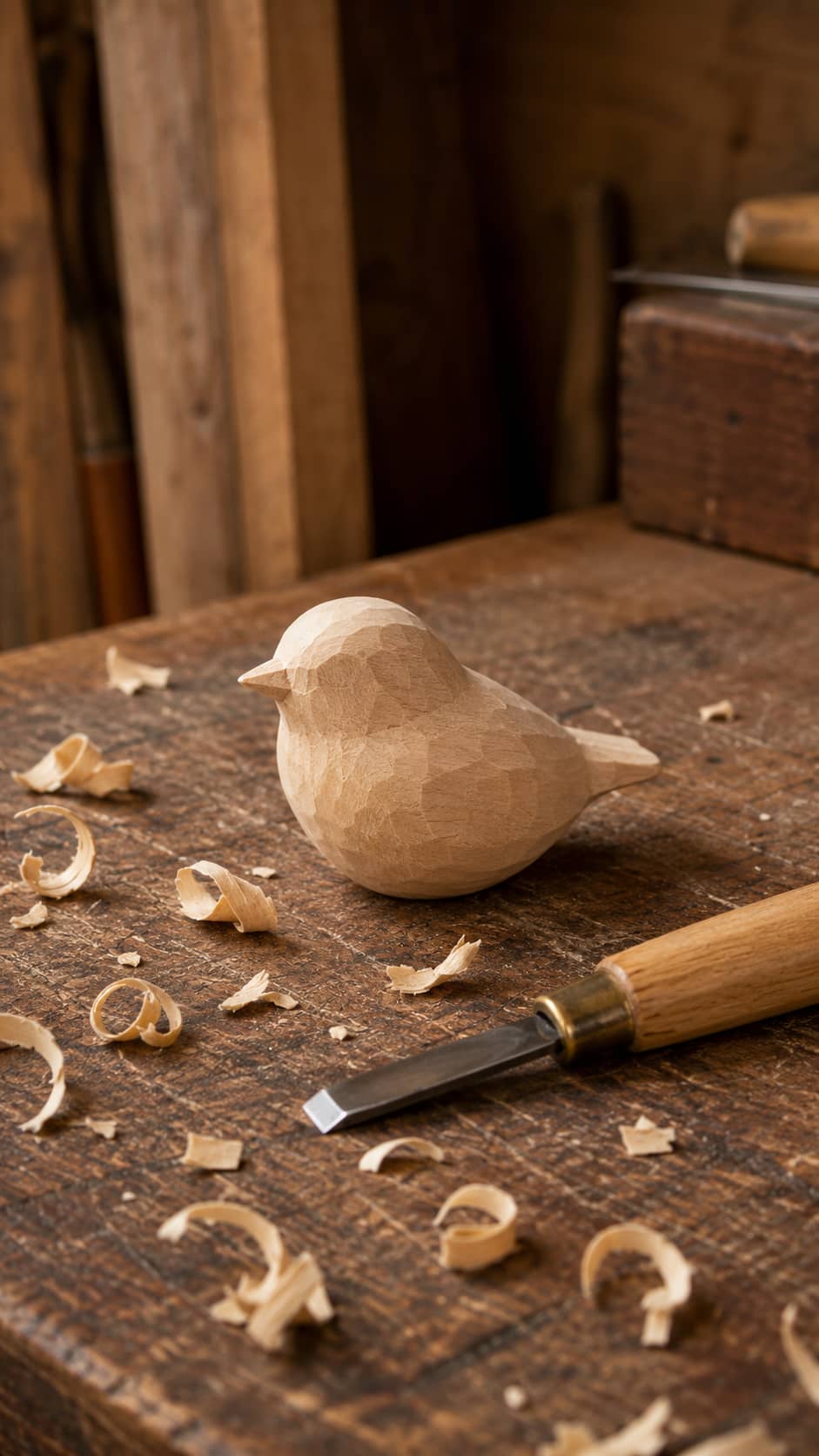
A tiny bird is a classic beginner carving pattern. Keep the body simple and avoid tiny legs — they snap if you look at them wrong. Most beginner bird patterns skip legs altogether and just carve the bird sitting flush on a small base, which looks just as charming and saves you from a broken project two hours in.
- Best for: Whittling, animal carving
- Difficulty: Easy–Medium
- Beginner tip: Focus on the silhouette more than small details.
More animal patterns are waiting in 21 Easy Animal Wood Carving Ideas for Beginners.
8. Wooden Flower Relief Pattern
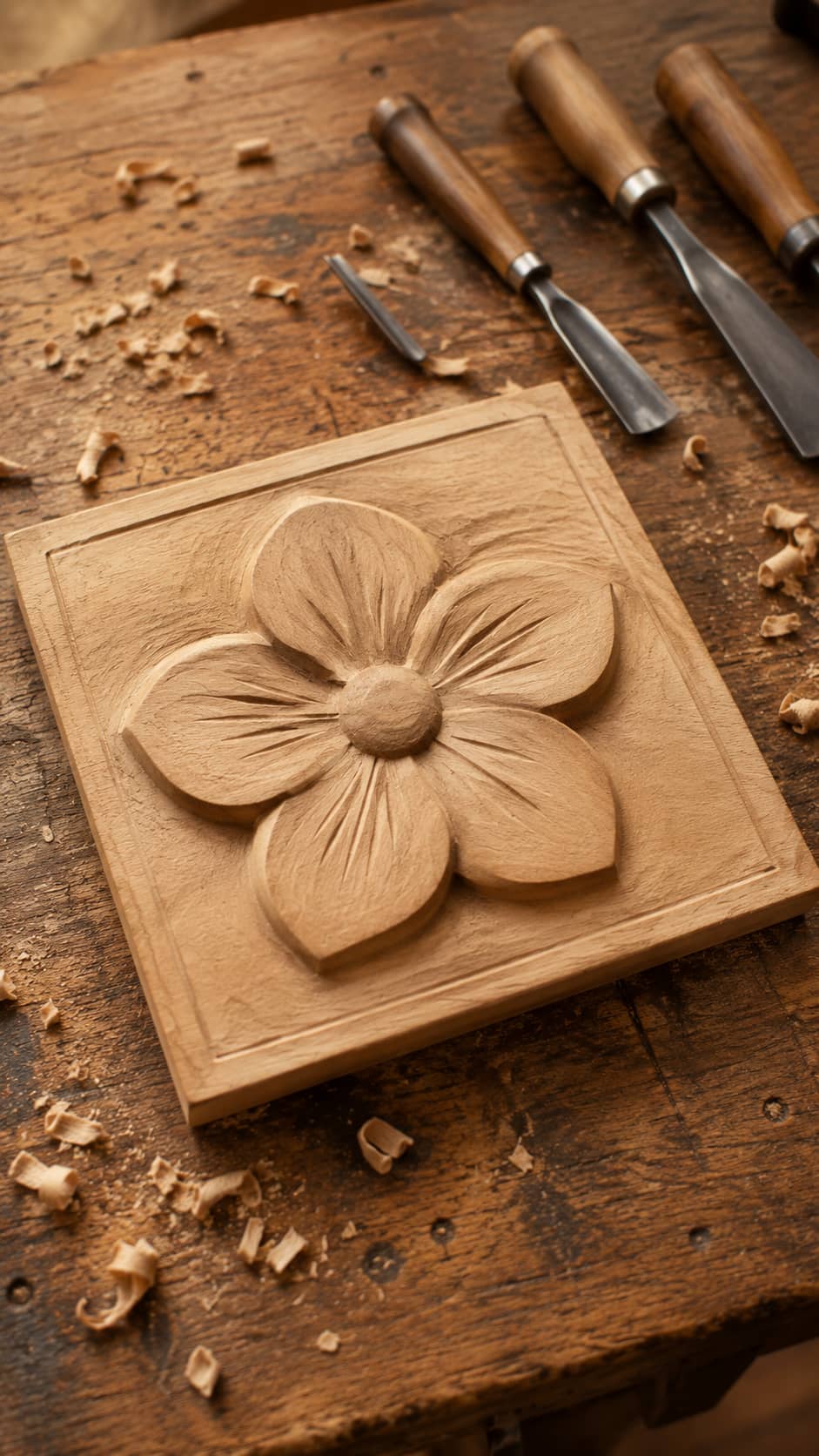
A flower relief pattern is great for flat boards, signs, and decorative panels. Instead of carving a freestanding shape, you’re removing wood around the flower so it sits raised above the background. It’s a good introduction to relief carving because the outline is forgiving and the background gives you room to fix small mistakes as you go.
- Best for: Relief carving, wall decor
- Difficulty: Medium
- Beginner tip: Start with five simple petals instead of a complicated flower.
9. Simple Tree Pattern
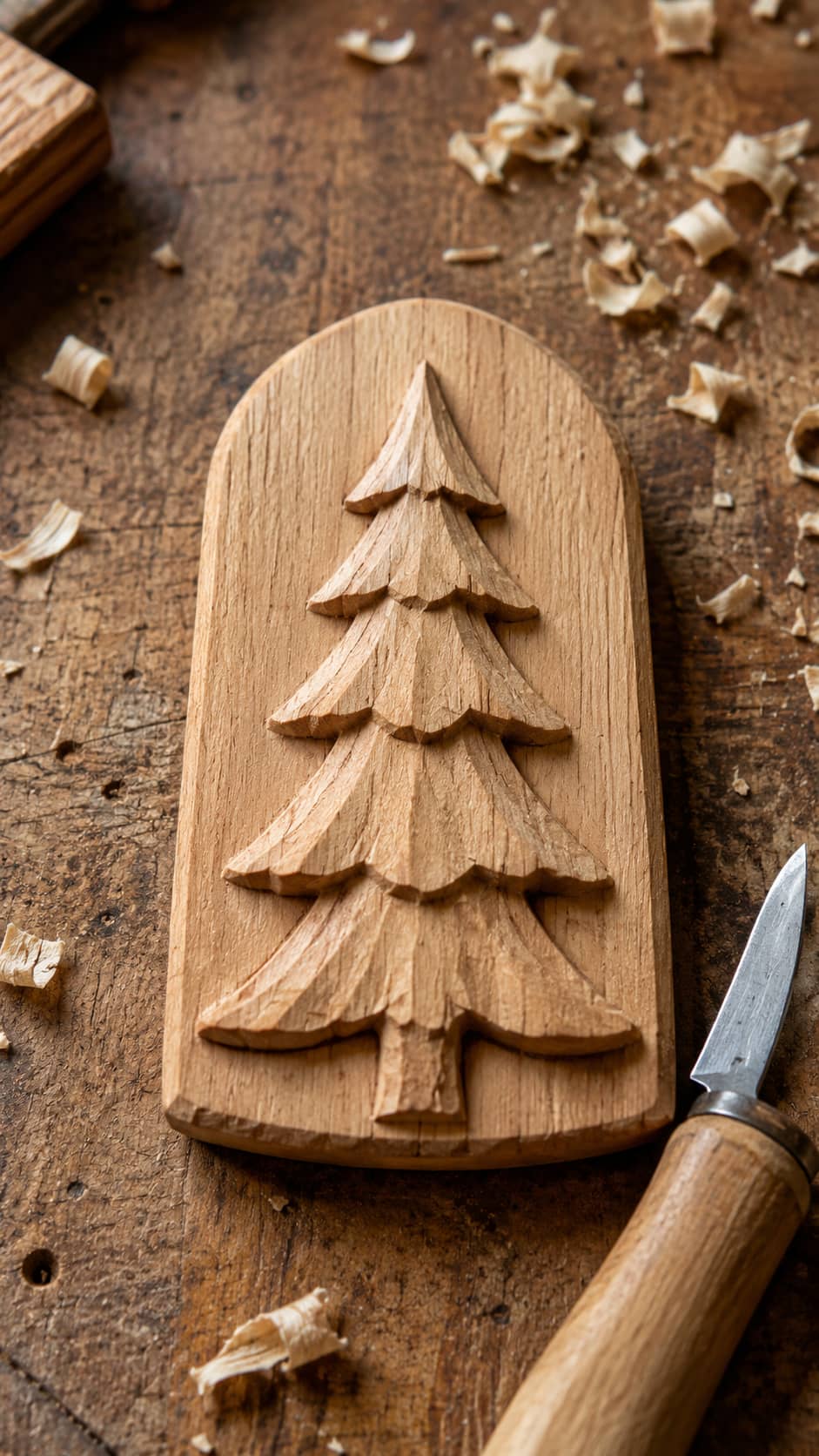
A tree pattern works well for wood burning, relief carving, or shallow carving. The simplest versions are just a trunk and a triangle or cloud-shaped canopy, so you can adjust the difficulty depending on how much detail you want in the branches. Trees also pair nicely with other nature patterns on this list if you want to build a themed set.
- Best for: Signs, ornaments, nature decor
- Difficulty: Easy
- Beginner tip: Use a triangle-style pine tree for the easiest version.
10. Crescent Moon Pattern
A crescent moon is simple, elegant, and perfect for ornaments or wall hangings. The curved shape looks more refined than the effort it actually takes, which is always a nice trade when you’re still building confidence. Drill a small hole at the top and it turns into a hanging ornament in about thirty seconds.
- Best for: Hanging decor, ornaments
- Difficulty: Easy
- Beginner tip: Use a coping saw or scroll saw to rough out the shape before carving.
11. Star Ornament Pattern
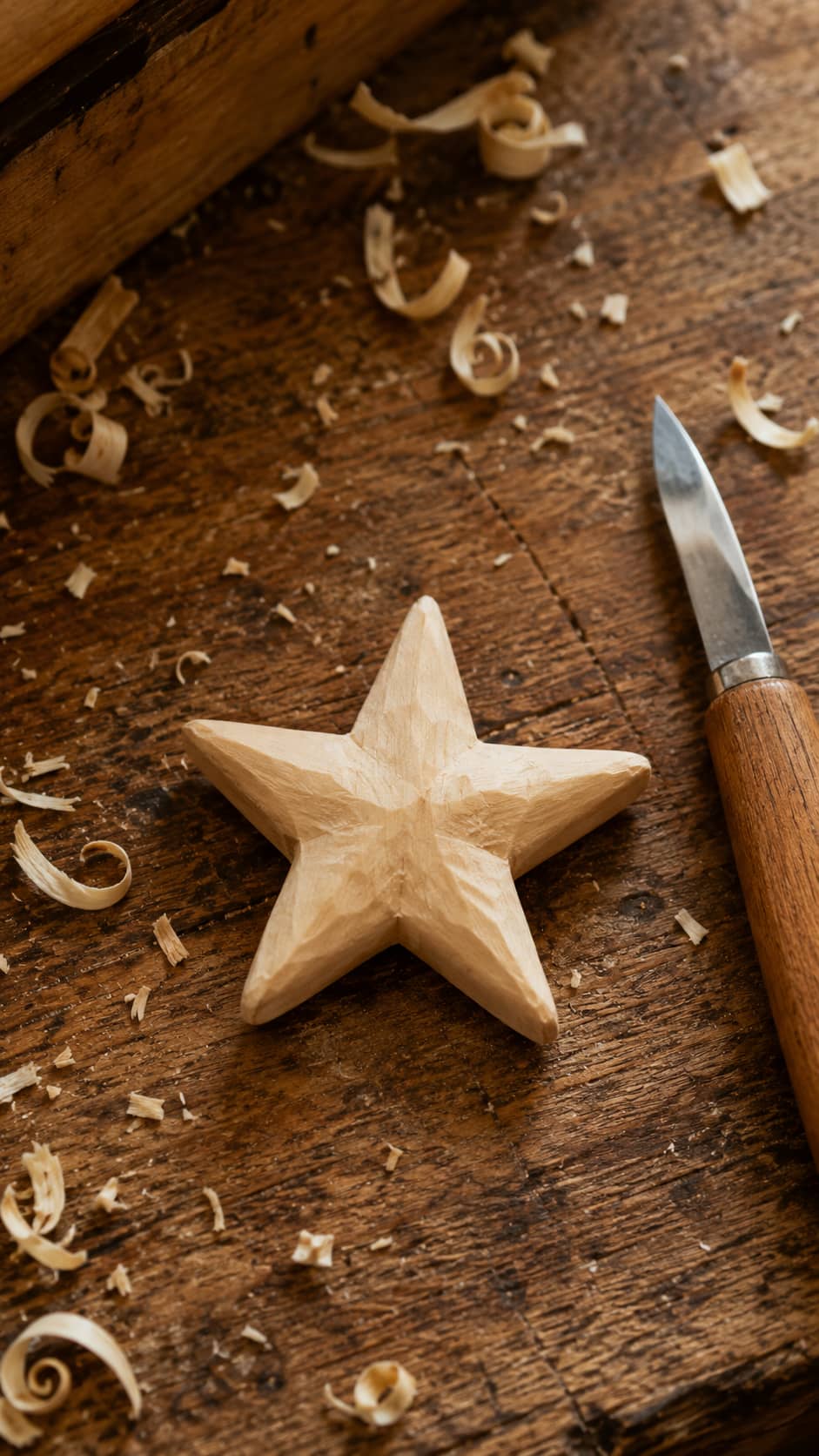
A star pattern is great for practicing corners and edges. Unlike the rounded shapes earlier on this list, a star forces you to carve clean points without splitting the wood at the tips. Take it slow at each point and this becomes one of the more satisfying shapes to finish and hang up.
- Best for: Christmas decor, ornaments
- Difficulty: Easy–Medium
- Beginner tip: Slightly round the points so they do not chip easily.
12. Simple Cross Pattern
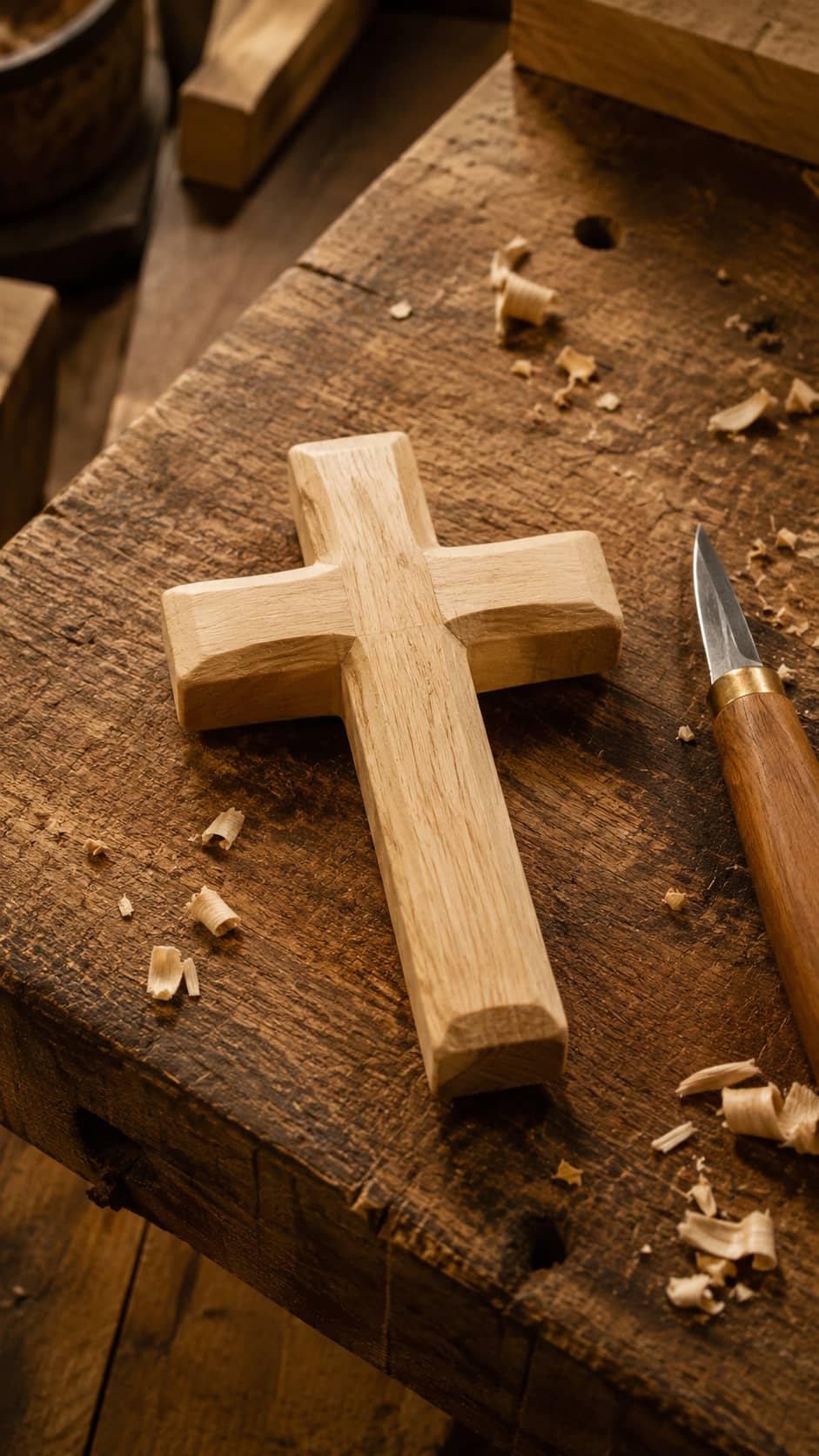
A cross pattern is clean, meaningful, and beginner-friendly. The shape is really just two rectangles overlapping, so there’s very little guesswork involved once you’ve marked your center lines. It also makes a thoughtful, personal gift for someone who appreciates handmade pieces with a bit of meaning behind them.
- Best for: Gifts, ornaments, wall decor
- Difficulty: Easy
- Beginner tip: Keep the corners crisp and sand lightly.
13. Wooden Spoon Pattern
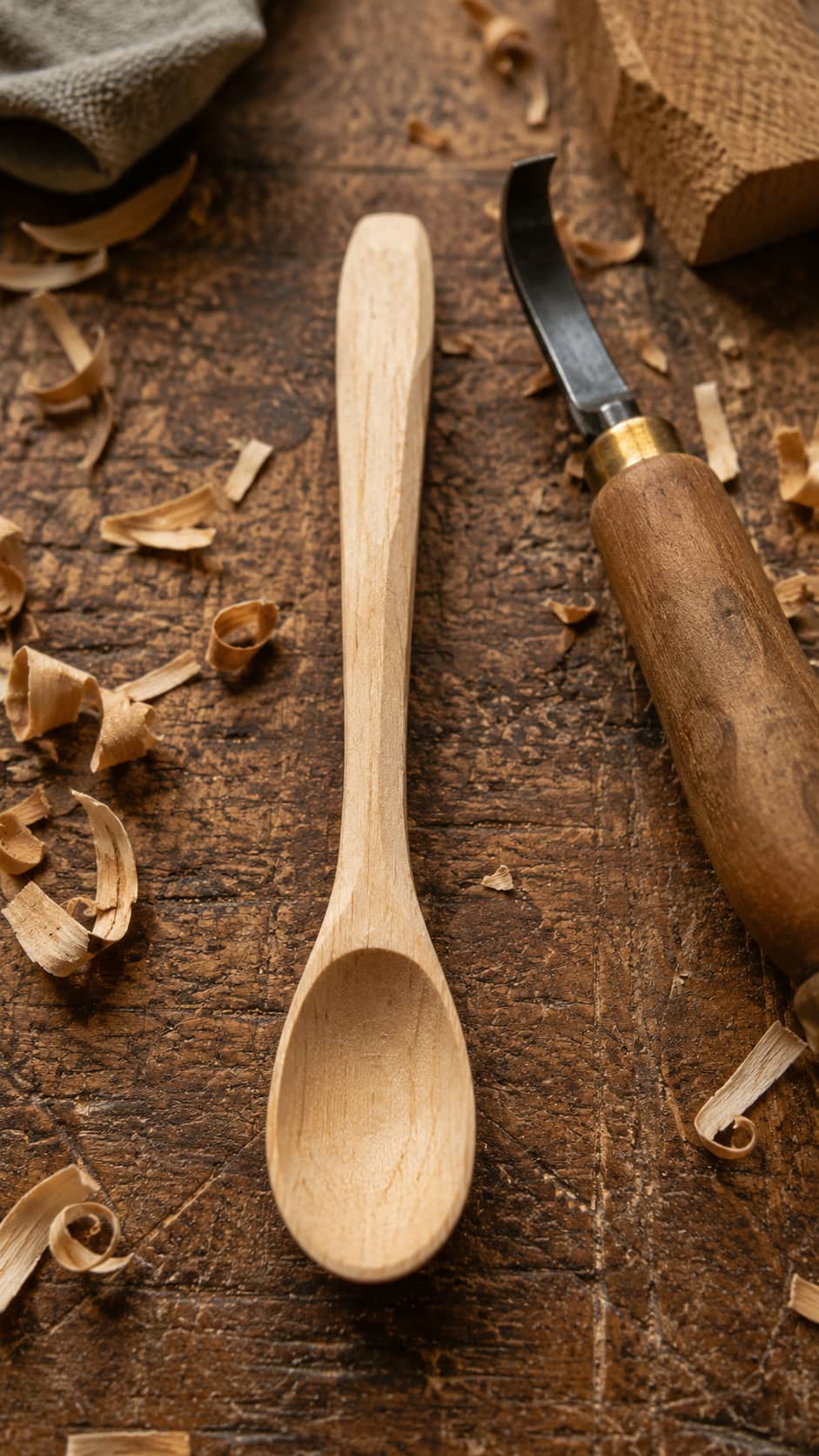
A spoon pattern is more advanced than a simple ornament, but it’s one of the most useful beginner carving projects you can tackle. You’ll need to hollow out the bowl, which introduces a gouge or hook knife if you haven’t used one yet. The payoff is worth it, though — a spoon is something you’ll actually use, not just something that sits on a shelf.
- Best for: Functional carving
- Difficulty: Medium
- Beginner tip: Start with a small coffee scoop or tasting spoon before carving a full-size spoon.
If spoons interest you, How to Carve a Wooden Spoon by Hand walks through the process in detail.
14. Acorn Pattern
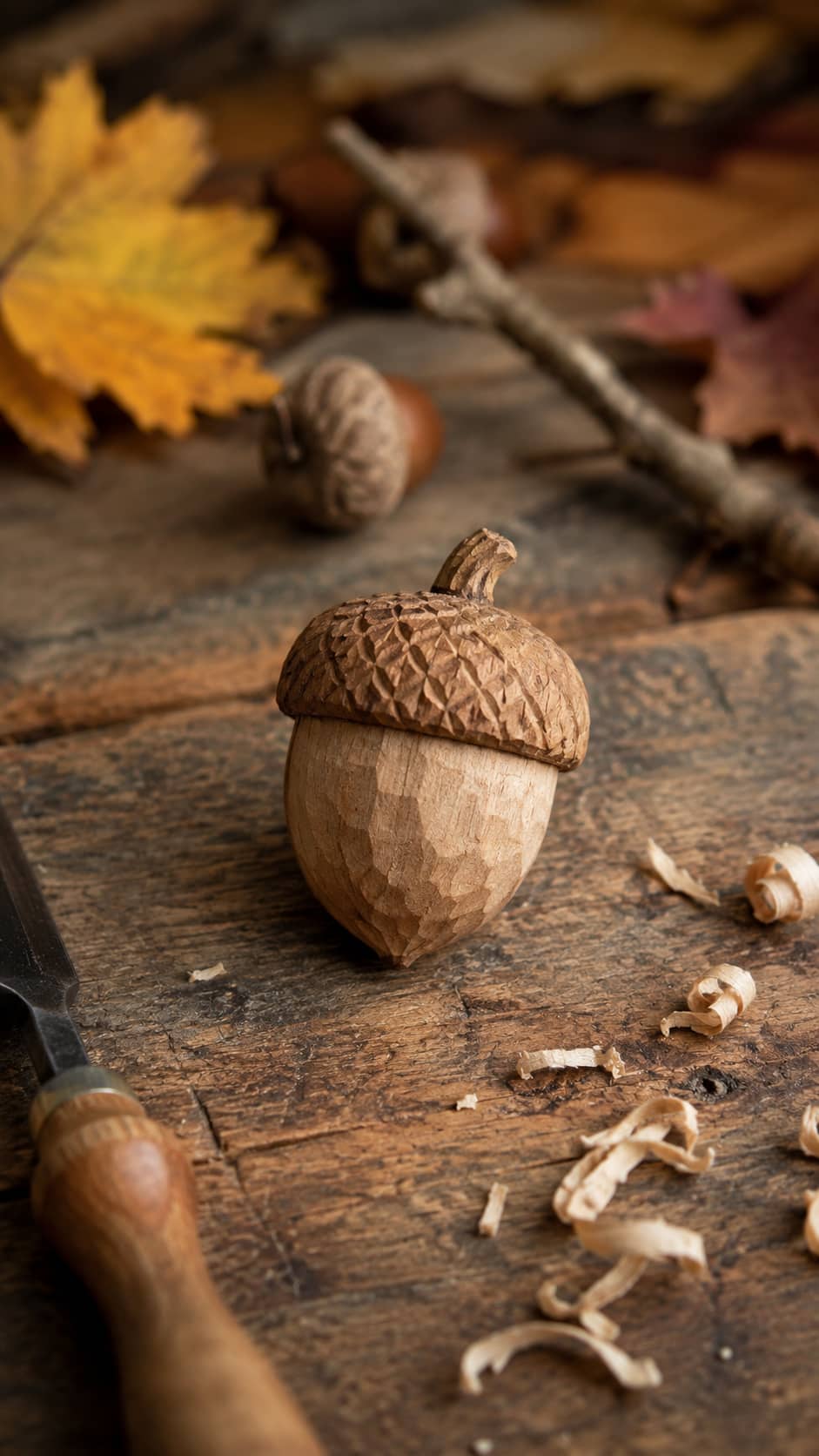
An acorn is a cute nature-inspired pattern with a simple cap and rounded bottom. It’s basically two connected shapes — an oval body and a slightly wider cap — so there’s not much room to overthink it. Small texture lines on the cap add a nice realistic touch once you’re comfortable with the base shape.
- Best for: Fall decor, small carving
- Difficulty: Easy
- Beginner tip: Use shallow lines on the cap for texture.
15. Simple Bear Pattern
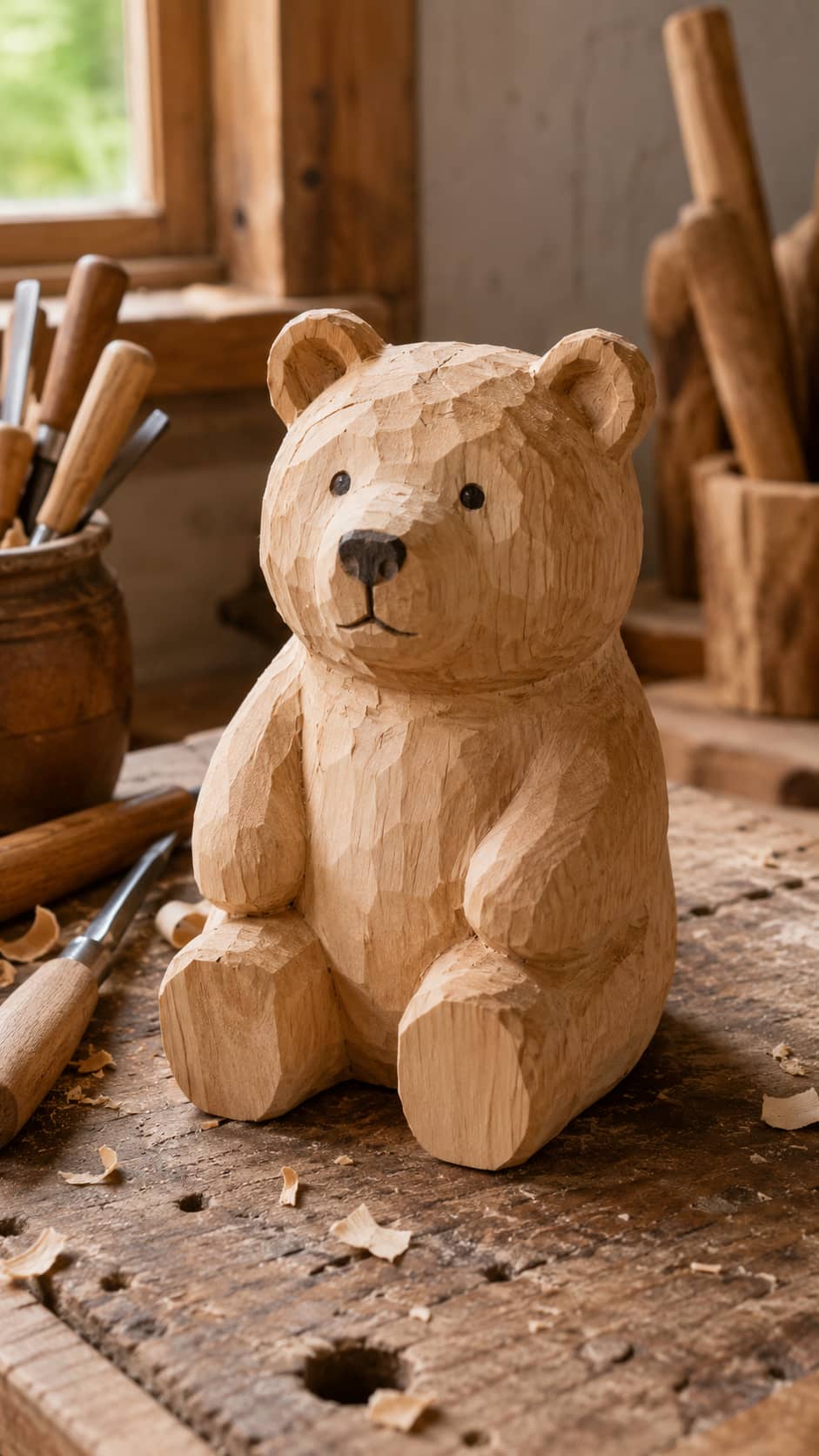
A bear pattern can be beginner-friendly if you keep the body chunky and rounded. A sitting bear or standing bear with short, thick limbs is far easier to carve than one in a dynamic pose. Save the more detailed running or roaring bear patterns for after you’ve built up some confidence with simpler animal shapes.
- Best for: Animal carving
- Difficulty: Easy–Medium
- Beginner tip: Avoid thin arms and legs. Chunky shapes are stronger.
16. Wooden Cat Pattern
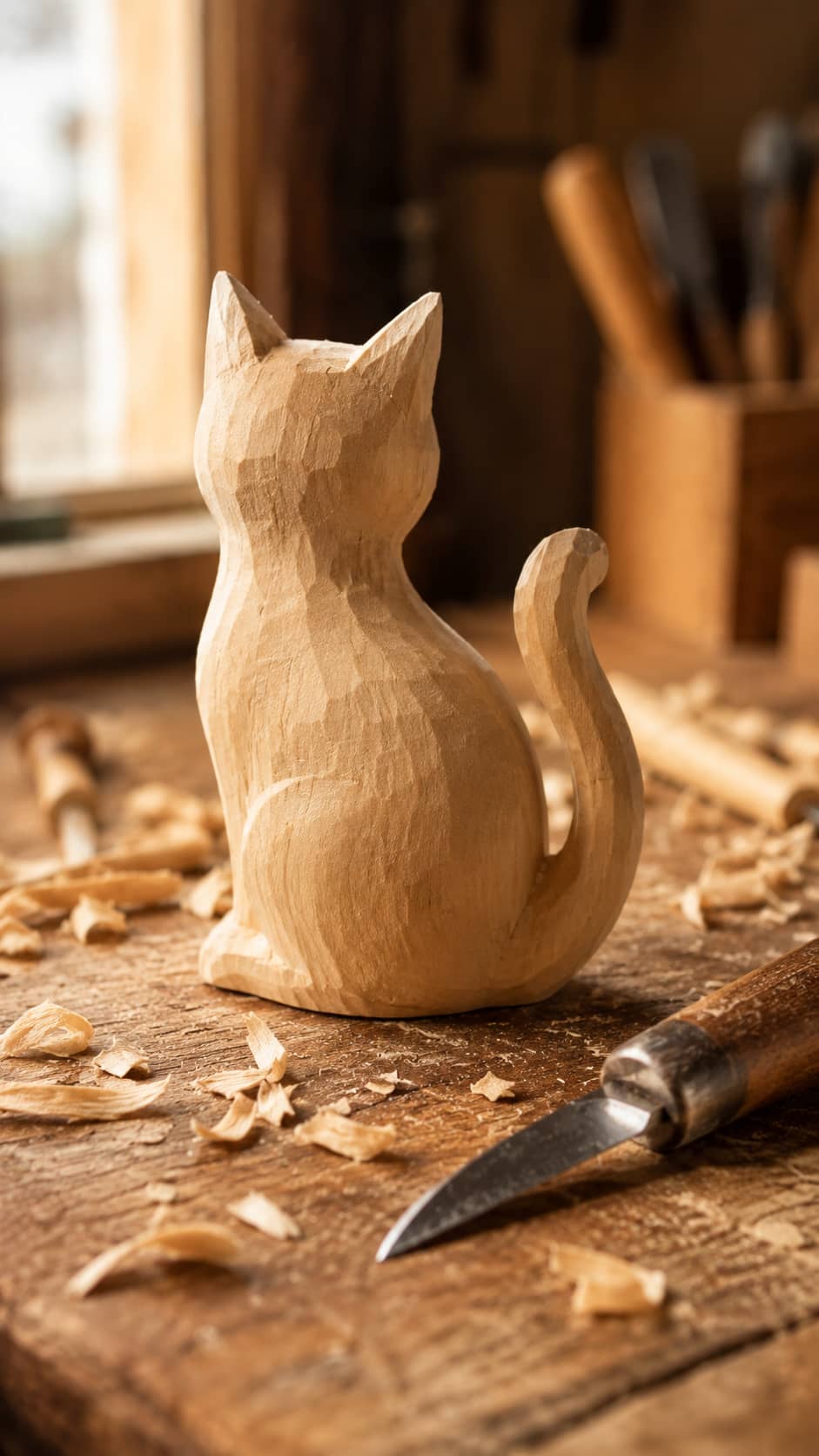
A cat silhouette is easy to recognize even with very little detail. Pointed ears and a curled or upright tail are really all it takes for people to know exactly what you carved. This makes it a great pattern for practicing clean silhouette work before you attempt anything with more surface detail.
- Best for: Animal silhouettes, gifts
- Difficulty: Easy
- Beginner tip: Focus on the ears and tail shape.
17. Small Rabbit Pattern
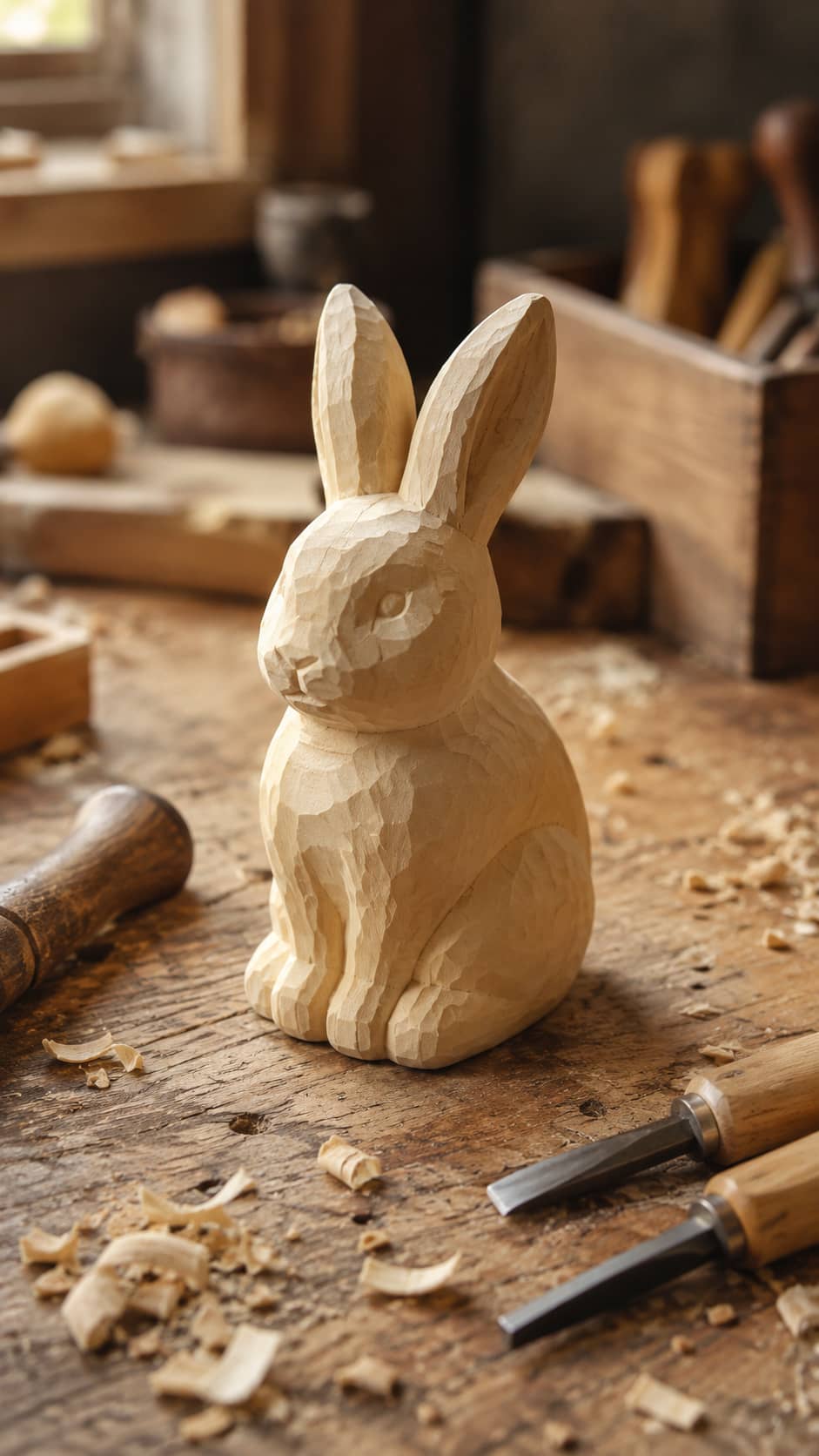
A rabbit pattern is great for spring, Easter, or simple animal carving practice. The long ears are the main visual feature, so getting those proportions right matters more than nailing tiny facial details. Sitting rabbits with tucked-in legs are much easier to carve than ones mid-hop, so start there.
- Best for: Seasonal decor, animal carving
- Difficulty: Easy–Medium
- Beginner tip: Keep the ears thick enough so they do not snap.
18. Mountain Scene Pattern
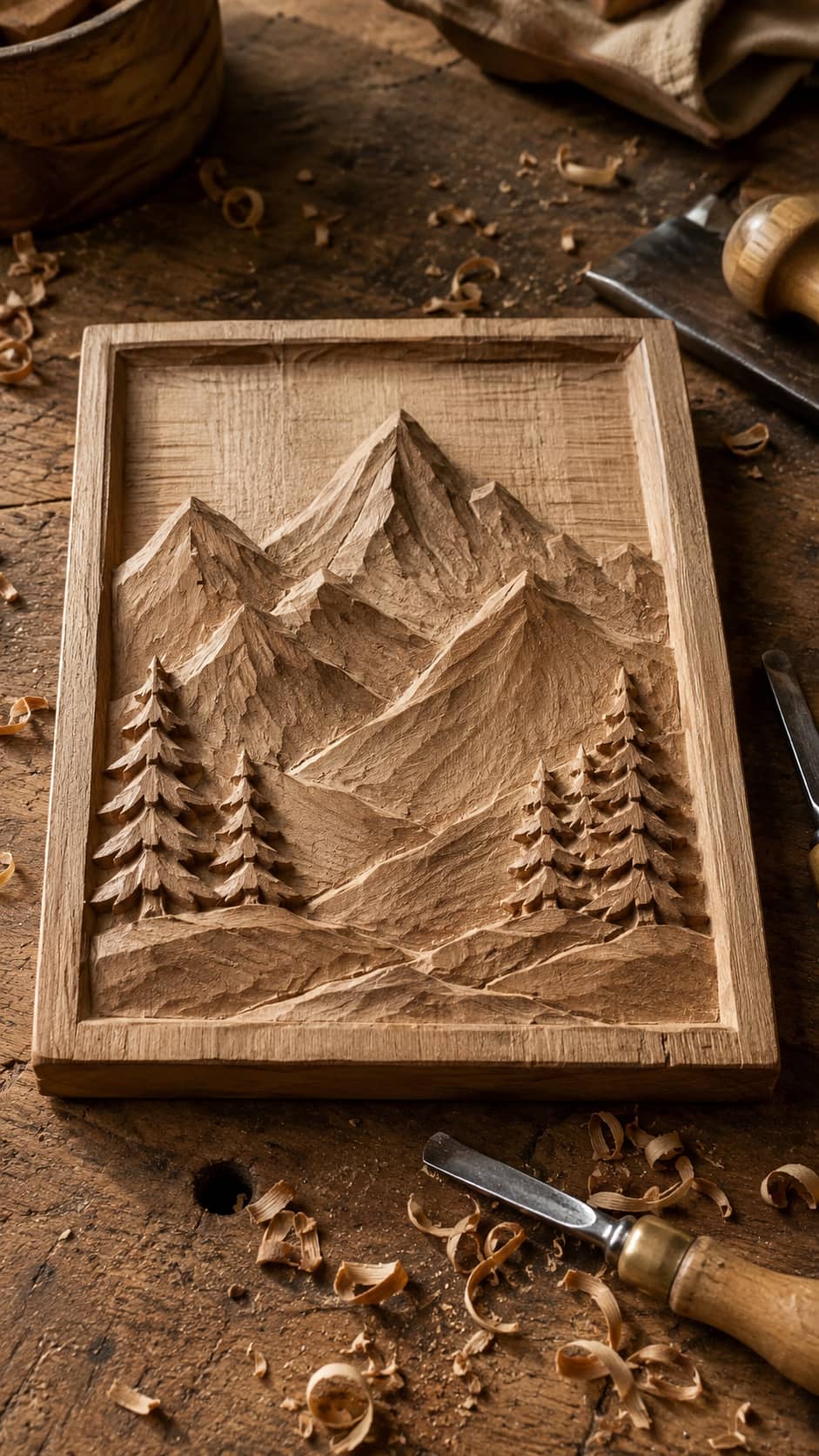
A simple mountain pattern works beautifully on flat wood panels. Layering a few overlapping triangle shapes at different depths creates a surprisingly convincing sense of distance without much extra carving. This is one of the more relaxing relief patterns on this list, since the shapes are all straight-edged and repetitive.
- Best for: Relief carving, wood burning, wall art
- Difficulty: Easy
- Beginner tip: Use layered triangle shapes for the mountains.
If wood burning is more your speed, How to Start Wood Burning: The Complete Beginner’s Guide is a good next stop.
19. Sunflower Pattern
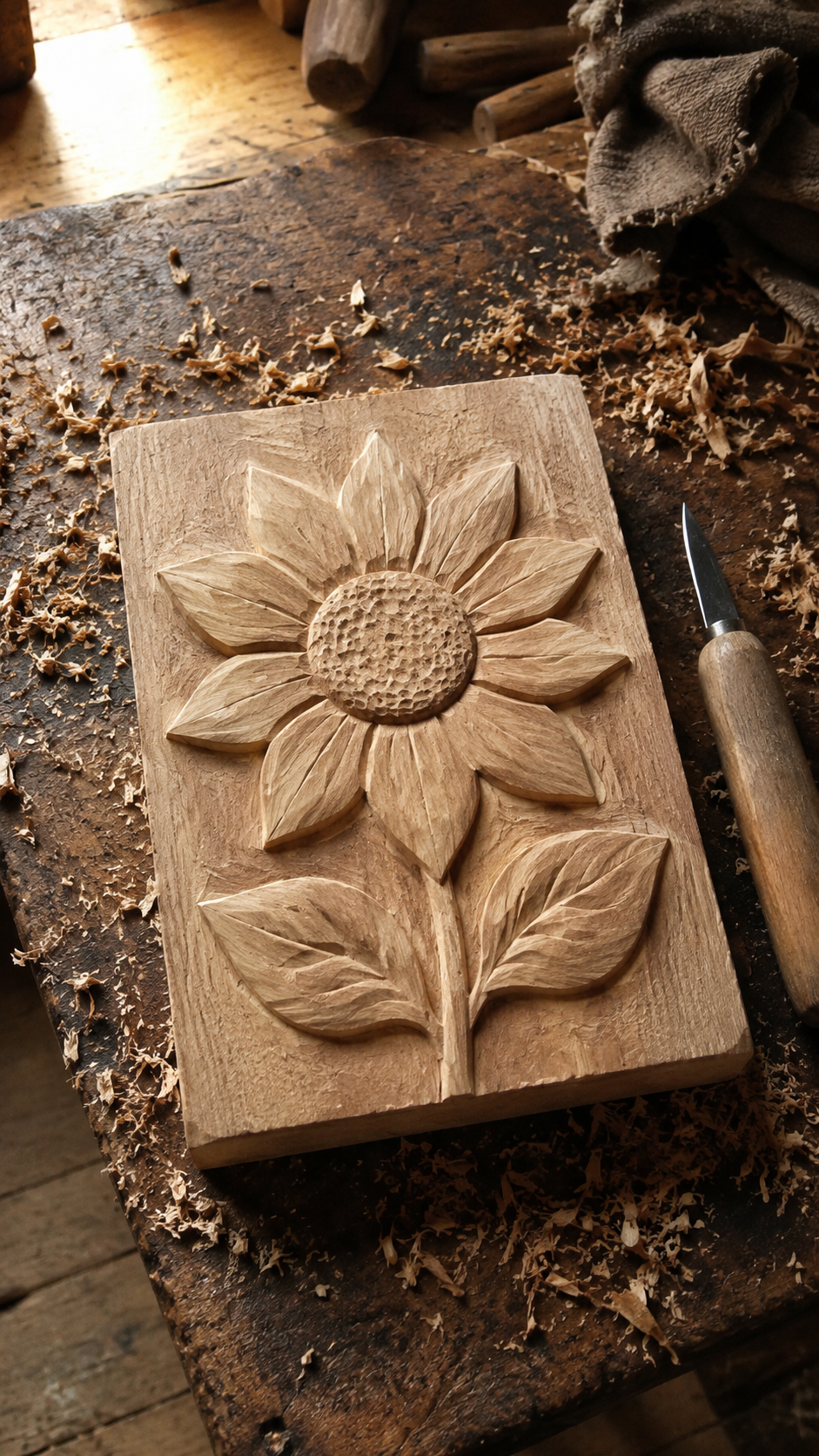
A sunflower pattern is more detailed, but beginners can keep the petals large and simple. Six to eight oversized petals around a round center look just as good as twenty tiny ones, and they’re a lot less fiddly to carve cleanly. This pattern works especially well as a relief carving on a garden sign or small wall plaque.
- Best for: Decorative carving, garden signs
- Difficulty: Medium
- Beginner tip: Carve fewer, larger petals instead of many tiny ones.
20. Simple Face Pattern
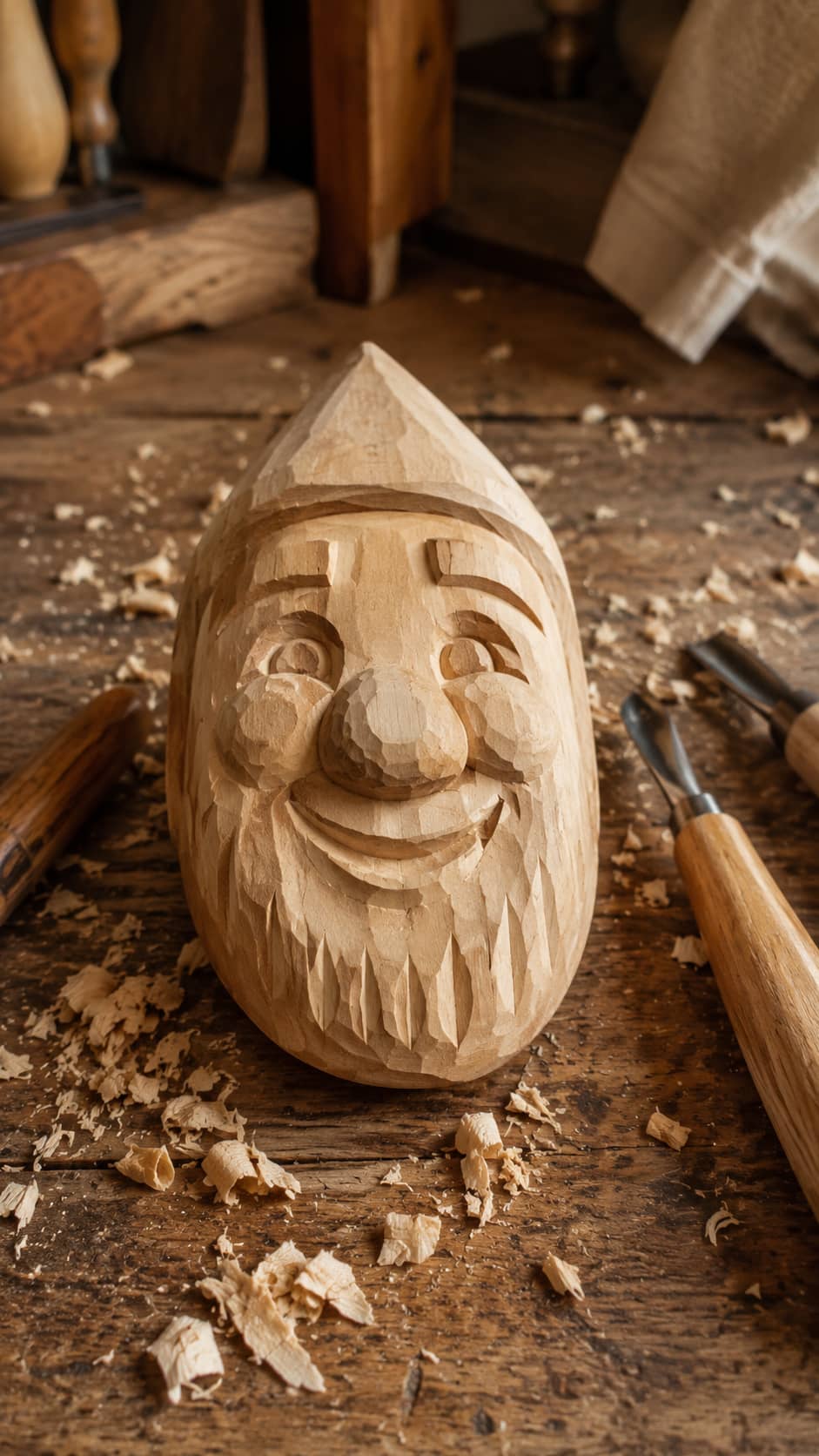
A beginner face pattern helps you practice eyes, nose, mouth, and expression without going too realistic. Cartoon-style proportions are far more forgiving than realistic ones, since exaggerated features hide small asymmetries instead of highlighting them. This is a fun pattern to revisit over and over, since every face turns out with its own personality whether you plan it that way or not.
- Best for: Face carving practice
- Difficulty: Medium
- Beginner tip: Start with cartoon-style features before trying realistic faces.
For a deeper dive, How to Carve Expressive Faces in Wood: A Beginner’s Guide covers this in more detail.
21. Gnome Pattern
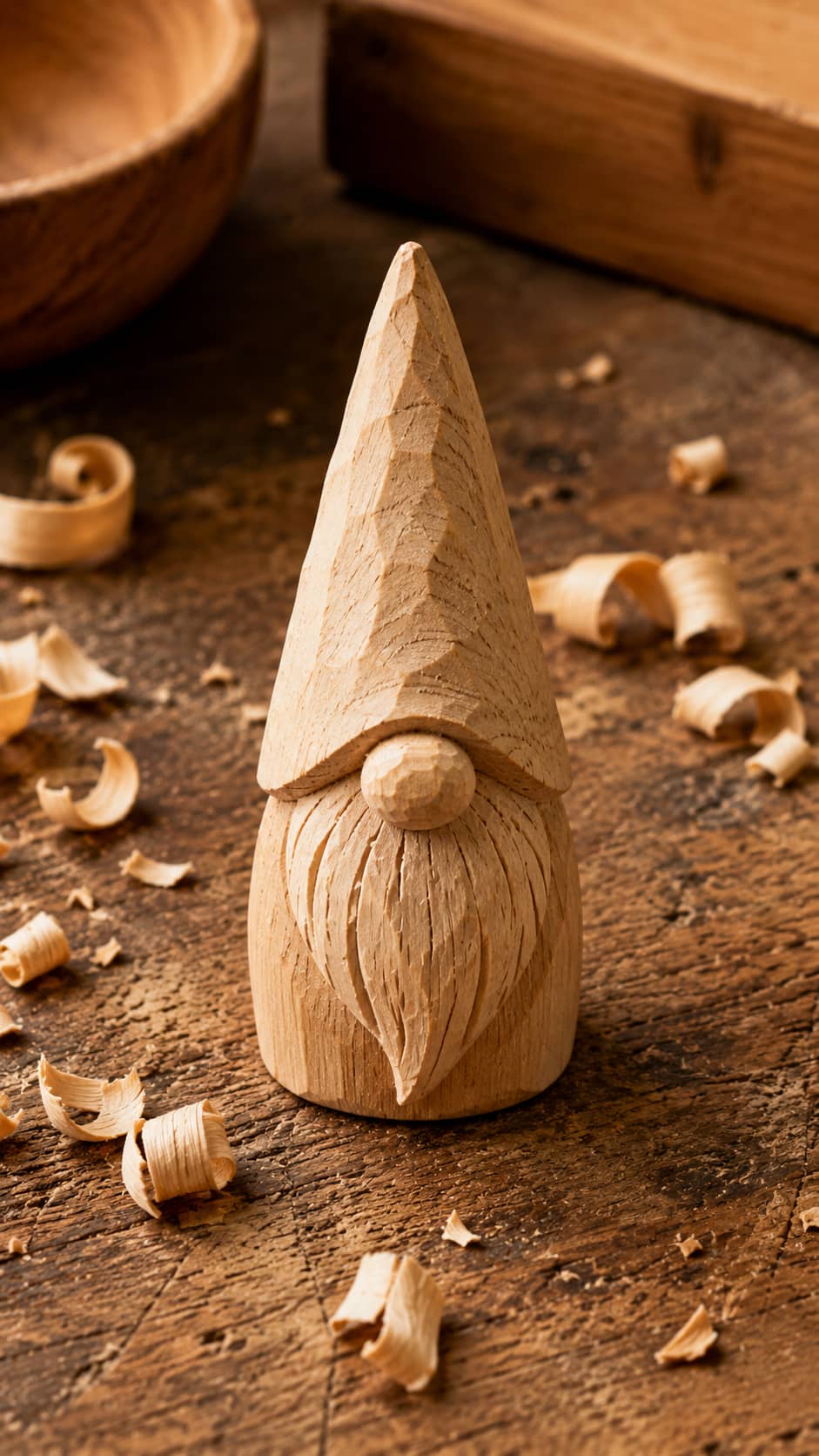
A gnome is a fun beginner carving pattern because the hat, nose, and beard are easy to exaggerate. Most of the shape is a tall cone-like hat and a rounded beard, which means there’s very little precision required to get something charming. Gnomes have become a genuinely popular holiday and home decor item too, so this one doubles as a gift idea.
- Best for: Holiday decor, gifts
- Difficulty: Easy–Medium
- Beginner tip: Let the hat take up most of the shape.
22. Whale Pattern
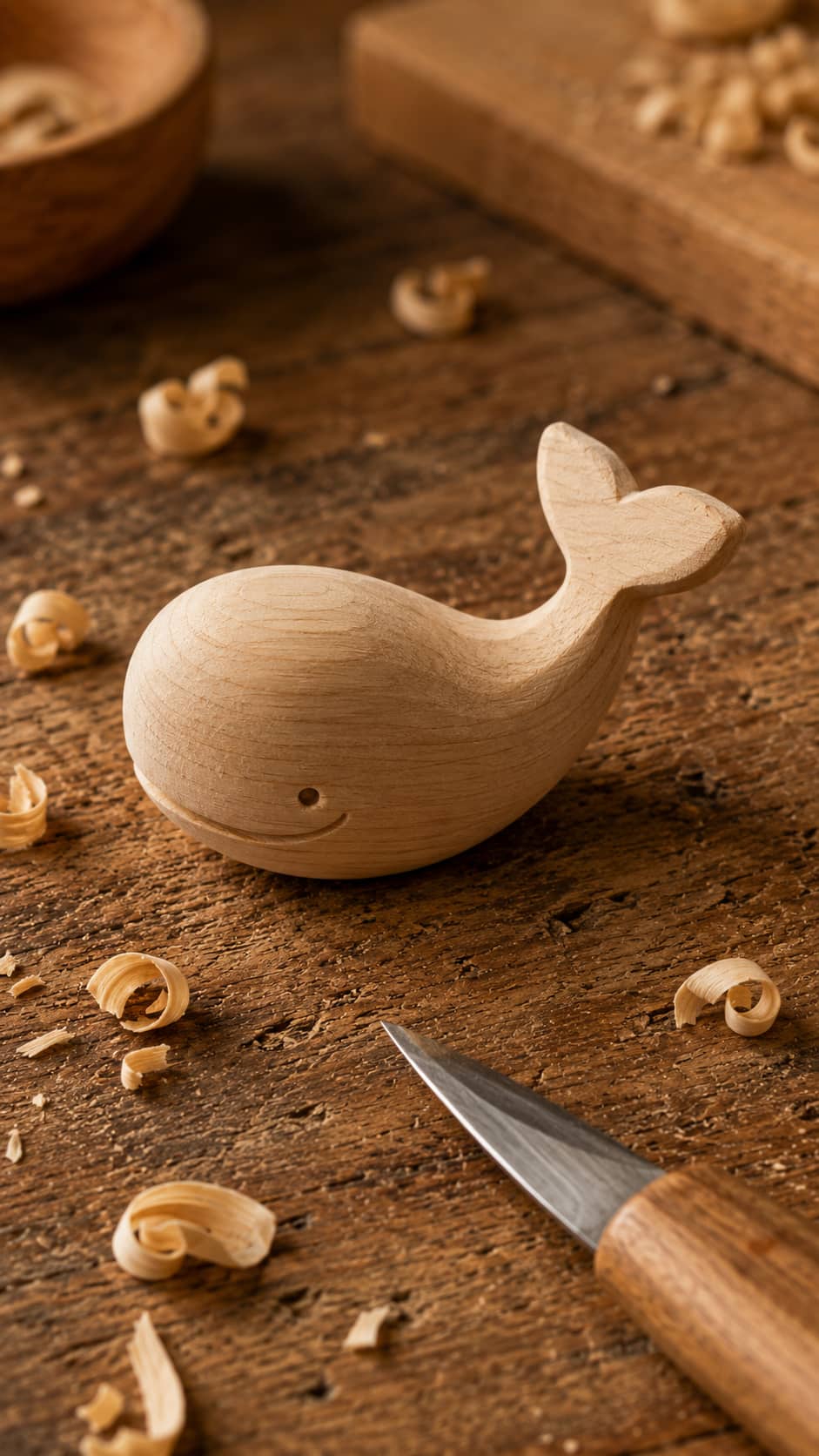
A whale pattern is smooth, simple, and perfect for small wood carving. The body is one continuous curve from nose to tail, similar to the fish pattern but chunkier and more rounded overall. Kids especially love these little carvings, which makes them a nice project if you’re carving alongside your family.
- Best for: Kids’ decor, small animal carving
- Difficulty: Easy
- Beginner tip: Keep the tail broad and rounded.
23. Wooden Bookmark Pattern
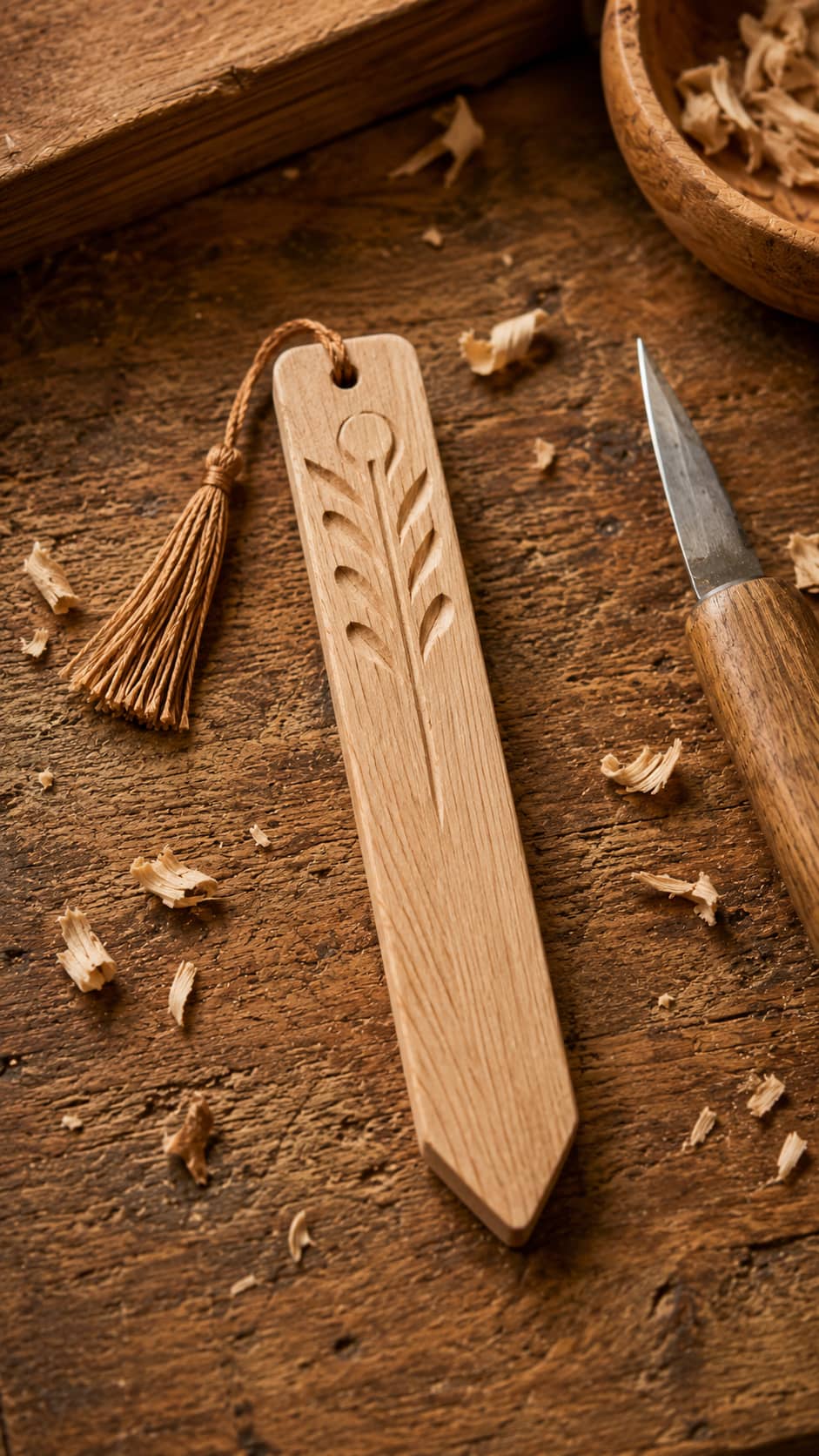
A carved bookmark pattern can be made from a thin strip of wood with simple lines or a small design at the top. Because the wood is thin, you’re mostly doing surface-level detail rather than deep carving, which keeps the risk of splitting fairly low. It’s also one of the fastest projects on this list, so it’s a good one to knock out when you only have an hour or two free.
- Best for: Gifts, beginner detail practice
- Difficulty: Easy
- Beginner tip: Use shallow carving so the bookmark stays strong.
24. Name Sign Pattern

A simple name sign or word plaque is perfect for practicing letters, borders, and shallow relief carving. Carving letters is more about patience than skill, since straight lines and consistent depth matter more than fancy technique. A name sign also happens to be one of the most requested handmade gifts, so it’s worth adding to your practice list early.
- Best for: Personalized gifts, signs
- Difficulty: Medium
- Beginner tip: Use large block letters instead of tiny script lettering.
25. Simple Border Pattern
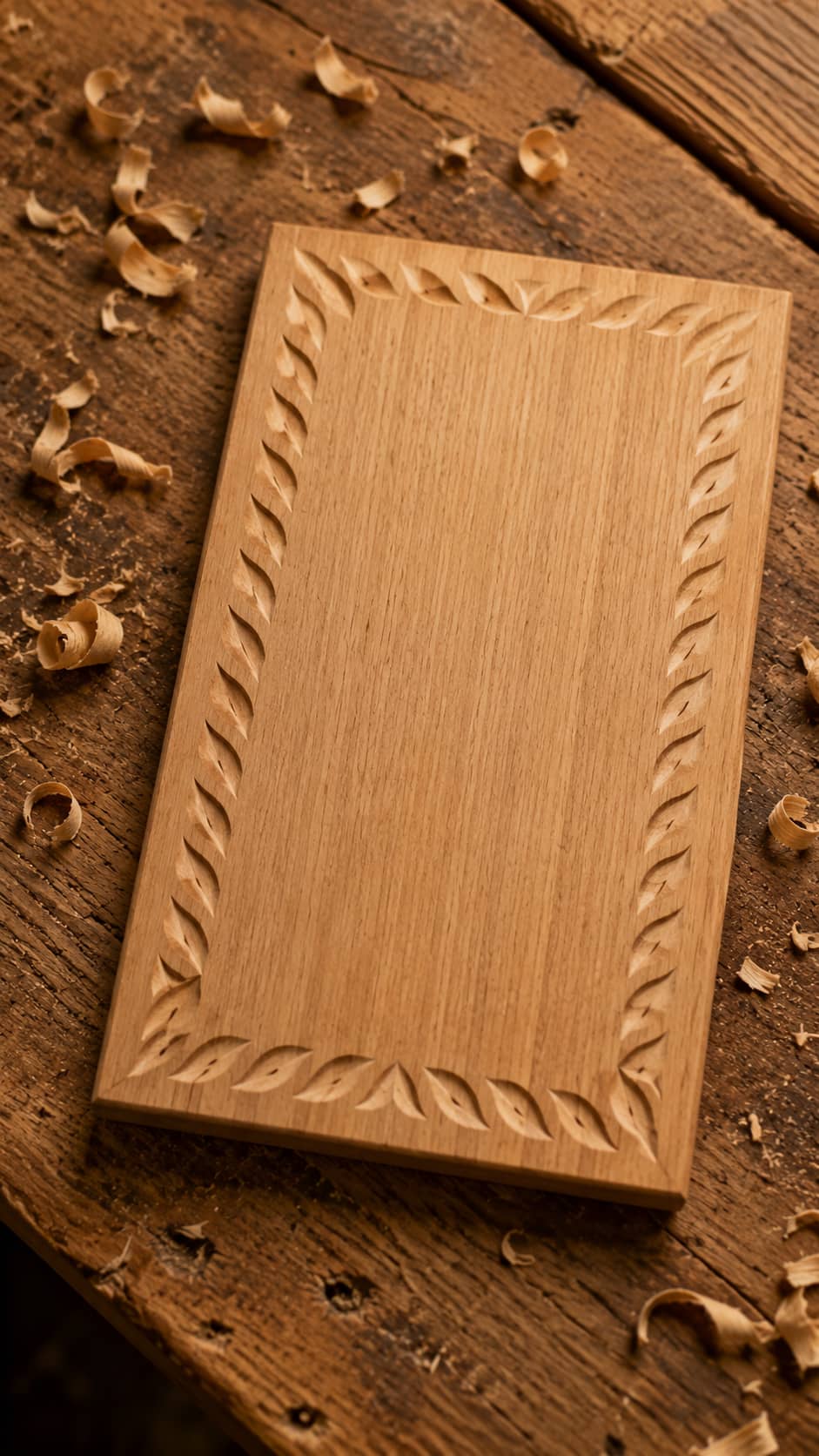
A border pattern is great practice for decorating boxes, signs, trays, shelves, and panels. Repeating a single simple shape along an edge trains your hand to carve with consistent spacing and depth, which is a skill that quietly improves every other project you tackle. It’s also a satisfying way to dress up a plain, otherwise finished piece without starting an entirely new carve.
- Best for: Relief carving, decorative edges
- Difficulty: Easy
- Beginner tip: Repeat one simple shape, like a triangle, leaf, or wave.
Best Wood Carving Patterns for Absolute Beginners
If you’re brand new and just want early wins, start with these:
- Simple leaf
- Wooden fish
- Mushroom
- Wooden heart
- Tree pattern
- Crescent moon
- Simple border
- Whale
These patterns are forgiving because they use simple outlines, rounded shapes, and fewer small details. Ever wonder why some carvers quit after one project? IMO it’s usually because they picked something way too ambitious for a first try. Starting small and finishing something you’re proud of matters way more than jumping straight into an intricate design you’ll abandon halfway through.
Best Printable Wood Carving Patterns
Not every pattern prints and transfers equally well. Some hold up fine at small sizes; others turn into a blurry mess. The patterns that translate best tend to have bold, simple outlines rather than fine internal detail, since detail is exactly what gets lost when you shrink or resize a printed template.
Best printable options:
- Leaf pattern
- Feather pattern
- Flower relief pattern
- Mountain scene pattern
- Simple face pattern
- Spoon pattern
- Animal silhouettes
- Border patterns
For printables, use bold outlines and avoid tiny details. A clean pattern is easier to transfer and easier to carve. FYI, this is where a lot of Pinterest patterns fall apart — gorgeous on screen, useless once you try to trace them.
Best Wood Carving Patterns for Gifts
Small carved gifts feel handmade without needing expensive materials, and honestly, people react to them way better than you’d expect from something that took an afternoon. There’s something about a hand-carved object that a store-bought item just can’t compete with — people can tell someone actually spent time making it. Keep a few blanks pre-cut in your workshop and you’ll always have a last-minute gift ready to go.
Gift-friendly ideas:
- Wooden heart
- Small owl
- Crescent moon
- Star ornament
- Spoon
- Name sign
- Bookmark
- Gnome
- Flower relief
Common Beginner Mistakes to Avoid
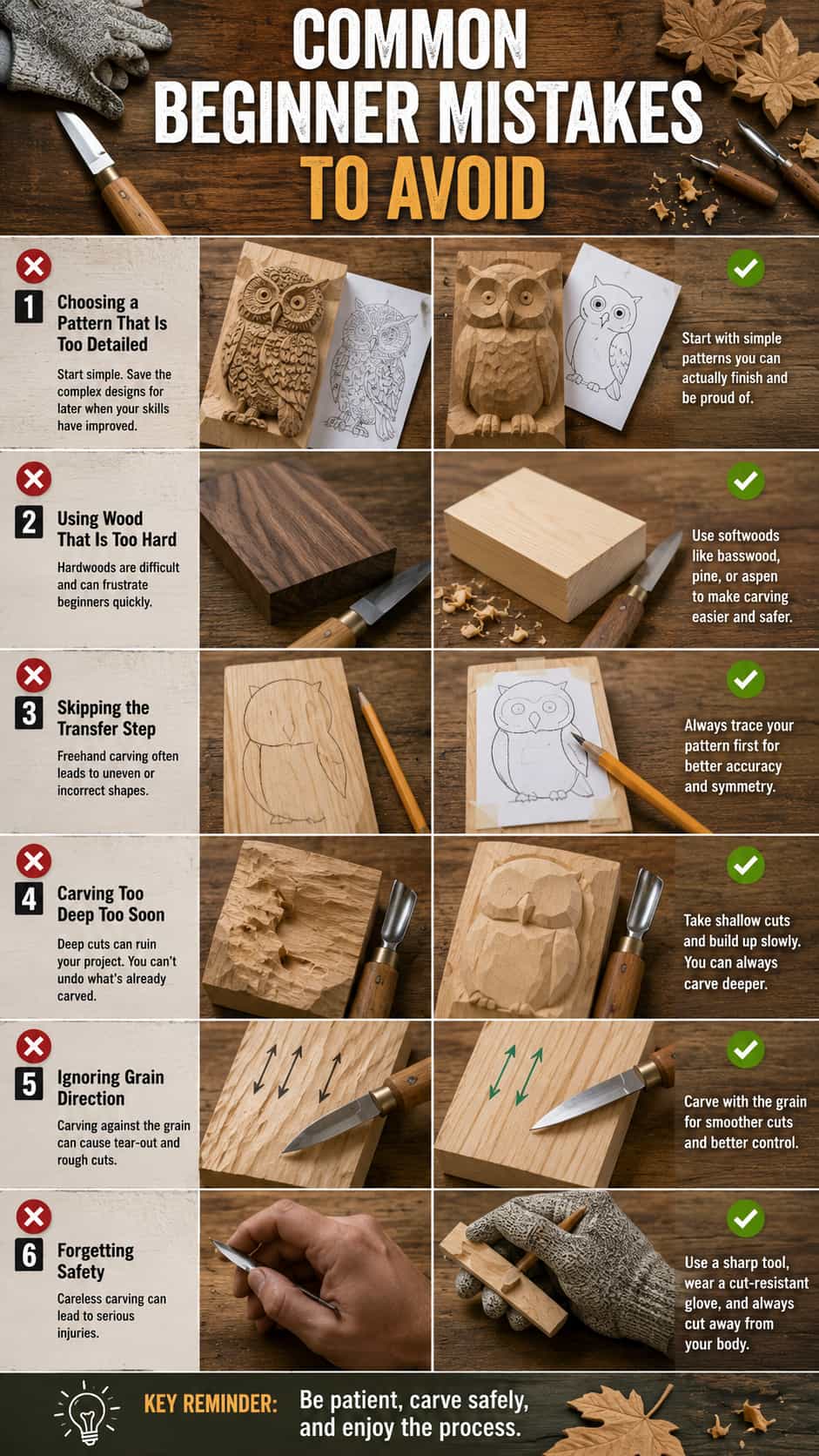
Choosing a Pattern That Is Too Detailed
Start simple. Tiny feathers, realistic faces, and detailed animal fur can wait until your knife skills catch up to your ambition. It’s tempting to jump straight to the coolest-looking pattern you find online, but a half-finished, frustrating carve does way more damage to your motivation than a simple one you actually complete.
Using Wood That Is Too Hard
Hardwood can frustrate beginners fast. Save the walnut and oak for later projects. Dense woods require more force and sharper tools to carve cleanly, and that extra resistance makes it much easier to slip and hurt yourself, especially if you’re still getting used to how a knife behaves.
Skipping the Transfer Step
Freehand carving is harder than it looks. Trace the pattern first — your future self will thank you. Skipping this step usually means discovering halfway through the carve that one side is bigger than the other, and by then it’s too late to fix without starting over.
Carving Too Deep Too Soon
Take shallow cuts and build up slowly. You can always carve deeper. You cannot un-carve wood you’ve already removed, so patience here saves you from ruining an otherwise good project in the last ten minutes of work.
Ignoring Grain Direction
Carving against the grain can make cuts rough and unpredictable. Pay attention to which way the wood wants to split. Run a test cut on a scrap edge first — if the wood tears or lifts instead of slicing cleanly, flip your direction and try again.
Forgetting Safety
Use a sharp tool, wear a cut-resistant glove, and keep your hands out of the carving path. A sharp knife is actually safer than a dull one — dull blades slip. Always cut away from your body and your supporting hand, and take breaks if your grip starts feeling tired, since that’s usually when accidents happen.
Final Thoughts
Twenty-five patterns is a lot of options, but you don’t need to carve all of them this month. Pick one that matches your current skill level, trace it onto a piece of basswood, and just start cutting.
The leaf, the fish, and the mushroom are the easiest launching points if you’re brand new to this. Once those start feeling easy, work your way toward the feather, the flower relief, or the spoon. Carving is one of those hobbies where consistent small wins build real skill fast.
So which pattern are you carving first? Grab your knife, pick a shape, and get that first block of wood moving.