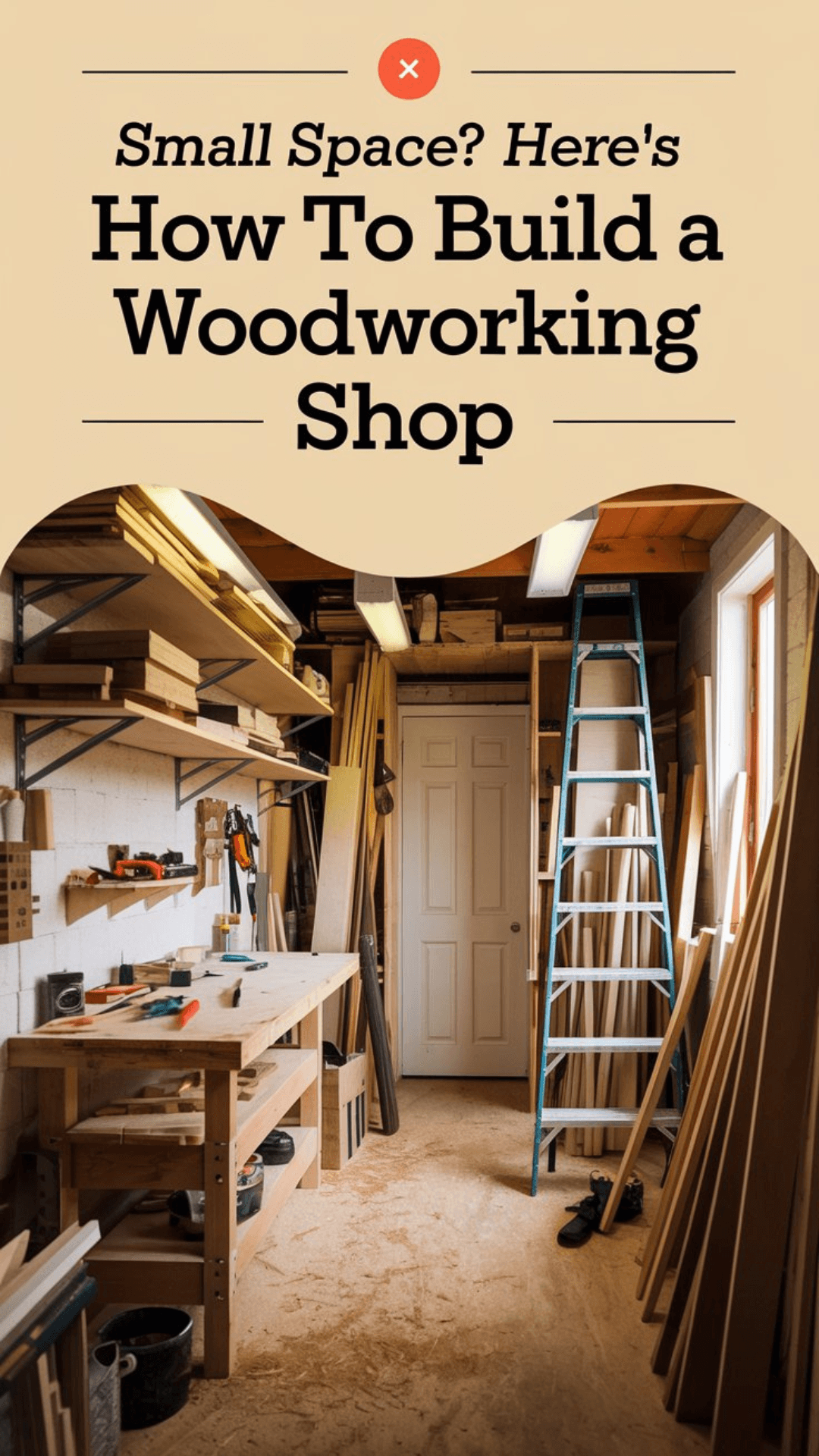
Let me guess — you’ve been watching woodworking videos for months, your Pinterest board is full of gorgeous projects, and you’re convinced you need a 2,000 sq ft workshop with $10,000 worth of tools before you can even touch a piece of wood. Sound familiar? 🙂
Here’s the truth: opening a small woodworking shop is easier and less expensive than most people believe. I’m not just saying this to make you feel better. Many skilled woodworkers began in a spare area of their garage, with only a few tools and no sophisticated equipment.
In this guide, I’ll walk you through everything — how to pick the right space, which tools you actually need, how to lay it all out, keep it organized, stay safe, and do it all without blowing your budget. Let’s get into it.
Why a Small Woodworking Shop Is Perfect for Beginners
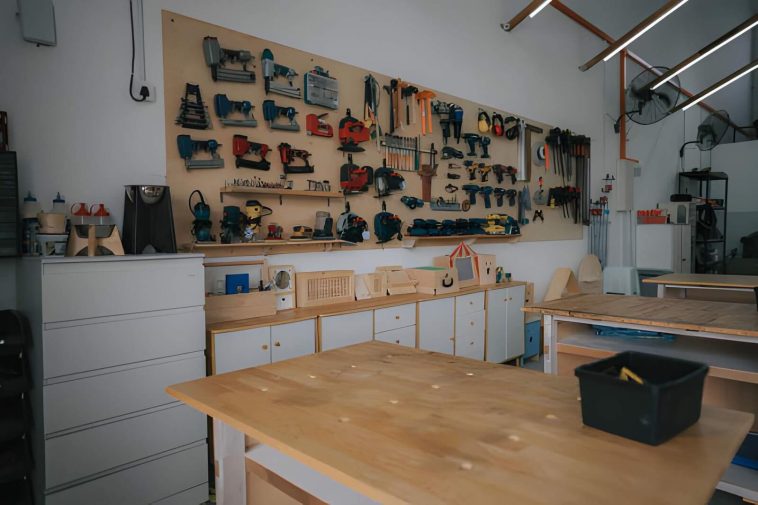
Before you start feeling bad about your 10×10 garage corner, let me tell you — small shops have some serious advantages. And no, I’m not just trying to make you feel better about your situation (well, maybe a little 😄).
For starters, a smaller space costs less to set up. You’re not spending thousands just to fill a room. It’s also way easier to keep organized — you can’t let clutter pile up when space is limited, which actually makes you a more disciplined woodworker.
And honestly? Smaller spaces are less overwhelming for beginners. You grow your shop as you grow your skills. That’s how it should work.
Spaces that work surprisingly well:
- Garage corner — probably the most popular starting point
- Backyard shed — great if you want a dedicated space
- Basement — underrated, especially in cold climates
- Spare room — yes, it’s possible with the right dust management
Choosing the Best Space for Your Woodworking Shop
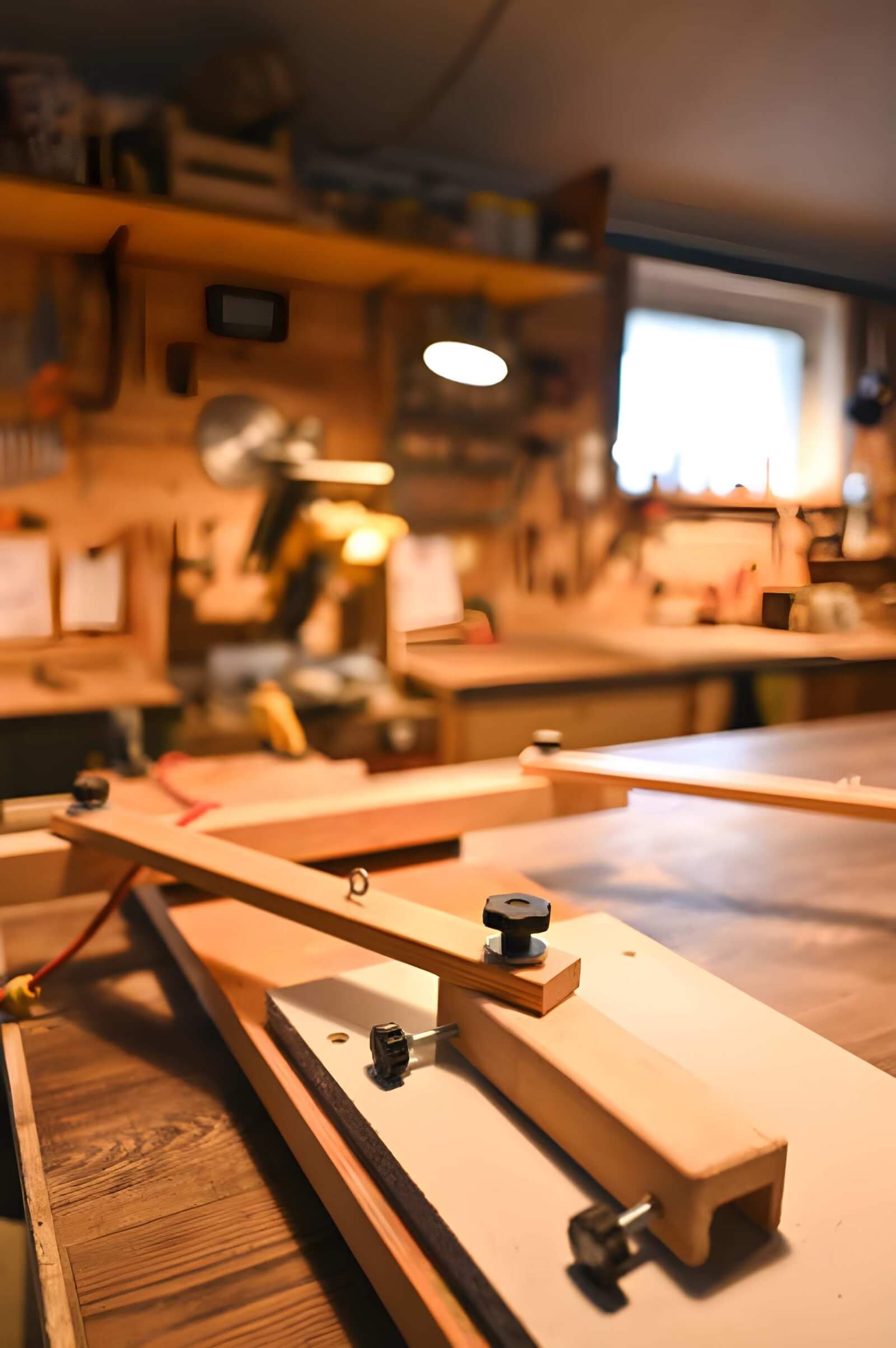
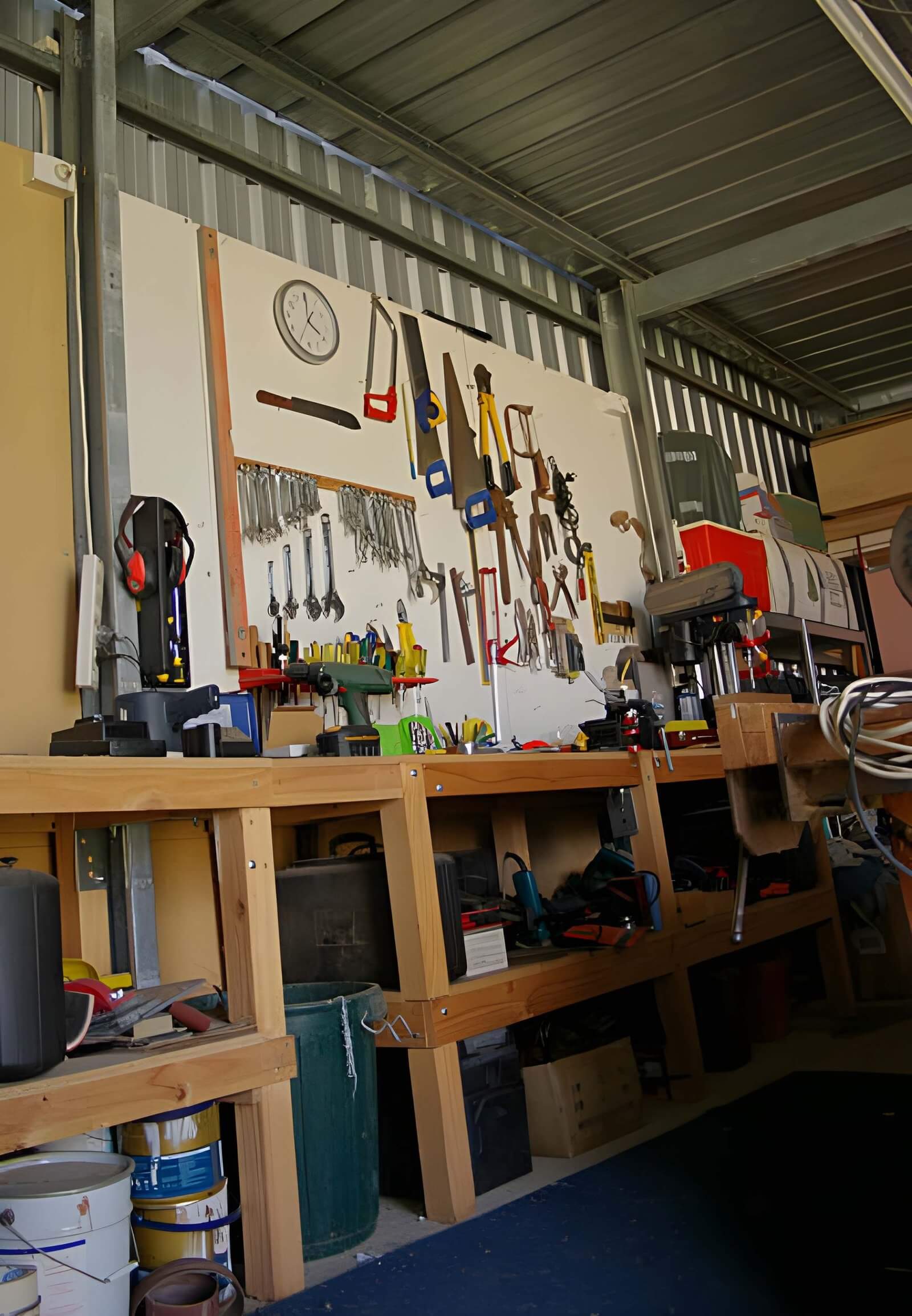
Not all spaces are created equal. Here’s a quick breakdown so you can pick what makes sense for your situation — no overthinking required.
Garage Workshop
The garage is the classic choice, and for good reason. You get natural ventilation, space for larger tools, and easy access when you want to work. The downside? Temperature swings can mess with your wood, and you’re sharing space with, you know, your car.
Basement Workshop
Basements are climate controlled and quiet — two things that matter more than people realize. The catch is dust management. Sawdust finds its way everywhere in a basement, so you’ll want a decent dust collection setup from day one. Furthermore, natural light is virtually nonexistent, so arrange your lighting accordingly.
Shed Workshop
A dedicated shed is the dream setup for a lot of hobbyists. You get a fully separate workspace — no sharing, no compromising. The trade-off is you may need to run electricity out there and insulate it if winters get rough where you live.
FYI: Regardless of which space you choose, make sure you have good overhead lighting and at least two power outlets. These aren’t optional — they’re the foundation of a functional shop.
Essential Tools for a Beginner Woodworking Shop
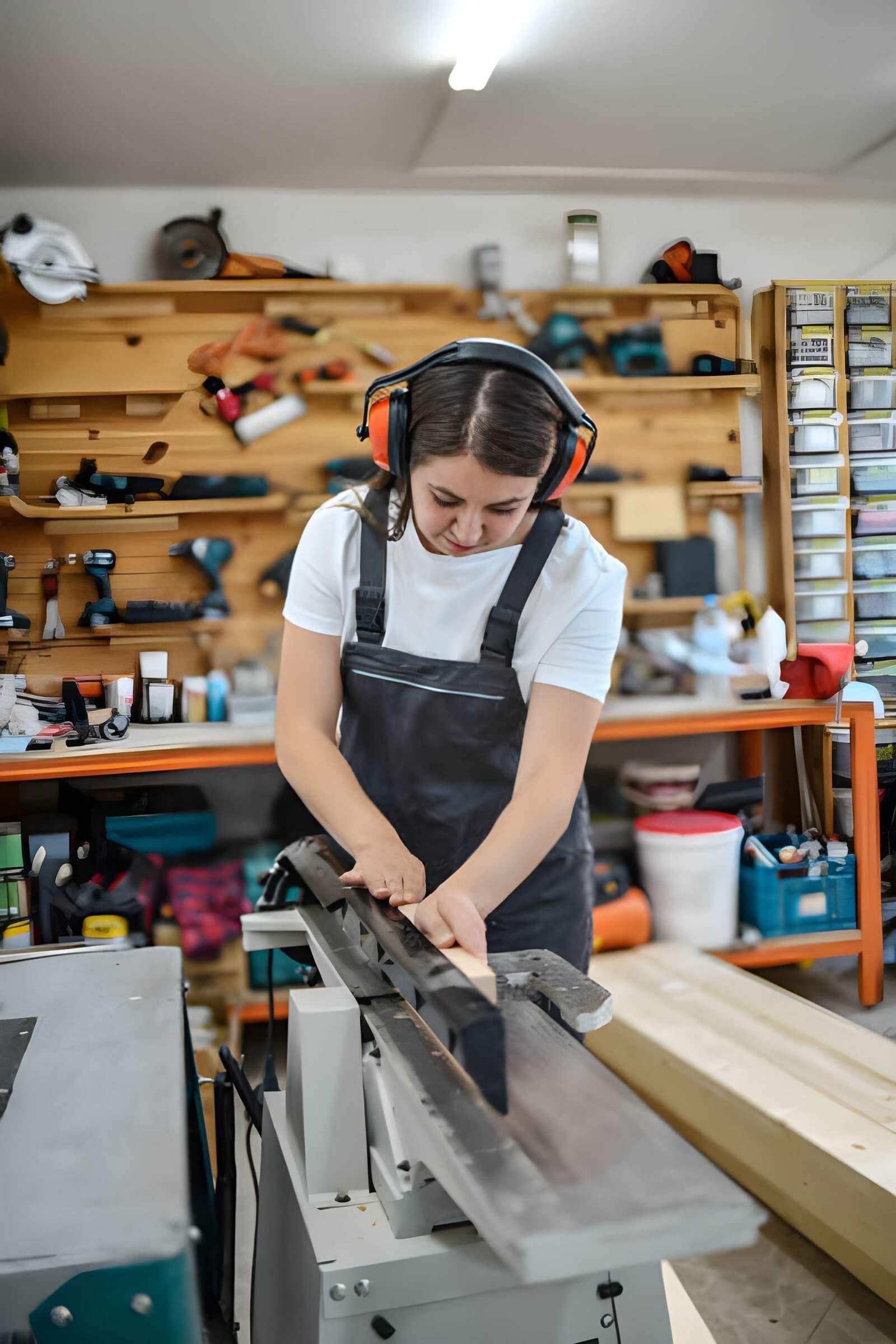
Here’s where a lot of beginners go wrong — they either buy everything at once or they’re so afraid of spending money that they don’t buy enough. Neither extreme works. Begin with the essentials and progress from there.
Core Power Tools
You don’t need a full cabinet shop to get started. These four tools will handle the vast majority of beginner projects:
- Circular saw — your go-to for straight cuts on boards and sheet goods
- Jigsaw — when you need curves or more detailed cuts
- Cordless drill — honestly, you probably already own this one
- Random orbital sander — because smooth finishes don’t happen by magic
These four tools will handle the vast majority of beginner projects. If you’re building your first toolkit, this list of must-have woodworking tools for beginners will help you choose the right ones.
Must-Have Hand Tools
Power tools get the glory, but hand tools do a lot of the real work. Make sure you have:
- Tape measure (get a good one — cheap tape measures lie to you)
- Hammer and mallet
- Set of chisels
- Combination square: for indicating and verifying angles
- Screwdrivers in multiple sizes
Clamps — Often Forgotten but Essential
I cannot stress this enough: you need clamps. More than you think. Clamps are your third hand during glue-ups and assembly — without them, you’re just hoping things hold together while the glue dries (spoiler: they won’t).
Start with a mix of bar clamps, quick-release clamps, and corner clamps. You’ll thank yourself later.
The Most Important Part of Your Shop: The Workbench

If your shop had a heart, it would be the workbench. Everything happens here — measuring, cutting, assembling, finishing. Don’t skip this.
For a small shop, think carefully about size. You want a bench that’s large enough to work on but doesn’t eat up all your floor space. A wall-mounted or folding workbench is a game-changer for tight spaces.
And build storage underneath it. Drawers, shelves, or a pegboard on the side — use every inch. A well-built workbench can replace an entire storage cabinet.
IMO, building your own workbench as your first project is one of the best moves a beginner can make. You’ll learn a ton and end up with something that fits your space perfectly.
If your shop had a heart, it would be the workbench. Everything happens here — measuring, cutting, assembling, and finishing.
If you’re looking for ideas, check out these free DIY workbench plans you can build this weekend.
Smart Layout Ideas for a Small Woodworking Shop
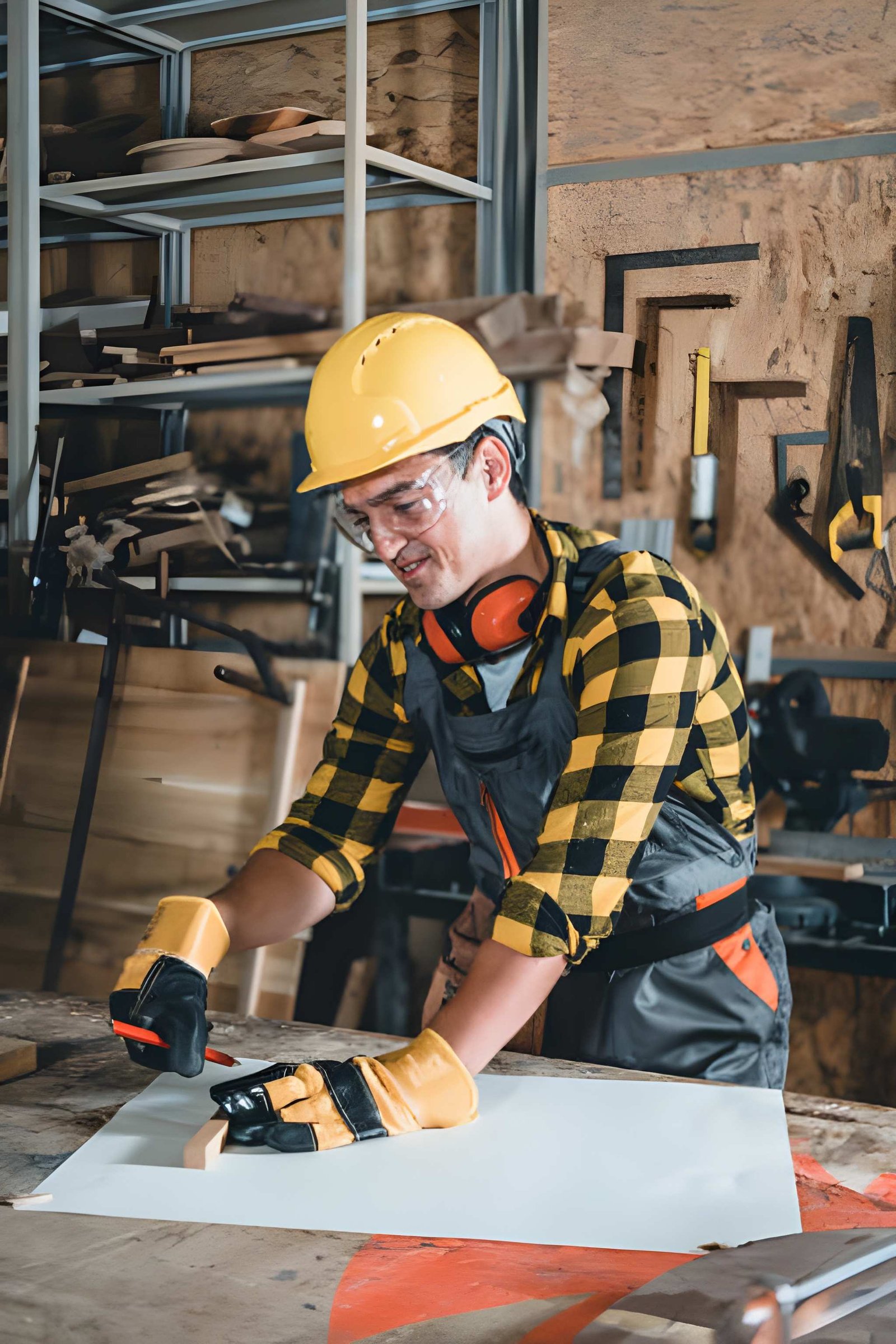
Layout is one of those things beginners don’t think about until they’re constantly tripping over their own tools. Plan it out first — seriously, even a rough sketch on paper saves a lot of frustration.
The golden rule: keep your most-used tools closest to the workbench. Everything else works outward from there.
Think in zones:
- Cutting zone — where your circular saw and jigsaw live
- Sanding zone — ideally near ventilation
- Assembly area — your workbench, with room on both sides
- Storage wall — pegboards, shelves, bins
Leave at least 3 feet of walking space around your main work area. Bumping into things while holding sharp tools is not a vibe.
Storage Ideas to Keep Your Woodworking Shop Organized
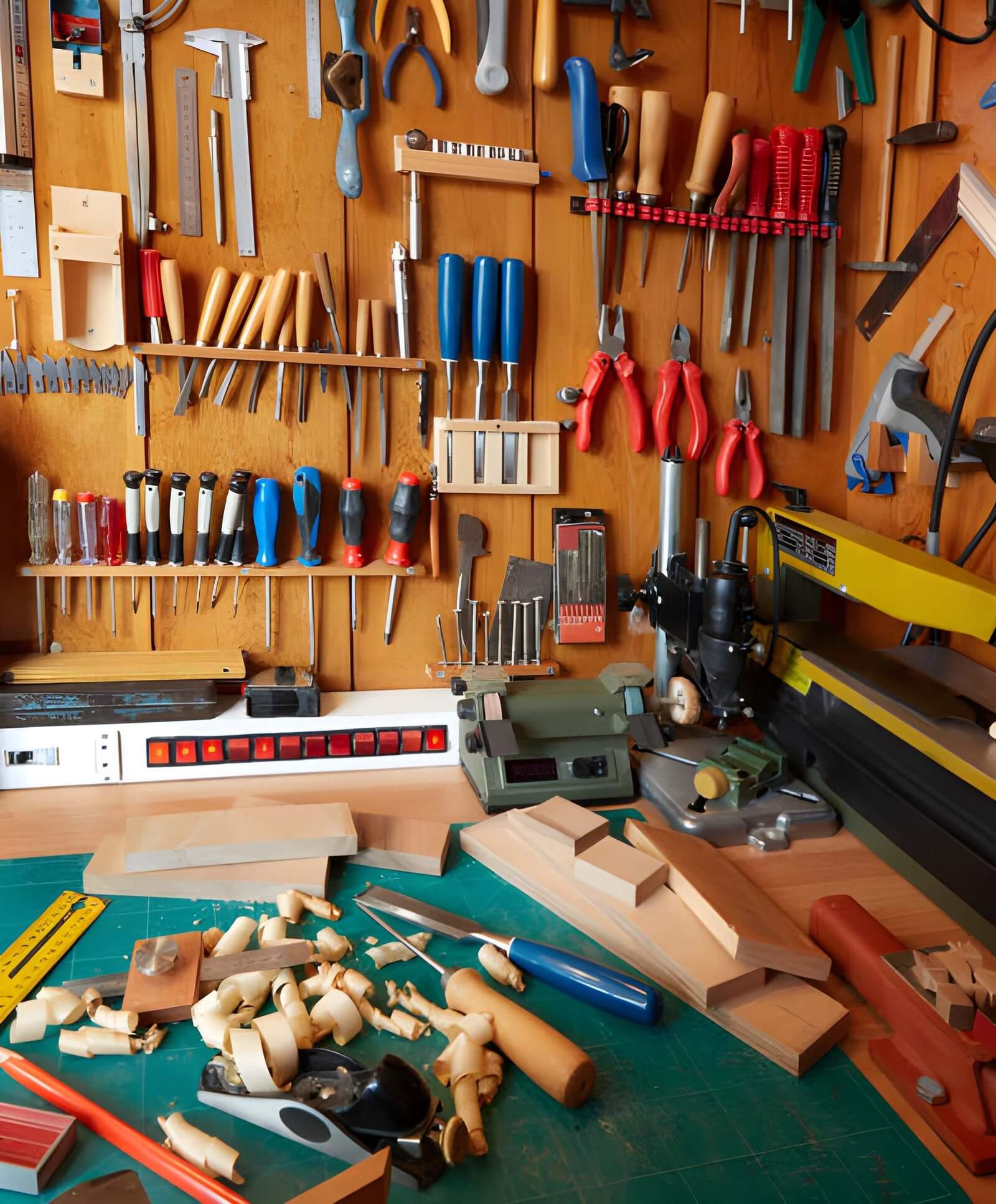
A cluttered shop is a dangerous shop — and an annoying one. The key to organization in a small space is one word: vertical.
Here’s what works best:
- Pegboards — mount them on every available wall. Hooks are cheap and you can see everything at a glance
- Wall shelves — for bins, hardware jars, and supplies
- Rolling tool cart — keeps your power tools mobile and accessible
- Wood storage rack — keeps lumber off the floor and sorted by size
The floor is for walking, not storing. Once you internalize that rule, your shop gets 10x more functional overnight.
Many woodworkers build their own storage using simple scrap wood projects that are easy to make and incredibly useful in small workshops.
Lighting and Ventilation for a Safe Workshop
This section doesn’t get enough attention, and it should. Poor lighting causes mistakes. Poor ventilation causes health problems. Neither is negotiable.
For lighting, install LED shop lights overhead and a dedicated task light over your workbench. You want bright, even lighting with no shadows where you’re cutting.
For ventilation, open windows when you can, and invest in at least a basic shop vacuum and dust collection system. Sawdust sounds harmless, but fine wood dust is a real respiratory hazard over time. Even a $60 shop vac beats breathing it in.
Basic Safety Rules Every Beginner Must Know
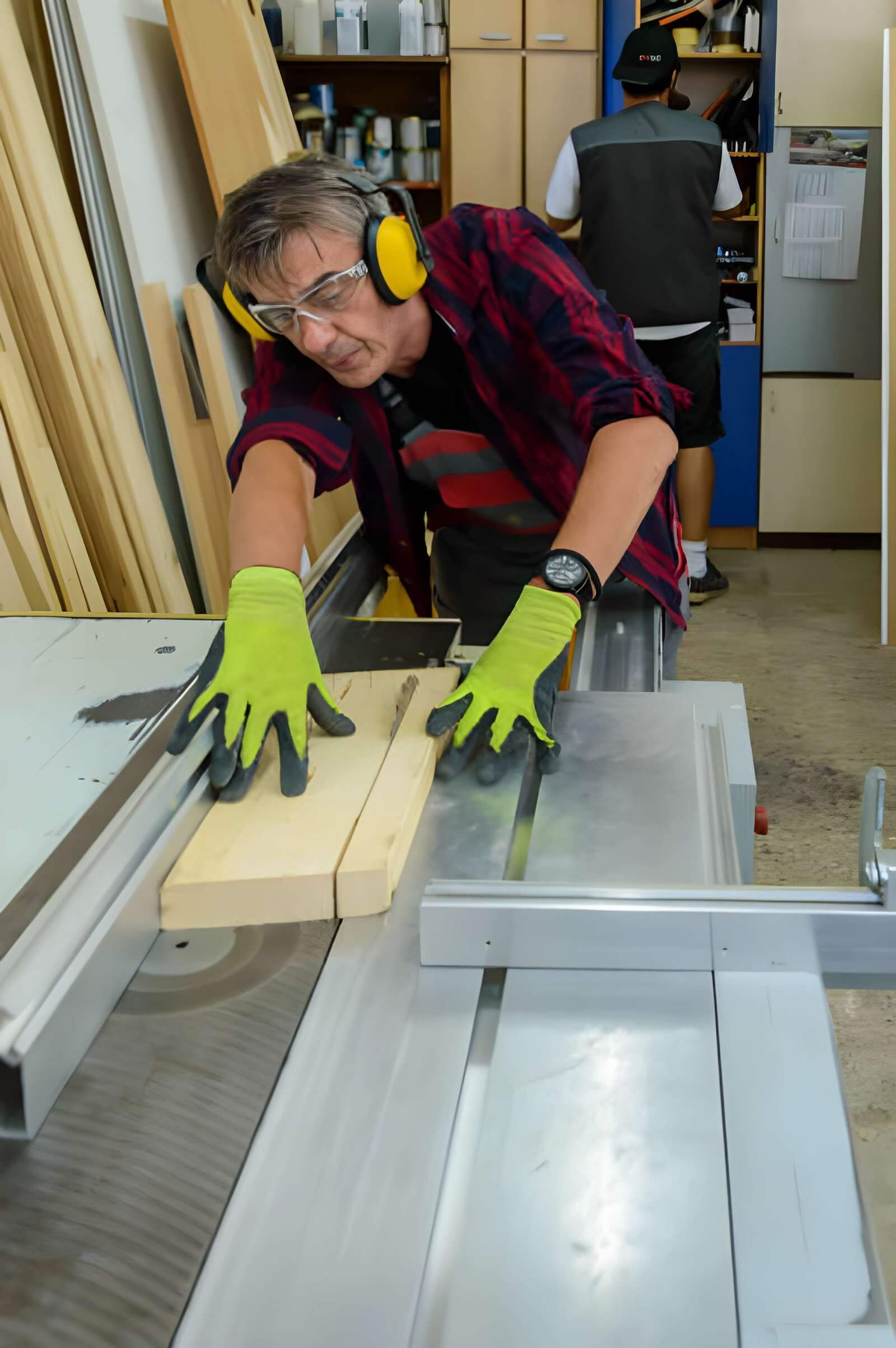
Let’s be real — power tools can hurt you. That’s not meant to scare you off, it’s just a reason to take safety seriously from day one. The habits you build now stick with you forever.
- Always wear safety glasses when using power tools — no exceptions
- Wear hearing protection — extended exposure to power tools damages hearing
- Never wear loose clothing or gloves near spinning blades
- Keep a fire extinguisher accessible — sawdust is genuinely flammable
- Unplug tools before changing blades or bits
- Keep a first-aid kit in the shop — splinters and minor cuts happen
The pros follow these rules every single time. That’s how they stay pros.
Budget Tips for Setting Up a Woodworking Shop
Good news: you don’t need to spend a fortune to get started. Many successful woodworkers launched their shops for under $300. Here’s how they did it:
- Buy used tools — Facebook Marketplace, Craigslist, and estate sales are goldmines for quality tools at half the price
- Start with essentials only — resist the urge to buy every tool you see on YouTube
- Build your own workbench — saves $200-500 compared to buying one
- Upgrade gradually — buy better tools as your projects demand them, not before
If you want a complete, proven system for building your shop on a tight budget, Ultimate Small Shop is worth checking out. It walks you through exactly what to buy, how to set up your space efficiently, and how to avoid the expensive mistakes most beginners make. Solid resource, especially if you want to skip the trial and error.
Beginner Projects to Try in Your New Woodworking Shop
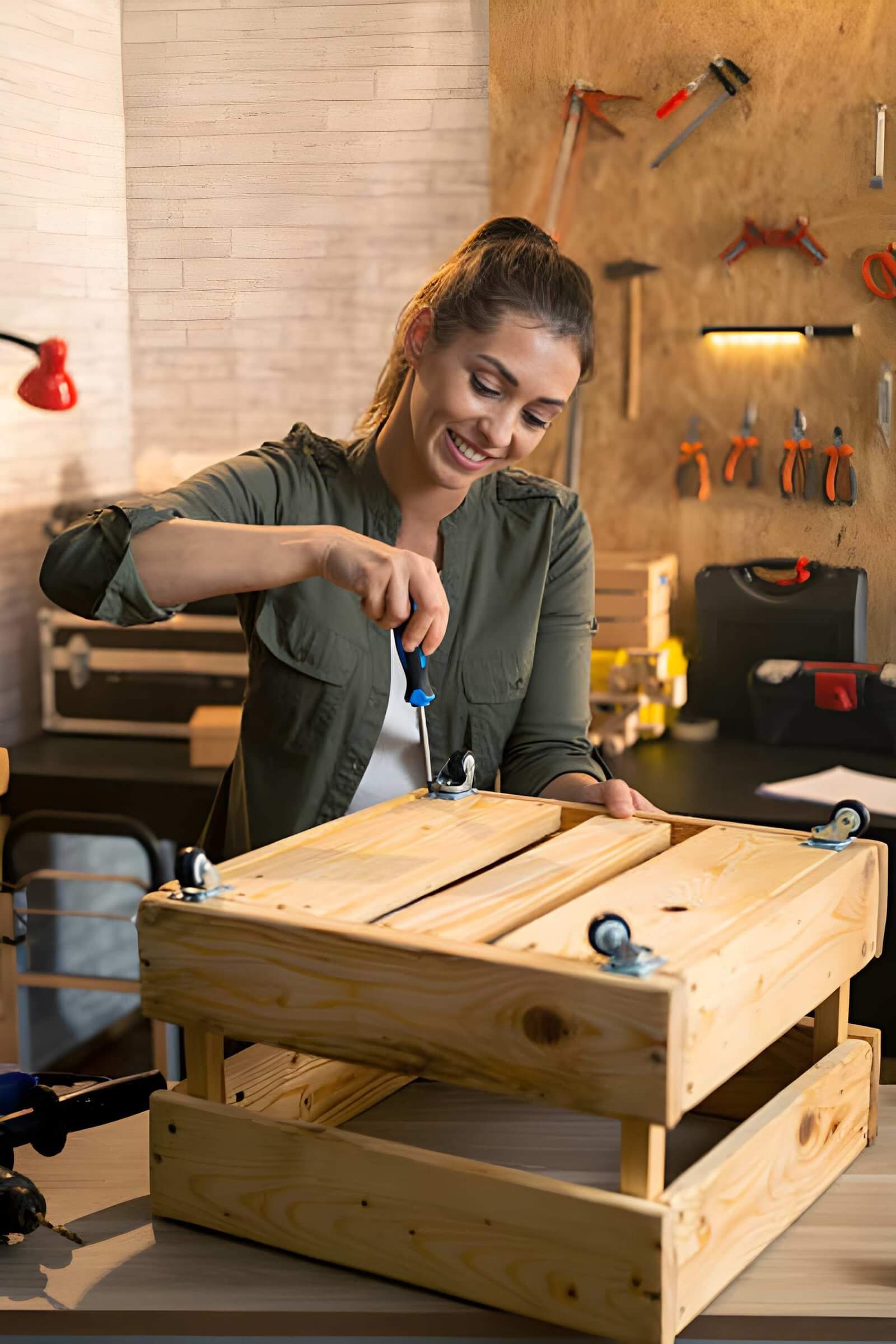
You’ve got the shop. Now what do you actually build? Start simple — you’re learning the tools and the process at the same time, so pick projects that are forgiving and satisfying.
- Wooden signs — great first project, teaches you straight cuts and finishing
- Cutting boards — a crowd favorite, and people actually use them
- Floating shelves — practical, looks impressive, beginner-friendly
- Planter boxes — perfect outdoor project with room for creativity
Once your woodworking shop is set up, check out these 25 beginner-friendly projects you can actually sell.
Where to Find Step-by-Step Woodworking Plans
Here’s a problem nobody talks about enough: knowing what to build is easy. Knowing how to build it correctly is a different story. Without good plans, you end up wasting wood, making costly mistakes, and getting frustrated.
Detailed plans with diagrams, cut lists, and material lists make an enormous difference — especially when you’re starting out. Ted’s Woodworking is one of the most popular resources for exactly this reason. Thousands of plans, all with step-by-step instructions so you’re not just guessing your way through a project.
Common Mistakes When Setting Up a Woodworking Shop
Let me save you some headaches. These are the mistakes I see beginners make all the time:
- Buying too many tools too early — you don’t need a lathe before you’ve made your first shelf
- Ignoring dust collection — seriously, even a basic shop vac changes everything
- Poor lighting — you cannot make accurate cuts if you can’t see clearly
- No layout plan — winging it leads to a shop that frustrates you every single time you use it
- Skipping safety gear — not a personality quirk, just a bad habit
Avoid these and you’ll be miles ahead of where most beginners find themselves after six months.
Final Thoughts
Here’s the bottom line: you don’t need a massive workshop, a huge budget, or years of experience to start woodworking. You need a small space, a few solid tools, and the right setup.
Start simple. Build your skills. Upgrade as you go. The woodworkers you admire online all started somewhere — most of them started exactly where you are right now.
And if you want to shortcut the learning curve on setting up your shop the right way, Ultimate Small Shop gives you a complete roadmap so you don’t waste money figuring it out the hard way. Worth every penny for a beginner.
Now stop planning and start building. Your first project won’t be perfect — and that’s completely fine.
FAQ
Q1: How much does it cost to set up a small woodworking shop?
You can get started for as little as $200-$300 if you buy used tools and build your own workbench. A more comfortable beginner setup runs $500-$800. You don’t need to spend thousands to do real work.
Q2: What tools do I need to start woodworking as a beginner?
Start with a circular saw, cordless drill, jigsaw, and random orbital sander. Add a tape measure, combination square, chisels, hammer, and several clamps. That covers 90% of beginner projects.
Q3: Can I set up a woodworking shop in a garage?
Absolutely — the garage is the most popular starting point. Just make sure you have adequate lighting, ventilation, and dedicated power outlets. A 1-car garage corner works fine for most beginner setups.
Q4: How much space do I need for a woodworking shop?
You can work with as little as 8×10 feet if you’re smart about layout and use vertical storage. A 10×12 or larger space gives you more comfort, but size is less important than organization.
Q5: What is the best flooring for a woodworking shop?
Concrete is fine and easy to sweep. If you want comfort on your feet during long sessions, consider anti-fatigue mats near your workbench. Avoid carpet — it’s a nightmare for collecting sawdust and debris.
Q6: Is woodworking safe for beginners at home?
Yes, when you follow basic safety rules. Always wear safety glasses and hearing protection, keep your workspace organized, unplug tools when not in use, and invest in a fire extinguisher. Respect your tools and they’ll treat you well.