
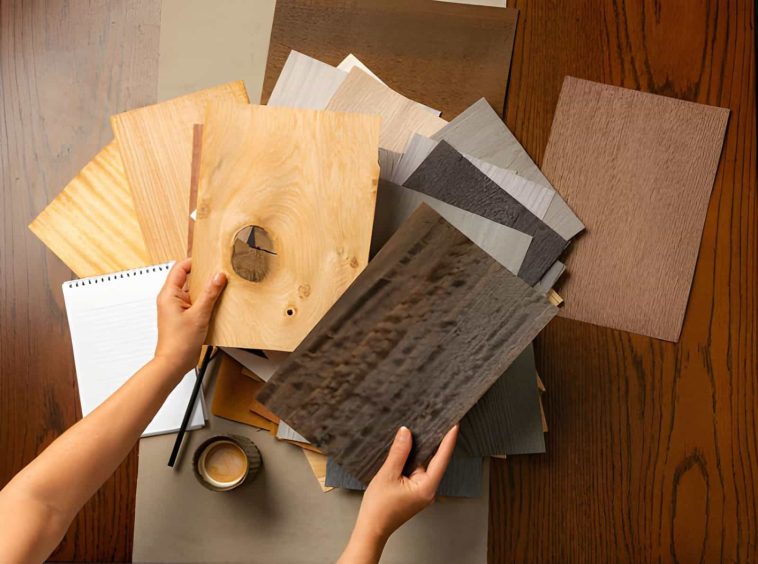
Plywood is one of the most useful materials you can keep on hand in a beginner woodworking shop. It’s affordable, easy to find at almost any lumberyard or home improvement store, strong enough for real furniture, and forgiving enough for a first-time builder. From shelves and cabinets to organizers, benches, storage boxes, and small furniture pieces, a single sheet can turn into something you actually use every day.
The best part? You don’t need fancy hardwood or a professional workshop to get started. A single 4×8 sheet of plywood, planned out carefully, can become several small projects — or one solid piece of furniture — in a single weekend.
In this guide, you’ll find 21 DIY plywood projects you can build this weekend, covering home storage, garage organization, simple furniture, shop upgrades, and beginner-friendly builds anyone can tackle with basic tools.
Quick note: This article is a project idea roundup, not a full set of detailed plywood plans. Exact measurements will depend on your space, plywood thickness, tools on hand, and the size you want to build. If you want exact cut lists and diagrams for any of these, check the plans section near the end of this guide.
If your tool collection is still growing, start with a few basic woodworking tools for beginners before trying larger plywood furniture builds.
Why Plywood Is Great for DIY Projects
Plywood is beginner-friendly because it comes in large, flat sheets, stays fairly stable over time, and can be cut down into dozens of different parts from one sheet. Unlike solid wood, it’s far less likely to twist, cup, or warp badly when it’s stored and used correctly — which makes it a much more forgiving material to learn on.
Benefits of building with plywood:
- Affordable compared to most hardwoods
- Easy to find at nearly every lumber store or big-box hardware store
- Strong enough for shelves, boxes, cabinets, and storage builds
- Takes paint beautifully, so it’s great for painted projects
- Works well for modern and minimalist furniture styles
- Perfect for garage and workshop organizers
- Scales from small scrap projects to full sheets of furniture
Because plywood comes pre-glued in layers, it also resists the kind of seasonal expansion and contraction that solid wood boards go through — one more reason it’s a safe first material for anyone still learning how wood moves.
Best Plywood Types for Beginner Projects
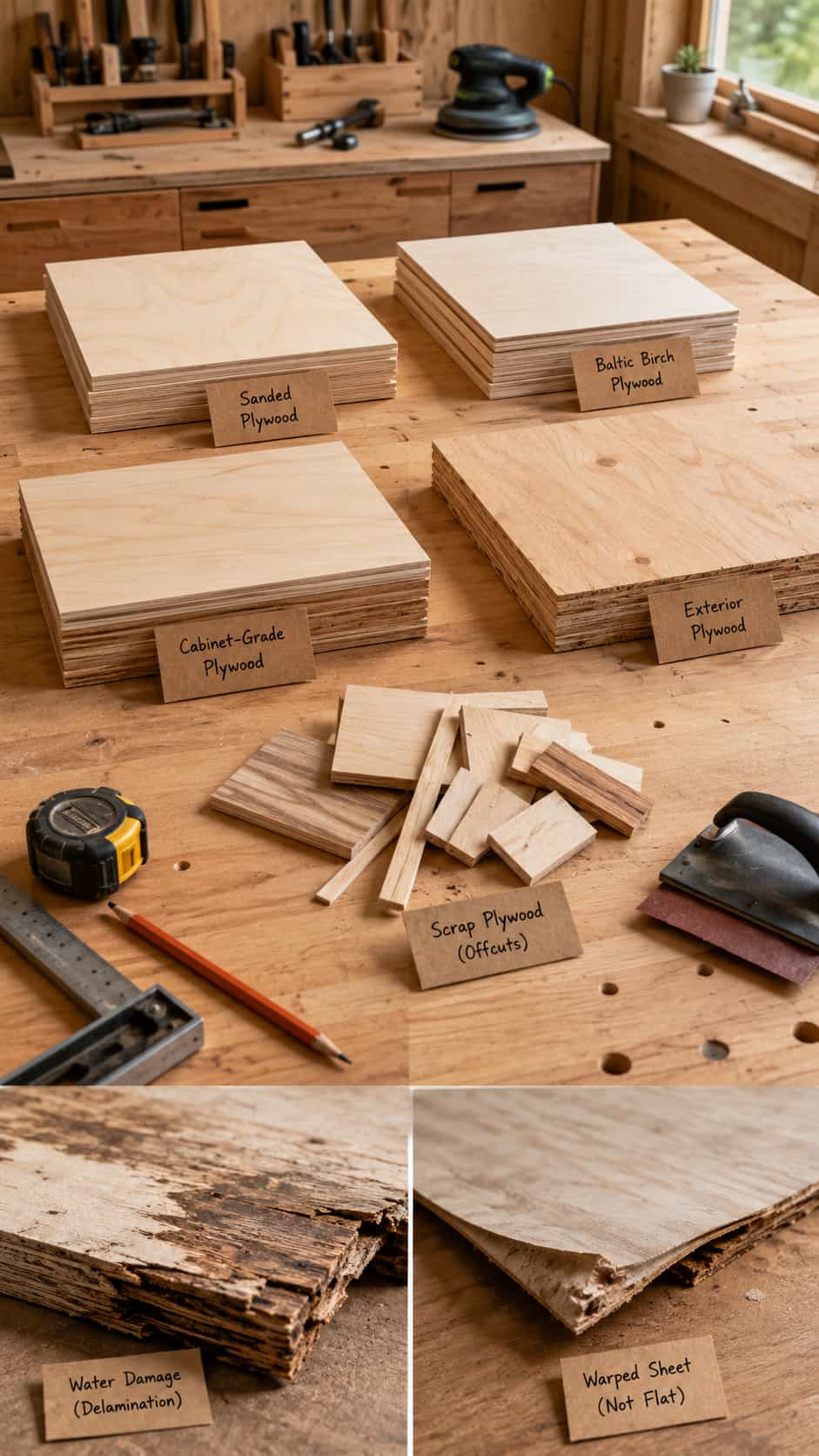
Not all plywood is created equal, and picking the right type up front will save you a lot of sanding and frustration later.
Sanded plywood — A smooth, ready-to-paint surface. Good for painted furniture, shelves, and storage boxes where you don’t need a natural wood-grain look.
Baltic birch plywood — Multiple thin, void-free layers give it clean edges when cut. Great for drawers, jigs, and higher-quality projects where the edge itself will be visible.
Cabinet-grade plywood — A step up in appearance and consistency. Best for furniture, cabinets, built-ins, and nicer indoor pieces you want to look intentional, not shop-made.
Exterior plywood — Rated for outdoor exposure, but it still needs paint or sealer to hold up long-term against rain and humidity.
Scrap plywood — Leftover offcuts from bigger projects. Perfect for small organizers, trays, jigs, wall shelves, and other workshop projects where perfection doesn’t matter as much as usefulness.
A quick warning: Avoid badly warped sheets, water-damaged plywood, or plywood with large internal voids if the project needs real structural strength — those issues tend to show up later as sagging shelves or weak joints.
Tools You May Need
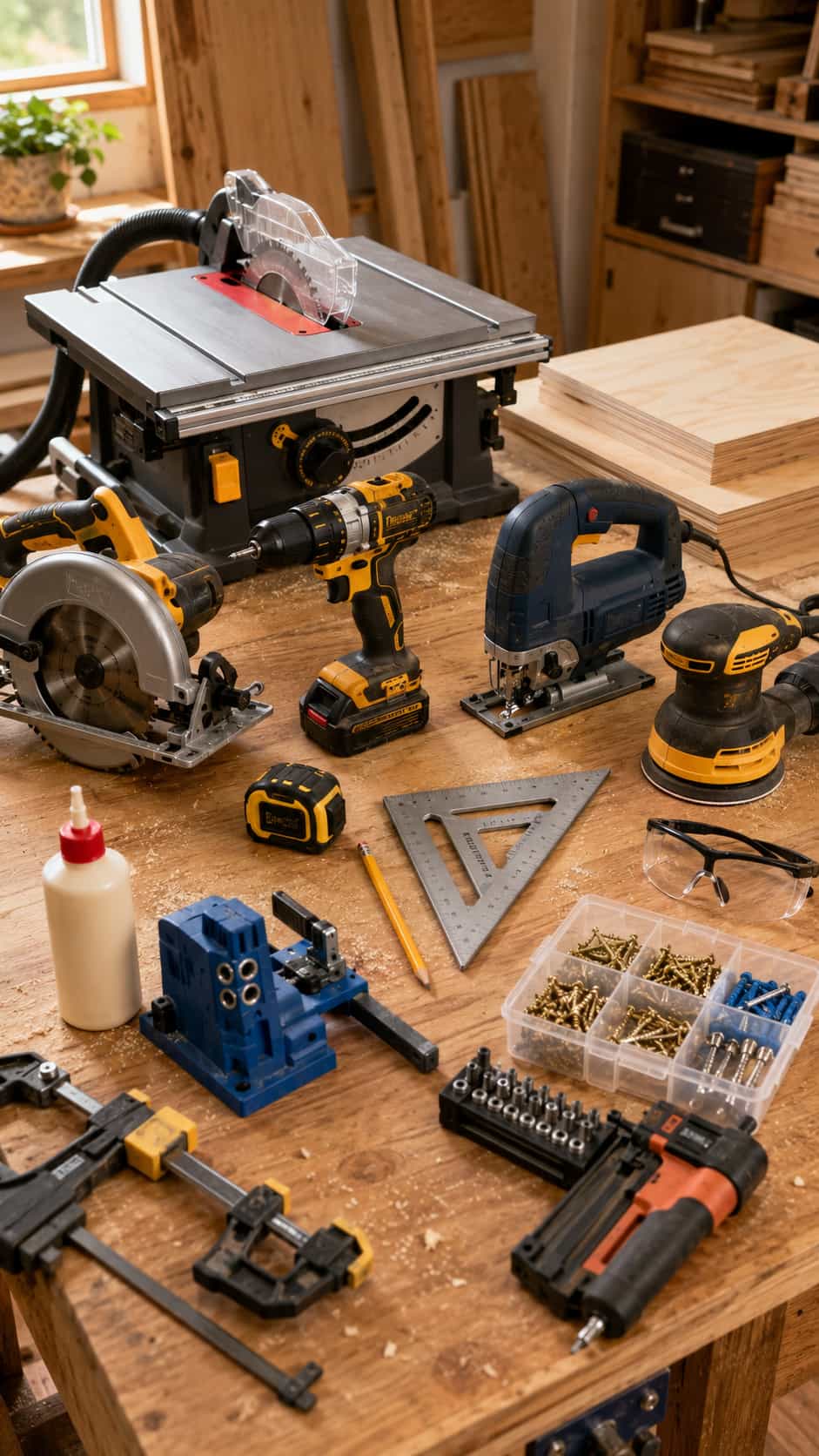
Most of the projects on this list can be built with a fairly basic tool kit — you don’t need a full cabinet shop to get through this list.
Basic tools:
- Circular saw or table saw
- Jigsaw
- Drill
- Measuring tape
- Pencil
- Speed square
- Clamps
- Sander
- Pocket hole jig
- Wood glue
- Brad nailer or screws
- Safety glasses
Quick safety note: Plywood sheets can be heavy and awkward to cut, especially full 4×8 sheets. Support the sheet properly, use clamps when needed, wear safety glasses, and avoid cutting large panels in an unstable position. Plywood dust can also be irritating, so sanding and cutting in a well-ventilated area is always a smart move.
Quick Comparison Table: Best DIY Plywood Projects
| Project | Best For | Difficulty |
|---|---|---|
| Plywood Wall Shelves | Home storage | Easy |
| Plywood Storage Box | Garage or closet storage | Easy |
| Plywood Bookshelf | Living room or office | Medium |
| Plywood Desk | Home office | Medium |
| Plywood Toy Box | Kids’ room storage | Medium |
| Plywood Workbench Top | Workshop upgrade | Easy |
| Plywood Drawer Organizers | Kitchen or desk drawers | Easy |
| Plywood Shoe Rack | Entryway storage | Easy–Medium |
Quick Plywood Thickness Guide
1/4-inch plywood works best for drawer dividers, wall art, small panels, and lightweight craft projects.
1/2-inch plywood works well for storage boxes, drawer boxes, organizers, small shelves, and lighter furniture parts.
3/4-inch plywood is the best choice for shelves, desks, benches, cabinets, nightstands, workbench tops, and projects that need more strength.
21 DIY Plywood Projects You Can Build This Weekend
1. Simple Plywood Wall Shelves
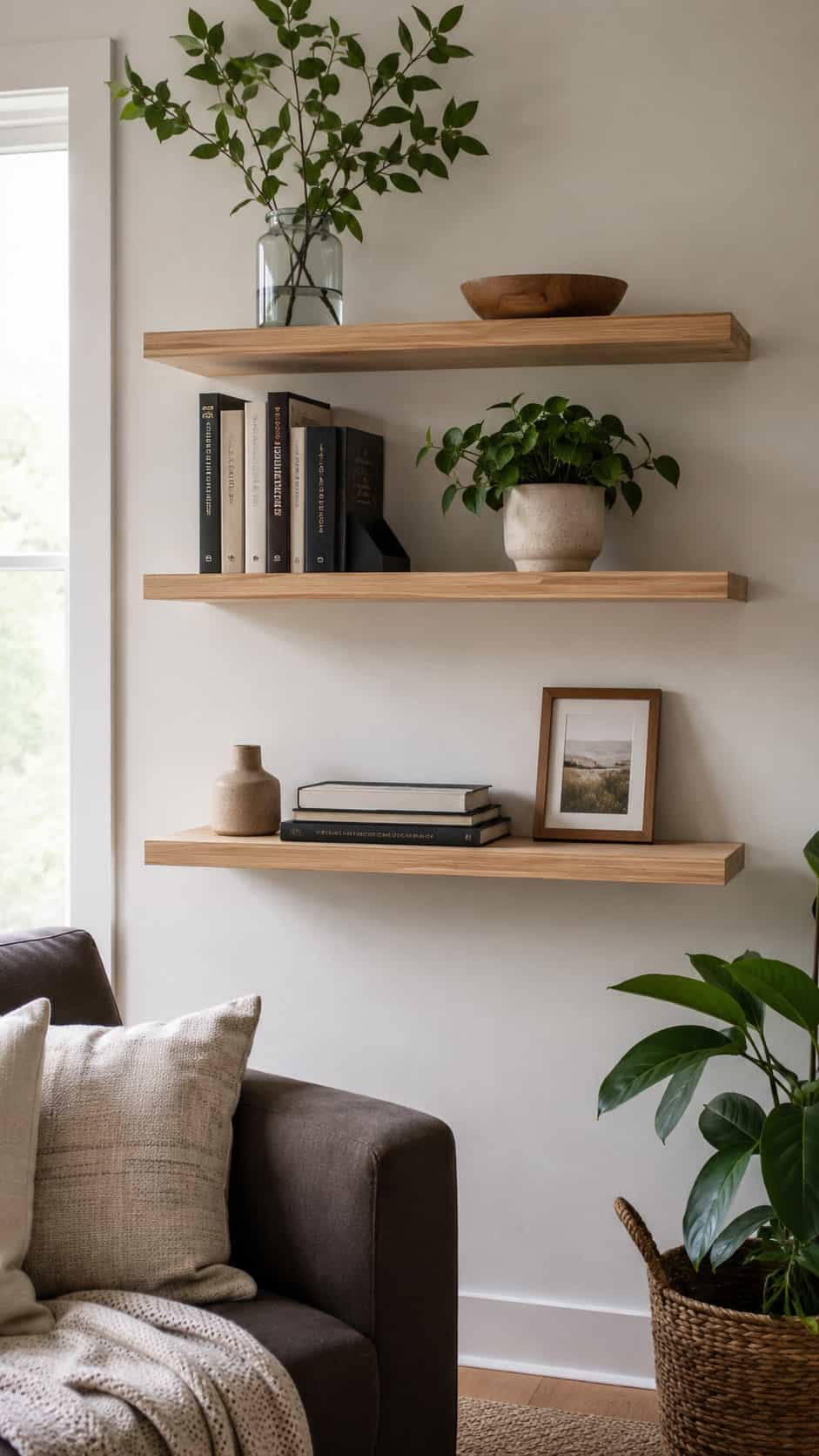
Plywood wall shelves are one of the easiest DIY plywood projects for a beginner, and a great way to learn how to make straight, accurate cuts before moving on to bigger builds. Cut clean rectangular shelf boards, add simple brackets or L-shaped plywood supports, sand every edge smooth, and finish with paint or stain to match your room.
Because there’s no complicated joinery involved, this project is really about precision — a straight cut and a level mounting line will make the whole thing look far more polished than the materials cost would suggest.
- Best for: Living rooms, bedrooms, offices
- Difficulty: Easy
- Best plywood thickness: 3/4 inch
- Weekend tip: Edge banding makes plywood shelves look far more finished, since it hides the raw plywood layers along the front edge.
Internal link: How to Build a Floating Shelf
2. Plywood Storage Box
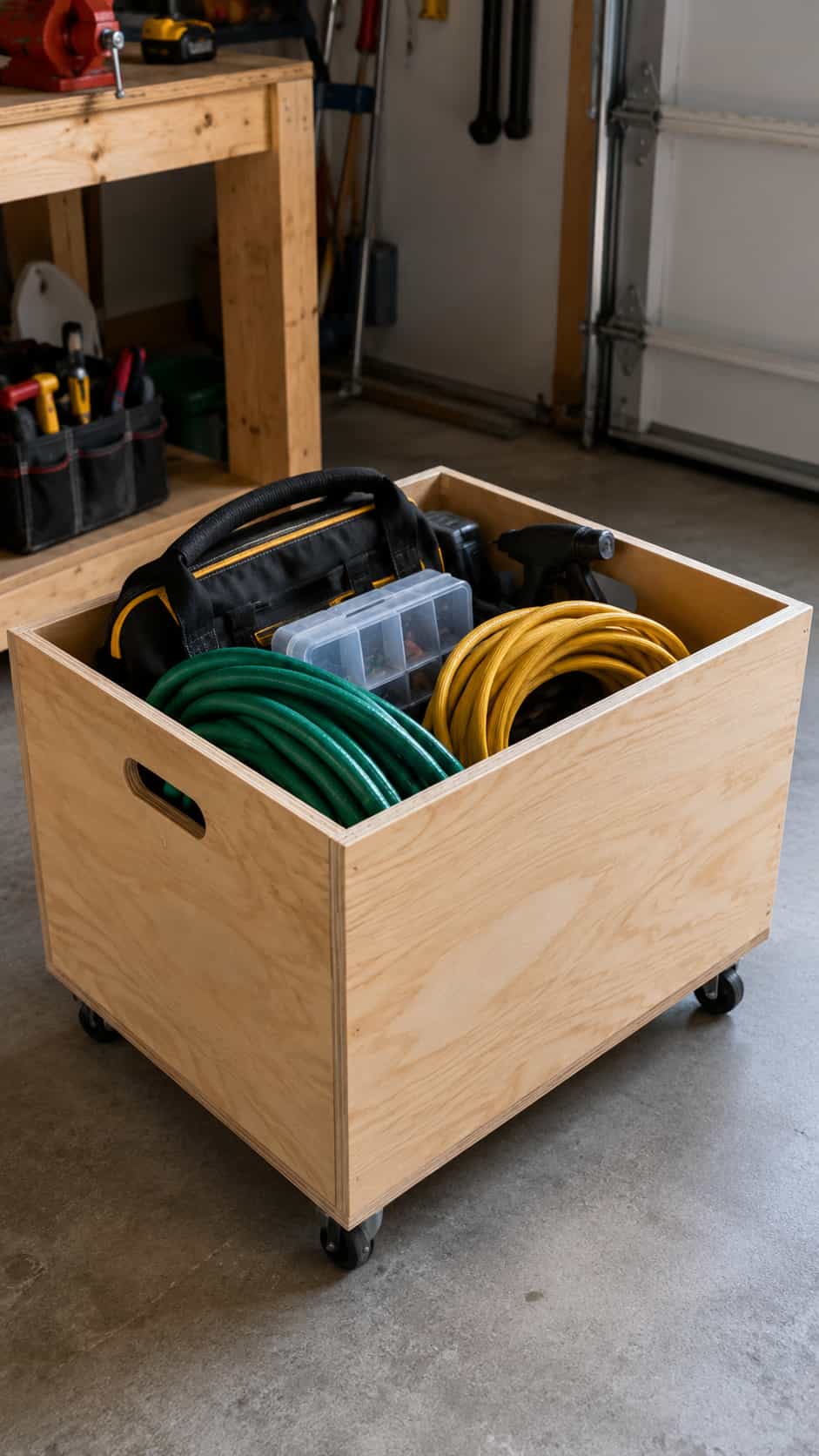
A basic plywood storage box is one of the most versatile builds on this list — perfect for closets, garages, kids’ rooms, or general workshop storage. It teaches the fundamentals: measuring accurately, cutting square, gluing, and screwing without any complicated joinery to worry about.
Start with a simple open box, then decide whether you want a lid, dividers, or handles based on what you’re storing. This is also a great project to build several of at once, since the cut list repeats easily across multiple boxes.
- Best for: Storage, garage organization, beginner practice
- Difficulty: Easy
- Best plywood thickness: 1/2 inch or 3/4 inch
- Weekend tip: Add handles or caster wheels if the box will hold heavy items, so you’re not lifting a fully loaded box by hand.
3. Plywood Bookshelf
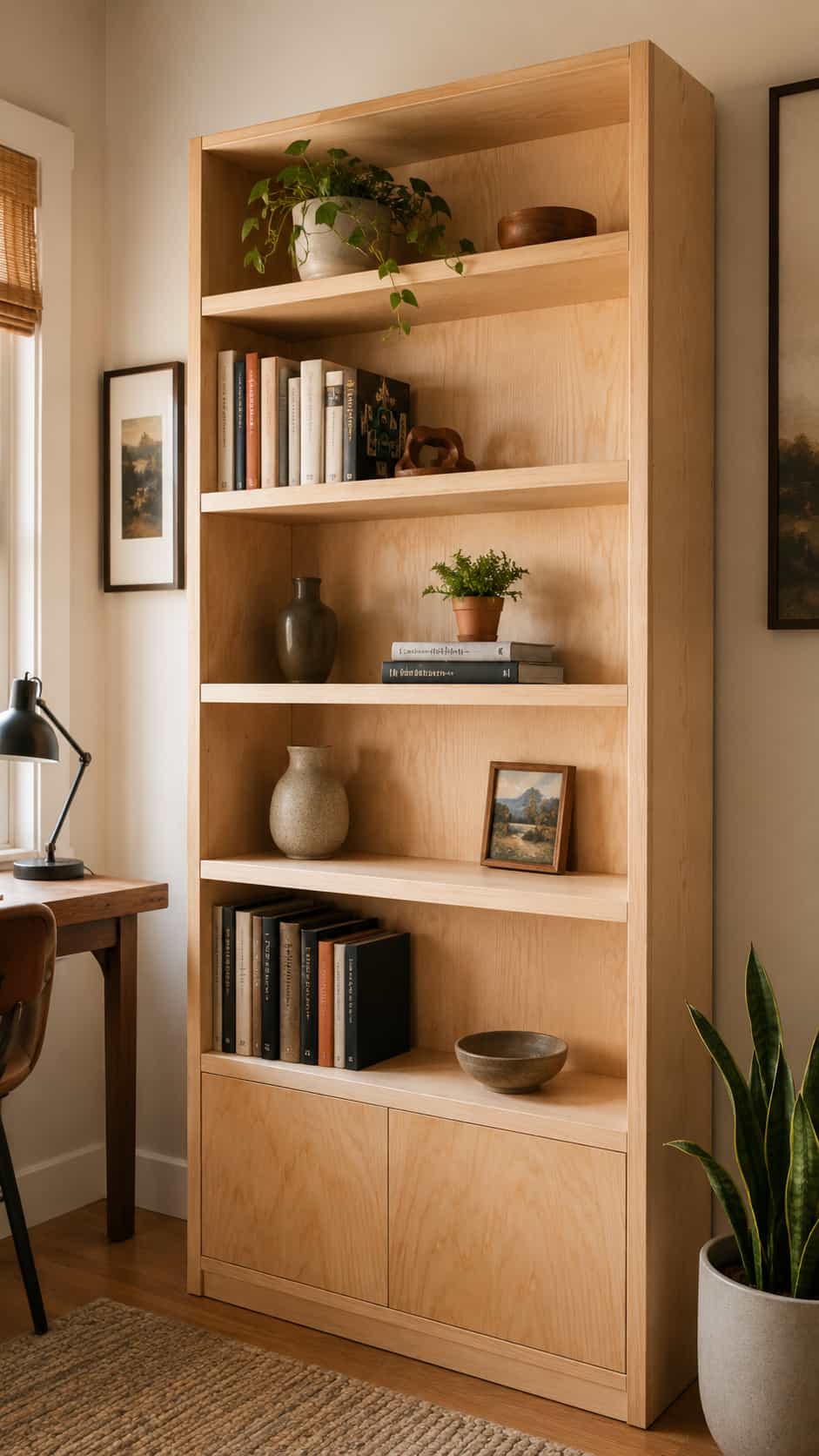
A plywood bookshelf is a practical project that can be as simple or as elaborate as you want it to be. Start with a rectangular frame, add fixed or adjustable shelves, and finish the front edges with trim or edge banding so the plywood layers don’t show.
If you want adjustable shelf heights, drill a series of evenly spaced holes down the inside of each side panel for shelf pins — it’s a small extra step that makes the whole bookshelf far more flexible down the road.
- Best for: Home office, bedrooms, living rooms
- Difficulty: Medium
- Best plywood thickness: 3/4 inch
- Weekend tip: Make sure the shelves are supported well if they’ll hold heavy books — thin, unsupported plywood spans can sag over time.
Internal link: How to Build a Wooden Bookshelf from Scratch
4. Plywood Desk
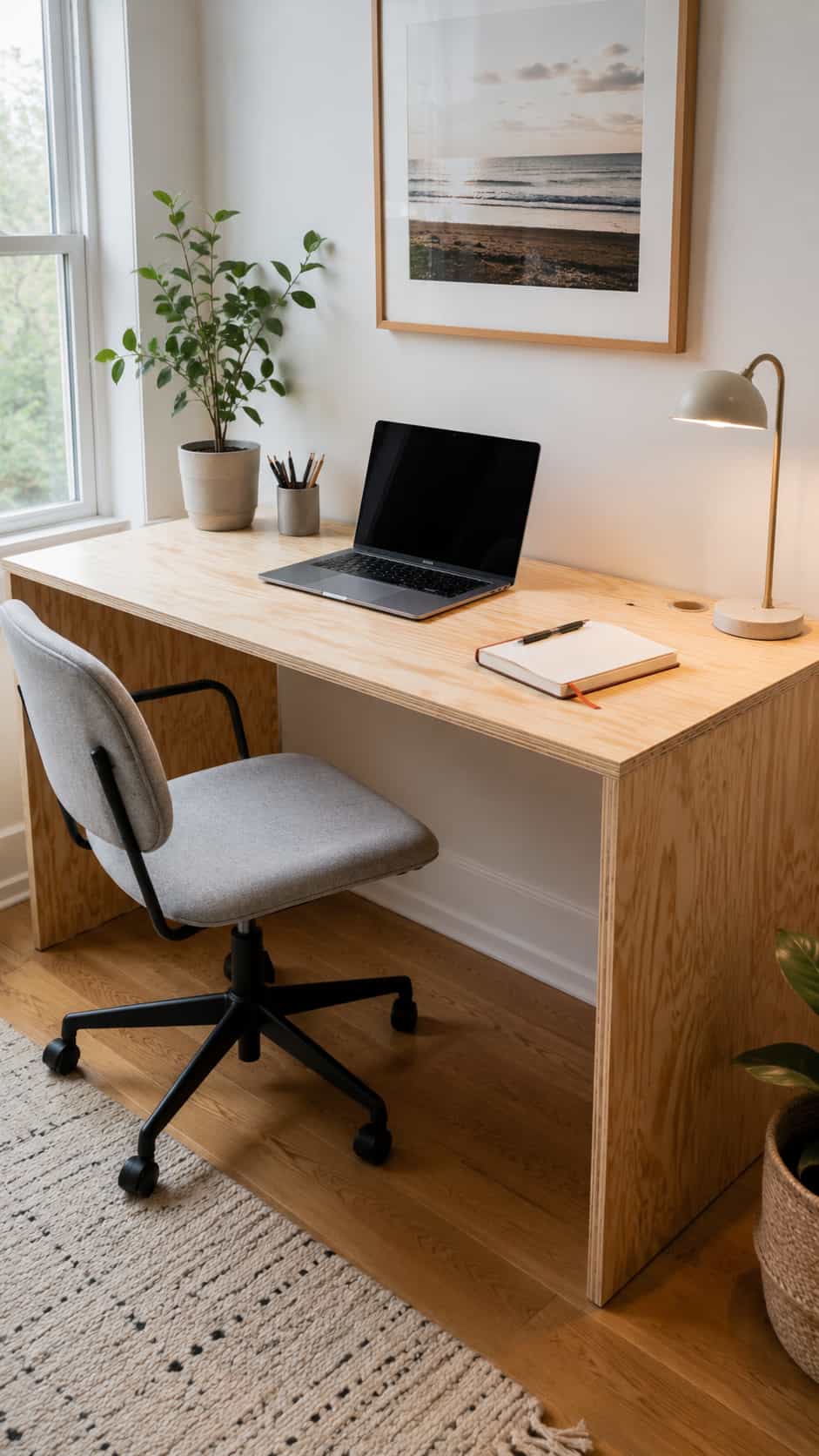
A plywood desk can be built with a simple flat top and basic side panel supports, and it’s one of the more satisfying furniture builds on this list because you’ll use it every day. You can make it modern and minimal with clean lines and a painted finish, or go rustic with a stained top and exposed edges.
Keep the base design simple for your first build — two side panels and a stretcher underneath the top is plenty strong for most home office setups.
- Best for: Home office, study space, bedrooms
- Difficulty: Medium
- Best plywood thickness: 3/4 inch
- Weekend tip: Add a cable hole in the back corner for chargers and cords so everything stays tidy.
5. Plywood Coffee Table
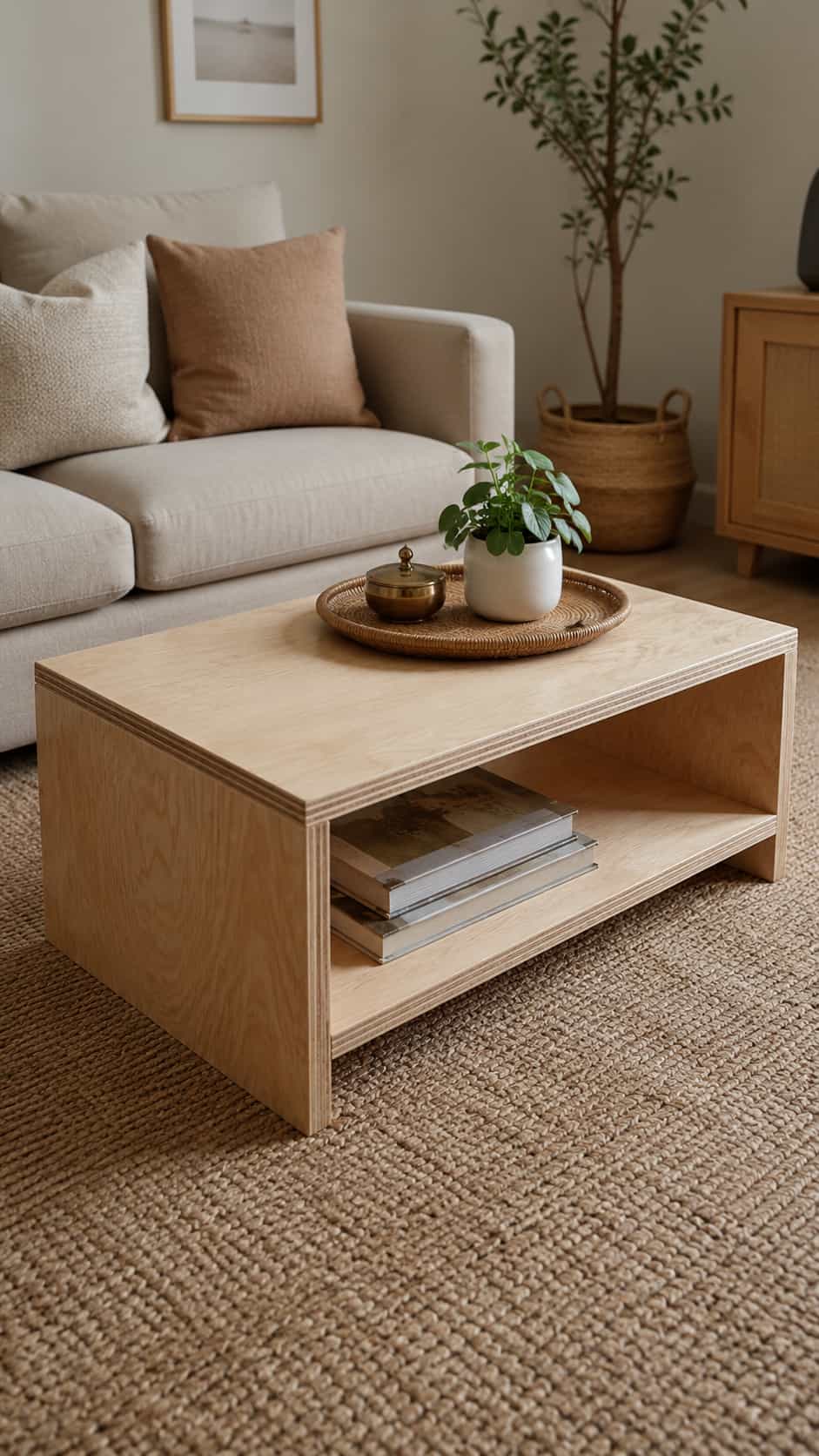
A plywood coffee table is a great weekend furniture project for anyone ready to move past basic boxes. Use plywood for the top and sides, then take extra care finishing the edges so the piece looks clean and intentional instead of rough and unfinished.
Because the top surface gets seen and touched constantly, this is a good project to practice edge banding or trim work on — it makes a huge visual difference for very little extra effort.
- Best for: Living room furniture
- Difficulty: Medium
- Best plywood thickness: 3/4 inch
- Weekend tip: Use a simple boxy design if this is your first plywood furniture build — save the fancy leg joinery for later.
Internal link: DIY Coffee Table Plans
6. Plywood Shoe Rack
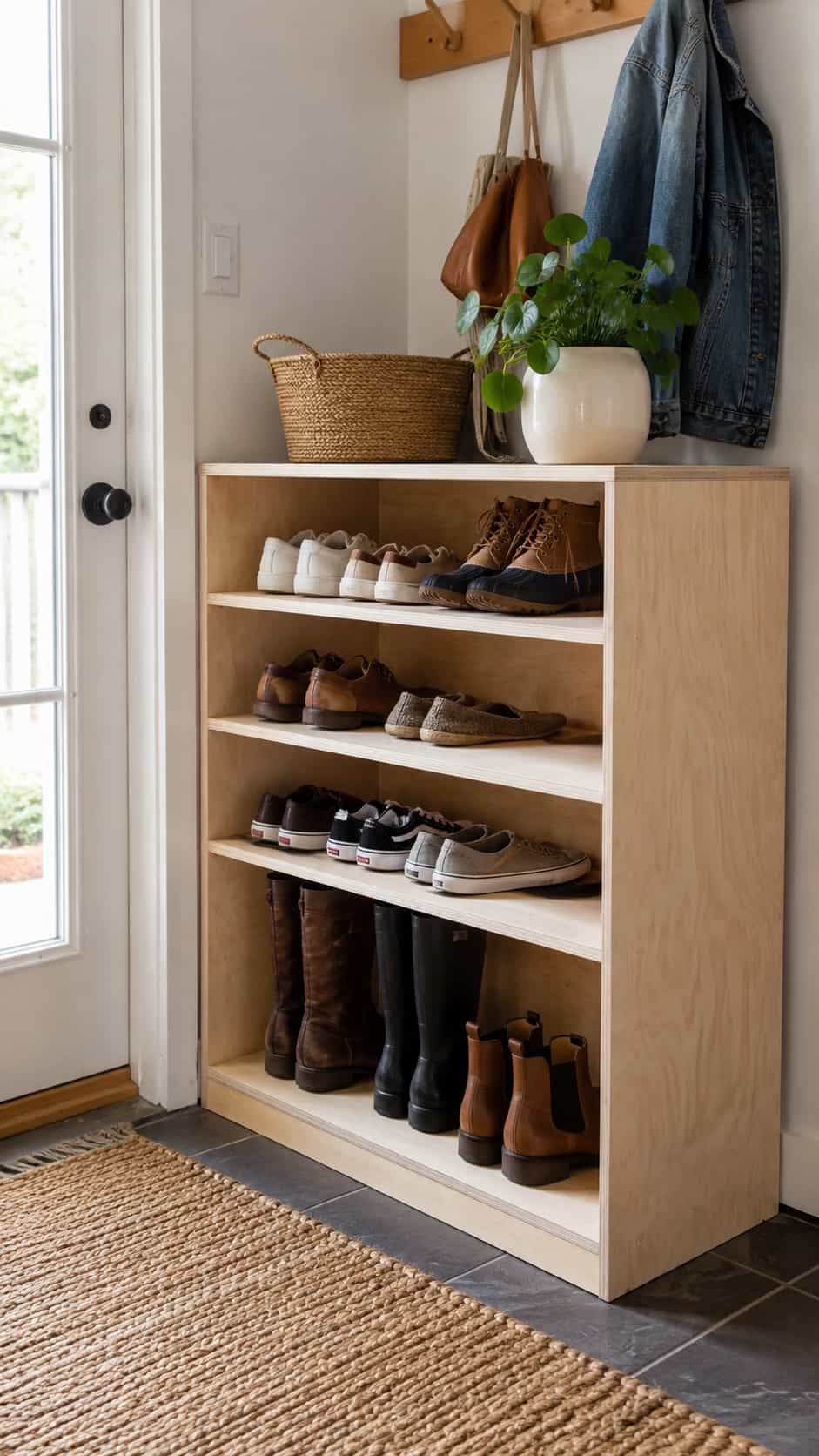
A plywood shoe rack is useful, beginner-friendly, and one of the fastest projects on this list to finish in a single afternoon. Build it with open shelves spaced to fit your household’s shoes, and consider angling the shelves slightly for easier slide-in storage.
This project is also easy to size up or down — a narrow two-shelf rack for a small entryway, or a wider multi-shelf version for a family mudroom.
- Best for: Entryway storage, mudrooms, closets
- Difficulty: Easy–Medium
- Best plywood thickness: 1/2 inch or 3/4 inch
- Weekend tip: Measure your tallest shoes (think boots) before deciding on shelf spacing.
Internal link: How to Build a DIY Mudroom Bench with Shoe Storage
7. Plywood Toy Box
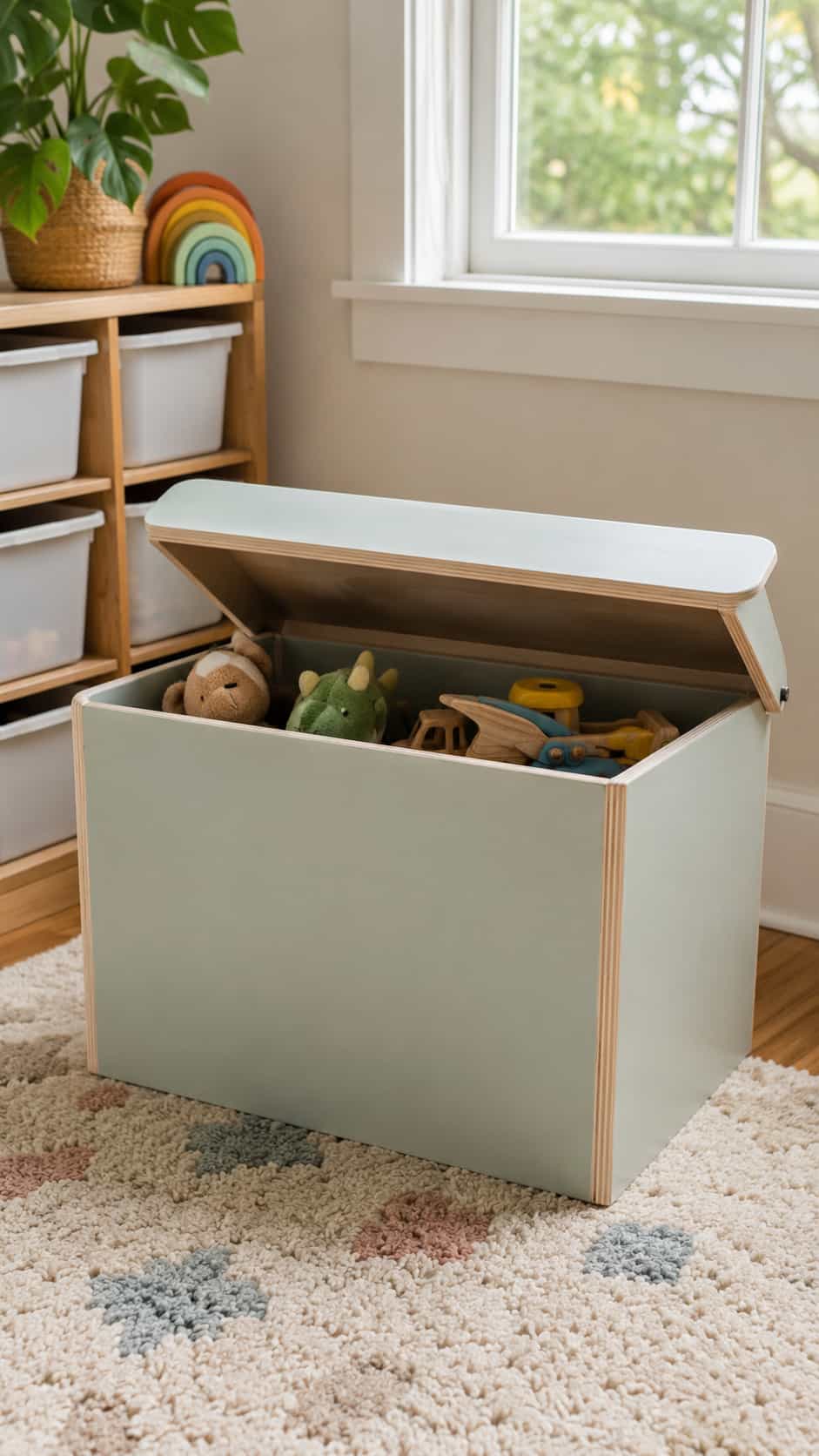
A plywood toy box is a useful storage project for kids’ rooms, playrooms, or shared family spaces, and it’s a nice excuse to add some color with paint. Keep the design simple: a rectangular box with a smooth, lightweight lid is both easy to build and safer for kids to use.
Safety matters more here than in most other builds on this list, so take the extra step of rounding over sharp corners and choosing hinges that won’t pinch little fingers.
- Best for: Kids’ room storage
- Difficulty: Medium
- Best plywood thickness: 1/2 inch or 3/4 inch
- Weekend tip: Use safe, soft-close hardware and avoid heavy lids that can slam shut.
8. Plywood Drawer Organizers
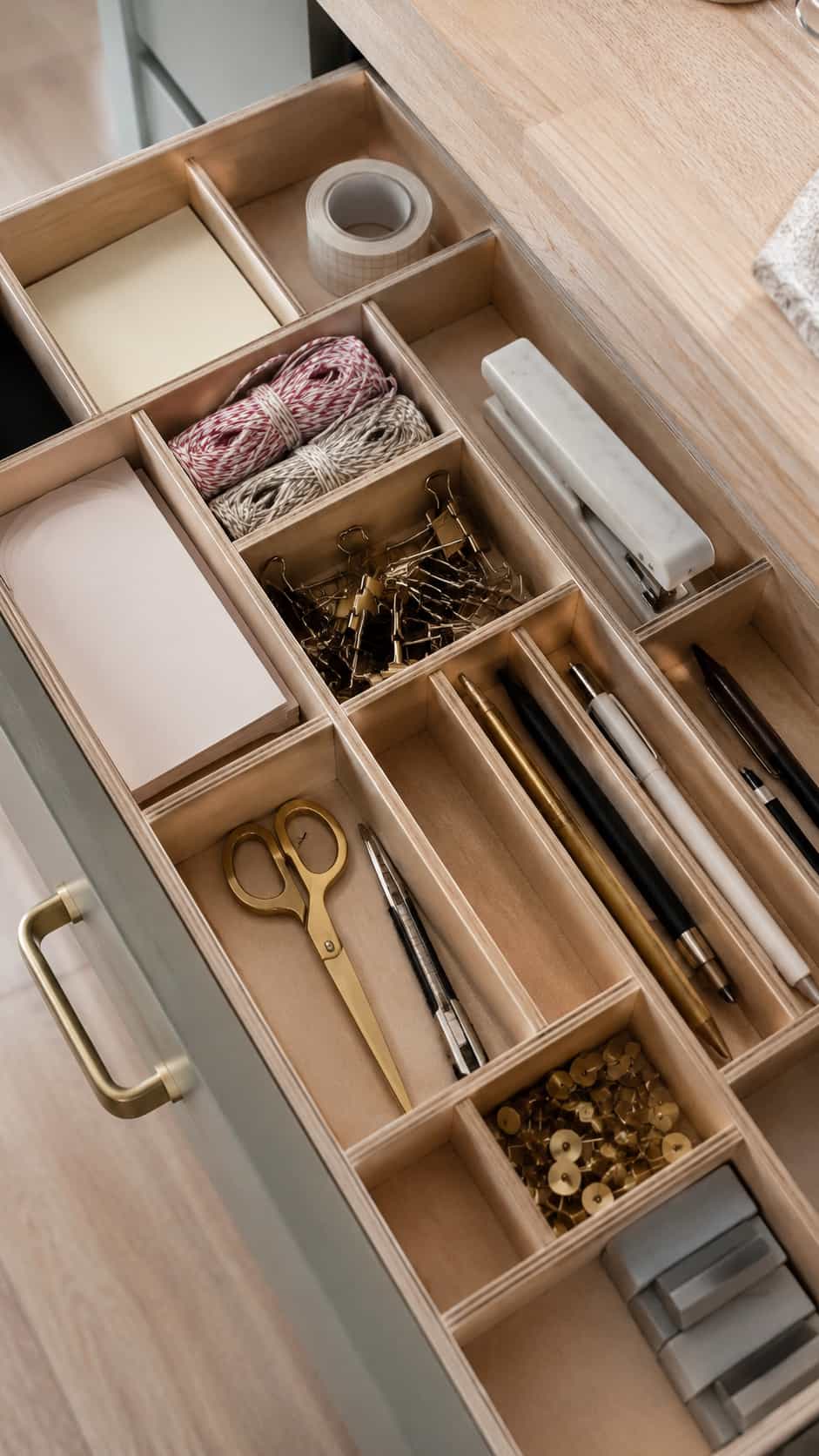
Drawer organizers are one of the best ways to use up smaller plywood scraps left over from bigger projects. Cut thin dividers and create custom compartments sized exactly to what you’re storing — kitchen utensils, office supplies, tools, or craft materials.
Because these pieces are small, this is a great project to knock out in an evening rather than a full weekend, and it’s a satisfying way to use wood that would otherwise go in the scrap pile.
- Best for: Kitchen drawers, desk drawers, tool drawers
- Difficulty: Easy
- Best plywood thickness: 1/4 inch or 1/2 inch
- Weekend tip: Dry-fit all the dividers in the drawer before gluing anything permanently in place.
Internal link: 10 Kitchen Drawer Organization Ideas
9. Plywood Pull-Out Cabinet Drawers
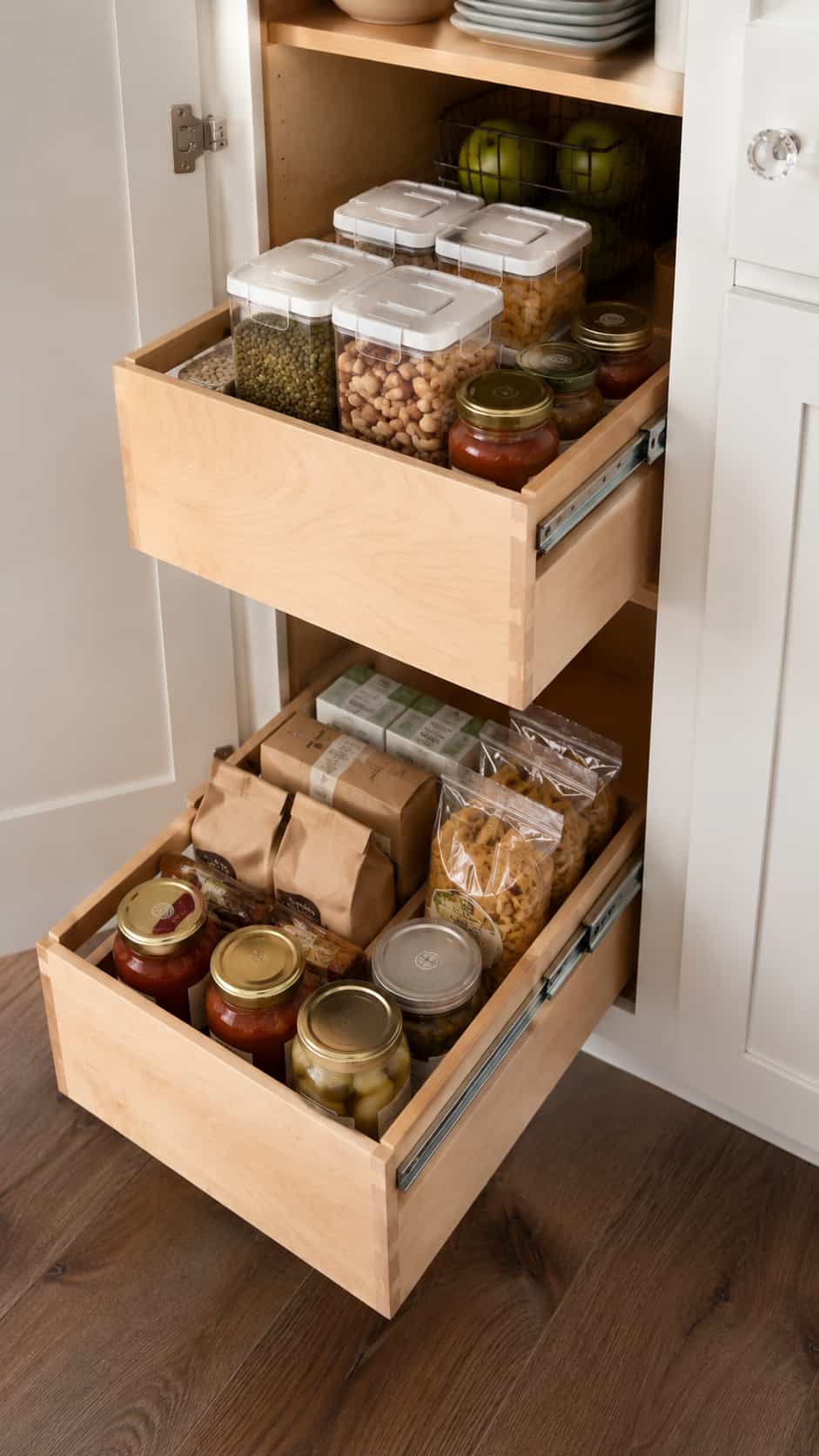
Pull-out drawers make deep, hard-to-reach cabinets dramatically more useful, and plywood is an ideal material for the job because it’s stable, strong, and easy to cut into consistent drawer box parts.
Measure the cabinet opening carefully before cutting anything, since even a small error here can mean a drawer that doesn’t glide properly on its slides.
- Best for: Kitchen cabinets, pantry storage, bathroom cabinets
- Difficulty: Medium
- Best plywood thickness: 1/2 inch for drawer boxes, 3/4 inch for fronts
- Weekend tip: Use quality drawer slides — cheap slides are the most common reason pull-out drawers feel flimsy.
Internal link: How to Build Pull-Out Drawers in Existing Kitchen Cabinets
10. Plywood Pegboard Tool Wall
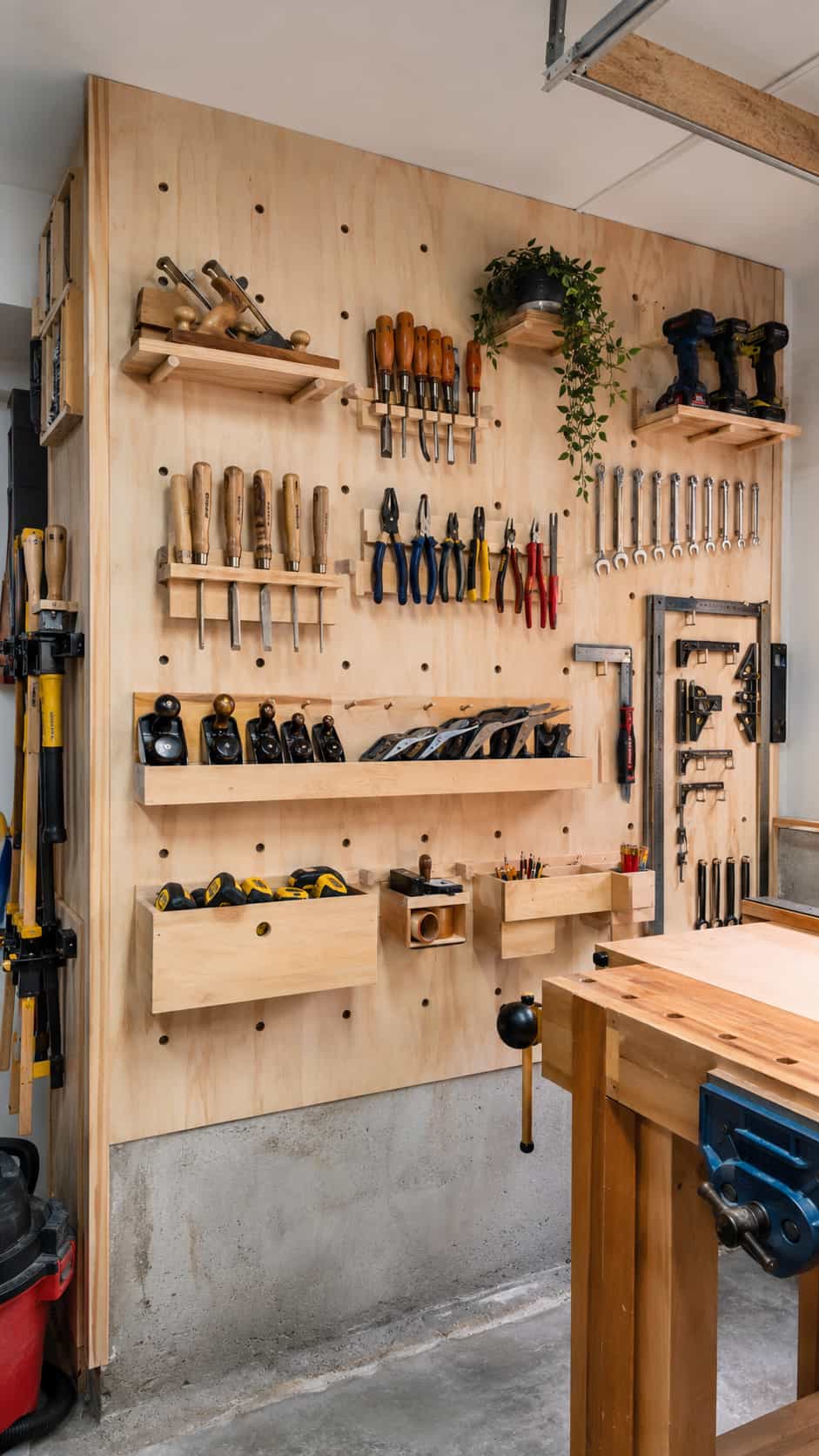
You can build a simple plywood tool wall by mounting a plywood panel to your garage or shop wall and adding hooks, small shelves, or French cleats to hold your most-used tools within reach.
This is one of the highest-value projects on the list relative to effort — a single afternoon of work can completely reorganize how your shop functions.
- Best for: Garage shops, small workshops, tool storage
- Difficulty: Easy
- Best plywood thickness: 1/2 inch or 3/4 inch
- Weekend tip: Mount into wall studs if you plan to hang heavier tools.
11. Plywood Workbench Top
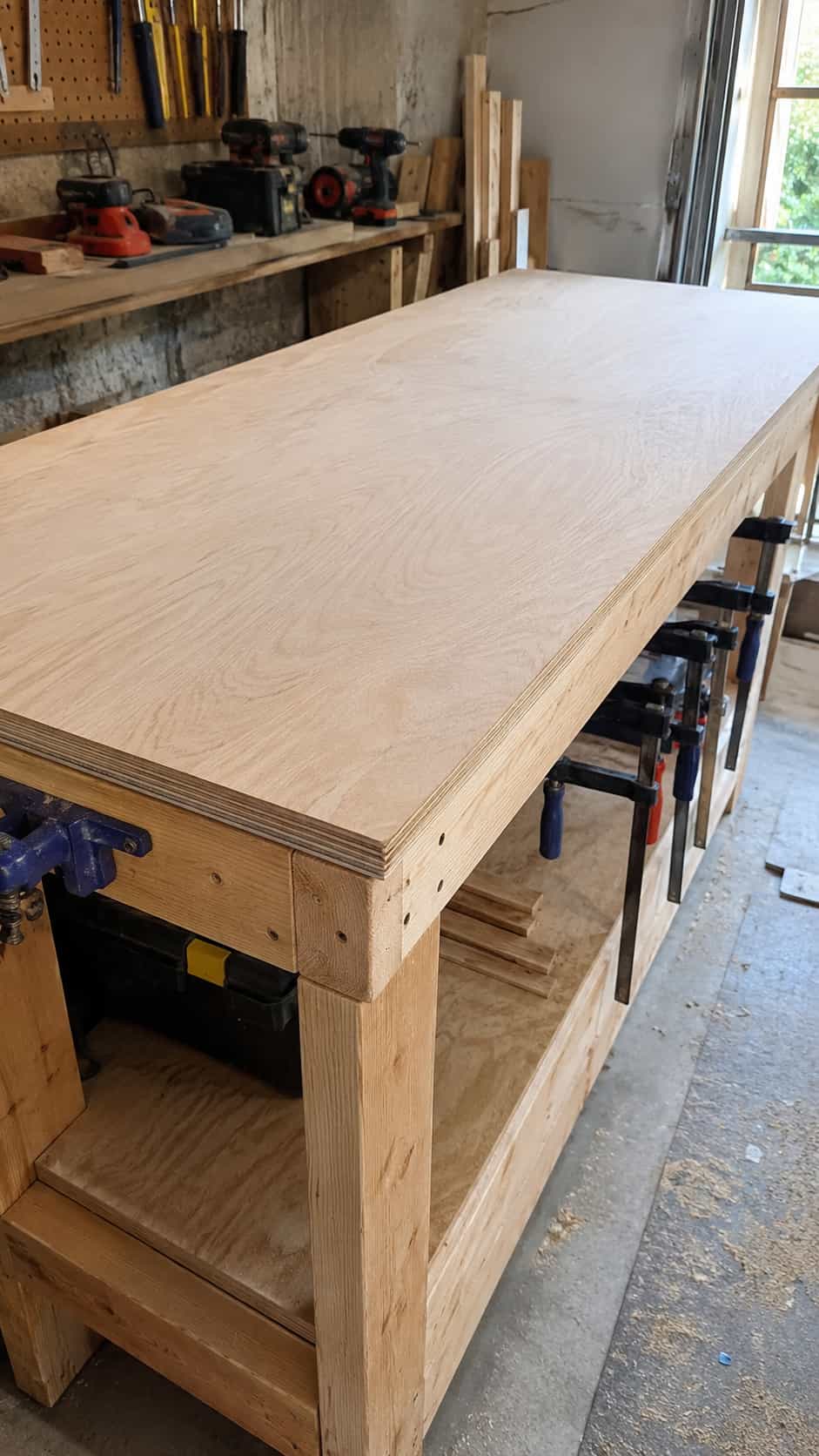
A plywood workbench top is one of the simplest upgrades you can make to your shop, and it’s a great project if your current bench surface is beat up, uneven, or just too small. It gives you a flat, strong surface for cutting, sanding, assembling, and finishing future projects.
- Best for: Workshop upgrades
- Difficulty: Easy
- Best plywood thickness: 3/4 inch
- Weekend tip: Use two layers of plywood glued and screwed together for a heavier, more rigid workbench top that won’t flex under weight.
Internal link: 20+ Free DIY Workbench Plans for Every Skill Level
12. Plywood Rolling Cart
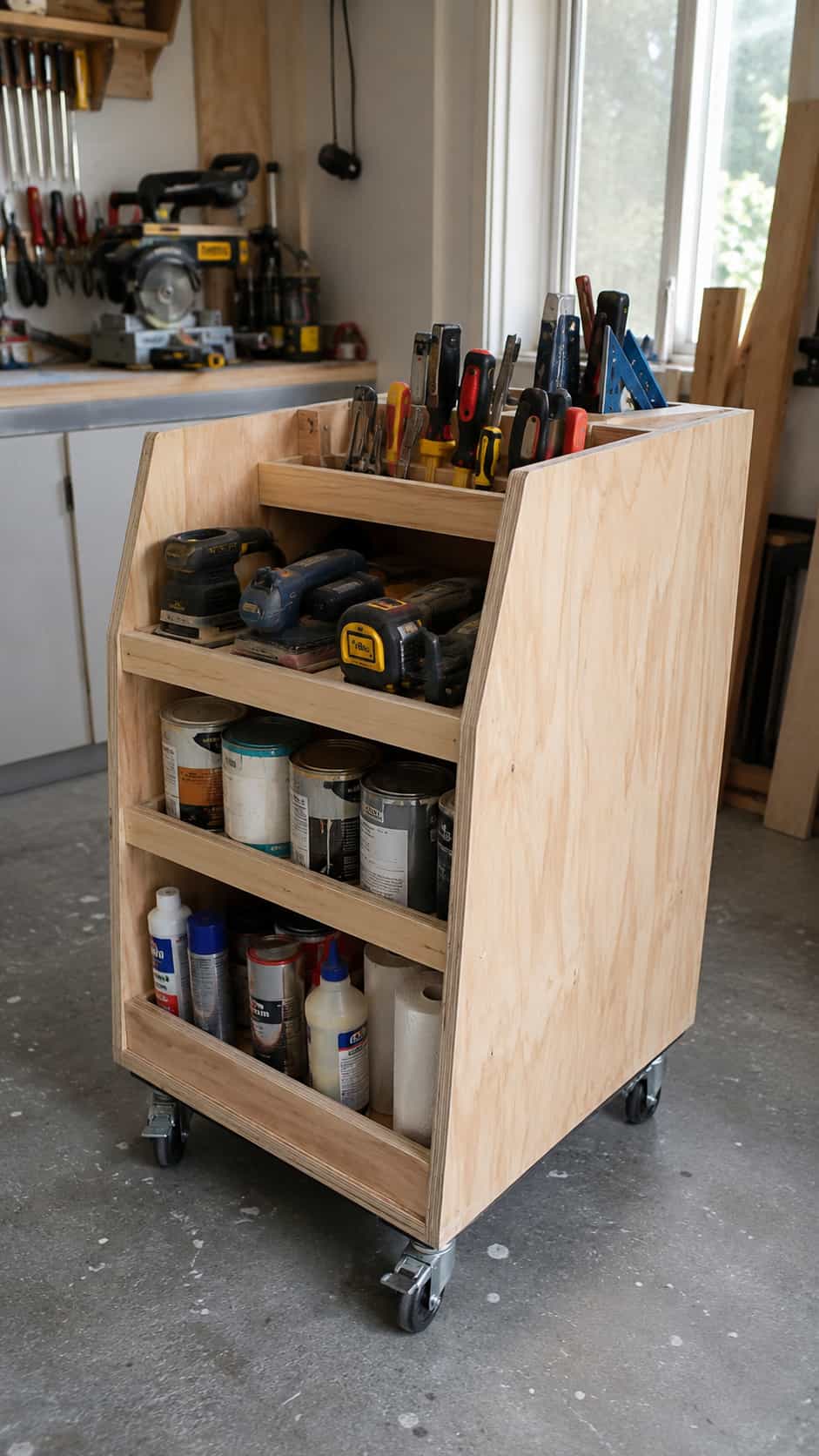
A rolling plywood cart is useful for tools, craft supplies, paint, clamps, or general workshop storage — and unlike fixed shelving, it can move wherever you need it that day. Add shelves, sides, and locking casters to the base for stability while you work.
- Best for: Small shops, garages, craft rooms
- Difficulty: Medium
- Best plywood thickness: 1/2 inch or 3/4 inch
- Weekend tip: Use locking casters so the cart doesn’t roll away while you’re working on it.
13. Plywood Garage Storage Shelves
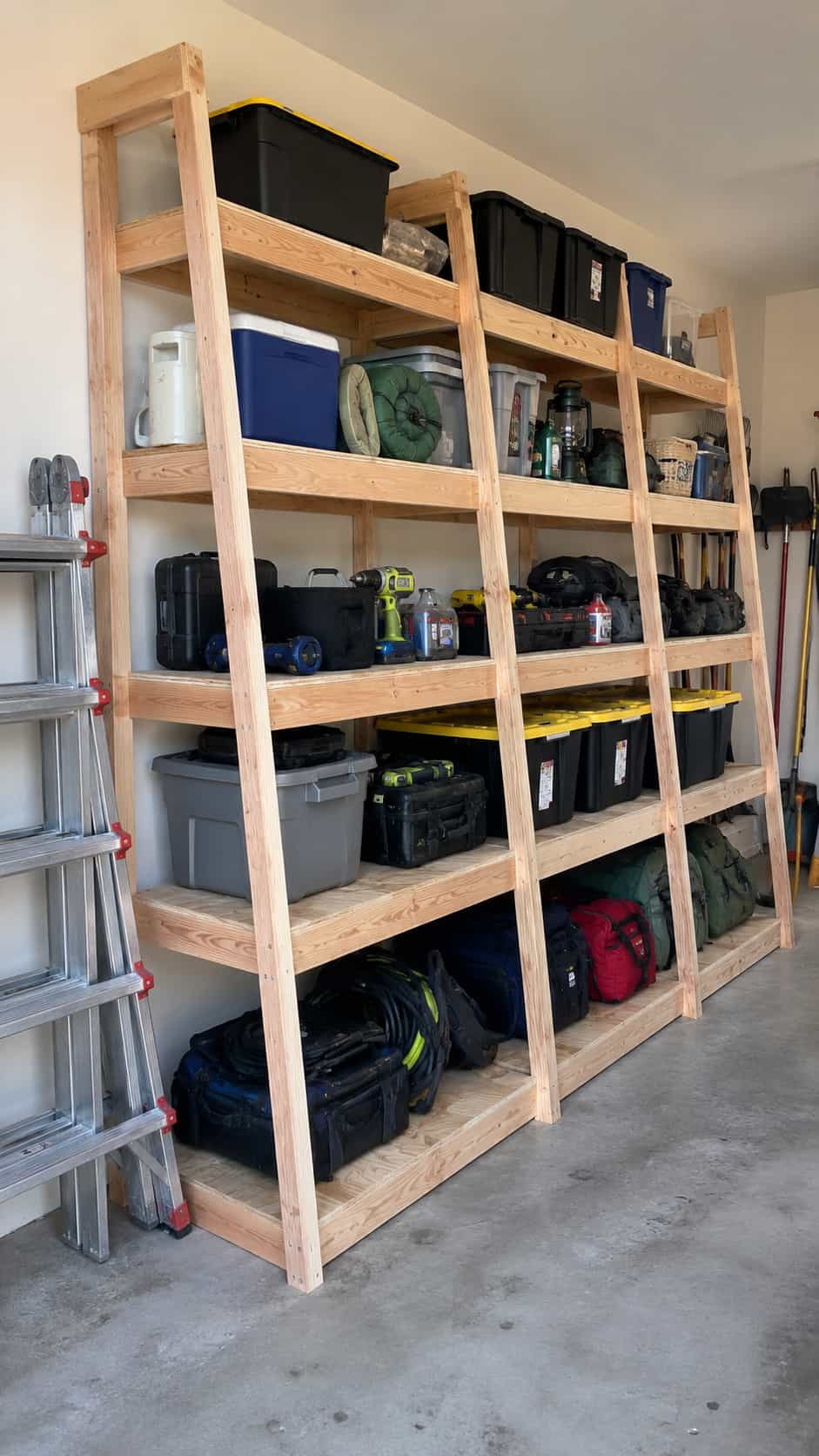
Plywood shelves are excellent for garage storage because they’re strong, inexpensive, and easy to customize to your exact space. Build a basic ladder-style frame and add plywood shelves sized to your bins, tools, and seasonal supplies.
- Best for: Garage organization
- Difficulty: Medium
- Best plywood thickness: 3/4 inch
- Weekend tip: Plan your shelf height around the storage bins you already own before cutting anything.
Internal link: 25 Genius DIY Organizers You Can Build From Scrap Wood
14. Plywood Planter Box
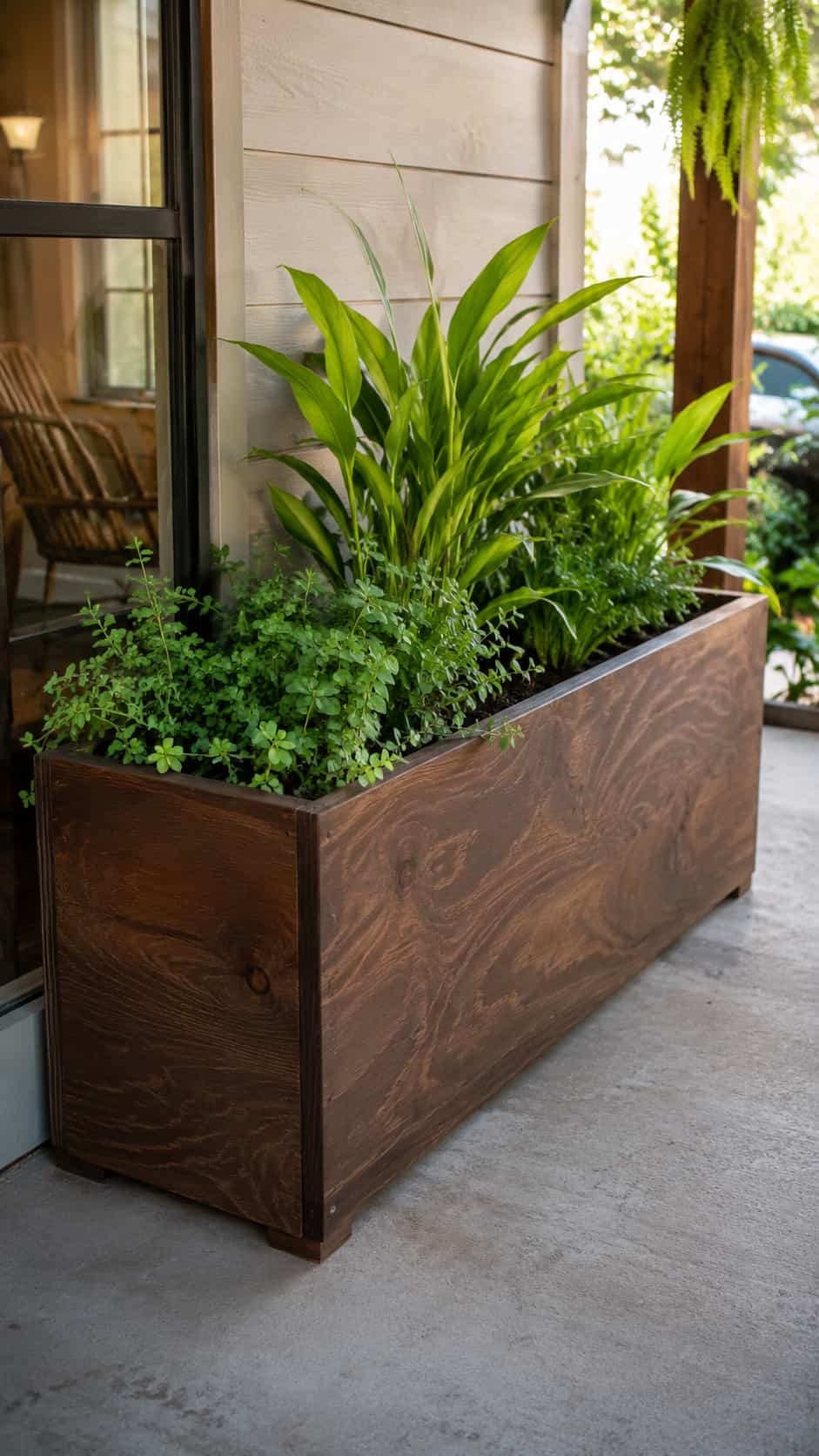
A plywood planter box can work for covered patios or indoor plants if it’s sealed properly against moisture. It’s a simple box build at its core, but there’s plenty of room to add style with paint, stain, or trim details.
- Best for: Patio decor, indoor plants, porch styling
- Difficulty: Easy–Medium
- Best plywood thickness: 1/2 inch or 3/4 inch
- Weekend tip: Use exterior paint or a quality sealer on every surface if it will be exposed to moisture.
Internal link: 15 Stunning Planter Box Plans to Build This Weekend
15. Plywood Nightstand
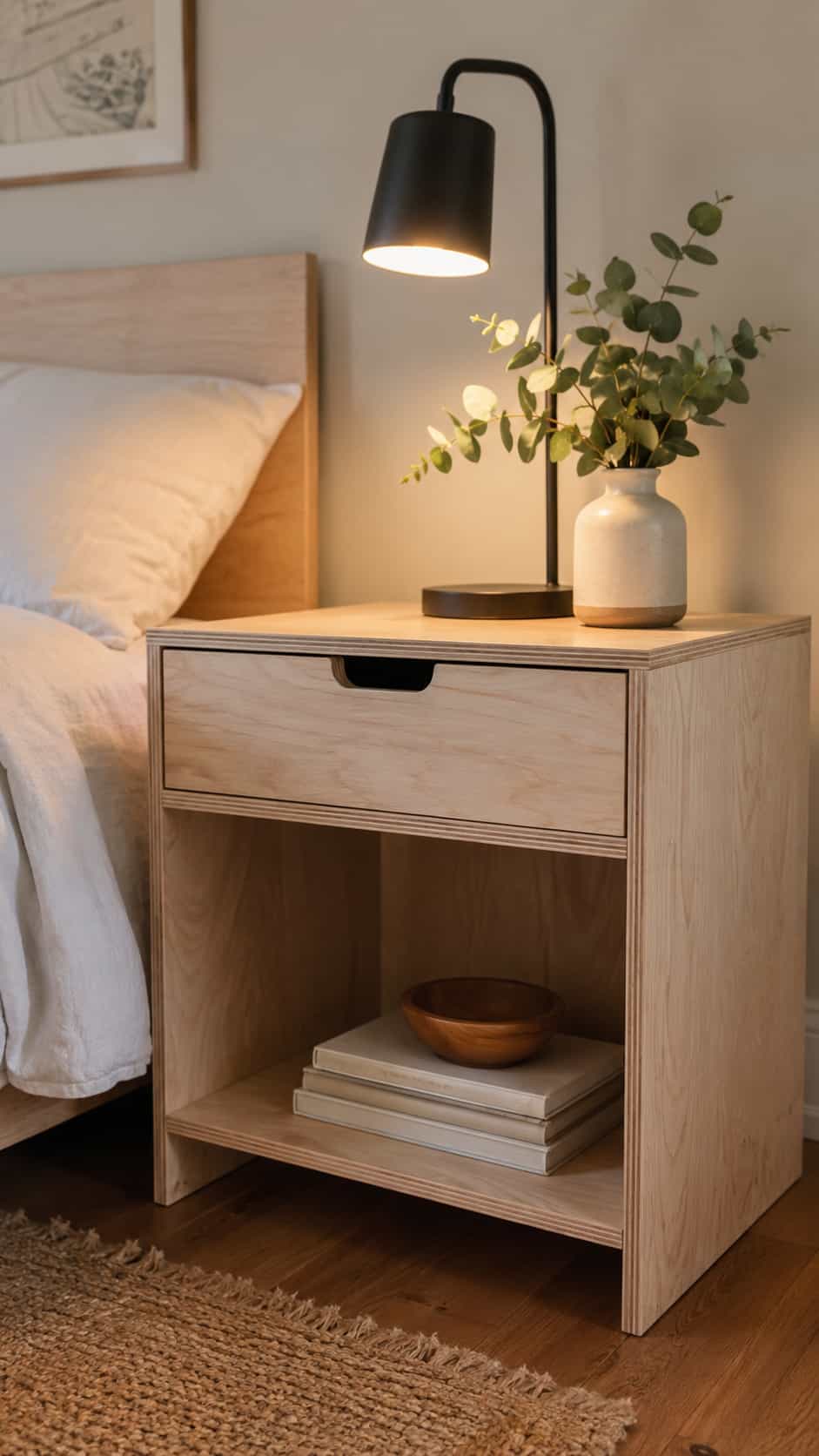
A small plywood nightstand is a great beginner furniture project because the scale is forgiving — small mistakes are easier to hide, and the whole build goes together quickly. A basic box shape with one shelf or a single drawer can look modern and clean with the right finish.
- Best for: Bedroom furniture
- Difficulty: Medium
- Best plywood thickness: 3/4 inch
- Weekend tip: Add edge banding or trim to hide the plywood layers for a more polished, furniture-store look.
Internal link: How to Build a DIY End Table with Cabinet Storage
16. Plywood Laptop Stand
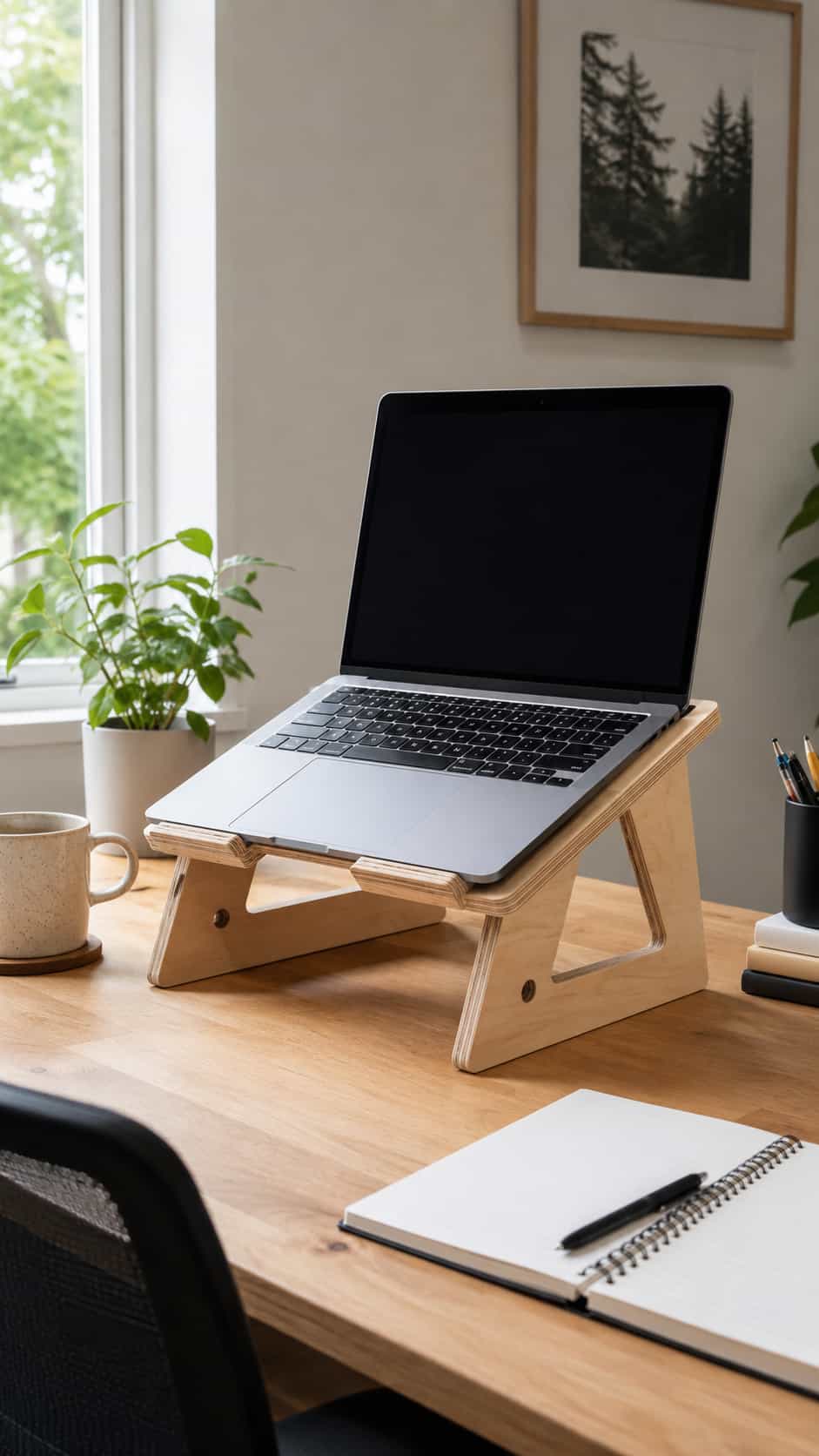
A plywood laptop stand is quick, useful, and one of the best projects on this list for using up scrap plywood. It can be made from just a few small pieces and customized to whatever desk height feels most comfortable for you.
- Best for: Desk setup, home office, quick projects
- Difficulty: Easy
- Best plywood thickness: 1/2 inch
- Weekend tip: Sand every edge extra smooth, since this is a project your hands will touch constantly.
17. Plywood Wall Art
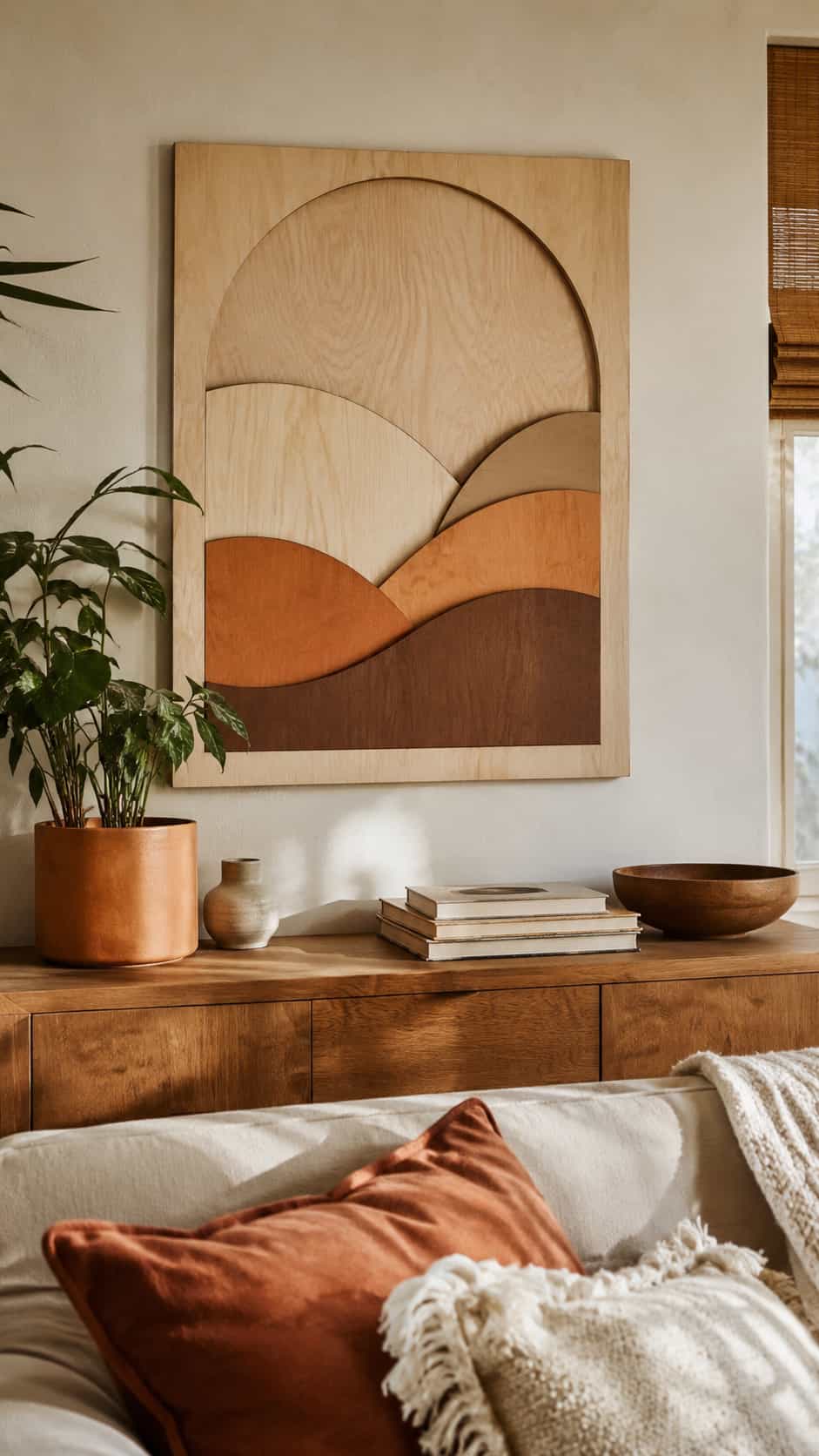
Plywood wall art can be made with geometric shapes, layered cutouts, painted panels, or wood stain patterns — it’s a good project if you want something decorative rather than purely functional, and it’s a nice way to experiment with a jigsaw.
- Best for: Home decor, gifts, selling
- Difficulty: Easy–Medium
- Best plywood thickness: 1/4 inch or 1/2 inch
- Weekend tip: Use painter’s tape to mask off clean, crisp geometric patterns before painting.
18. Plywood Kids’ Play Table
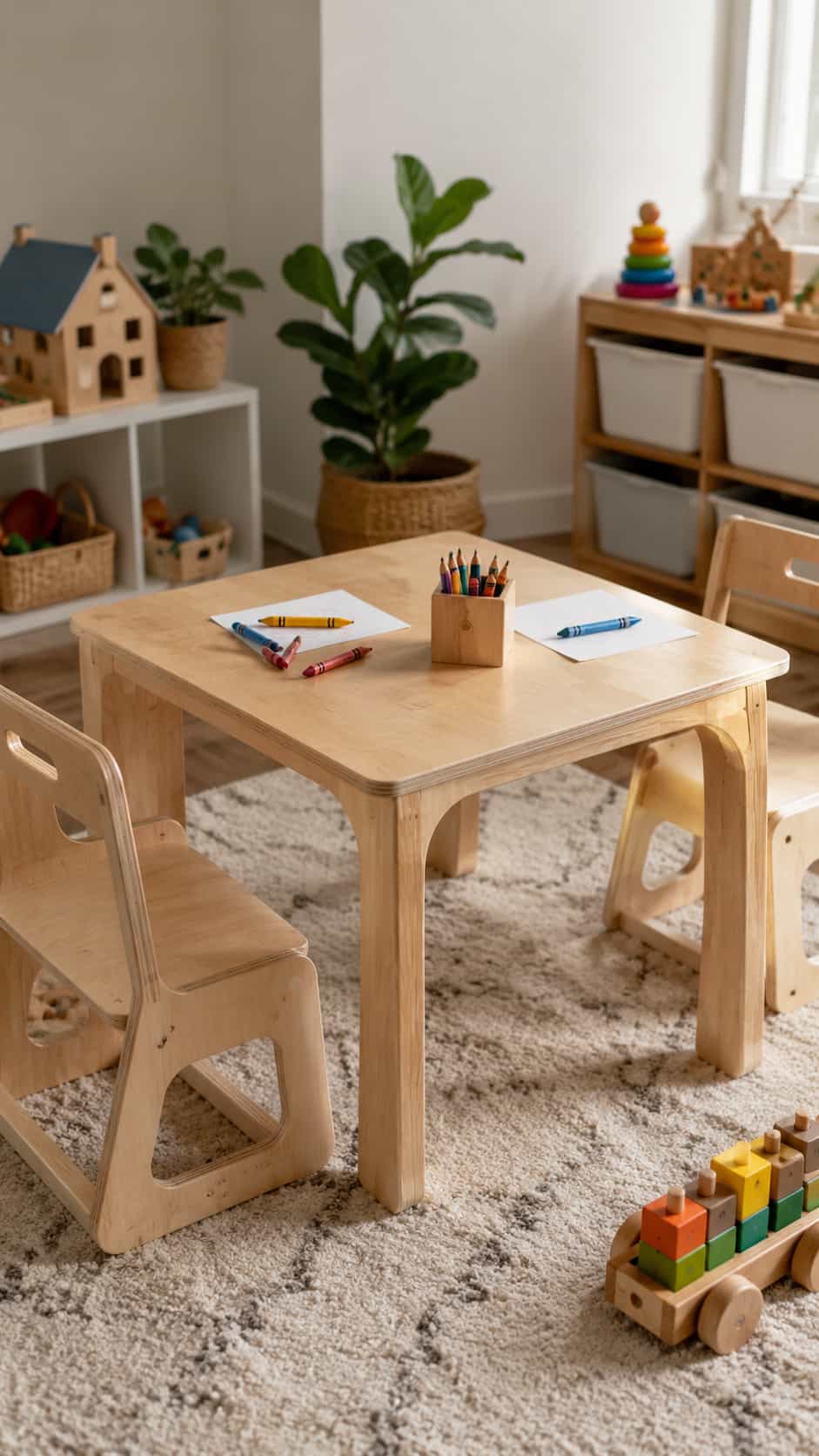
A small kids’ play table can be built from plywood with a simple top and sturdy, wide-set legs for stability. Keep the edges rounded and the surface easy to wipe clean, since it’ll see plenty of crayons, paint, and snacks.
- Best for: Kids’ rooms, playrooms
- Difficulty: Medium
- Best plywood thickness: 3/4 inch
- Weekend tip: Round over every corner and sand thoroughly for a smoother, safer finish around kids.
19. Plywood Outdoor Storage Bench
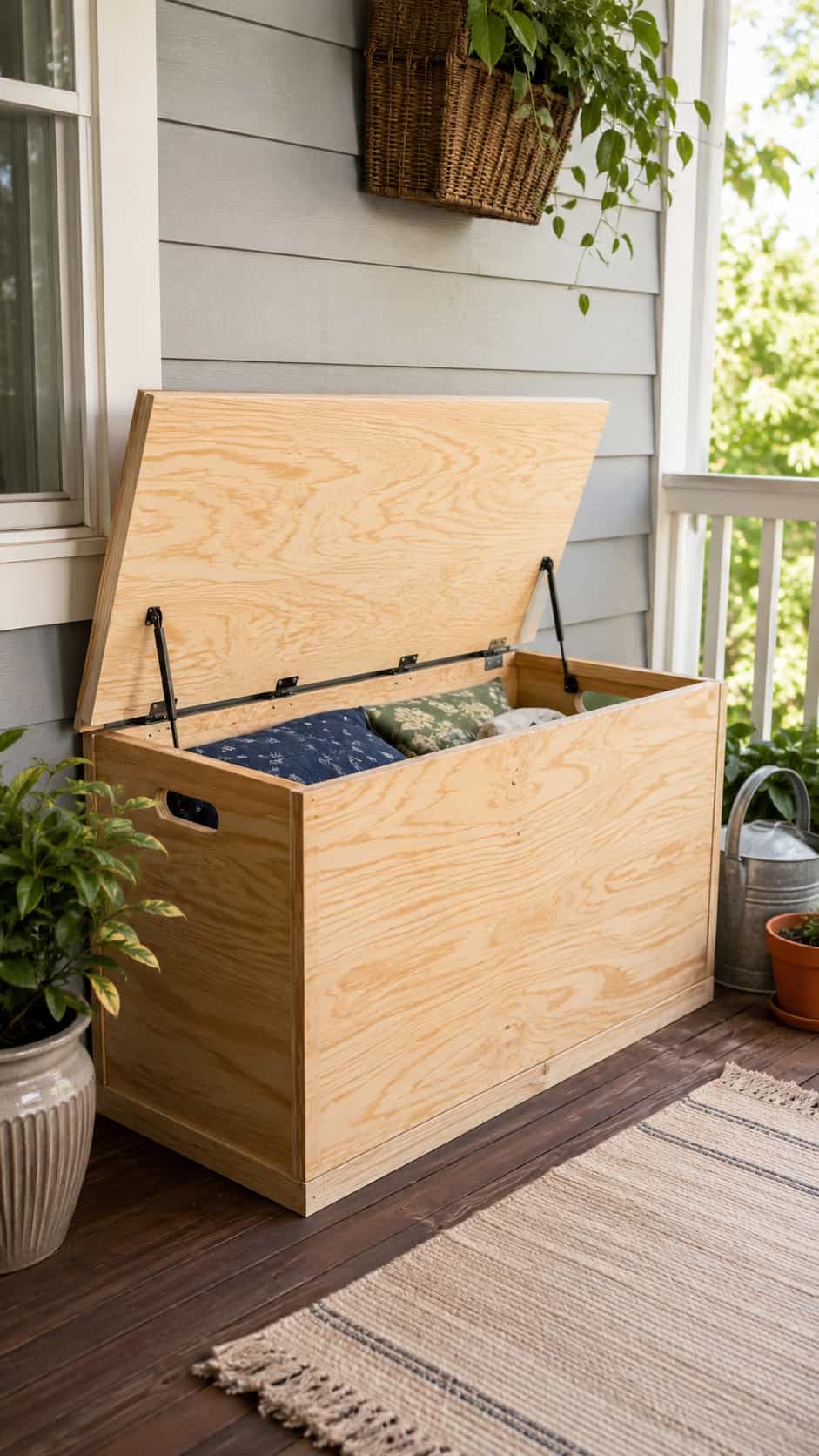
A plywood outdoor storage bench can hold cushions, toys, garden tools, or other outdoor accessories, and doubles as extra seating. It works best in a covered area like a porch or patio and should be sealed well against the elements.
- Best for: Patio storage, porch seating
- Difficulty: Medium
- Best plywood thickness: 3/4 inch
- Weekend tip: Use exterior-grade plywood and seal every exposed edge, not just the visible faces.
20. Plywood Workshop Cabinet
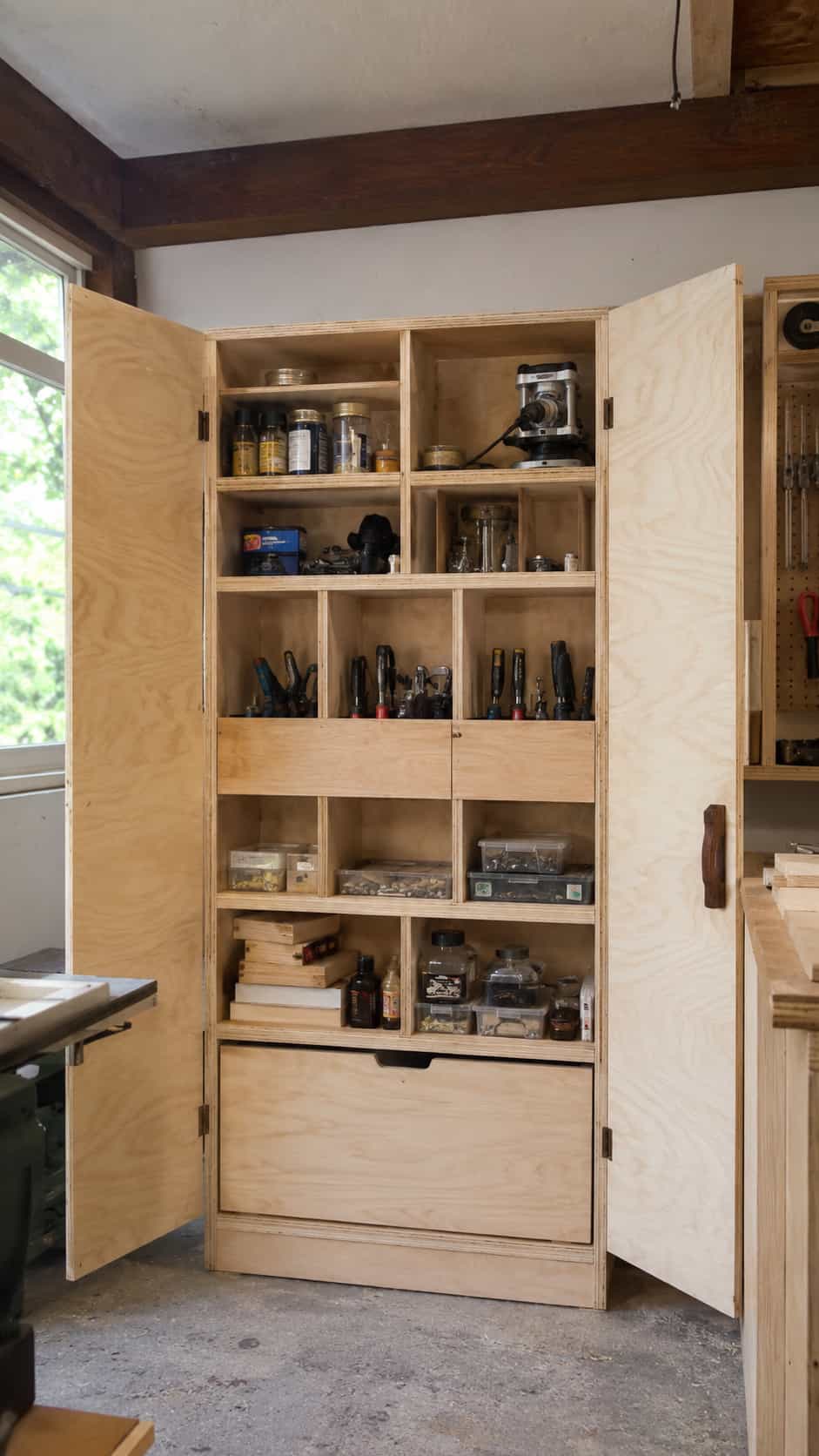
A simple plywood workshop cabinet is perfect for storing tools, screws, finishes, and other shop supplies out of sight and off your workbench. It can be wall-mounted to save floor space or built freestanding, depending on what your shop layout allows.
- Best for: Workshop storage
- Difficulty: Medium
- Best plywood thickness: 3/4 inch
- Weekend tip: Start with open shelves before committing to doors or drawers — you can always add them later once you know how you actually use the space.
21. Plywood Table Saw Outfeed Support
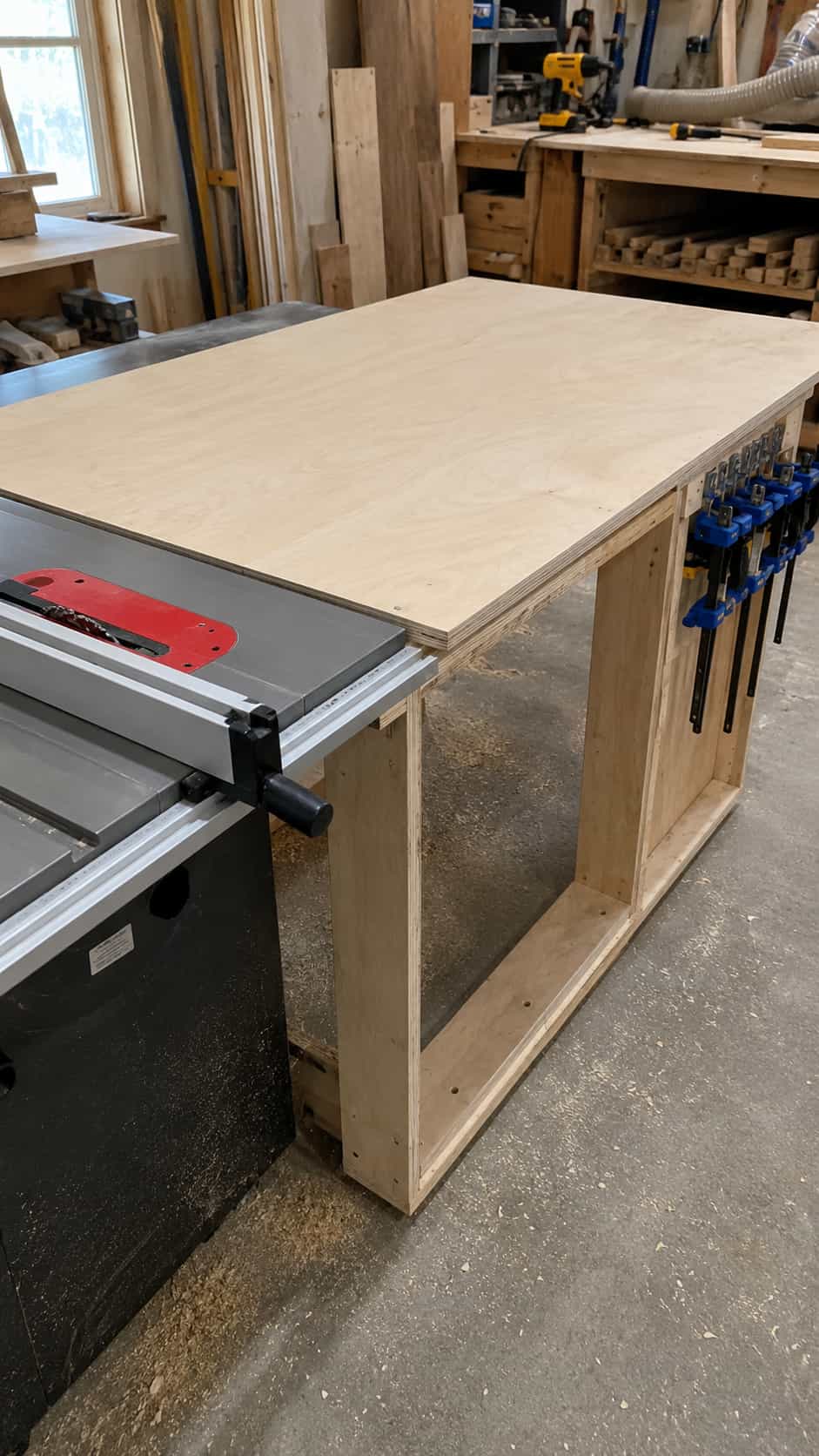
If you use a table saw, plywood can make a simple outfeed support table or work surface behind the saw. This helps support longer boards and sheet goods as they come off the blade, which makes solo cuts far safer and more accurate.
- Best for: Small shops, table saw users, workshop upgrades
- Difficulty: Medium
- Best plywood thickness: 3/4 inch
- Weekend tip: Match the outfeed surface height to your table saw as closely as possible so boards slide across without catching.
Internal link: 10 Table Saw Workbench Plans That Save Space and Add Storage
Best DIY Plywood Projects for Beginners
If you’re brand new to plywood, start with the easiest projects first before moving into furniture builds:
- Wall shelves
- Storage box
- Drawer organizers
- Laptop stand
- Pegboard tool wall
- Workbench top
- Simple shoe rack
These projects use basic straight cuts, simple assembly, and forgiving designs — which means more confidence and fewer wasted sheets while you’re still learning.
Best Plywood Projects for Small Workshops
If your goal is a more organized, functional shop rather than furniture for the house, focus on:
- Rolling cart
- Garage storage shelves
- Tool wall
- Workshop cabinet
- Workbench top
- Table saw outfeed support
- Drawer organizers
These projects help you organize your shop while also building the exact skills — straight cuts, square boxes, simple joinery — you’ll need for bigger furniture projects later.
Best Plywood Projects to Sell
Some of these plywood builds also work well for handmade shops, craft fairs, or local selling, especially once you’ve built a few and refined your process.
Good options for selling include:
- Wall shelves
- Planter boxes
- Laptop stands
- Toy boxes
- Wall art
- Storage boxes
- Small nightstands
- Drawer organizers
These tend to sell well because they’re small enough to batch-produce, don’t require exotic materials, and solve a real storage or decor problem for the buyer.
Common Mistakes to Avoid With Plywood Projects
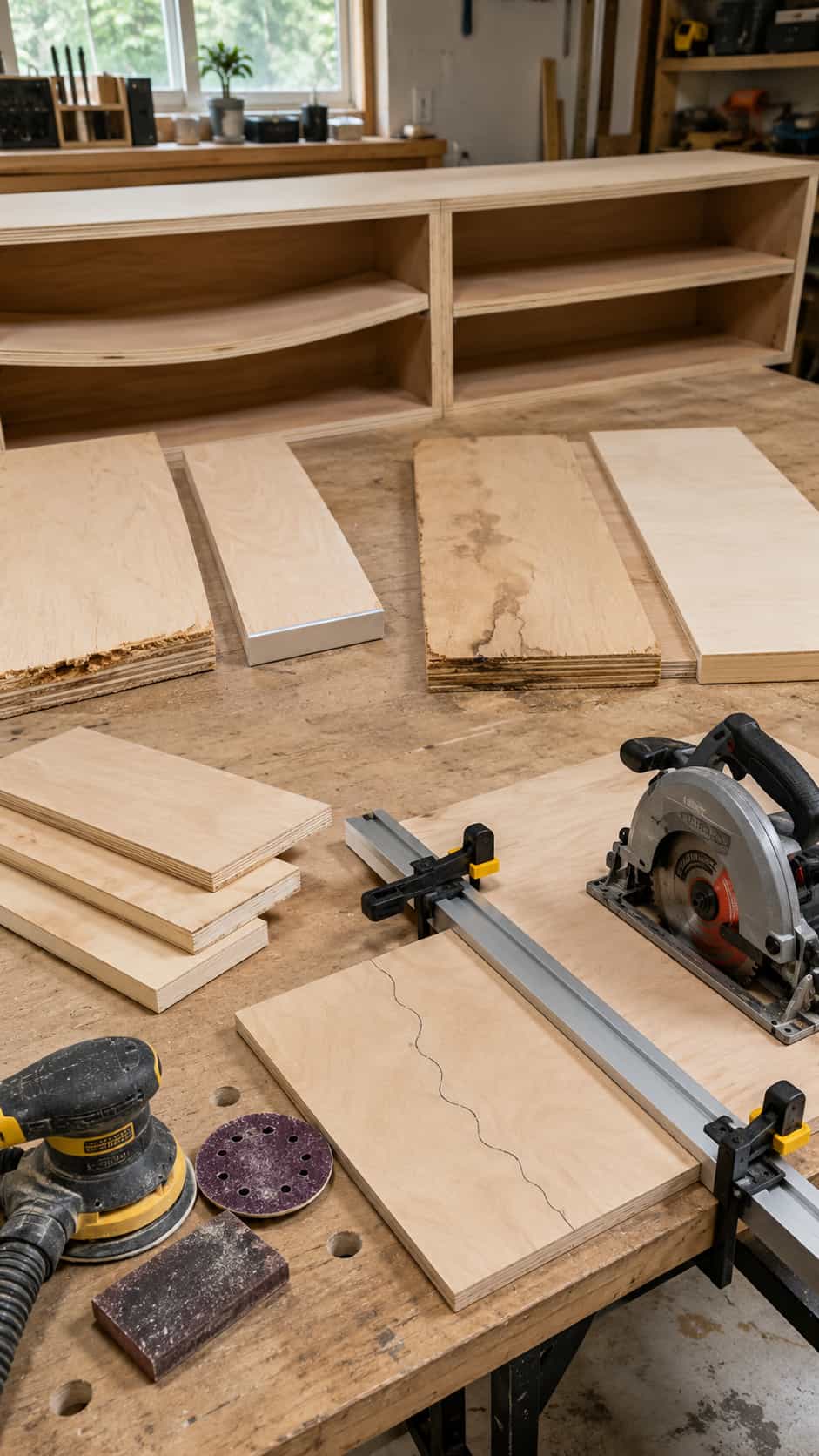
Choosing the wrong thickness. Thin plywood can sag under weight over time, especially on shelves and larger furniture spans. When in doubt, size up.
Ignoring plywood edges. Raw plywood edges show every layer and can look unfinished next to a clean painted or stained face. Use edge banding, solid wood trim, sanding, or paint to clean them up.
Not supporting shelves properly. Long plywood shelves can bow in the middle if they aren’t supported at the right intervals — add a center support or cleat on anything over a couple of feet wide.
Forgetting about moisture. Plywood edges absorb moisture faster than the faces do. Seal every edge carefully on outdoor projects, not just the parts you can see.
Cutting without a guide. A circular saw works far better — and far straighter — with a clamped straightedge guide instead of trying to follow a pencil line freehand.
Skipping sanding. Plywood edges and faces can splinter easily. Always sand before painting or staining for a smoother, more professional-looking result.
Want More Beginner Woodworking Project Ideas?
If you enjoyed these DIY plywood projects, you may also like:
- 21 Best Simple Woodworking Projects for Absolute Beginners
- 25 Easy Scrap Wood Crafts You Can Make This Weekend
- 25 Scrap Wood Projects That Sell
- 15 Wooden Tool Box Ideas You Can Build This Weekend
- 20+ Free DIY Workbench Plans for Every Skill Level
- 15 Genius Tool Storage DIY Ideas to Organize Your Workshop
Want Detailed Plywood Project Plans?
Free plywood project ideas like these are great for inspiration, but sometimes you want exact measurements, cut lists, diagrams, and step-by-step instructions before you start cutting into a sheet.
That’s where Ted’s Woodworking Plans can help. It includes a large library of woodworking plans covering furniture, storage projects, workshop builds, outdoor projects, and beginner-friendly weekend builds — many of which pair well with the projects on this list.
If you like having a clear plan in hand before you make your first cut, it may be worth checking out.
See what’s included in Ted’s Woodworking Plans here.
FAQ About DIY Plywood Projects
What can I make with plywood? You can make shelves, storage boxes, desks, bookshelves, drawer organizers, cabinets, workbench tops, garage shelves, tool walls, toy boxes, and simple furniture.
What is the easiest plywood project for beginners? Simple wall shelves, storage boxes, drawer organizers, laptop stands, and workbench tops are some of the easiest plywood projects for beginners.
What plywood thickness should I use for DIY projects? For furniture, shelves, benches, and cabinets, 3/4-inch plywood is commonly used. For drawer dividers, crafts, wall art, and lightweight projects, 1/4-inch or 1/2-inch plywood can work well.
Can plywood be used for furniture? Yes — plywood works well for furniture, especially bookshelves, desks, cabinets, nightstands, coffee tables, storage benches, and modern-style builds.
How do you make plywood edges look better? You can use iron-on edge banding, solid wood trim, paint, wood filler, sanding, or a roundover bit to make plywood edges look cleaner and more finished.
Can plywood projects be used outdoors? Yes, but use exterior-grade plywood and seal all exposed edges carefully with outdoor paint, stain, or sealer.
Final Thoughts
DIY plywood projects are perfect for beginners because plywood is affordable, strong, and flexible enough for home, garage, workshop, and outdoor builds.
Start with simple projects like shelves, storage boxes, drawer organizers, laptop stands, or a workbench top. Once you get comfortable cutting and assembling plywood, move into desks, cabinets, toy boxes, outdoor benches, and full furniture builds.
You don’t need fancy hardwood to build something useful. Sometimes one sheet of plywood is enough to create a project you’ll actually use every day.