
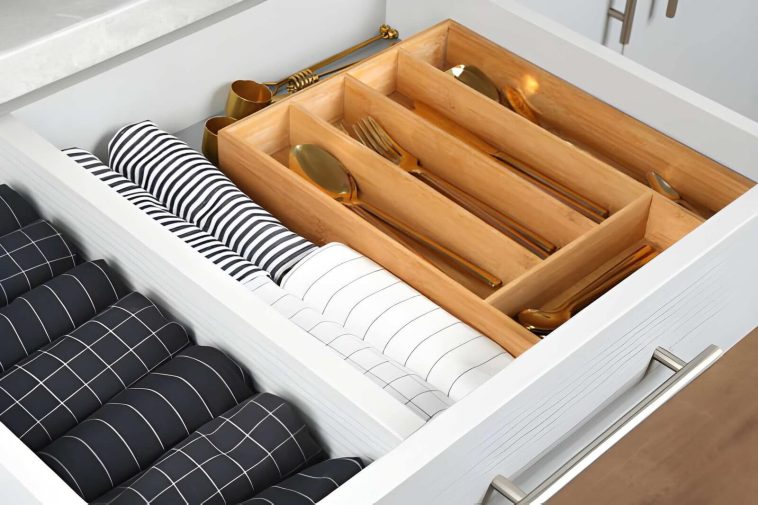
You know that moment — you’re cooking dinner, the pasta’s boiling over, and you yank open the kitchen drawer looking for a wooden spoon. What do you get? A spatula that’s sideways, a mystery gadget you bought in 2019, three expired takeout menus, and absolutely no wooden spoon. That drawer is a crime scene.
Here’s the thing: over 67% of homeowners say organizing their kitchen drawers is their #1 home priority. Which means you’re not alone — and also means it’s a problem worth actually solving, not just shoving back closed and pretending it didn’t happen.
In this post, I’ll walk you through 10 kitchen drawer organization ideas — from dead-simple sorting tricks to satisfying woodworking builds you can put together yourself. Most of these only need scrap wood and basic tools, so your wallet can relax. And if you’re brand new to DIY, go check out our 25 Genius DIY Organizers You Can Build From Scrap Wood first — it’s the perfect zero-waste starting point before you touch a single drawer.
Let’s fix this kitchen situation once and for all.
Idea #1: Sort Before You Build (The Foundation Step)
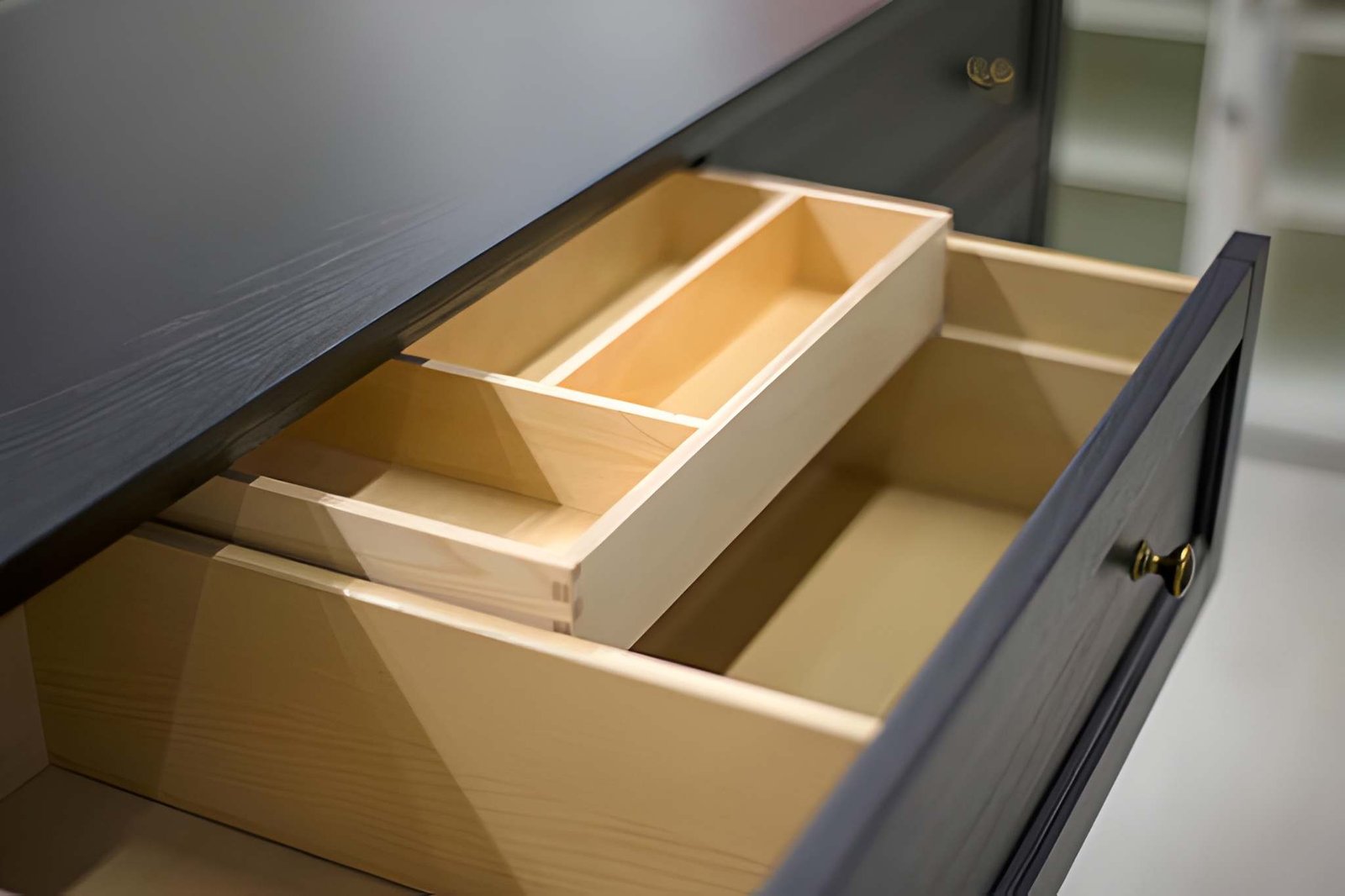
I know, I know — you want to skip straight to the fun part and start cutting wood. But hear me out, because this step will save you from building organizers the wrong size for your actual stuff.
Empty the drawer completely. Yes, all of it. Even the mystery gadget.
Once everything is on the counter, group items by type:
- Utensils (spatulas, wooden spoons, ladles)
- Cutting and prep tools (peelers, zesters, can openers)
- Wraps and bags (foil, cling wrap, Ziploc bags)
- Random gadgets and tools
Now measure your most-used items before you cut a single piece of wood. That rubber spatula you grab every morning? Measure it. The stack of spoons you always reach for? Count them and measure the pile. This one step determines exactly what compartment sizes you actually need — and stops you from building a beautiful organizer that doesn’t fit anything you own.
Idea #2: Custom Wooden Utensil Dividers for Kitchen Drawer Organization
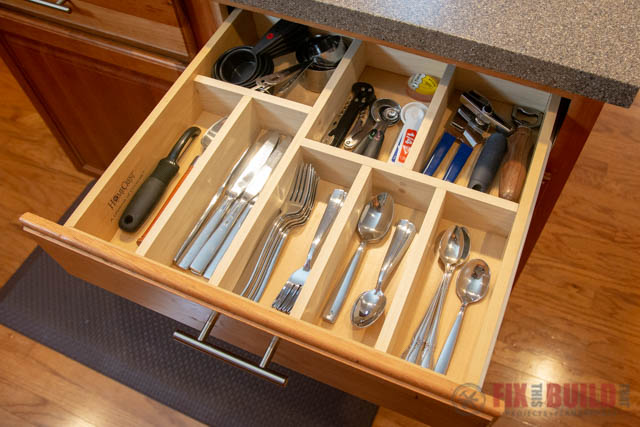
Source : fixthisbuildthat
This is the classic kitchen drawer upgrade, and honestly, it never gets old. There’s something deeply satisfying about sliding open a drawer and seeing every utensil in its own dedicated slot. It makes you feel like you have your life together 🙂
The best part? You can build this in under an hour from hobby boards or scrap wood, and you don’t need any fancy joinery. Simple butt joints and wood glue are more than enough to hold everything in place.
Here’s why building your own beats buying a store-bought tray every single time:
- Pre-made trays never fit. Drawers come in every size imaginable, and store trays are built for some theoretical average drawer that somehow isn’t yours.
- You control the compartment sizes. Your oversized serving spoon gets its own wide slot. Your collection of spatulas gets a long narrow section. Everything has a home that actually fits.
- It costs almost nothing if you’re working from scrap wood.
Cut your wood strips to the depth of your drawer, glue them in a grid pattern that matches your item groupings, and clamp until dry. Sand the edges smooth and you’re done. That’s genuinely it.
Idea #3: DIY Spice Drawer Insert
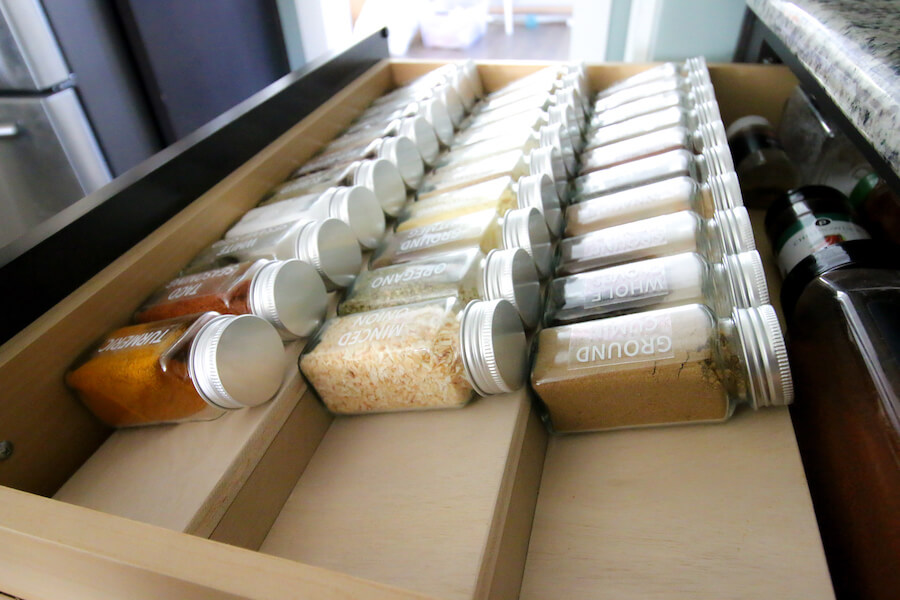
Source : learn.kregtool
If you’ve never seen a well-organized spice drawer, let me tell you — it’s a game changer. Instead of digging through a cabinet full of bottles where you can only see the tops, all your spices lay flat with labels facing up, perfectly visible at a glance.
The build is straightforward: cut a simple angled insert from plywood that tilts the bottles slightly toward you. The angle is typically around 15–20 degrees — just enough to make labels readable without the bottles rolling around.
This works especially well for shallow drawers that feel like wasted space when used for flat storage. Suddenly that awkward 2-inch-deep drawer becomes one of the most useful spots in the kitchen.
FYI, “spice drawer organization” is consistently one of the top searched kitchen organization terms on Pinterest — so if you want to share your build, that’s a ready-made audience.
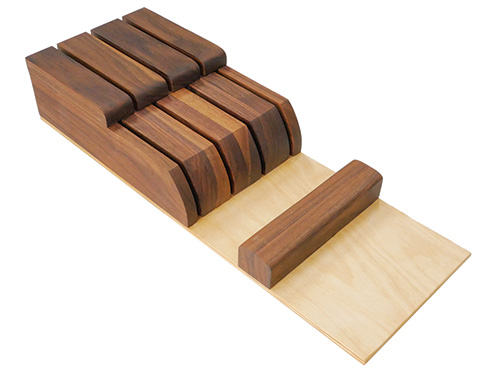
Idea #4: Knife Block Drawer Insert for Kitchen Drawer Organization
Source : Woodworkersjournal
Countertop knife blocks are bulky, collect crumbs in every slot, and eat up prime real estate on your counter. A drawer knife insert solves all of that and adds a safety bonus on top.
The build uses hardwood strips — maple or cherry work great — with routed slots sized for your specific knives. Space the slots to accommodate different blade widths, from a small paring knife to your largest chef’s knife.
A few things to keep in mind:
- Wood protects your blades — no more dulling your knives by tossing them in a drawer unprotected
- Wood protects your fingers — no reaching blindly into a drawer full of exposed edges :/
- Hardwood is worth it here — it holds up to daily use and looks great for years
If you’re enjoying woodworking projects like this and want to take on bigger kitchen builds, go check out our [15 Kitchen Cabinet Plans That’ll Transform Your Space] — there’s a lot of great hardwood work in there.
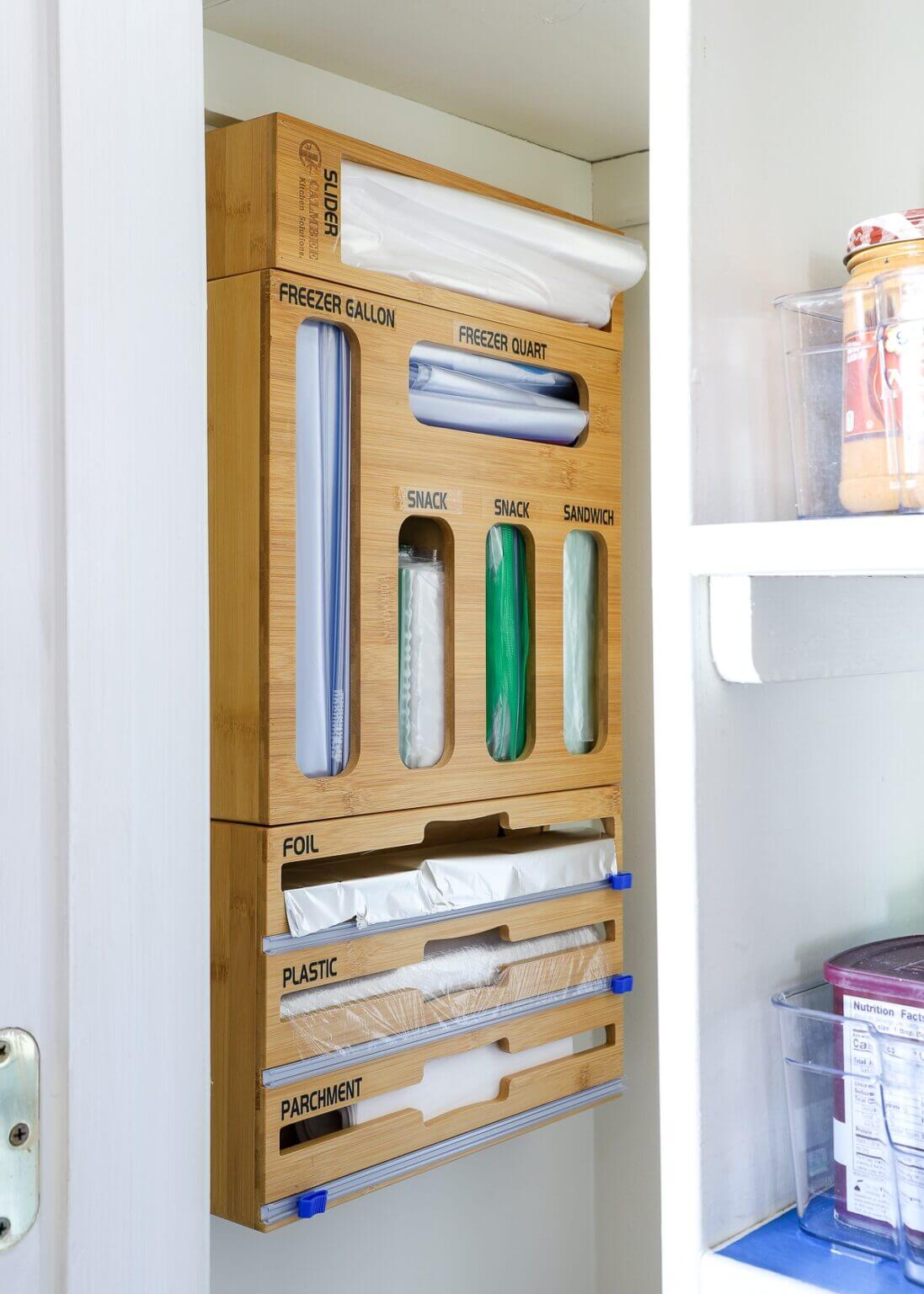
Idea #5: Ziploc Bag & Wrap Organizer
Source : thehomesihavemade
Few drawers in the kitchen get as chaotic as the one holding all your bags and wraps. Foil rolls tipping over, cling wrap that’s somehow wedged sideways, Ziploc boxes of three different sizes all jumbled together — it’s a whole situation.
The fix is a simple vertical divider system built from thin plywood strips that creates dedicated sections for each type:
- One section for aluminum foil
- One for cling wrap
- Sections for Ziploc bags by size (sandwich, quart, gallon)
The whole thing can be built in about 45 minutes from a single piece of ¼” plywood. Cut your strips to the depth of the drawer, space them to match your box widths, and glue everything together. Optional upgrade: add a small magnet latch so the whole unit stays put when you’re pulling out a new box.
This is one of those builds where the improvement-to-effort ratio is completely off the charts.
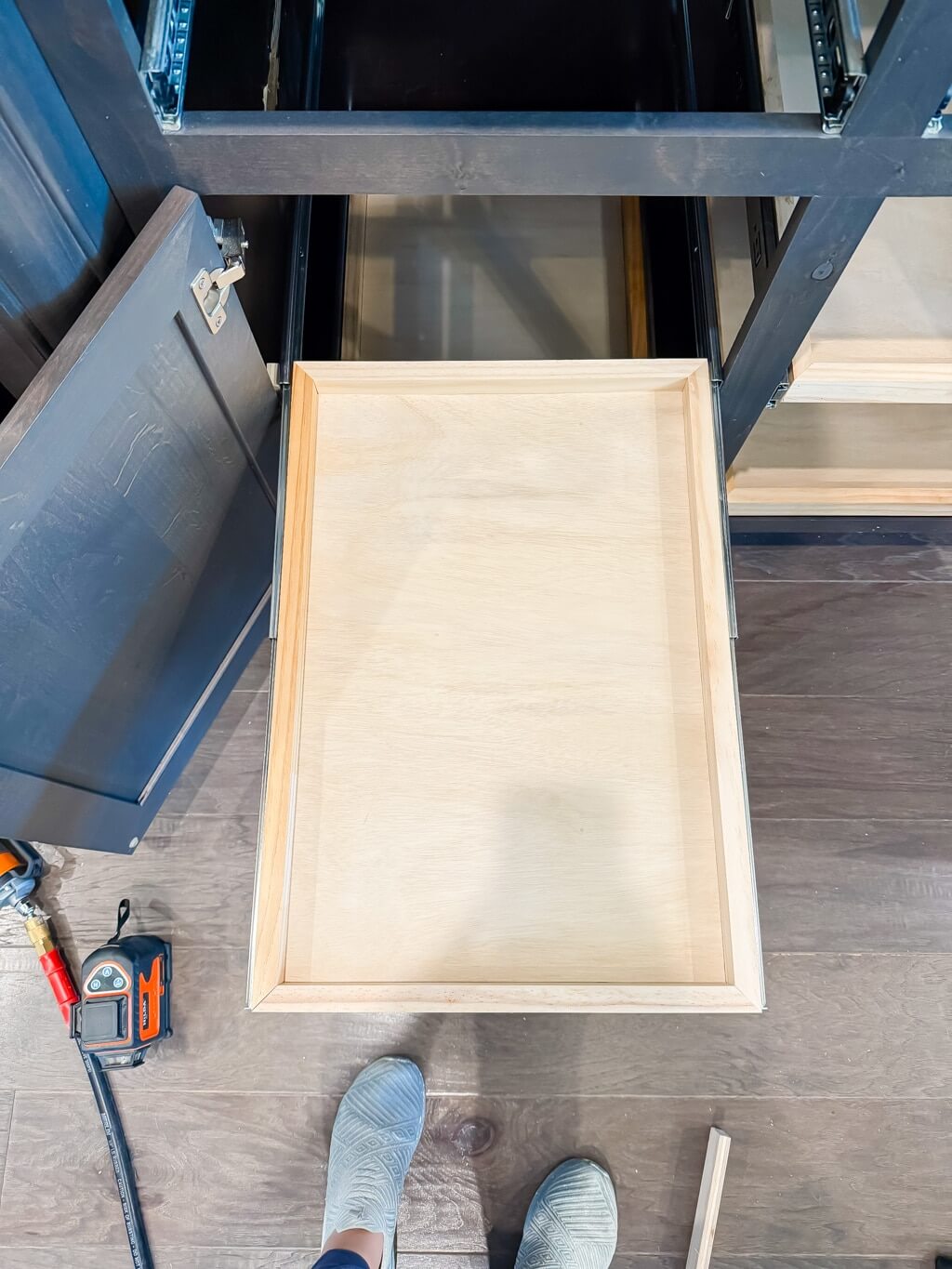
Idea #6: Pull-Out Drawer for Kitchen Drawer Organization
Credit : jennifermeyering
Lower cabinets with deep shelves have a universal problem: everything you need is always at the back, buried behind everything you never use. Sound familiar? A sliding pull-out tray fixes this entirely.
You’re essentially building a drawer inside a cabinet — a wooden tray mounted on drawer slides that lets you pull the whole shelf out toward you. No more kneeling on the floor and fishing around blindly for your cast iron pan.
This works beautifully for:
- Pots and lids
- Sheet pans and cutting boards stored vertically
- Small appliances like a rice cooker or Instant Pot
This is one of the most beginner-friendly builds on this list — no complex angles or joints, just measure the cabinet opening, build a tray to fit, mount the slides, and you’re done. Already thinking about your cabinet situation? Don’t miss our 15 Kitchen Cabinet Plans That’ll Transform Your Space (Without Breaking the Bank!) for the full picture.
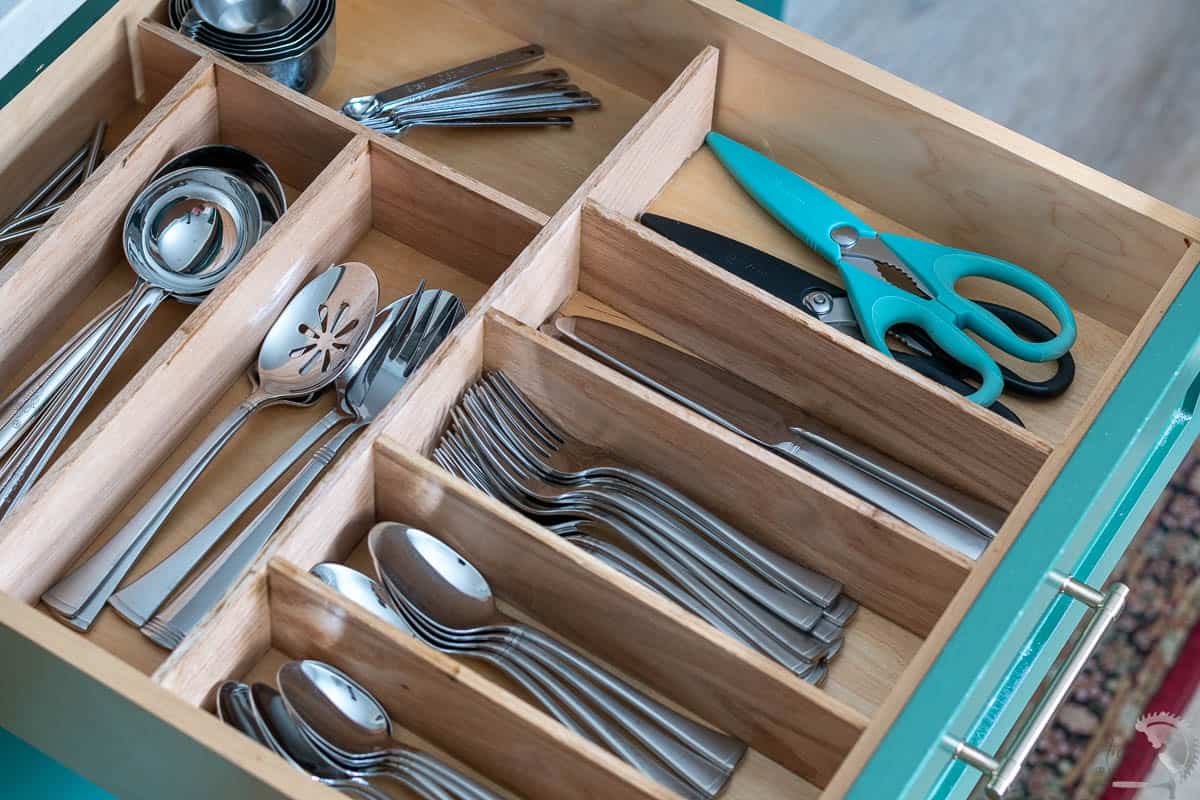
Idea #7: Cutlery Insert with Scrap Wood
Source : anikasdiylife
Let’s be real: buying a silverware tray from a home goods store is one of the more overpriced kitchen purchases you can make. They’re literally just a few dividers in a plastic or bamboo tray. You can build a better version in an afternoon from leftover scrap wood offcuts.
The build is about as simple as it gets:
- Cut strips to form the compartment walls
- Arrange them to match your cutlery layout (forks, knives, spoons, extras)
- Glue everything together
- Sand smooth and finish with food-safe mineral oil — this step matters since your utensils live here
The biggest advantage over store-bought? You control every dimension. Have extra-wide salad servers? Build a slot for them. Want a section for chopsticks? Done. Your drawer, your rules.
Got leftover wood scraps from this build? Don’t let them go to waste — our [25 Genius DIY Organizers You Can Build From Scrap Wood is full of ideas for using every last piece.
Idea #8: Bread Box Drawer Alternative
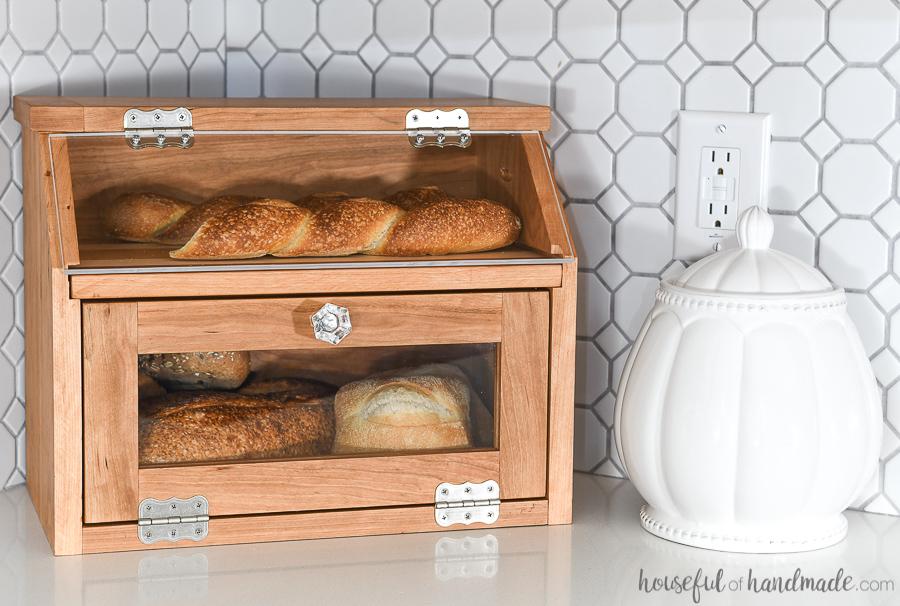
Source : learn.kregtool
Not every kitchen has counter space to spare, and if yours is already crowded, a dedicated bread drawer is a genuinely smart alternative to a standalone bread box.
Line a deep drawer with a thin cedar insert — cedar naturally regulates moisture and resists mold, which is exactly what you want for keeping bread fresh. The cedar insert doesn’t need to be a complex build; even a simple cedar-lined box that sits inside the drawer does the job.
When you’re not storing bread, this drawer doubles as a pastry and baking supply station — a great home for parchment paper, bench scrapers, dough cutters, and other baking tools that tend to scatter everywhere.
If you’d rather go the traditional route and want a beautiful standalone build instead, read our Why Every Kitchen Needs a Bread Box (And How to Make One) — it’s one of my favorite projects on the site.
Idea #9: K-Cup & Coffee Station Drawer
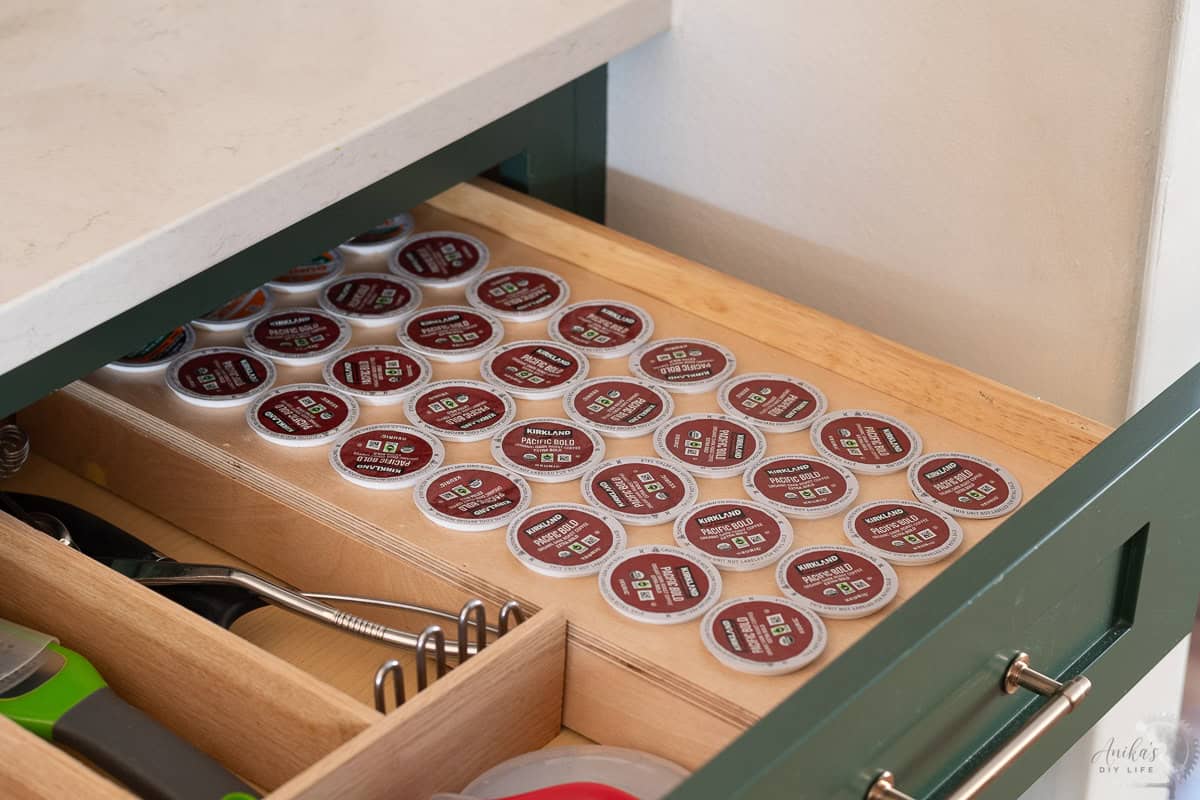
Source : anikasdiylife
If your morning routine involves a Keurig and a drawer that looks like a K-Cup tornado hit it, this one’s for you. Dedicating one drawer entirely to your coffee setup changes the whole morning experience.
The build: a simple grid insert sized to hold K-Cups upright, which typically holds 30–40 cups depending on drawer size. Add a small divided section alongside the grid for:
- Sweetener and sugar packets
- Stir sticks
- Tea bags if you’re a tea-and-coffee household
Total build time: about 2 hours. Materials: one sheet of plywood and basic tools. The grid is just a series of dividers cut and notched to interlock — no glue needed if you cut the slots right, though a little glue doesn’t hurt for stability.
IMO, this is the most satisfying “before and after” build on this list. Opening that drawer to a perfectly organized coffee station at 6am is genuinely a good way to start the day.
Idea #10: The “Everything Has a Home” Junk Drawer Makeover
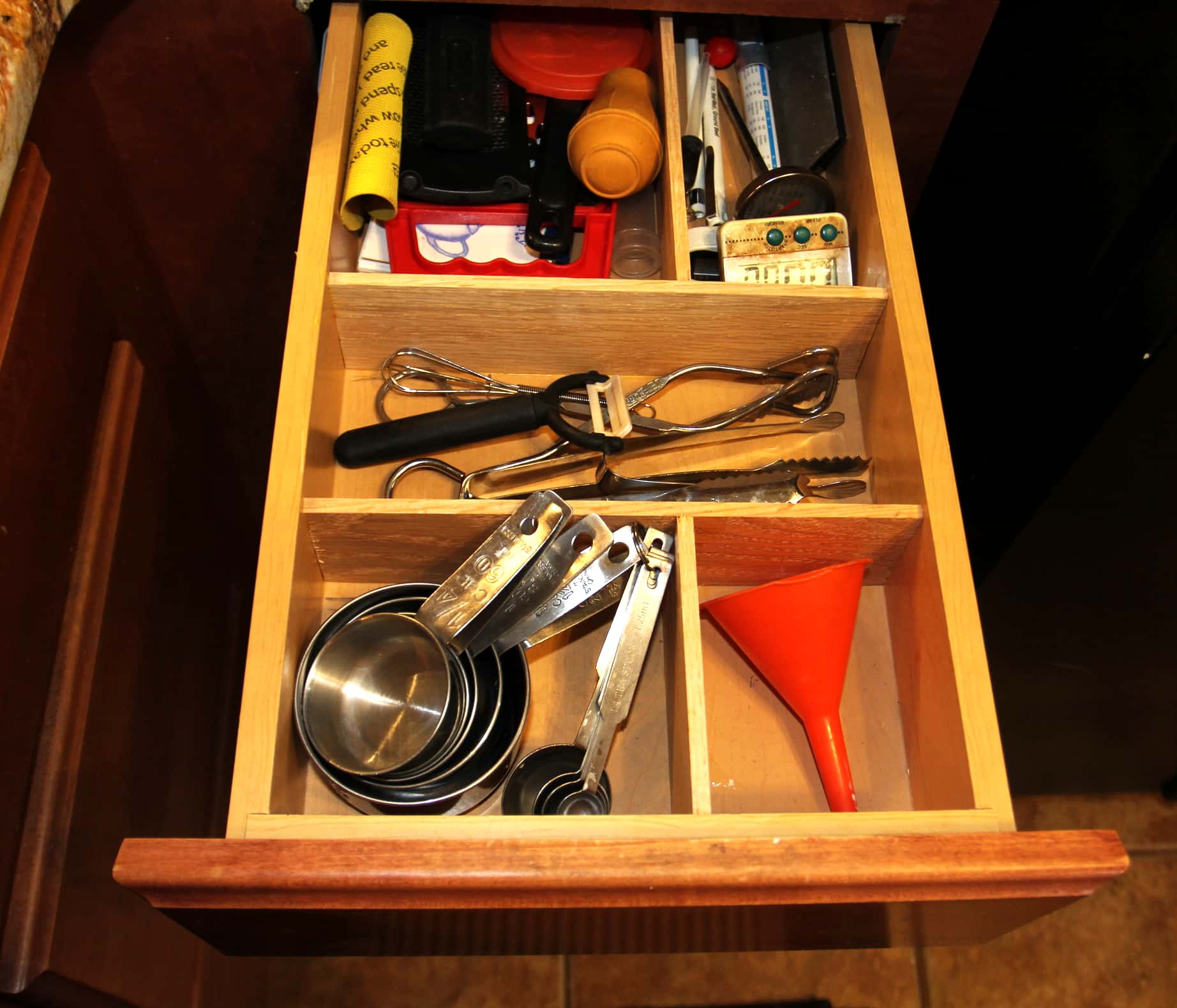
Credit : beckwithstreasures
Every kitchen has a junk drawer. The goal isn’t to eliminate it — the goal is to make it intentional instead of chaotic. There’s a big difference between a junk drawer and a “miscellaneous essentials” drawer, and that difference is organization.
Build small labeled compartments using thin hobby board strips glued in a grid pattern. Sections might include:
- Batteries (AA, AAA, 9V — sorted)
- Pens, markers, and a notepad
- Takeout menus (okay, maybe just one section, not ten)
- Keys and keychains
- Small tools — screwdriver, measuring tape, Allen keys
- Random but necessary stuff — rubber bands, bread clips, the mystery key that definitely opens something important
The insight here is simple: everything that ends up in a junk drawer is there because it has no other home. Give each category a defined compartment, label it, and the drawer actually works. The chaos creeps back in only when you stop respecting the system — and a well-built insert makes it easy to respect.
Ready to Go Further? Ted’s Woodworking Plans Has You Covered
If you’ve made it this far, I’m guessing you’re the type of person who’d rather build something perfect than settle for whatever’s on the shelf at the home goods store. That’s exactly the mindset behind Ted’s Woodworking Plans — a library of over 16,000 woodworking plans covering everything from simple drawer organizers to full kitchen cabinet builds.
Instead of figuring out measurements from scratch every time (and potentially cutting a board three times trying to get it right), you get step-by-step blueprints with cut lists, material lists, and detailed diagrams. I’ve used it as a reference for projects on this site more times than I can count. Whether you’re building your first utensil divider or planning a complete kitchen cabinet overhaul, it’s worth having in your toolkit.
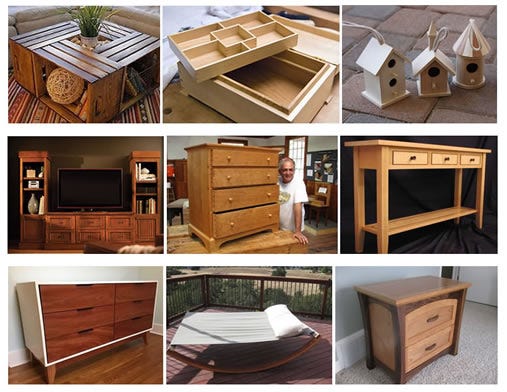
👉 Browse Ted’s Woodworking Plans and find your next kitchen project →
Start This Weekend
Here’s the honest truth: a chaotic kitchen drawer isn’t a personality trait — it’s just an unsolved problem. And now you have 10 ways to solve it, most of which need nothing more than some scrap wood, basic tools, and a free afternoon.
You don’t need to tackle all 10 at once. Pick one drawer — the worst one — and start there this weekend. Maybe it’s the utensil drawer. Maybe it’s the junk drawer that’s been silently judging you for months. One organized drawer tends to motivate the next, and before long you’ve got a kitchen that looks like it belongs in a magazine.
Save this post to Pinterest so you can find it when you’re ready to tackle the next one. And if you’re building anything from this list, I’d love to see how it turns out.