
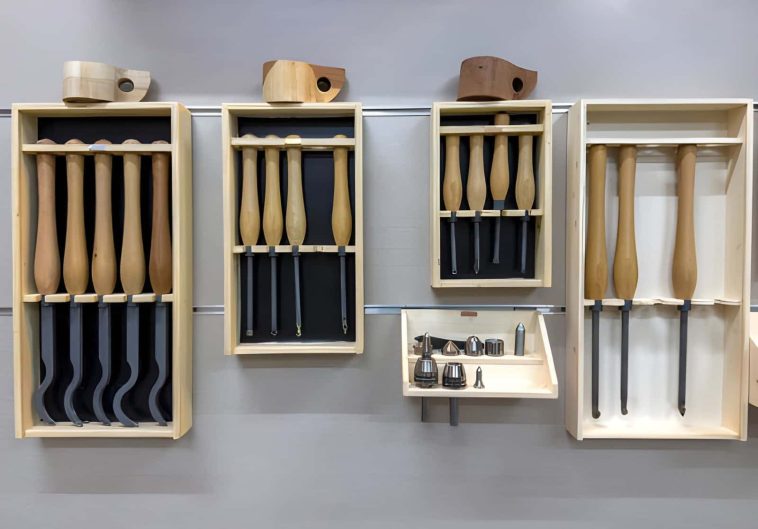
A messy workshop makes every project harder. Tools disappear, clamps pile up, cords get tangled, and small parts end up buried under sawdust somewhere near the back wall. That’s exactly why French cleat tool holders are one of the smartest storage upgrades you can make in any garage shop or woodworking space.
I switched my whole shop over to a French cleat wall a while back, and honestly, I should’ve done it years earlier. These holders are simple, strong, and completely removable, which means you can build most of them from scrap plywood or leftover boards without spending a dime at the lumber yard. In my opinion, that’s the kind of upgrade every beginner needs.
In this guide, you’ll find 21 easy French cleat tool holder ideas for drills, clamps, saws, screwdrivers, sandpaper, measuring tools, and pretty much everything else currently fighting for space on your bench.
| Holder Idea | Best For | Difficulty |
|---|---|---|
| Drill Holder | Cordless drills | Easy |
| Clamp Rack | Bar clamps and F-clamps | Easy-Medium |
| Circular Saw Holder | Heavy saw storage | Medium |
| Sandpaper Organizer | Sanding sheets and discs | Easy |
| All-in-One Station | Full workshop wall | Medium |
What Is a French Cleat Tool Holder?
A French cleat is a wall storage system made from two angled wood strips. One strip attaches to the wall. The matching strip attaches to the back of a tool holder, shelf, or cabinet.
The angled edges lock together, so the holder hangs securely while still being easy to move. Want a different layout next month? Just pop the holder off and slide it somewhere else. No patched holes, no re-measuring, no drama.
Beginners love this system because it’s:
- Strong enough to hold heavy tools
- Flexible, since holders move whenever your workflow changes
- Affordable, because scrap wood works just fine
- Easy to customize with almost zero extra tools
Why French Cleat Storage Works So Well in Small Workshops
Here’s the thing about small shops: floor space is precious, but wall space usually just sits there doing nothing. French cleats fix that instantly.
- It uses vertical wall space you’re already wasting
- It keeps every tool visible, so nothing hides in a drawer forever
- Holders can be rearranged anytime your workflow changes
- You can build most holders from scrap plywood
- It makes your shop look cleaner and more professional
- It works in garages, sheds, basements, and tiny woodworking corners
Ever notice how a cluttered shop makes you less excited to start a project? A French cleat wall solves that problem fast. For more shop organization ideas, check out my guide to 15 Genius Tool Storage DIY Ideas to Organize Your Workshop.
Basic Tools and Materials You May Need
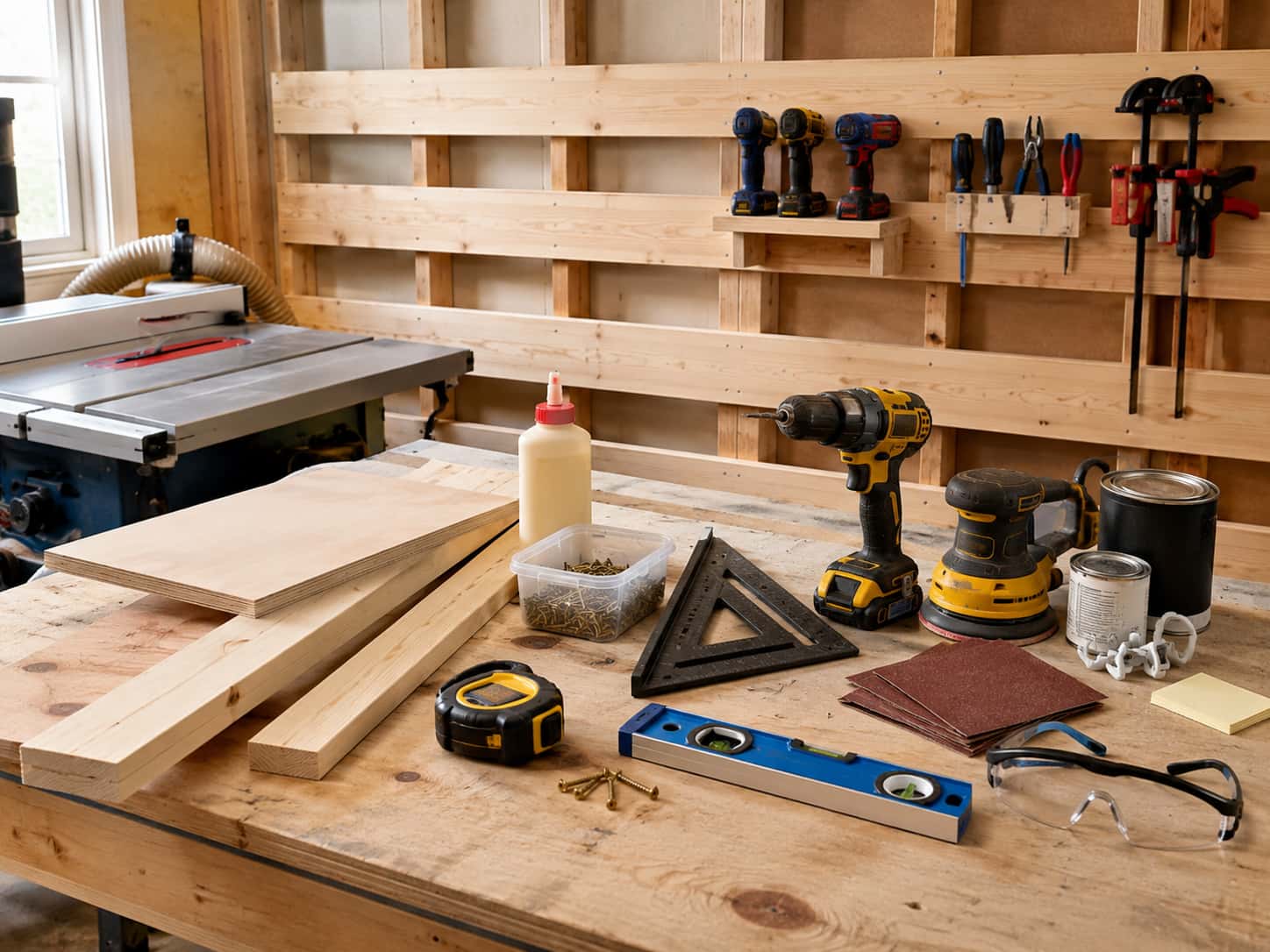
Nothing fancy here. If you’ve built anything before, you probably already own most of this.
Tools:
Materials:
- Plywood
- 1×4 or 1×6 boards
- Screws
- Wood glue
- Wall anchors or studs for mounting
- Sandpaper
- Optional: paint, stain, labels, hooks
Safety note: Always mount your main cleat strip into wall studs when storing heavy tools. A wall anchor might hold a sandpaper caddy just fine, but it will not hold your circular saw. Learn that lesson from me, not from a saw hitting the concrete floor.
How to Make a Basic French Cleat Strip
You don’t need a full tutorial here, just the core steps.
- Cut a board or plywood strip with a 45-degree angle running its full length.
- Attach one angled strip to the wall with the angle facing up.
- Attach the matching angled strip to the back of your holder, angle facing down.
- Hang the holder on the wall cleat.
- Test it before loading anything heavy onto it.
That’s it. Once you’ve made one strip, you basically know how to build all 21 holders below.
21 Easy French Cleat Tool Holders to Organize Your Workshop
1. French Cleat Drill Holder
Best for: cordless drills and drivers | Difficulty: Easy
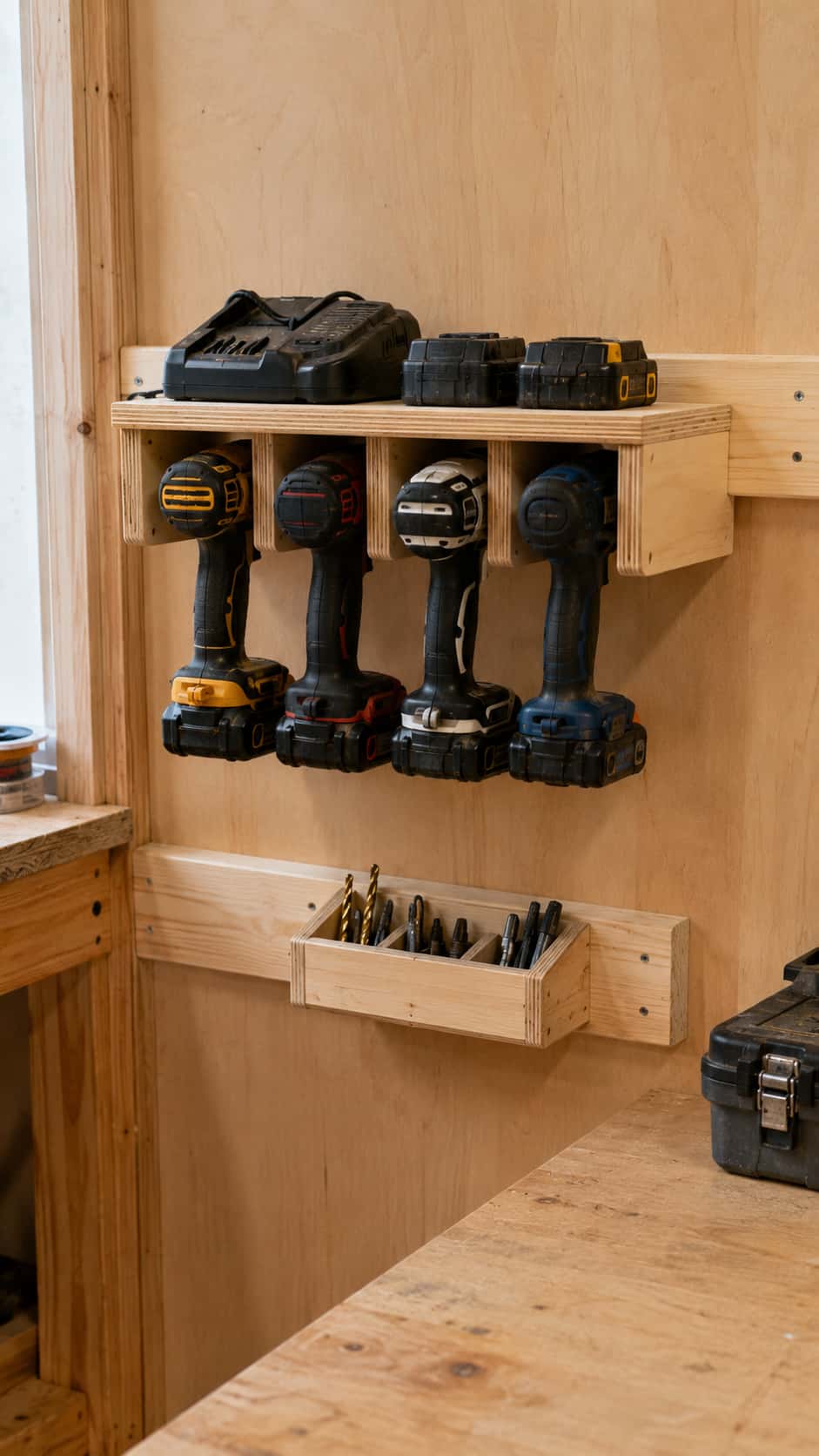
Build a simple shelf with slots underneath for drills to slide into. Space each slot about 3–4 inches apart so drills don’t knock into each other every time you grab one. Add a top shelf for batteries and chargers, and toss in a small divided bin below for bits and drivers so you’re not hunting for the right one mid-project.
2. Battery and Charger Station
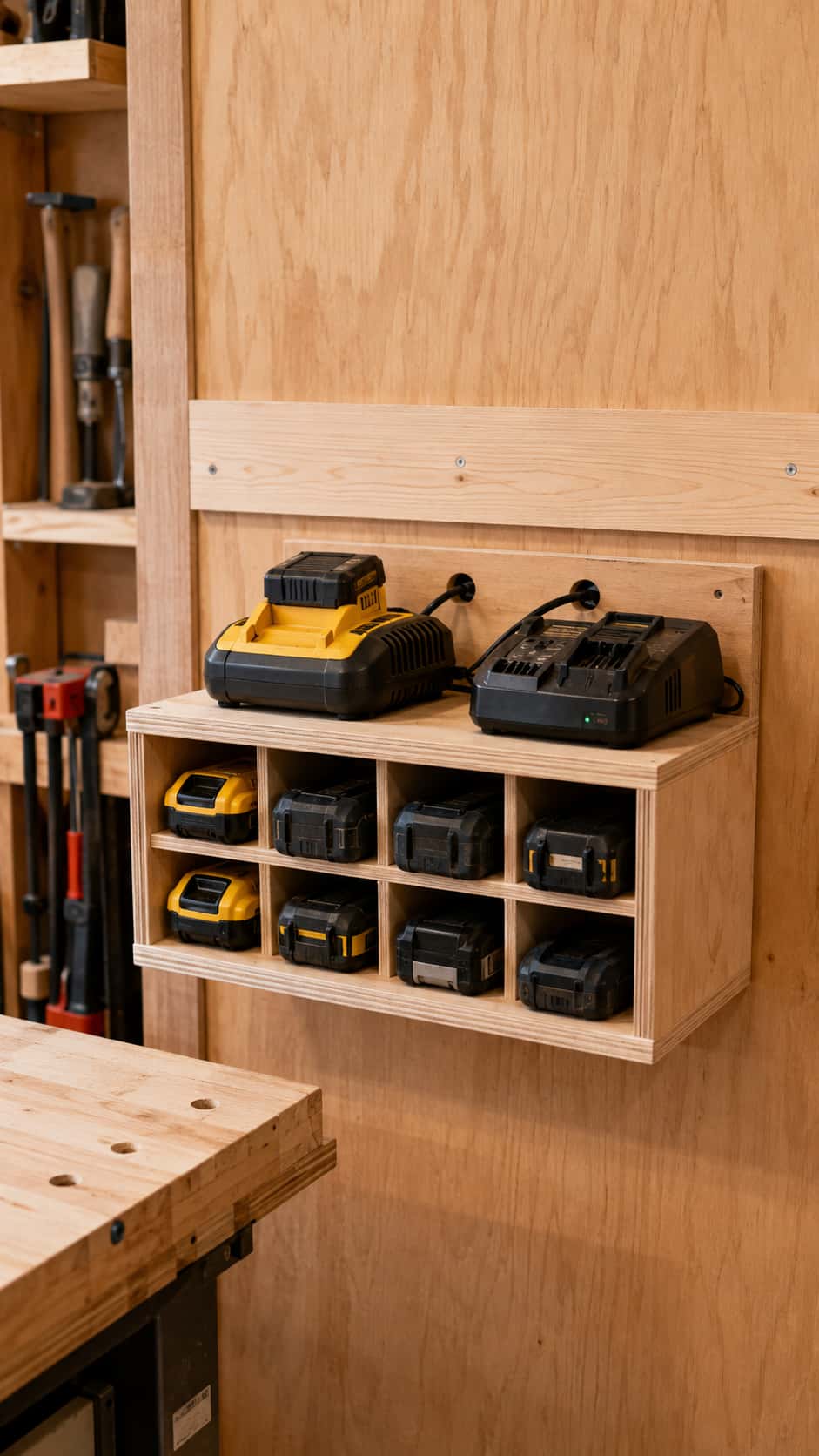
Best for: drill batteries, chargers, cords | Difficulty: Easy
Build a small box-style shelf with dividers for batteries and a flat top for chargers. Drill a few holes in the back for cords so you’re not fighting a tangled mess every morning.
3. Clamp Rack Holder
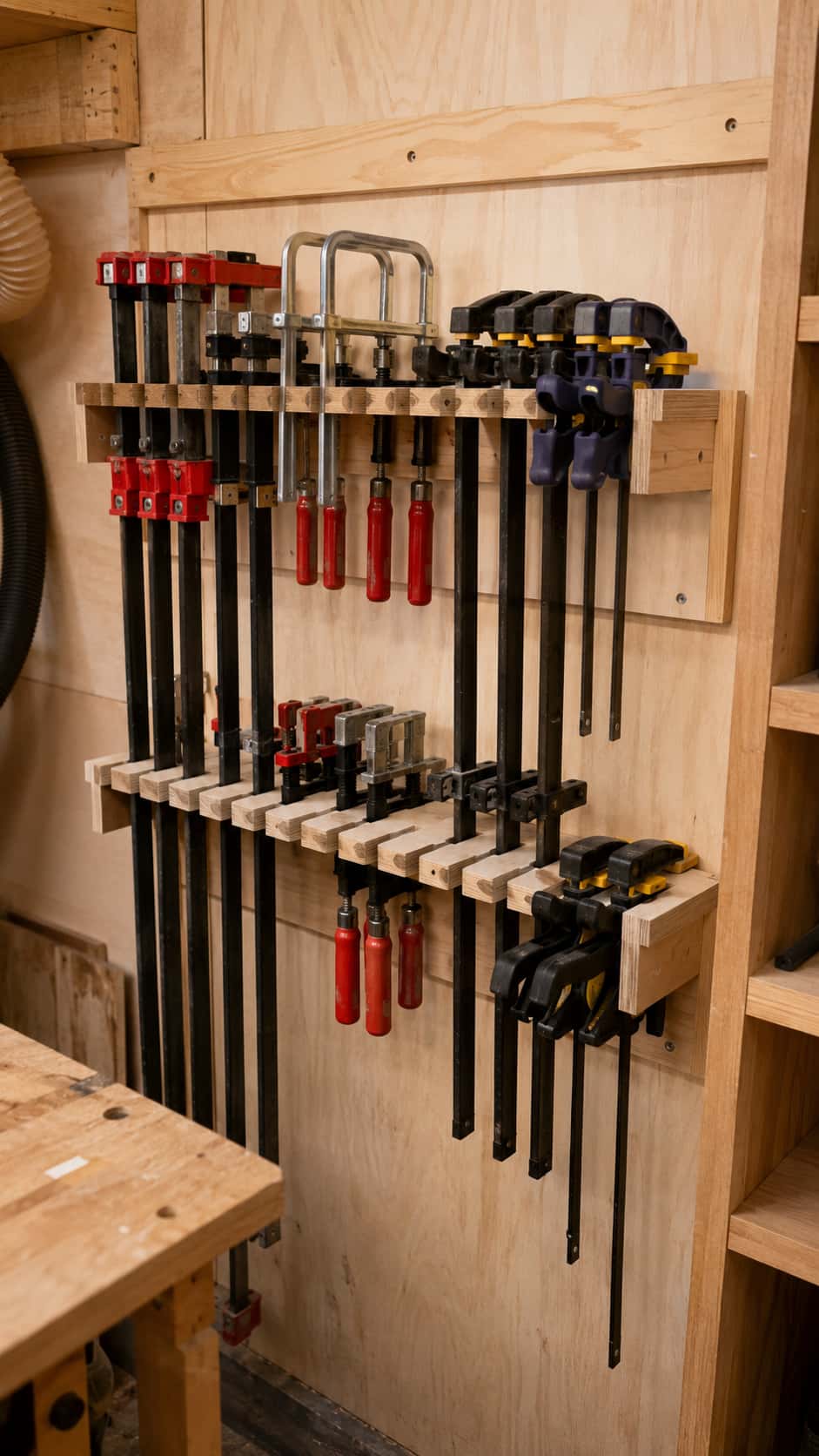
Best for: bar clamps, F-clamps, quick-grip clamps | Difficulty: Easy to medium
Use notched plywood strips or a double horizontal rail to hold clamps upright without them sliding around. A double rail setup, one strip near the top and one lower down, keeps long bar clamps from tipping forward when you pull one out. This is easily one of the most useful French cleat holders for woodworkers, since clamps multiply like rabbits and never stay organized on their own.
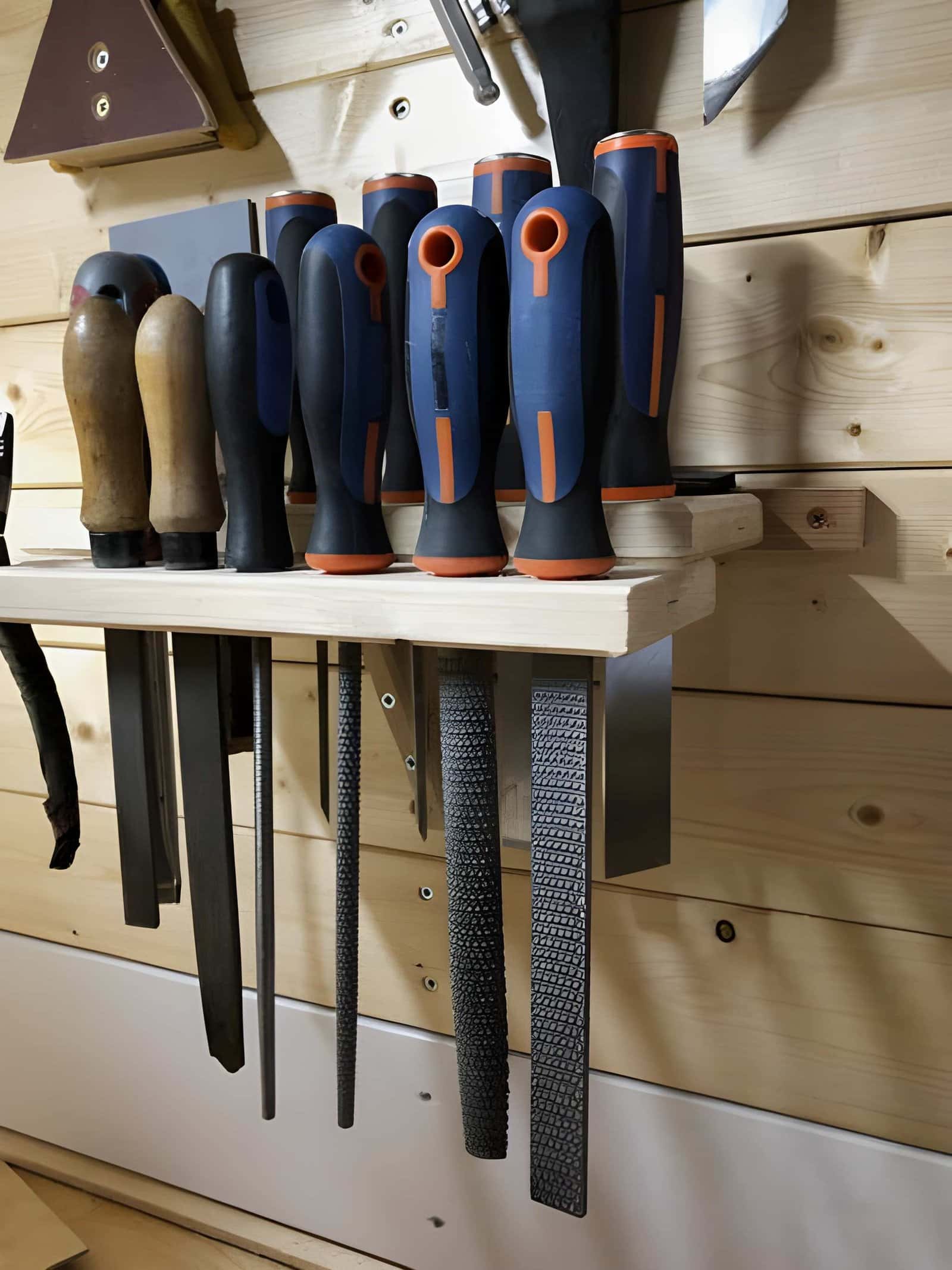
4. Screwdriver Holder
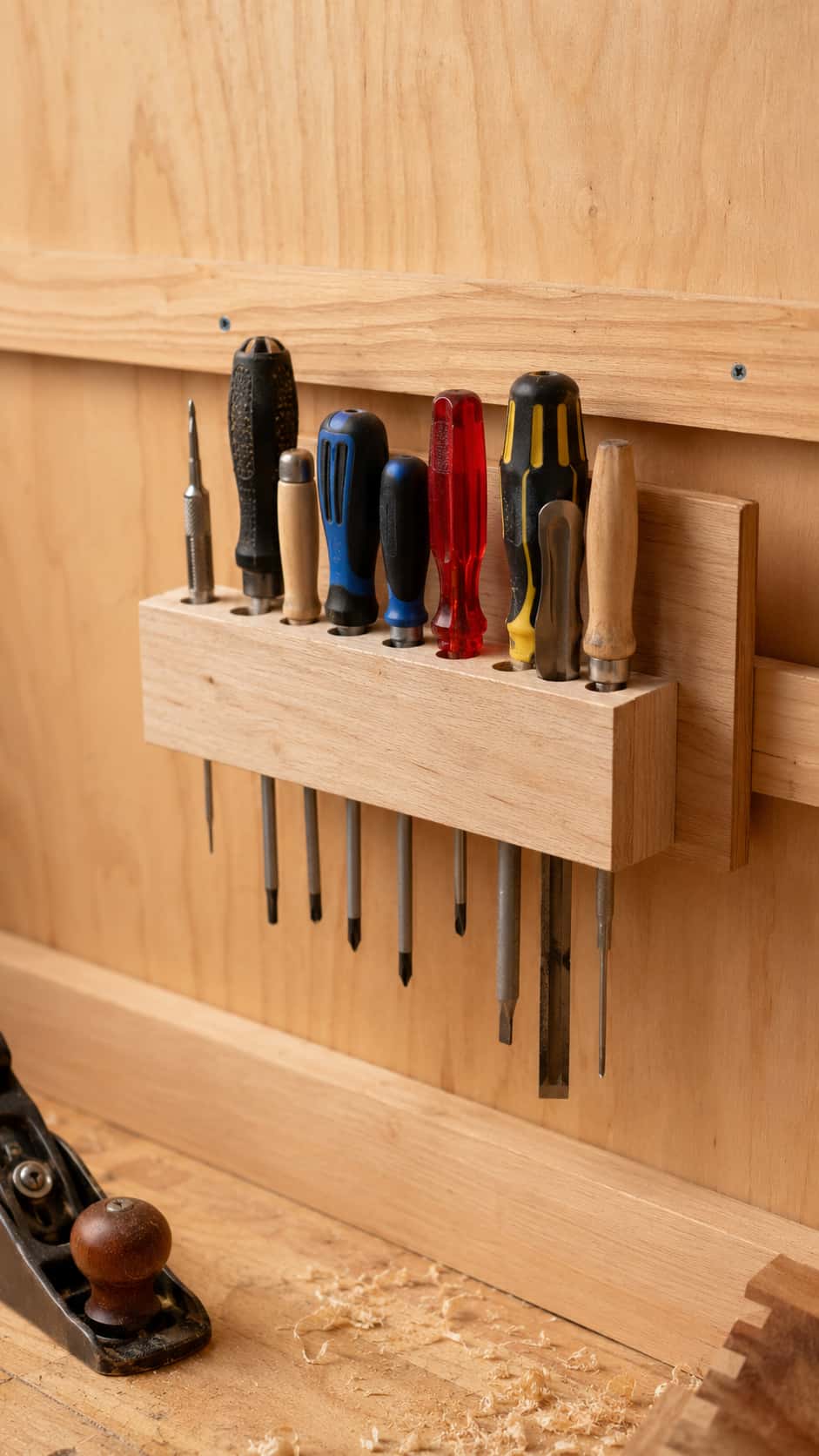
Best for: screwdrivers, awls, small hand tools | Difficulty: Easy
Drill holes into a small board and mount it to a cleat backer. This keeps screwdrivers vertical, visible, and within arm’s reach instead of rolling off the bench.
5. Chisel Rack
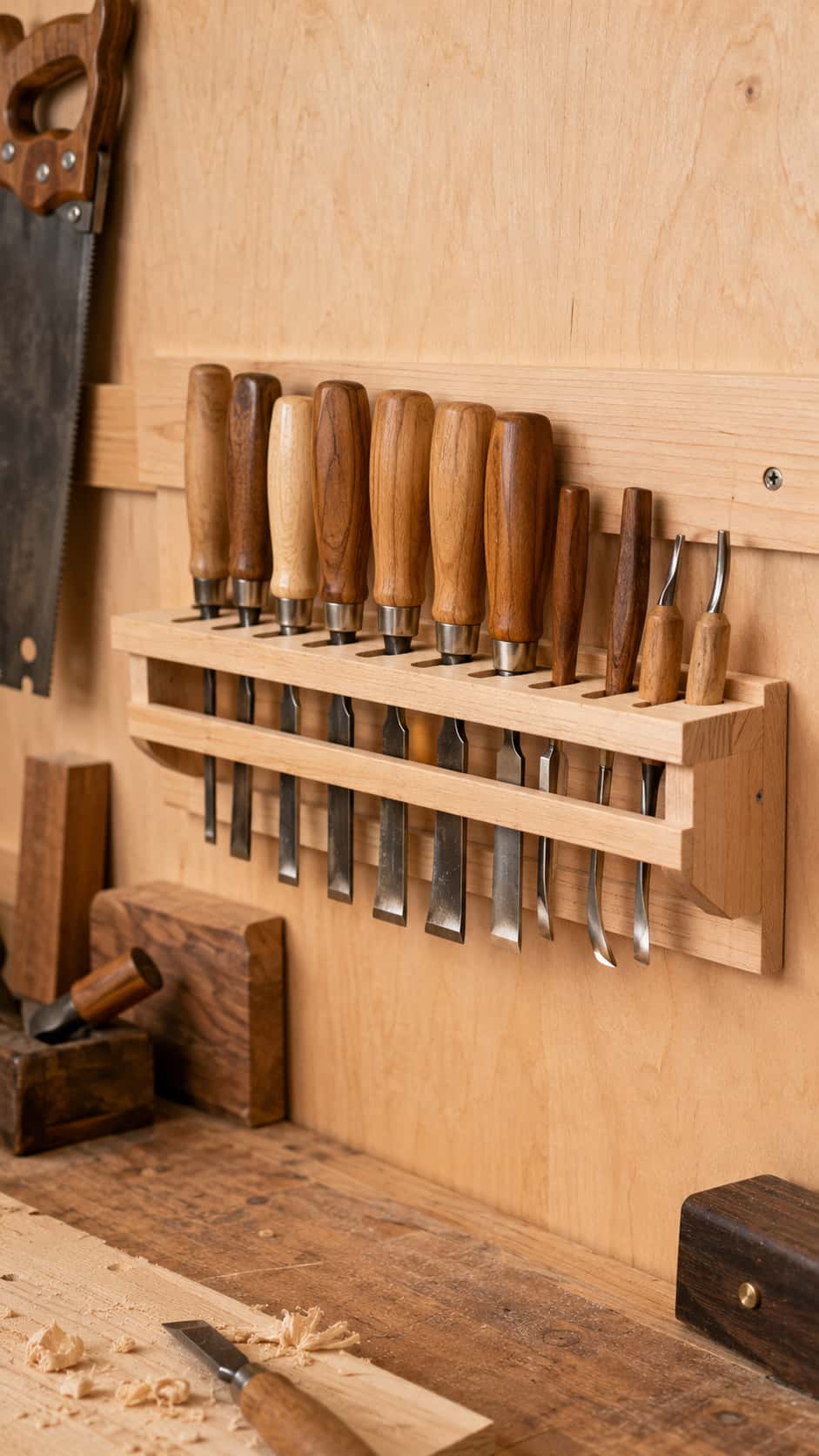
Best for: chisels and carving tools | Difficulty: Easy
Use a slotted rack with a front safety lip so sharp tools stay put. If you’re also into wood carving patterns or whittling projects, a dedicated chisel rack is a game changer since it keeps every carving tool sharp, sorted, and away from curious hands.
6. Hand Saw Holder
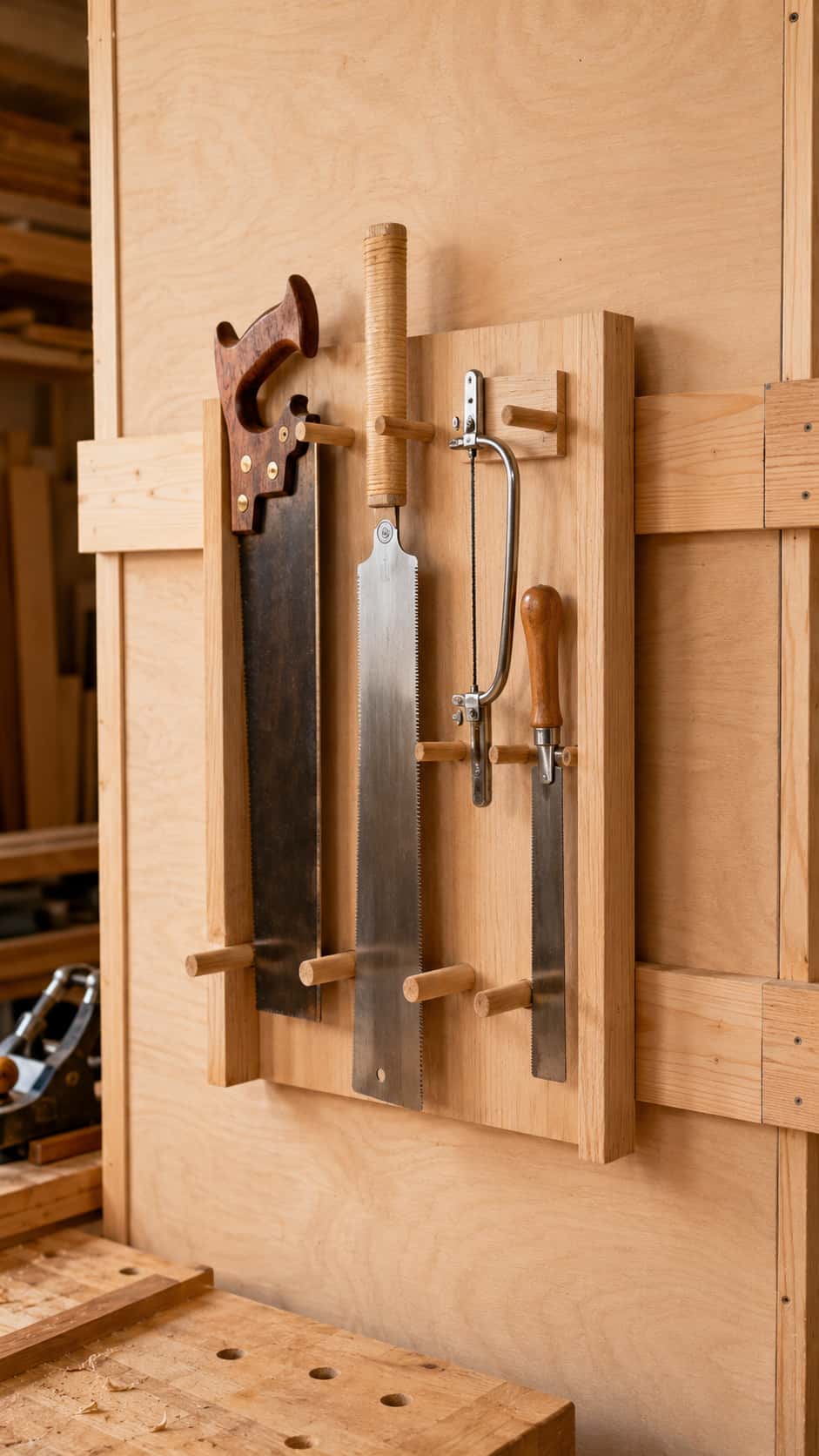
Best for: hand saws, Japanese saws, coping saws | Difficulty: Easy
Build a simple vertical holder with slots or pegs. Leave enough spacing so the blades don’t rub against each other and dull faster than they should.
7. Circular Saw Holder
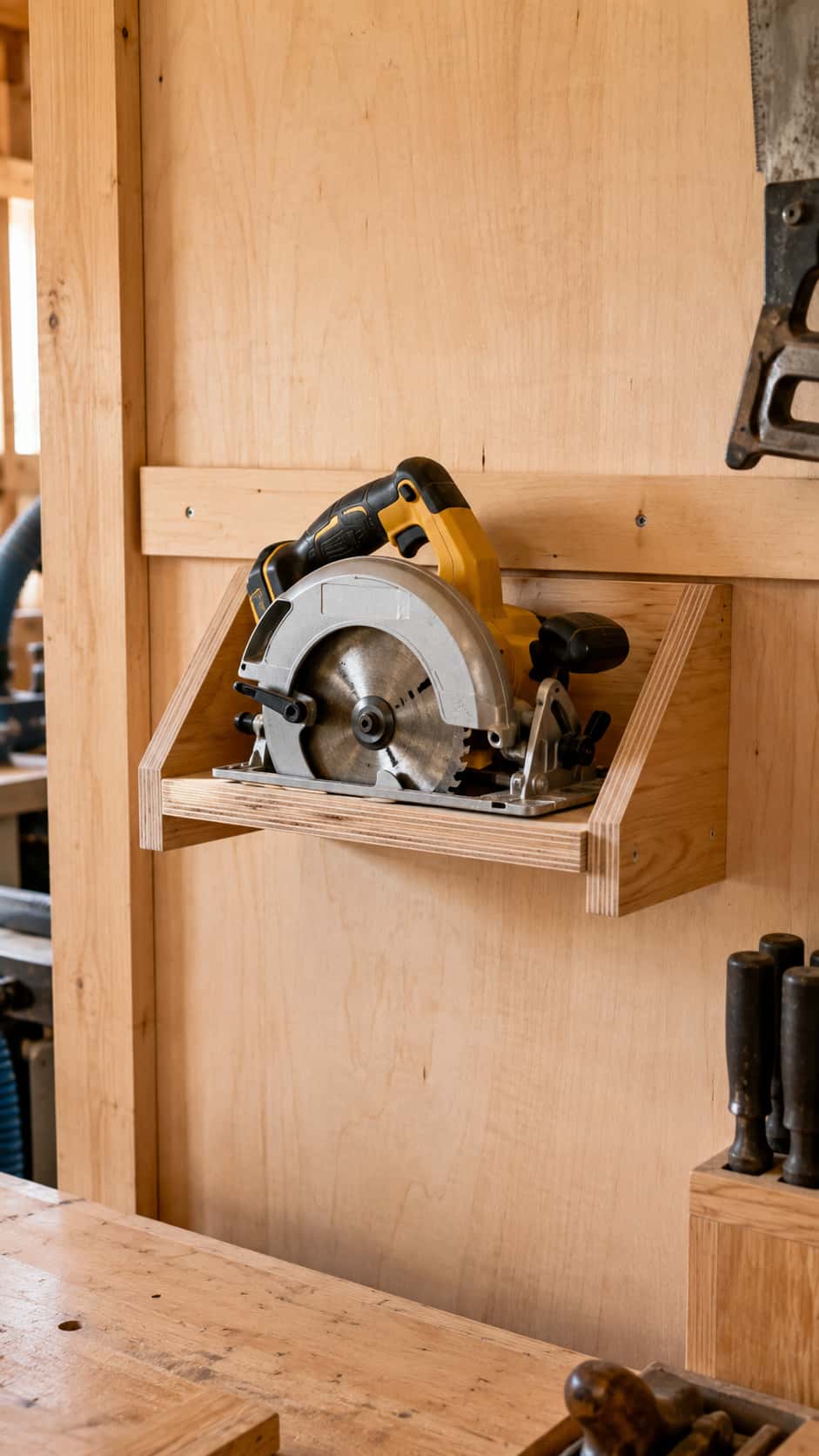
Best for: circular saw storage | Difficulty: Medium
Create a strong plywood shelf using thicker plywood, at least ¾ inch, with a front lip to keep the saw from sliding forward off the shelf. Add side supports for extra rigidity, since a circular saw is heavier than most tools on this list and nobody wants that landing on their foot.
8. Jigsaw Holder
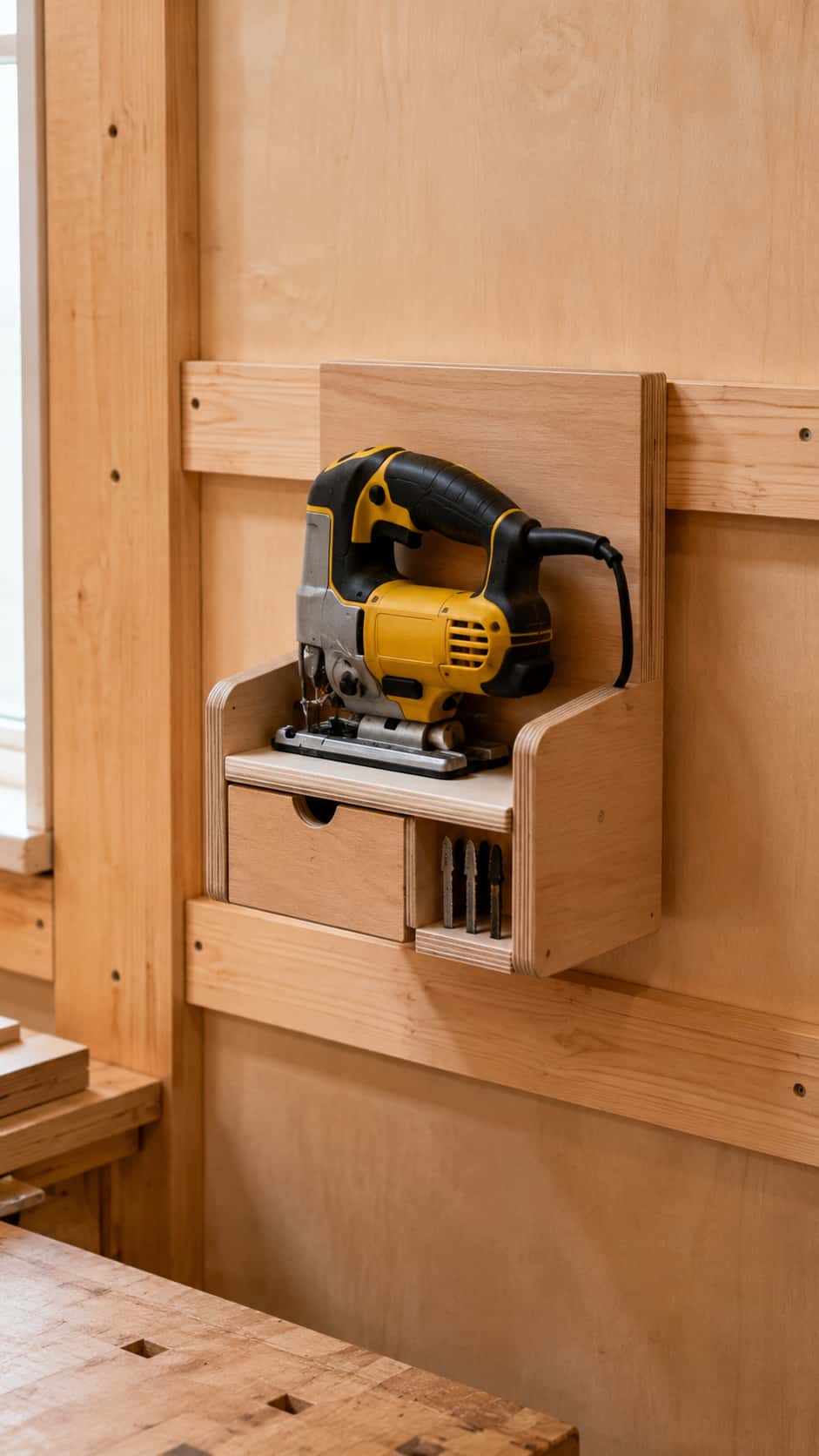
Best for: jigsaw and blades | Difficulty: Easy
A compact plywood holder with a small shelf for the jigsaw and a tiny drawer or cup for blades works perfectly. Small footprint, big payoff.
9. Router and Router Bit Holder
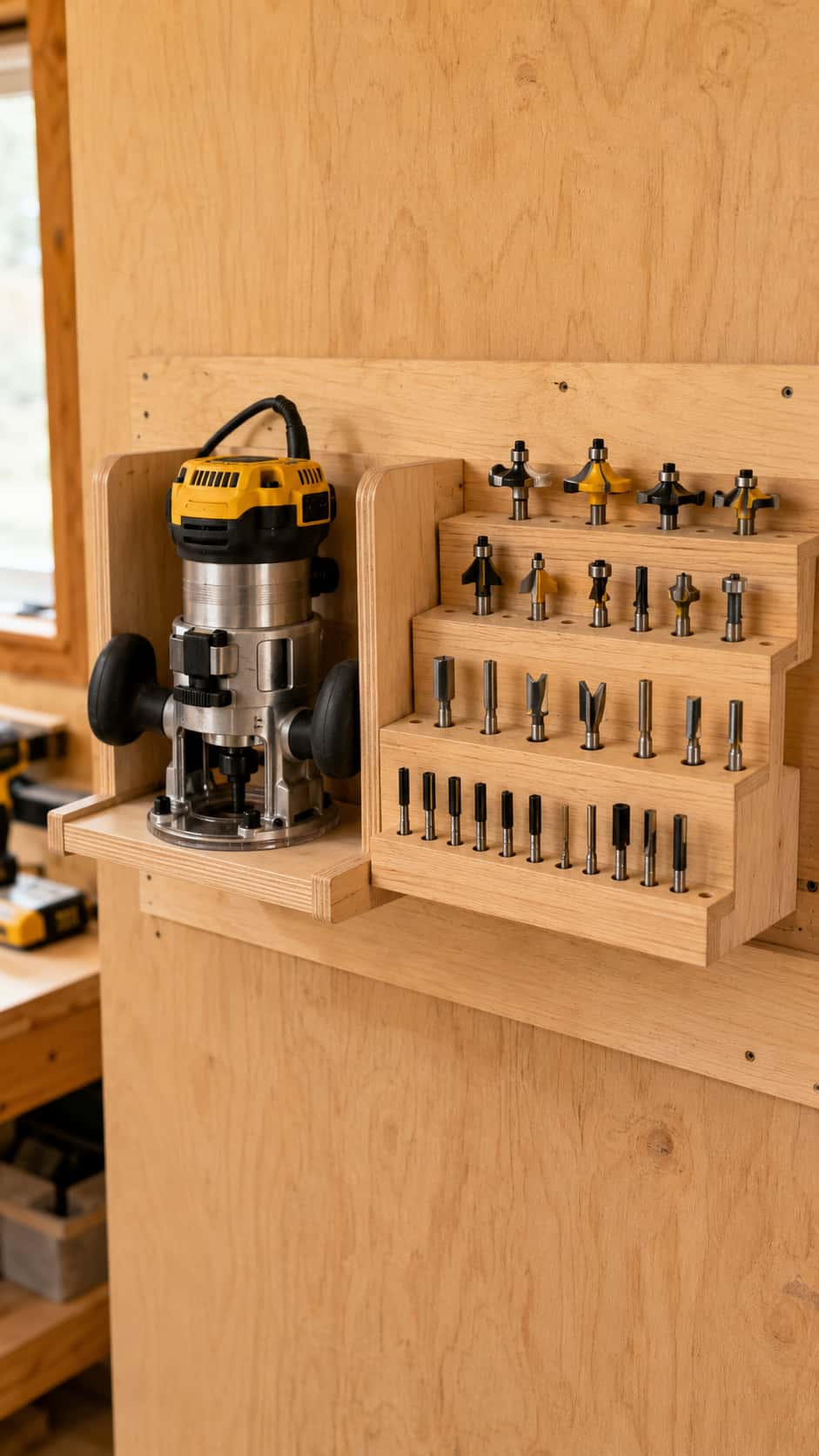
Best for: router, router bits, accessories | Difficulty: Medium
Make a deeper shelf for the router itself, then build a separate labeled bit block with drilled holes sized to match your most-used bits. Group bits by type, straight, roundover, chamfer, so you’re not squinting at tiny stamped numbers every time. Ever lost a router bit in a junk drawer? This holder ends that forever.
10. Sandpaper Organizer
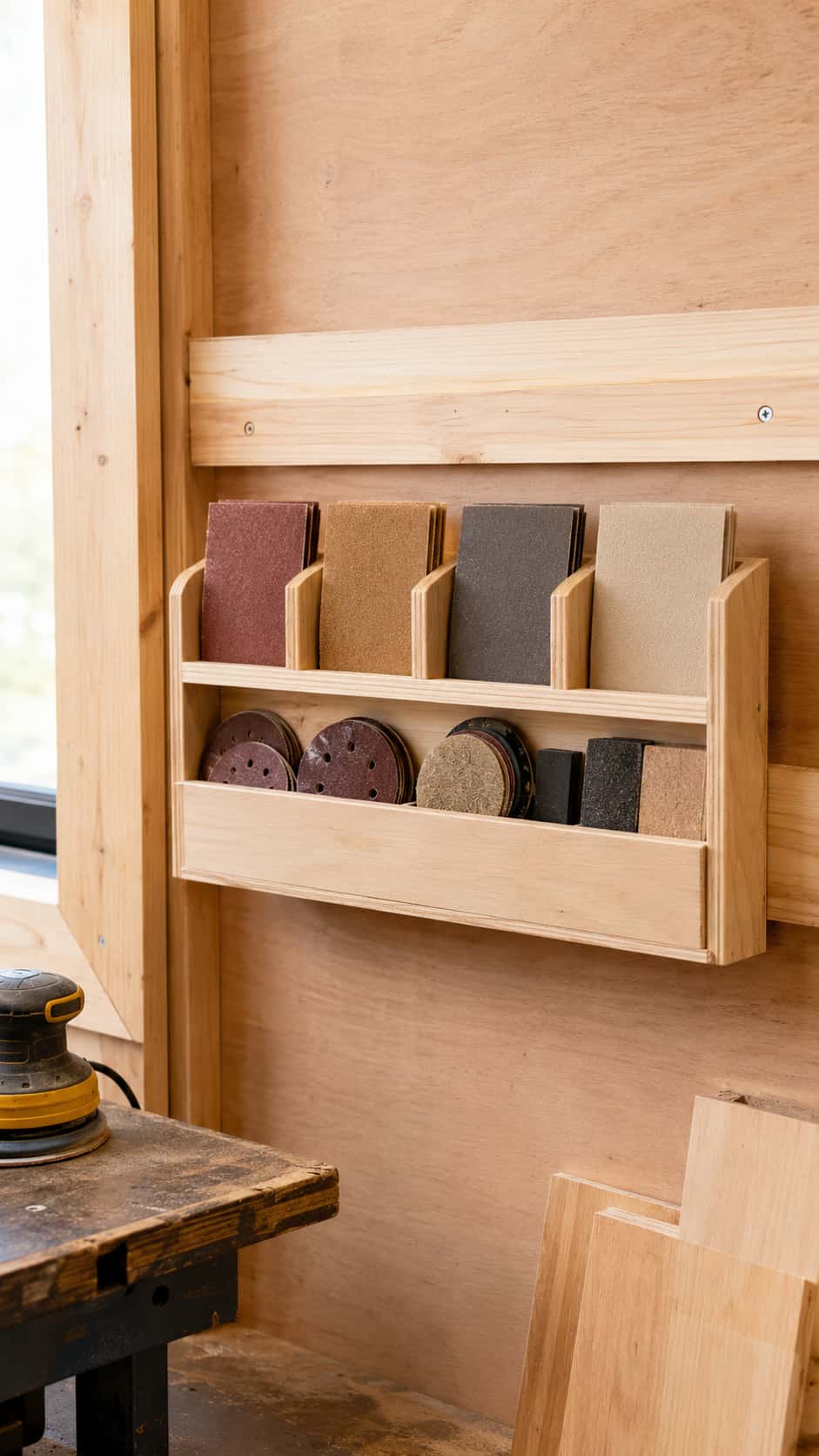
Best for: sanding sheets, discs, sanding blocks | Difficulty: Easy
Build a small divided box with labels for different grits like 80, 120, 180, and 220. This one alone saved me more time than almost anything else on this list, since guessing grit by feel is a real productivity killer.
You can also pair this with scrap wood projects from my guide on 25 Genius DIY Organizers You Can Build From Scrap Wood.
11. Tape Measure Holder
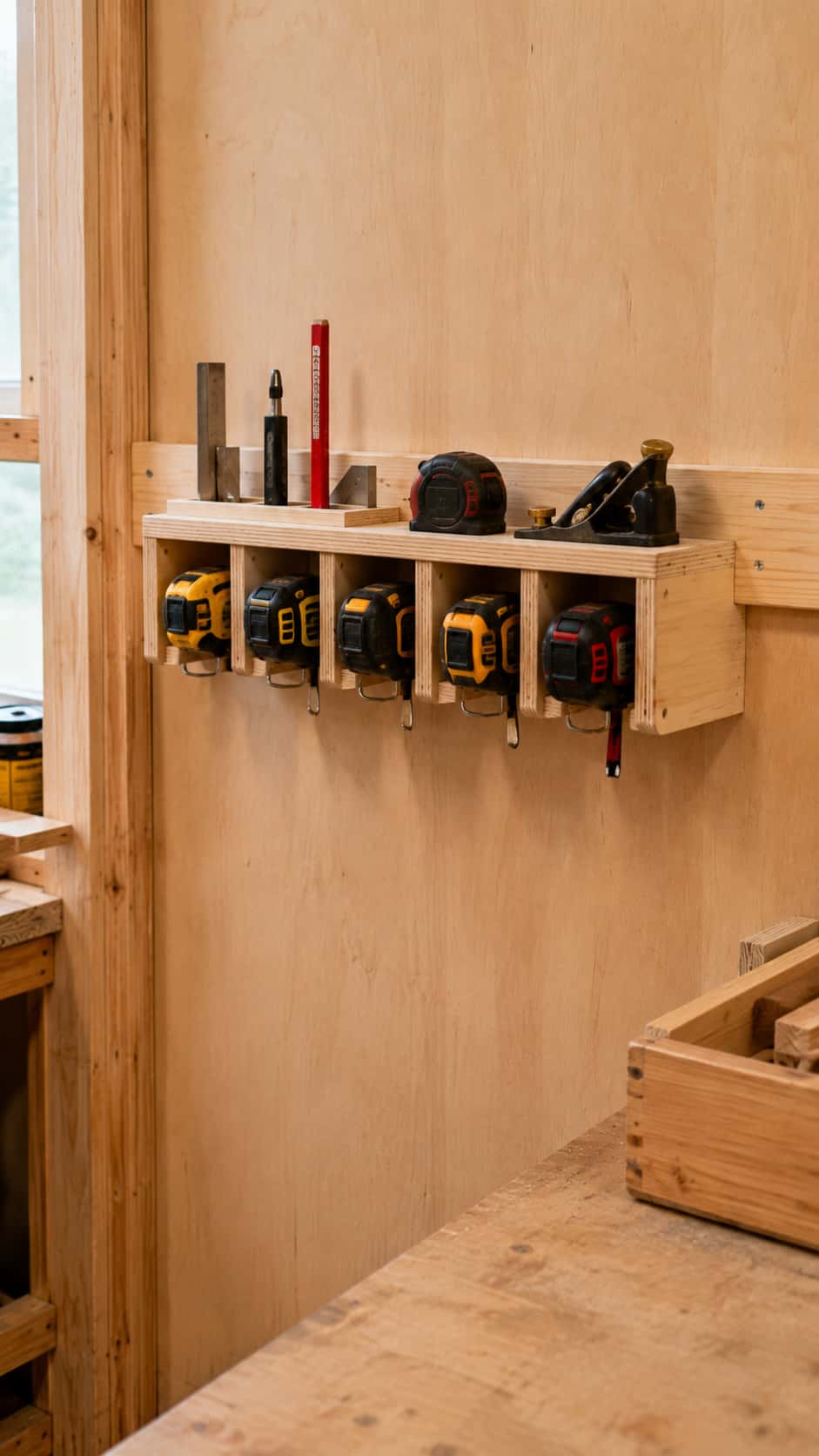
Best for: tape measures and small layout tools | Difficulty: Easy
Add small hooks, slots, or cubbies for tape measures. This is a five-minute scrap wood project that solves a problem you didn’t realize was bugging you.
12. Speed Square and Measuring Tool Holder
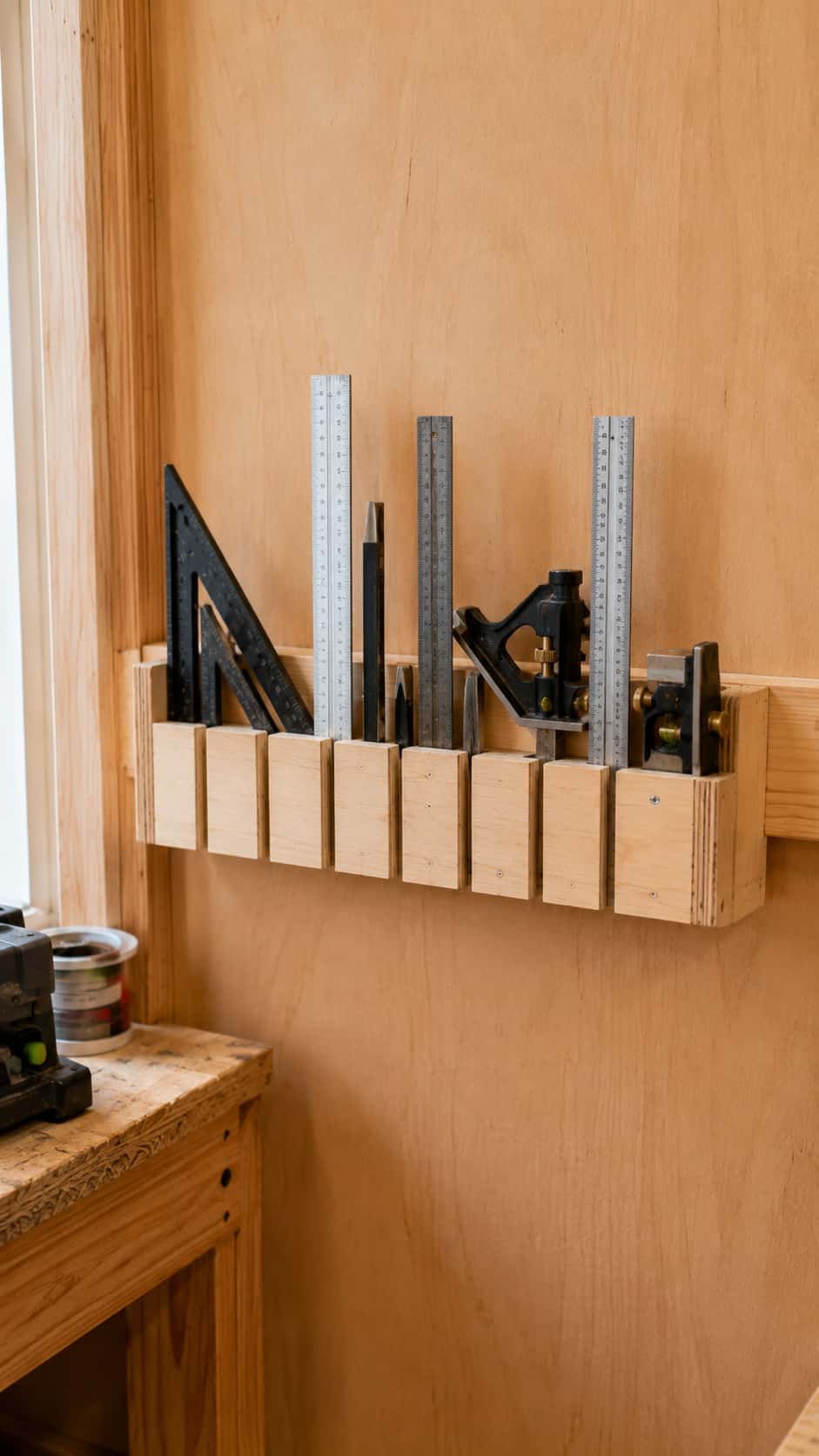
Best for: speed square, ruler, combination square | Difficulty: Easy
Create narrow vertical slots so layout tools stand upright and stay visible. No more shuffling through a drawer full of metal edges hoping you don’t slice a finger.
13. Hammer Holder
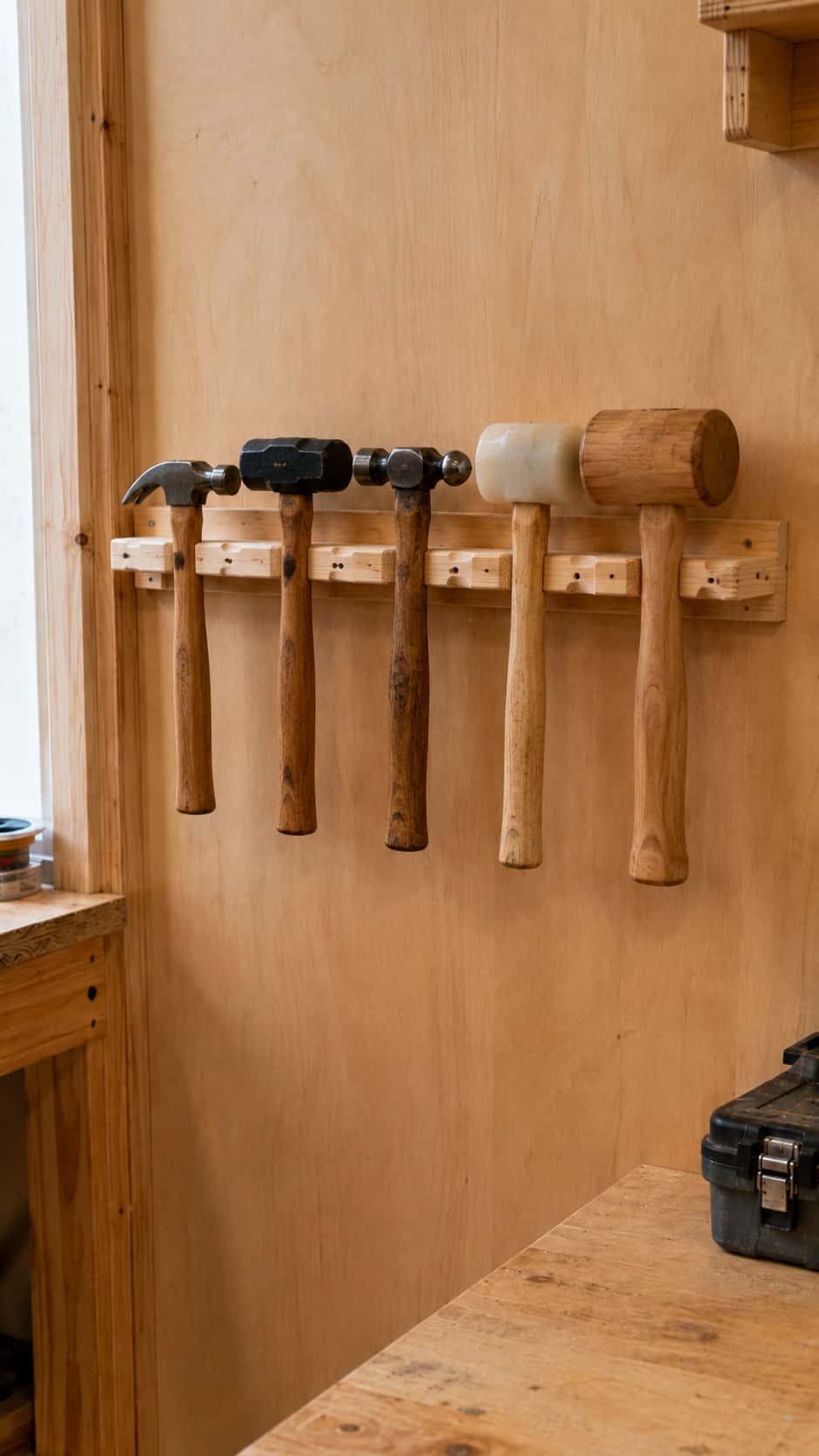
Best for: hammers and mallets | Difficulty: Easy
Use a simple notched strip or dowel-style holder. Keep enough spacing between handles so grabbing one hammer doesn’t turn into a game of Jenga.
14. Pliers and Wrench Holder
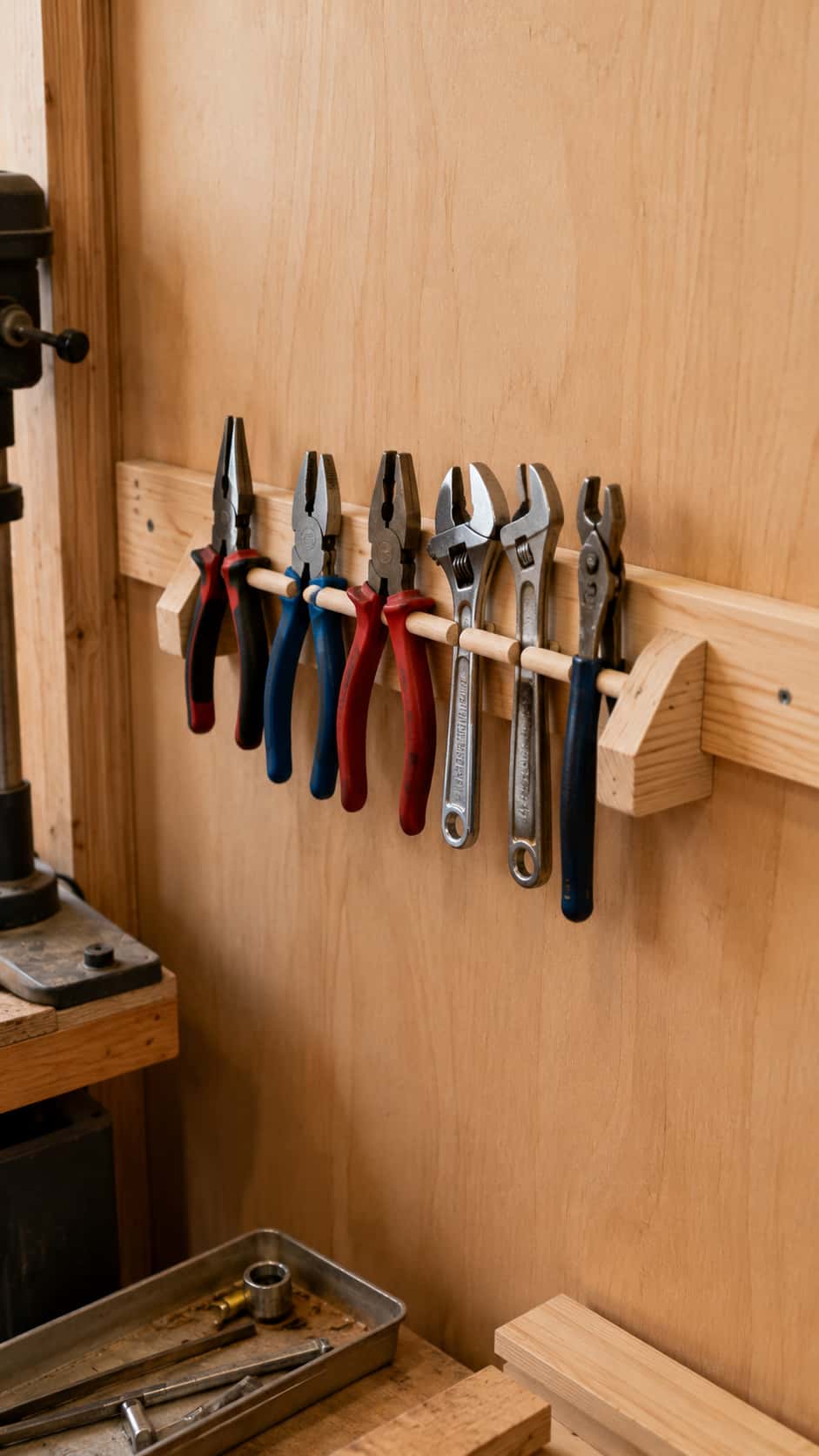
Best for: pliers, adjustable wrenches, small metal tools | Difficulty: Easy
Use a thin rail, dowel, or angled slots to hang tools by the handle. Simple, cheap, and it clears clutter off your bench in one afternoon.
15. Paint Brush and Finishing Supply Holder
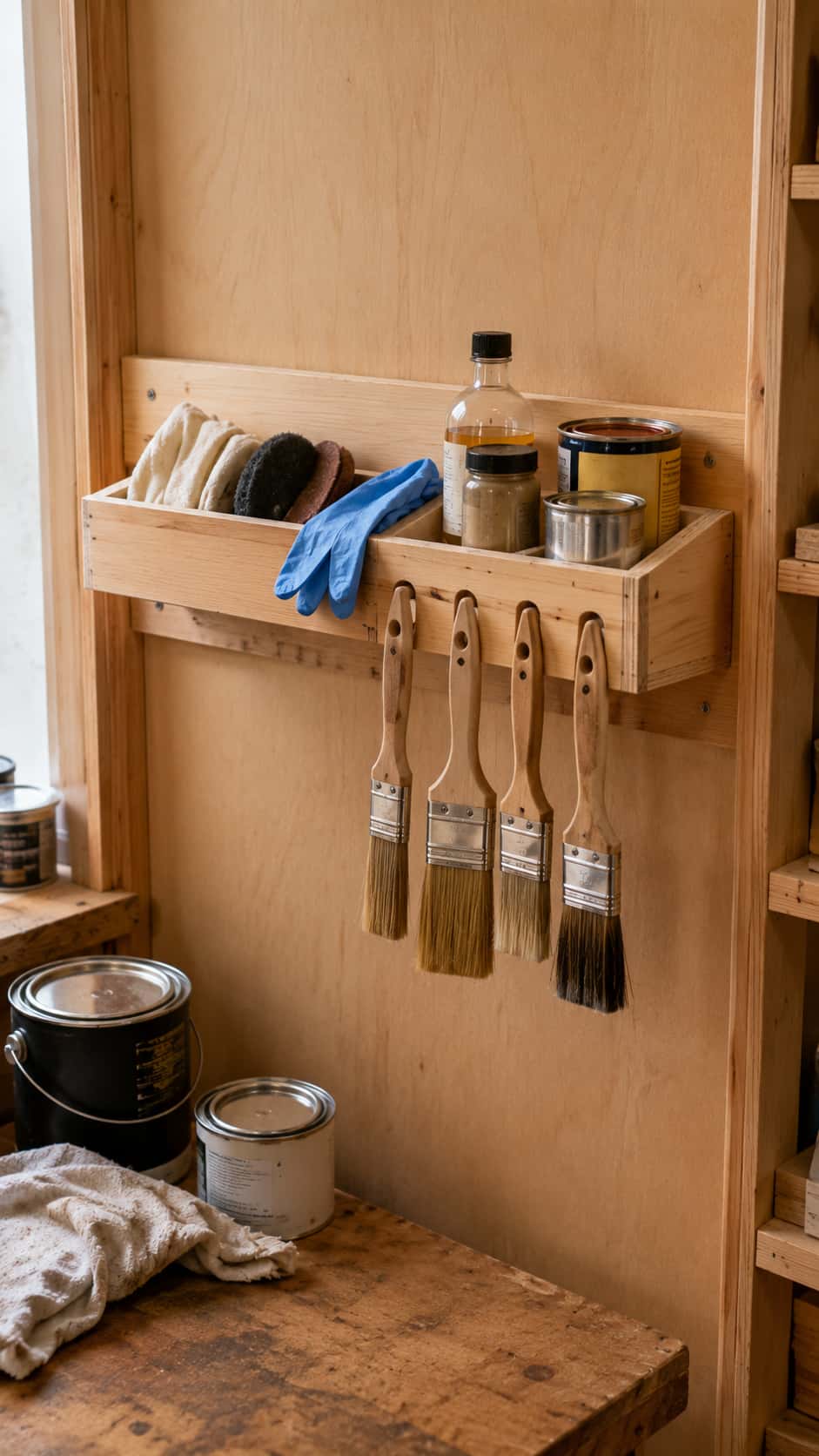
Best for: brushes, stain pads, gloves, rags | Difficulty: Easy
Build a shallow shelf with holes or hooks underneath for brushes. Add a small bin for gloves and finishing pads so your finishing station doesn’t turn into a sticky disaster zone.
16. Glue Bottle Holder
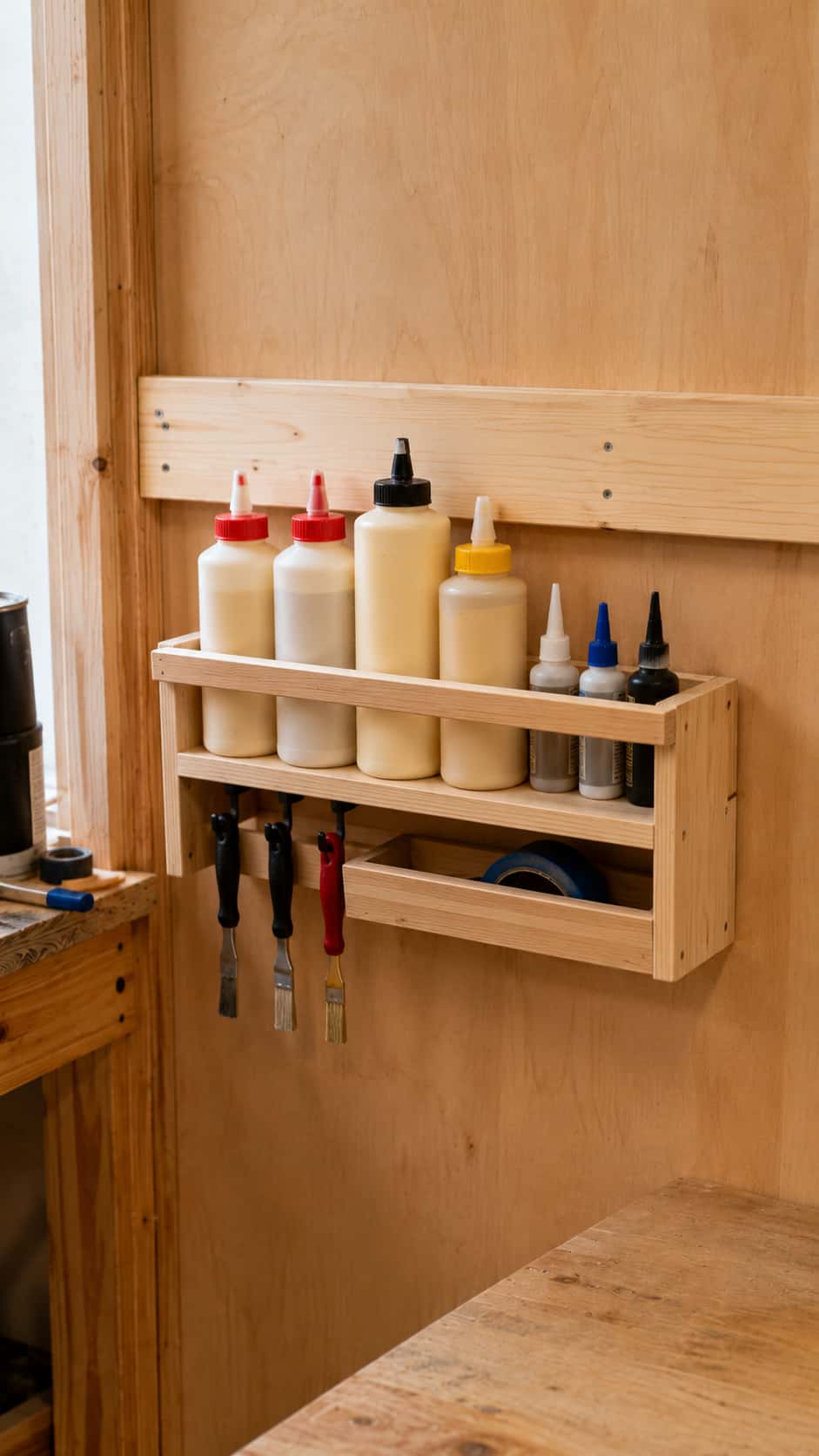
Best for: wood glue, CA glue, glue brushes | Difficulty: Easy
A small shelf with a front rail keeps glue bottles from tipping over onto your project. Add a lower hook for glue brushes or tape, because glue bottles without a home always end up glued shut somewhere they shouldn’t be.
17. Tape Roll Holder
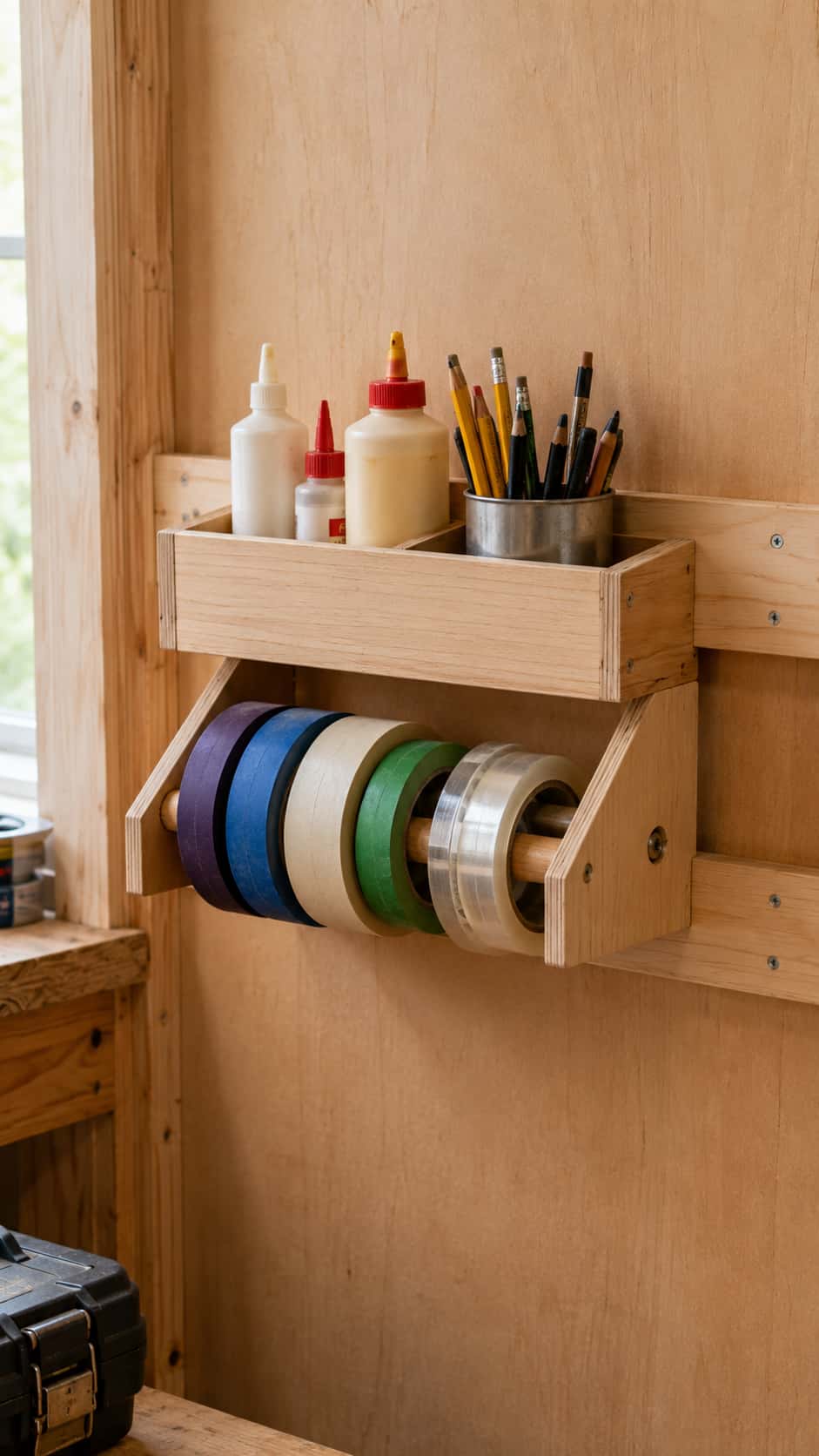
Best for: painter’s tape, masking tape, double-sided tape | Difficulty: Easy
Use a dowel between two side pieces to hold tape rolls. Add a small shelf above for glue or pencils and you’ve built a mini finishing station in one small footprint.
18. Safety Gear Holder
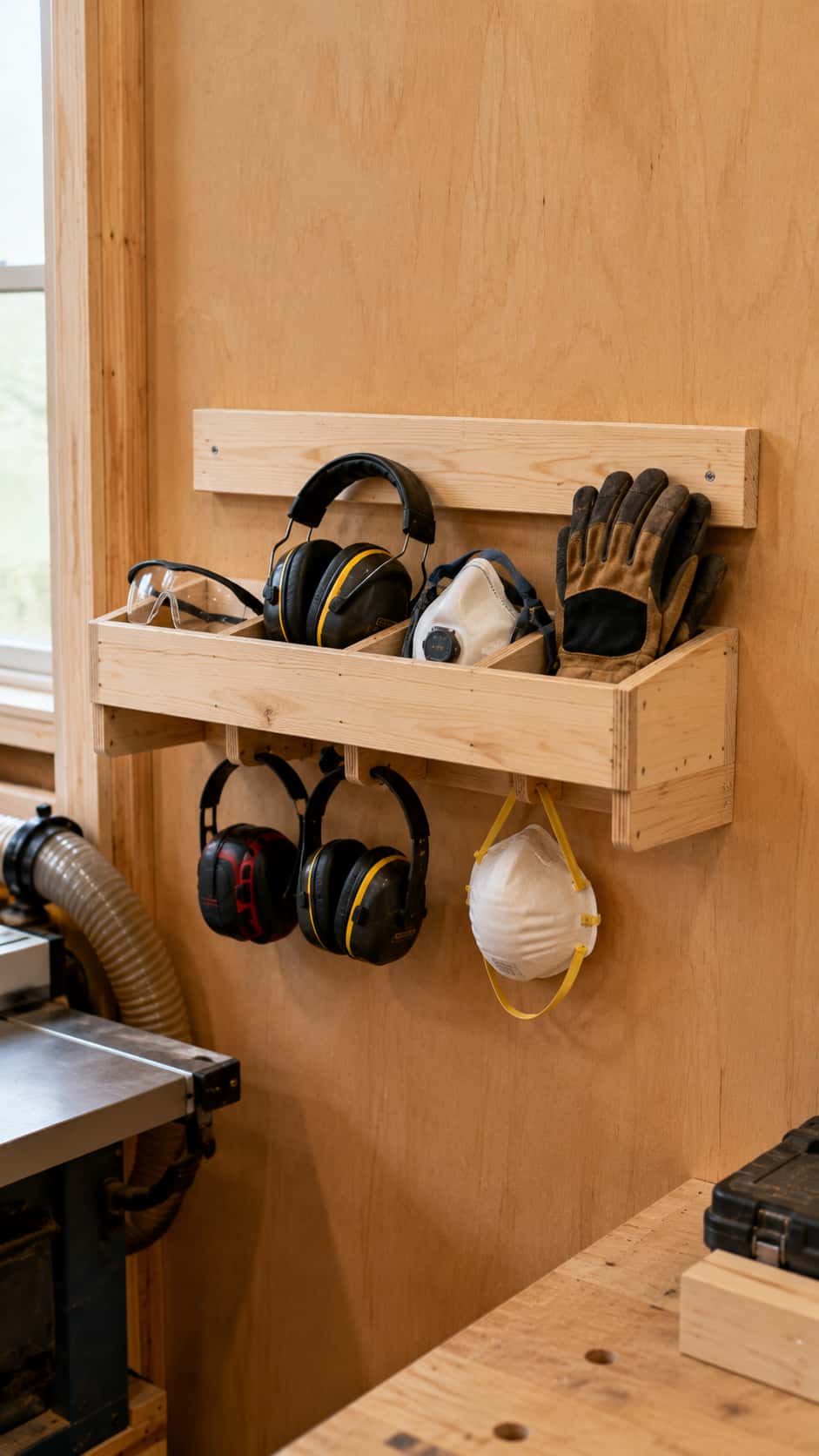
Best for: safety glasses, ear protection, dust mask | Difficulty: Easy
This one is a great beginner project because it keeps your safety gear visible instead of buried under sawdust somewhere. If your safety glasses are hard to find, you’re way less likely to actually wear them, and FYI, that’s exactly how eye injuries happen 🙂
19. Small Parts Bin Holder
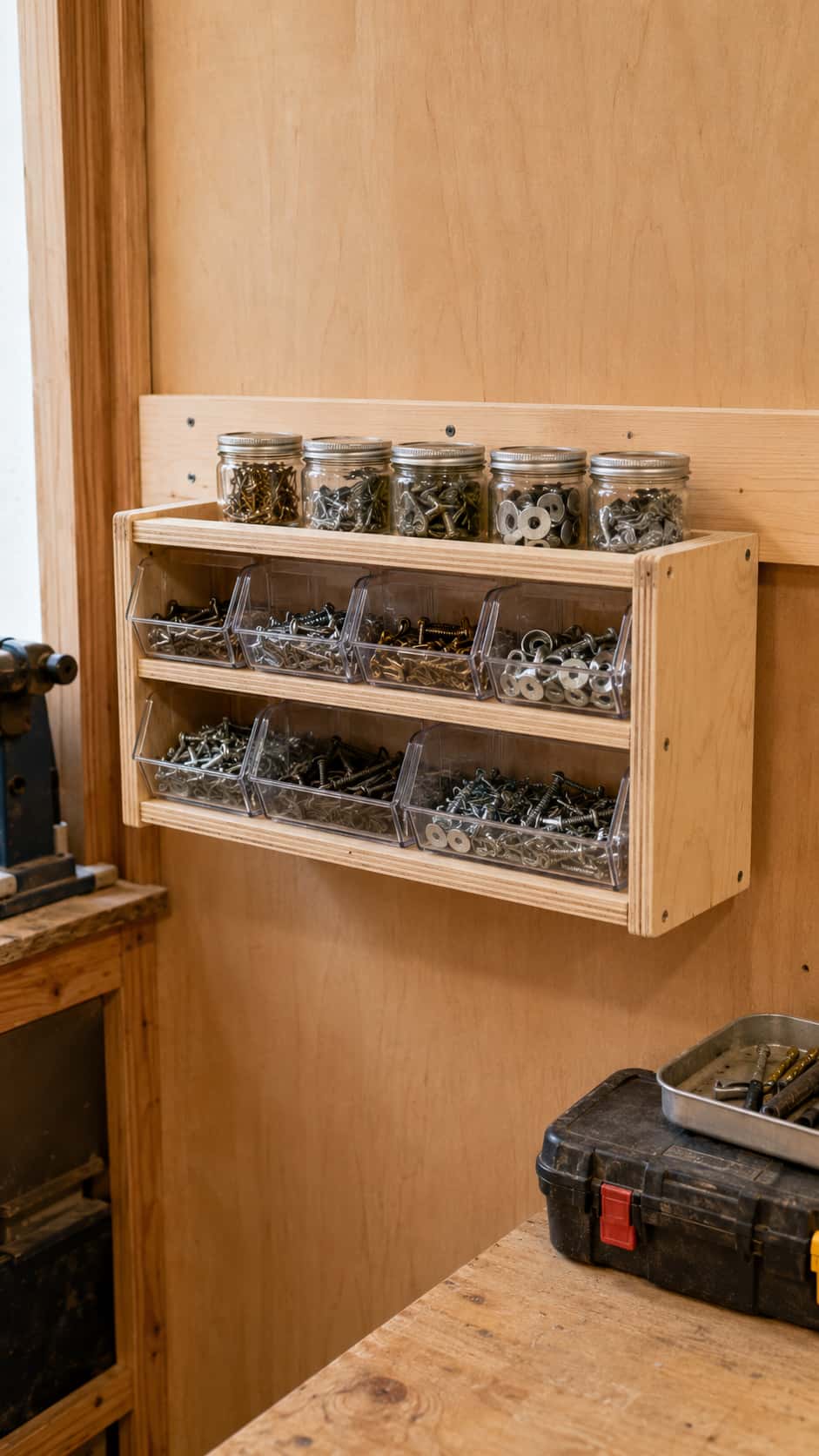
Best for: screws, nails, washers, hardware | Difficulty: Medium
Build a French cleat shelf sized to hold small mason jars, clear plastic bins, or labeled sliding trays, whatever fits your existing hardware collection. Jars work well if you like seeing contents at a glance, while trays are better for mixed odd sizes. Label each container so you’re not shaking six of them trying to find the right screw.
20. Cordless Tool Shelf
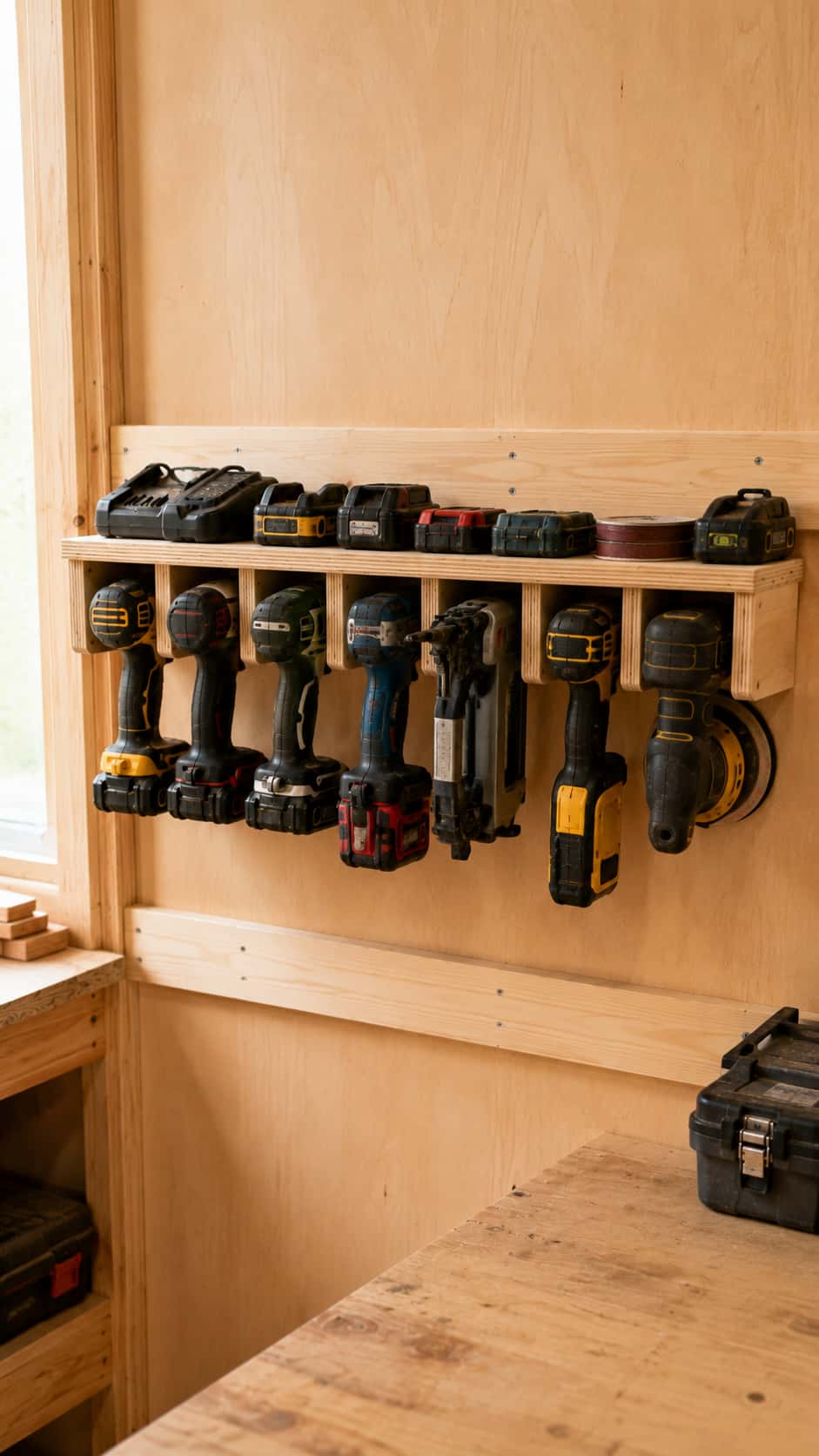
Best for: drills, impact drivers, nailers, sanders | Difficulty: Medium
Create a longer shelf with multiple tool slots underneath and a top shelf for batteries or accessories. This is basically the drill holder’s bigger, more ambitious sibling.
21. All-in-One French Cleat Tool Station
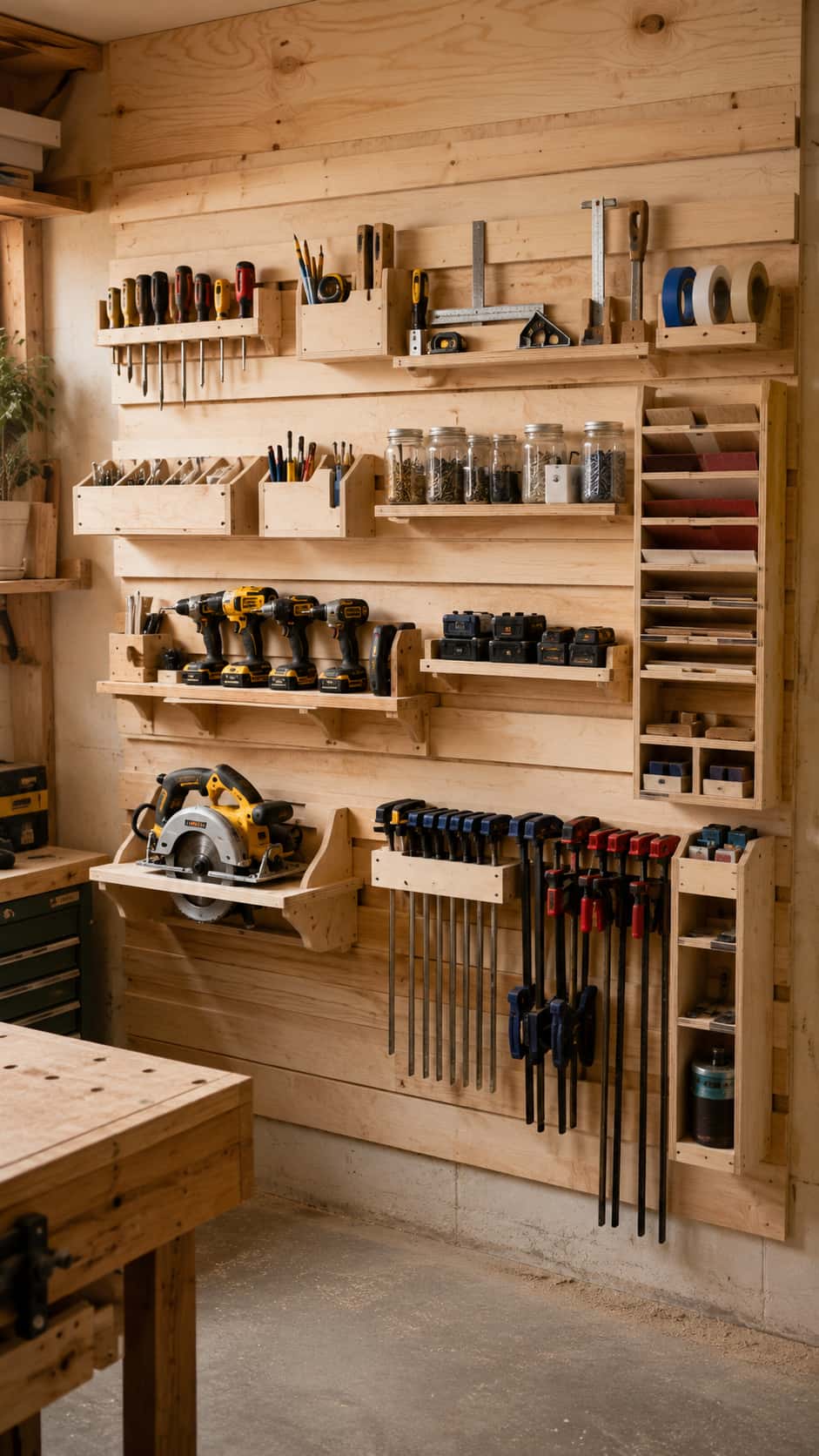
Best for: small workshops that need one complete wall system | Difficulty: Medium
Combine shelves, hooks, drill slots, clamp storage, sandpaper storage, and small parts bins into one complete French cleat wall. Before you start cutting anything, sketch your wall layout on paper first: place heavier holders like the circular saw and clamp rack lower and closer to center, keep lighter items like tape measures and screwdrivers up top, and leave a few open cleat rows for tools you haven’t bought yet. This is the “dream setup” build, the kind of wall that makes you actually want to spend more time in your shop.
Tips for Building Strong French Cleat Tool Holders
A few things I learned the hard way so you don’t have to:
- Use plywood or solid wood thick enough for the tool’s weight
- Mount the main cleat strip into studs, not just drywall
- Test each holder before loading expensive tools onto it
- Keep heavy tools lower on the wall for easier lifting and better balance
- Label small bins and shelves so you’re not guessing
- Leave room to add more holders later, because trust me, you will
Common Mistakes to Avoid For Building a Strong French Cleat Tool Holders
Making the Cleat Too Thin
Thin strips look fine until you load real tool weight onto them. Thin cleats flex, crack, or slip, and that’s a bad surprise mid-project.
Not Mounting Into Studs
Wall anchors alone may hold light items, but heavier workshop tools need real stud support. Skipping this step is how a shelf full of clamps ends up on the floor.
Overloading One Holder
Spread heavy tools across multiple holders instead of stacking everything onto one shelf. One overloaded holder stresses both the cleat and the wall.
Forgetting Future Storage Space
Leave blank wall space so you can add more holders later. Ever finish a “complete” tool wall only to buy a new tool a week later? Exactly.
Best French Cleat Tool Holders for Beginners
If this is your first build, start with something simple and low-stakes:
- Screwdriver holder
- Tape measure holder
- Sandpaper organizer
- Glue bottle shelf
- Safety gear holder
- Tape roll holder
These builds take less than an hour and teach you the cleat system without risking your good tools.
Best French Cleat Tool Holders for Small Workshops
Tight on space? These options give you the biggest storage payoff per square foot of wall:
- Drill holder
- Clamp rack
- Circular saw holder
- Small parts bin holder
- Cordless tool shelf
- All-in-one tool station
FAQ About French Cleat Tool Holders
What thickness of wood should I use for a French cleat?
For the main wall-mounted cleat, ¾-inch plywood or solid 1×4 boards work well. For holders carrying heavier tools like a circular saw or router, stick with ¾-inch plywood on the holder itself too. Thinner material is fine for light stuff like tape measures or screwdrivers.
Do French cleats really hold heavy tools securely?
Yes, as long as the main strip is mounted into wall studs and the angle is cut cleanly at 45 degrees. The angled joint distributes weight along the entire length of the cleat instead of concentrating it on a single screw or bracket.
Can I use a French cleat system on drywall without studs?
You can for very light items, but I wouldn’t risk it for anything heavier than a small sandpaper caddy or tape roll holder. For drills, saws, or clamp racks, always find studs or use heavy-duty toggle anchors rated for the combined weight.
What’s the best angle for a French cleat?
45 degrees is the standard and works for almost every project on this list. Some woodworkers use 30 or 60 degrees for specific joinery reasons, but 45 degrees is the easiest to cut accurately with a table saw or circular saw and a guide.
How much weight can a French cleat hold?
A properly built ¾-inch plywood cleat mounted into studs can hold a surprising amount of weight, but the exact limit depends on the wall, screws, cleat length, and how the load is spread. Always test a new holder gradually before loading it fully.
Can I paint or stain my French cleat holders?
Absolutely. Painting or staining doesn’t affect the cleat’s strength, and it’s a nice way to make your shop feel less like a construction zone and more like an actual space you enjoy working in.
Looking for the Ultimate Small Workshop Setup?
If you’re serious about woodworking and want a fully optimized small workshop, consider checking out the Ultimate Small Shop program. It provides expert guidance on setting up a complete, space-efficient workshop with essential tools and storage solutions—without spending a fortune.

👉 Learn More About Ultimate Small Shop Here! Click Here
Final Thoughts
French cleat tool holders are one of the easiest ways to turn a messy workshop into a cleaner, safer, and more efficient space. Start with one simple holder, like a screwdriver rack or drill shelf, then keep adding more as your tool collection grows and your wall fills up.
Your future self, the one who isn’t crawling around the floor looking for a missing tape measure, will thank you for it 🙂