
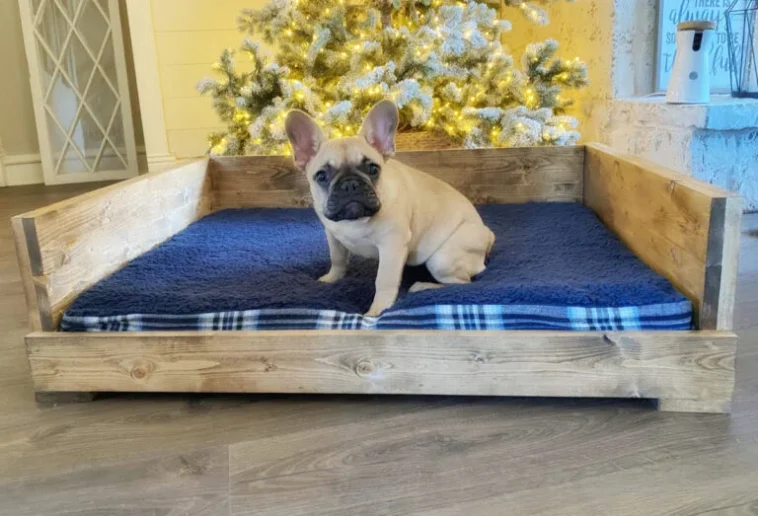
You know the scene. You spend real money on a good-looking dog bed, set it in the perfect corner of the living room, and your dog walks right past it to sleep on the floor.
Meanwhile, the beds that actually look good enough to leave in a living room can get expensive fast.
The good news is that many DIY dog beds are built around a cushion or mattress you already own. Instead of making the entire bed from scratch, you’re mainly building the frame—and a simple frame is one of the friendlier projects to tackle when you’re getting into woodworking.
A few boards, some screws, careful sanding, and a free weekend can give you a dog bed that looks more like furniture than pet supplies.
This collection includes simple wooden frames for beginners, modern and farmhouse designs, beds with hidden storage, pallet and upcycled projects, options for small and large dogs, and even an outdoor dog cabana.
Every idea below is based on a real online project or tutorial. I’ve linked the original source under each project so you can check the builder’s exact dimensions, materials, cut lists, and instructions before you start.
Before You Build: Measure the Dog and the Cushion First
Before choosing a design, do one thing that can save you a lot of frustration later: choose the cushion or mattress first, then size the frame around it.
A frame can usually be adjusted fairly easily. A cushion that is two inches too wide is much harder to persuade.
Woodshop Diaries’ modern dog bed is a good example. Its original design is built around a roughly 25 × 35-inch cushion, but the plan explains how the dimensions can be adapted for a different bed.
Before cutting anything, check four things.
Dog size: Your dog should be able to lie naturally without being squeezed between the rails. Measure your dog in a typical sleeping position rather than standing straight.
Cushion size: Measure the actual cushion instead of relying entirely on package dimensions. Soft cushions can spread, compress, and change shape when they’re being used.
Entry height: Small dogs, senior dogs, and dogs with limited mobility generally benefit from a lower entry rather than a tall rail they need to climb over.
Finish: Round or soften sharp edges, sand the project thoroughly, and follow the finish manufacturer’s instructions for application, ventilation, drying, and full cure before allowing your dog to use the bed.
Quick Comparison: Which DIY Dog Bed Should You Build?
| # | Project | Difficulty | Best Feature | Best For |
|---|---|---|---|---|
| 1 | Budget Wooden Bed | Easy | Cheap and simple | Beginners |
| 2 | Modern Plywood Bed | Easy | Clean design | Modern homes |
| 3 | Farmhouse Bed | Medium | Statement headboard | Large dogs |
| 4 | Storage Dog Bed | Medium | Hidden toy storage | Organization |
| 5 | Drawer Storage Bed | Medium | Pull-out drawer | Small spaces |
| 6 | Fabric Raised Bed | Medium | Removable sleeping surface | Easy cleaning |
| 7 | Pallet Bed on Casters | Easy | Mobile base | Workshops |
| 8 | Dresser Drawer Bed | Very easy | Upcycled design | Small dogs |
| 9 | Suitcase Dog Bed | Easy | Unique decor | Small dogs |
| 10 | Doghouse Canopy Bed | Easy | Cozy canopy frame | Decorative rooms |
| 11 | Curved Plywood Bed | Medium | Furniture-style finish | Interiors |
| 12 | Rustic Handled Bed | Easy | Easy to move | Farmhouse decor |
| 13 | Crib Mattress Bed | Easy | Large washable surface | Big dogs |
| 14 | Slatted Wooden Bed | Medium | Sturdy frame | Large breeds |
| 15 | Outdoor Dog Cabana | Medium | Roof and shade | Patio |
1. Simple Budget Wooden Dog Bed
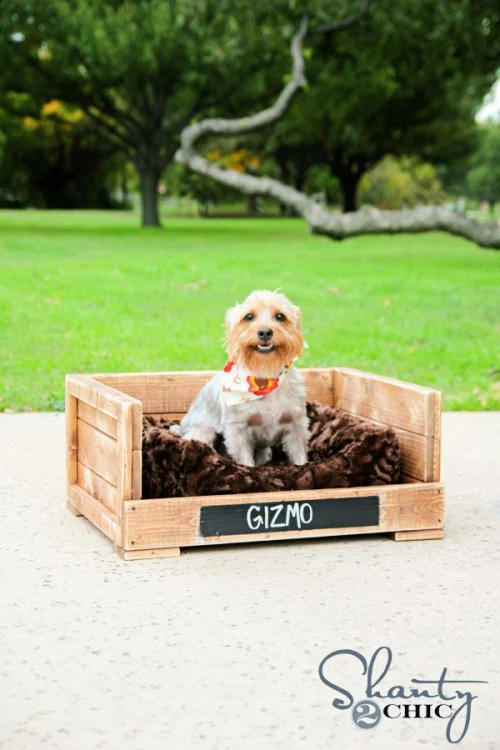
Source: Shanty 2 Chic — DIY $12 Pet Bed
Style: Simple farmhouse
Difficulty: Beginner
Best for: Small to medium dogs
This is a strong place to start if you’ve never built a dog bed before. The original Shanty 2 Chic project was designed as an inexpensive beginner build using ordinary dimensional lumber and a standard smaller dog cushion.
The design is essentially a raised rectangular base surrounded by low wooden rails. That straightforward construction is exactly what makes it useful for a first furniture-style woodworking project.
Most of the cuts are straight, and pocket-hole joinery can help keep the fasteners less visible. If pocket holes are new to you, the BubbleRelief wood joints guide explains how pocket-hole joints fit into beginner woodworking.
The finished bed can be stained for a natural farmhouse appearance or painted to match the room. Because the cushion isn’t permanently attached, you can also lift it out whenever it needs cleaning.
If your goal is simply to build something useful this weekend without turning the garage into a furniture factory, start here.
2. Modern Plywood Dog Bed
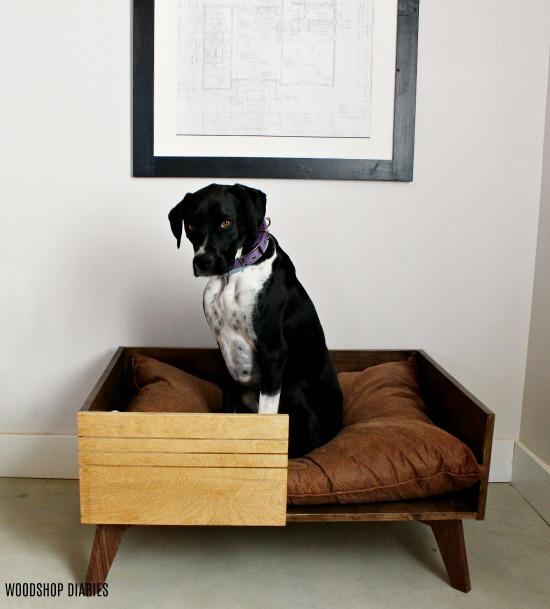
Source: Woodshop Diaries / Kreg — DIY Modern Dog Bed
Style: Modern minimalist
Difficulty: Easy
Best for: Medium and large dogs
This project goes in almost the opposite direction from the rustic bed above.
The frame uses plywood to create smooth, clean sides, while shaped feet raise the structure slightly off the floor. The finished result looks much closer to a piece of modern furniture than a typical pet bed.
One of the useful things about this design is that the cushion determines the size. If you already own a dog mattress you like, you can adapt the frame rather than searching for a cushion that happens to fit your woodworking.
Plywood also gives you a nice flat surface for paint. A muted black, warm white, sage, or natural clear finish could make the bed blend into a living room instead of looking like something that belongs next to the dog-food bin.
If appearance matters just as much as function, this is one of the strongest ideas in the list.
3. Farmhouse Dog Bed With Headboard
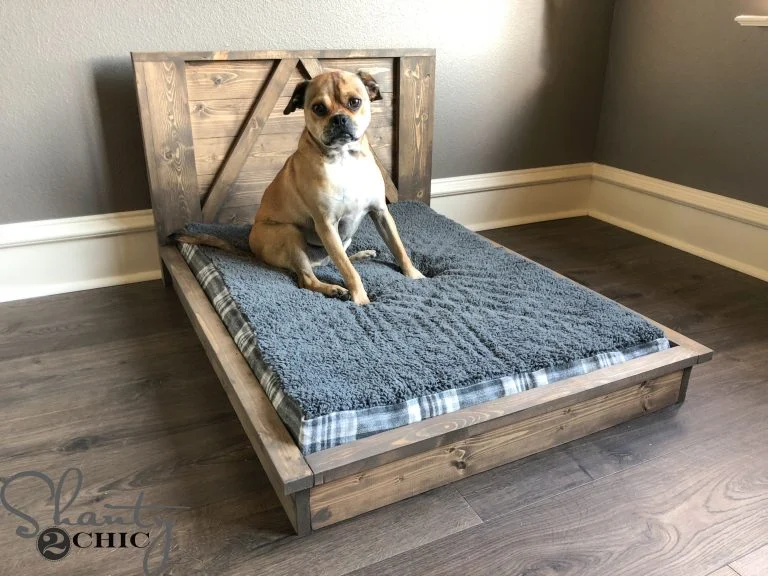
Source: Shanty 2 Chic — DIY Farmhouse Dog Bed
Style: Farmhouse furniture
Difficulty: Beginner/intermediate
Best for: Medium and large dogs
Some dogs get a cushion.
Others apparently need a four-star bedroom.
This design turns the basic dog-bed frame into a miniature farmhouse bed complete with a substantial wooden headboard. The original Shanty 2 Chic build was designed around a large dog mattress and used roughly $60 in lumber when the project was published.
The headboard is what changes the entire appearance. Rather than looking like a box with a pillow inside, the finished project has the proportions of an actual piece of bedroom furniture.
A medium or dark stain emphasizes the farmhouse character, while paint can make it feel cleaner and more contemporary.
This is a good choice when the dog bed will stay permanently in a bedroom, family room, or living room where the design is going to be seen every day.
4. Large Dog Bed With Hidden Toy Storage
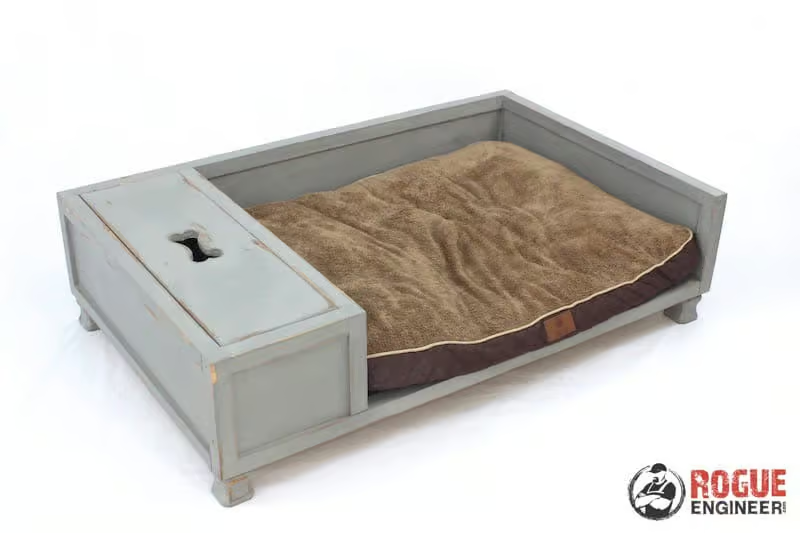
Source: Rogue Engineer — Large Dog Bed With Toy Storage
Style: Functional furniture
Difficulty: Intermediate
Best for: Large dogs and homes with plenty of dog toys
A dog bed already takes up a reasonable amount of floor space, so why not make that footprint do more than one job?
Rogue Engineer’s design incorporates toy storage directly into the dog-bed furniture. Instead of having a separate basket overflowing with ropes, squeaky toys, and tennis balls, you can keep at least some of the mess together with the bed.
The project uses plywood, 2×2 lumber, dimensional boards, pocket-hole joinery, and optional hardware. That makes it more involved than the first few designs, but still approachable for someone comfortable measuring, cutting, and keeping a larger assembly square.
The storage is the reason to choose this build. If you’re already giving up several square feet to a large dog bed, gaining some organization from the same footprint is a smart trade.
5. Dog Bed With a Pull-Out Storage Drawer
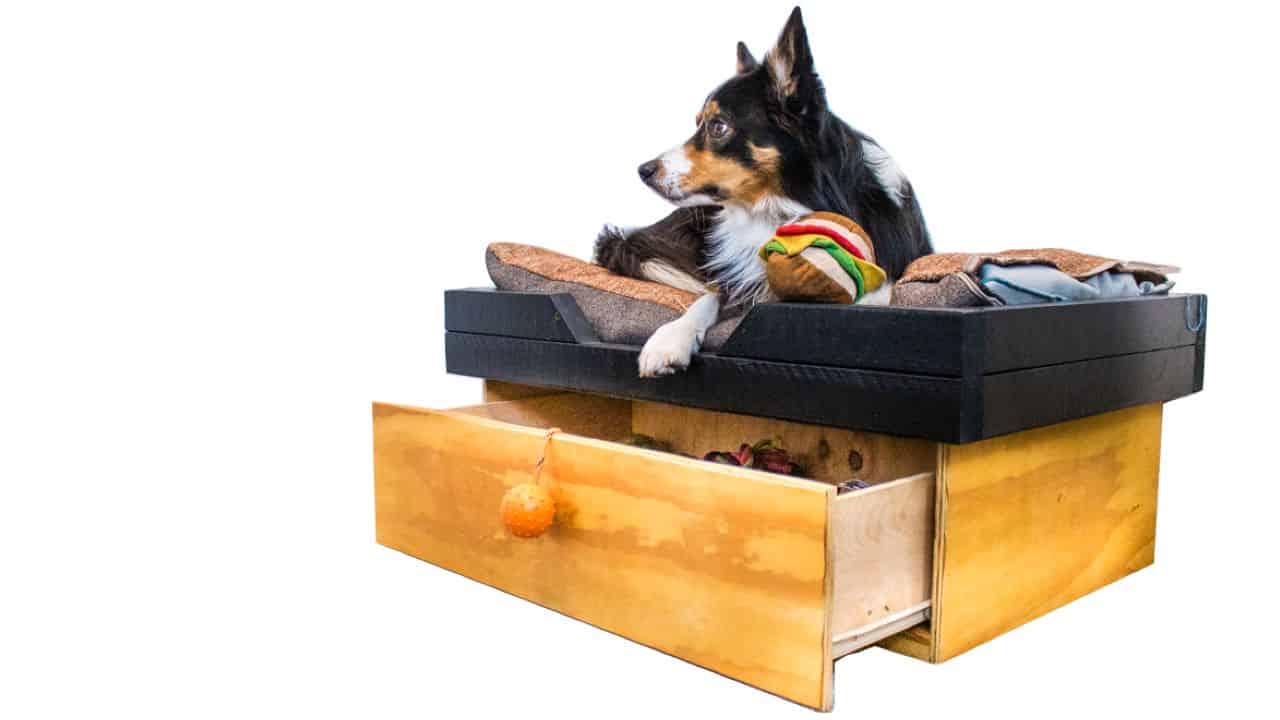
Source: The Carpenter’s Daughter — DIY Wooden Dog Bed With Storage Drawer
Style: Modern storage
Difficulty: Intermediate
Best for: Toys, leads, blankets, and small-space organization
This design takes the storage idea one step further by placing an actual pull-out drawer underneath the bed.
The original project is especially interesting for woodworkers because much of it was made from reclaimed timber and offcuts, while the drawer runners were salvaged from old furniture.
That makes it a good example of how a useful piece of furniture doesn’t necessarily require buying every board new.
The top becomes the sleeping platform while the lower section handles storage. Leads, blankets, grooming supplies, and toys can disappear into the drawer rather than collecting around the room.
If you have a healthy scrap pile, browse these 25 easy scrap wood crafts before buying more lumber. You may already have useful pieces hiding in the workshop.
6. Elevated Dog Bed With a Fabric Sleeping Surface
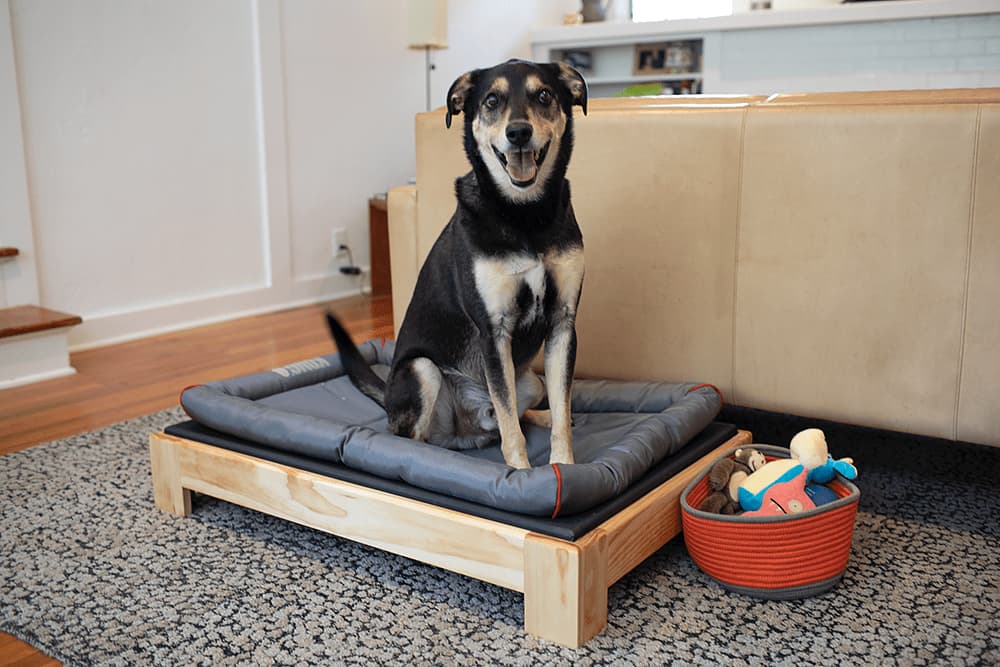
Source: Kreg Tool — Elevated Dog Bed
Style: Raised and practical
Difficulty: Moderate
Best for: Readers who want something other than a mattress in a wooden box
Not every DIY dog bed needs a thick cushion.
This design stretches a durable fabric sleeping surface across a wooden frame, creating an elevated cot-style bed rather than a conventional mattress bed.
That immediately gives the project a different look, but the practical advantage is cleaning. A removable fabric section can be much easier to deal with than a thick foam cushion permanently enclosed by a frame.
The raised construction also allows air beneath the sleeping surface, which can be useful in warmer rooms or climates.
If your priorities are straightforward construction, airflow, and a surface that can be removed for cleaning, this design deserves a closer look.
7. Pallet Dog Bed on Casters
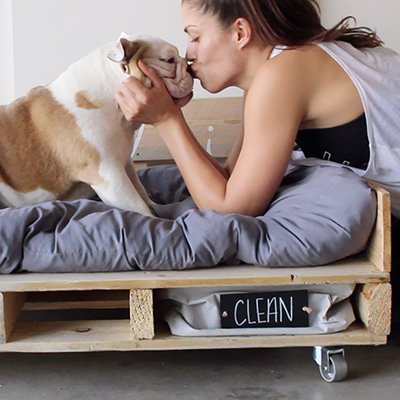
Source: The Home Depot / Living to DIY — DIY Pallet Dog Bed on Casters
Style: Rustic industrial
Difficulty: Beginner-friendly
Best for: Workshops, garages, and casual interiors
This project starts with a pallet and turns it into a surprisingly useful rolling dog bed.
Four casters underneath allow the bed to move around easily, while a simple headboard gives the pallet much more of a finished-furniture appearance.
That makes it especially useful in a workshop. Your dog gets a dedicated place to settle down, while you can move the bed when you need to clear floor space.
Locking casters are worth considering on smooth floors so the bed doesn’t roll when your dog climbs onto it.
Pallets also deserve a little extra caution. Don’t assume that every discarded pallet is suitable simply because it is made from wood. Use clean material with a known history when possible, reject anything stained, oily, contaminated, badly cracked, or chemically suspect, and sand all accessible surfaces carefully.
8. Repurposed Dresser Drawer Dog Bed
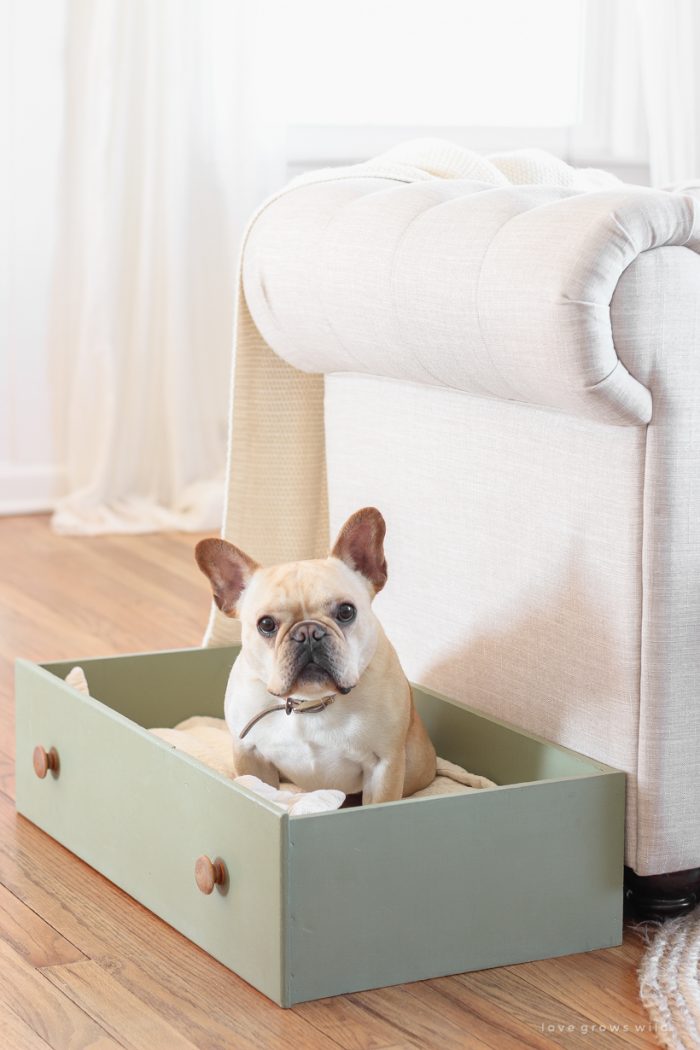
Source: Love Grows Wild — DIY Drawer Dog Bed
Style: Upcycled
Difficulty: Very easy
Best for: Small dogs
Have an old dresser drawer collecting dust?
You may already have most of a dog bed.
Love Grows Wild turned a discarded drawer into a cozy small-dog bed simply by repurposing the existing structure around a pillow.
One practical lesson from the original project is particularly useful: wheels were initially used underneath, but because they moved when the dog entered the bed, they were replaced with felt pads.
That is exactly the kind of small detail worth thinking about before adding decorative hardware.
The drawer itself can be painted to match the room, fitted with a washable pillowcase, given a different knob, or personalized with the dog’s name.
This is arguably the easiest project in the article because the box is already built for you.
9. Vintage Suitcase Dog Bed
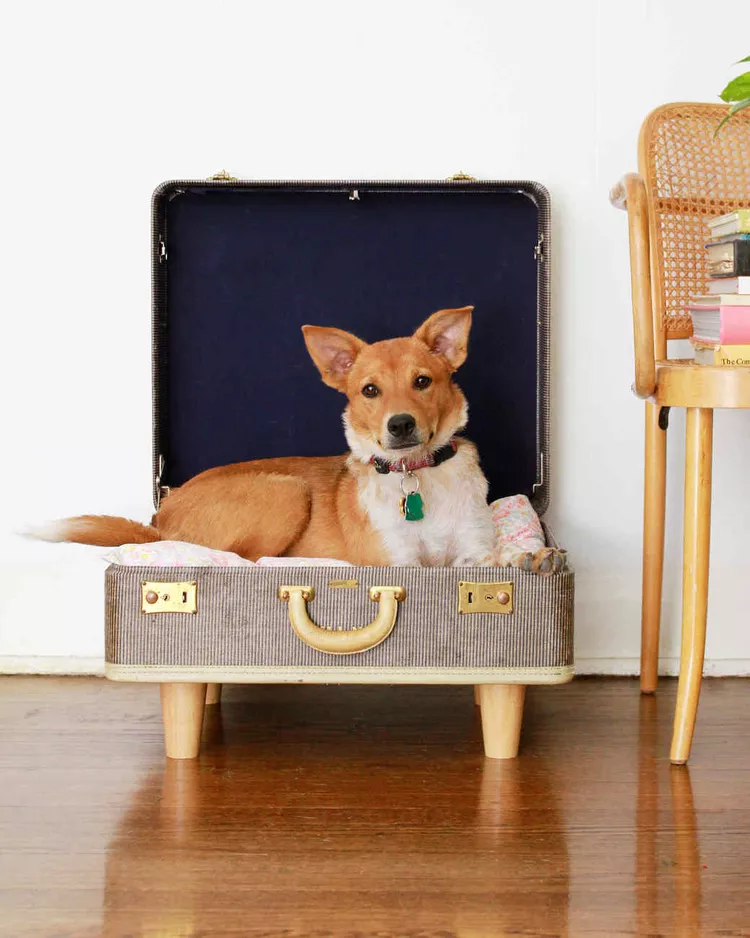
Source: Martha Stewart — Suitcase Pet Bed
Style: Vintage upcycled decor
Difficulty: Easy
Best for: Small dogs
This project is less traditional woodworking and more clever furniture upcycling.
The idea is simple: take an old suitcase, add four furniture legs, fit a pillow inside, and turn something that might have ended up in storage into a small raised pet bed.
The appeal is almost entirely visual.
A weathered suitcase can look surprisingly intentional in a bedroom, reading corner, or vintage-style living space. Because the pillow supplies the comfort, the suitcase mainly provides the structure and character.
Before using an old case, make sure it is structurally sound, free from exposed sharp hardware, and large enough for the dog to lie comfortably.
If you’re trying to make the dog bed part of the decor instead of hiding it, this is one of the most distinctive ideas here.
10. Doghouse-Style Canopy Bed
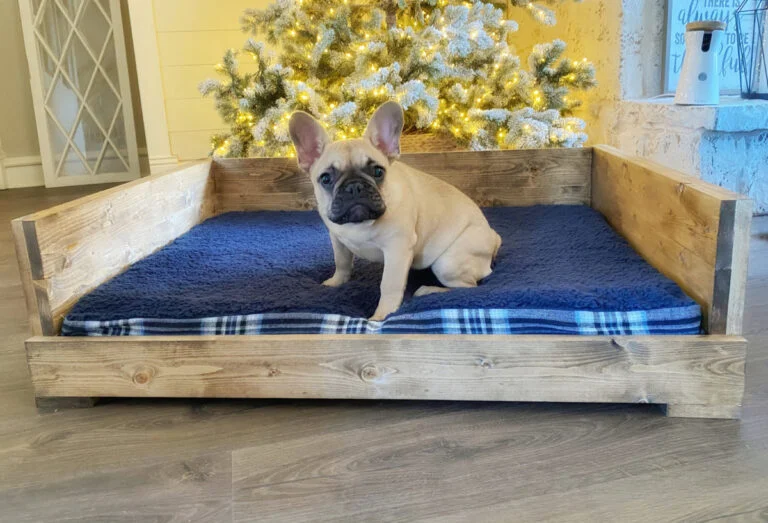
Source: Shanty 2 Chic — Doghouse Bed With Free Plans
Style: Doghouse / canopy
Difficulty: Beginner-friendly
Best for: Small dogs and decorative interiors
This design creates a small house-shaped wooden frame around the sleeping area.
Two side assemblies are connected to create the basic structure, while dowels and an optional fabric canopy give the bed its cozy tent-like appearance.
It manages to look decorative without requiring complicated cabinetry or advanced joinery.
The open frame keeps the project visually light, while the fabric top gives you plenty of opportunity to coordinate the bed with the room.
You could also add a small wooden name sign to the front without changing the basic construction.
If you’re choosing projects partly for Pinterest appeal, this one deserves a strong image. The house silhouette is instantly recognizable even before someone reads the title.
11. Furniture-Style Curved Plywood Pet Bed
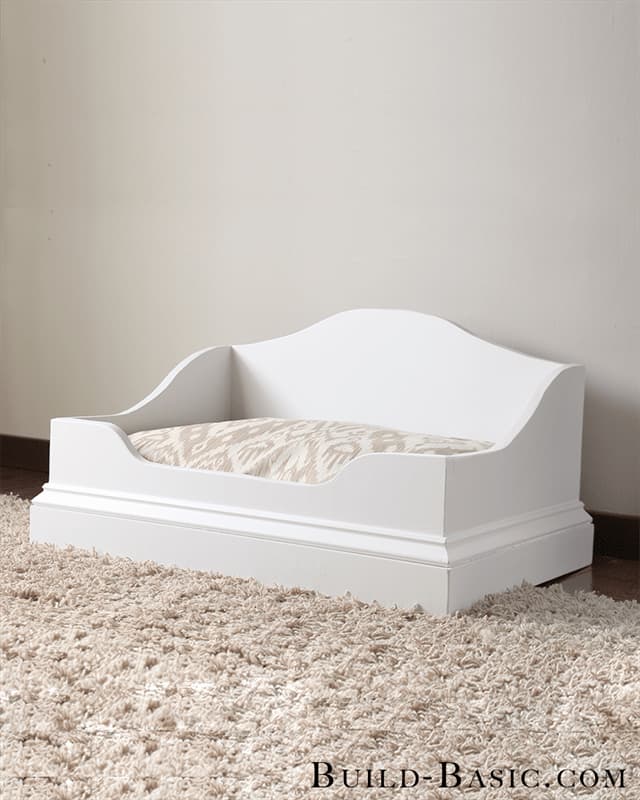
Source: Build Basic / Kreg — Furniture-Style Pet Bed
Style: Traditional furniture
Difficulty: Beginner/intermediate
Best for: Readers who want a more polished indoor piece
This is the dog bed that tries very hard not to look like a dog bed.
The Build Basic project starts with plywood, then adds shaped side panels, curved profiles, and molding to create a much more furniture-like finish.
It is a useful lesson in how much difference small design details can make.
A plywood box is functional. Add a carefully shaped front, proper trim, clean paint, and a fitted cushion, and suddenly the same basic construction looks intentional and expensive.
If your woodworking skills are moving beyond simple straight-edged projects, this is a nice way to practice using a jigsaw and finishing plywood cleanly without jumping straight into complicated furniture.
12. Rustic Dog Bed With Carry Handles
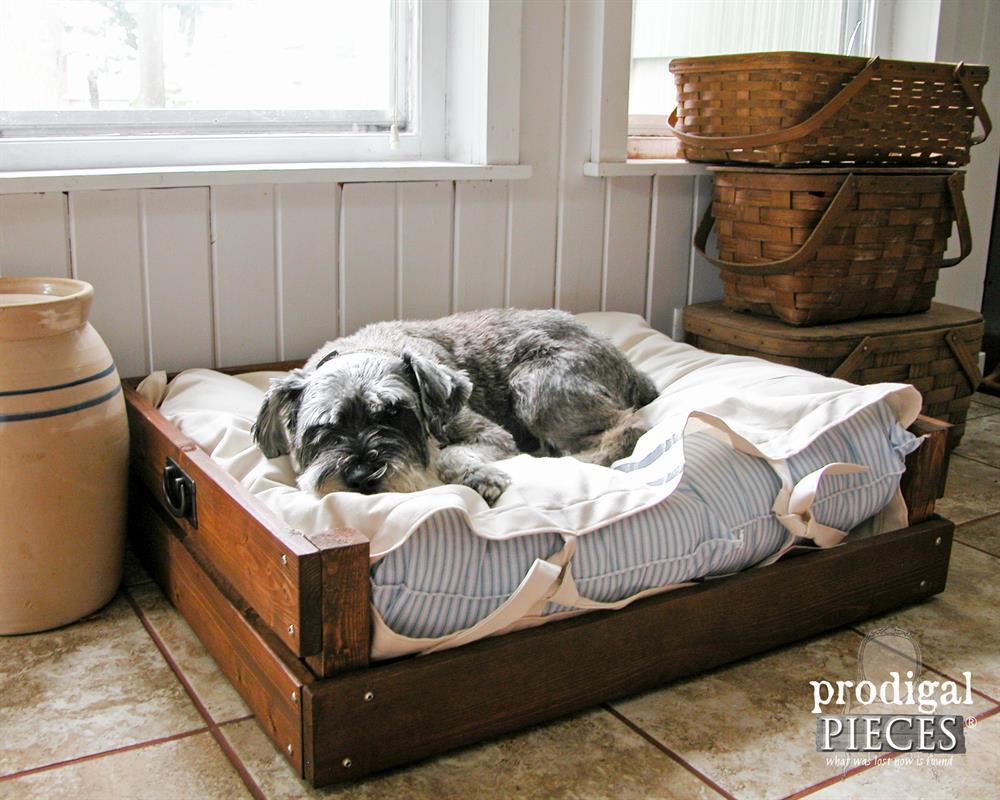
Source: Prodigal Pieces / Kreg — Build a Pet Bed
Style: Rustic farmhouse
Difficulty: Easy
Best for: Small and medium dogs
This rustic design uses a plywood base surrounded by simple wooden rails, then adds optional trunk-style handles at the sides.
Those handles give the bed much of its personality.
They also make it easier to move the empty frame when you’re cleaning, rearranging a room, or shifting the dog’s sleeping area.
The original cut list uses a base around 30 × 24 inches, although you should always size your own project around the cushion and dog you’re building for.
A distressed painted finish works particularly well with this design, but a simple stain would keep it more understated.
13. Crib Mattress Dog Bed
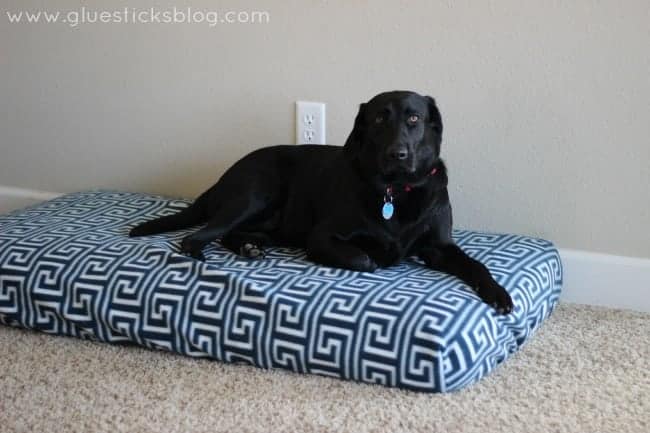
Source: Gluesticks — DIY Dog Bed From a Crib Mattress
Style: Upcycled / oversized cushion
Difficulty: Very easy
Best for: Large dogs
Large dogs need a lot of sleeping space, and buying an oversized pet cushion can get expensive.
This project takes a different route: the crib mattress becomes the dog bed.
Because the mattress already provides the shape and padding, the main work is creating a washable cover and setting up an appropriate sleeping area around it.
That can be particularly appealing for large breeds because you don’t need to fabricate a thick cushion from foam.
If you’re sourcing a used mattress, inspect it carefully. Skip anything with damaged covering, persistent odors, moisture damage, mold, or questionable cleanliness.
A removable washable cover is the detail that makes this idea practical long-term.
14. Large Slatted Wooden Dog Bed
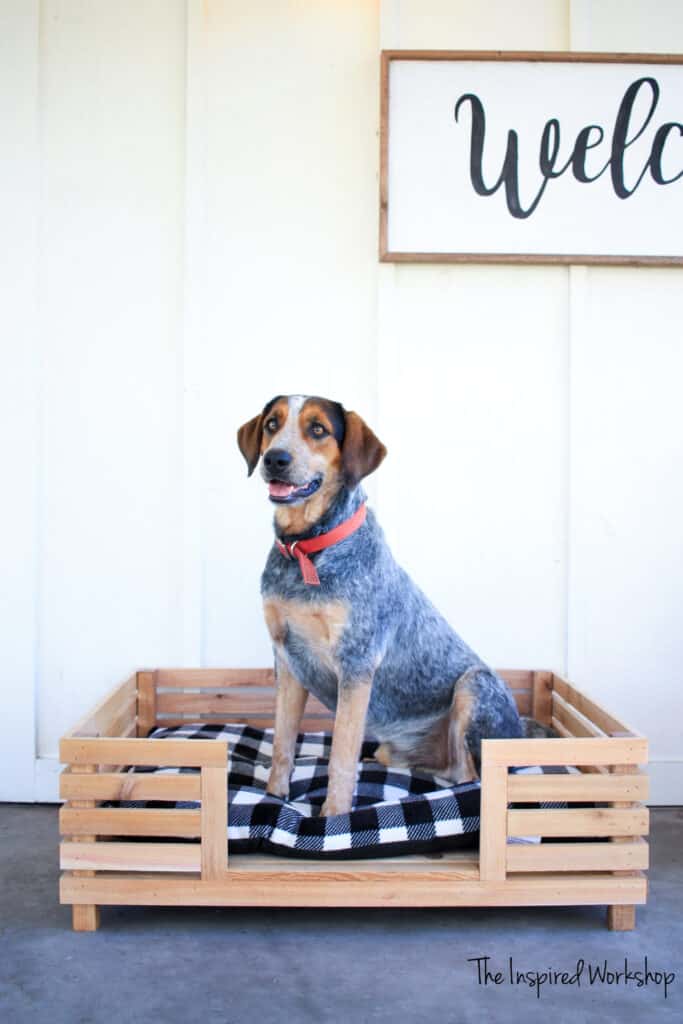
Source: The Inspired Workshop — DIY Large Dog Bed
Style: Modern farmhouse
Difficulty: Intermediate
Best for: Large dogs
If you want a woodworking project with a little more visual presence, this is one of the best designs in the collection.
The frame uses 2×2 lumber with vertical wooden slats around the sleeping area, creating something that feels much closer to full-size furniture.
The raised base and surrounding slats give the bed structure without making it look overly heavy, while center support helps carry the larger sleeping platform.
The design works particularly well with a thick neutral cushion because the wood frame remains the visual focus.
Compared with the simple starter beds, there are more individual parts to cut and align, so take your time keeping the frame square.
For a big dog whose bed stays in a main living area, the extra effort can be worthwhile.
15. Outdoor Pallet Dog Cabana
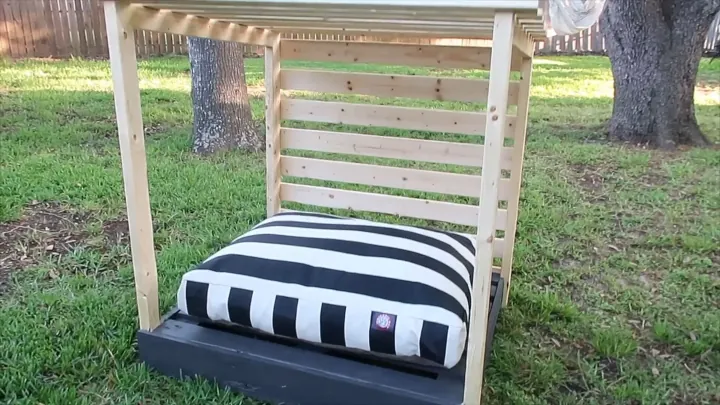
Source: Hometalk — DIY Dog Cabana
Style: Outdoor cabana
Difficulty: Intermediate
Best for: Patios and backyards
Let’s finish with the project that looks least like a conventional dog bed.
This outdoor dog cabana begins with a raised pallet-style platform, then adds four upright supports and a simple roof structure to create a shaded resting area.
A cushion underneath finishes the sleeping space.
It is part dog bed, part tiny patio furniture—and visually, it makes a great final project for the article.
For an outdoor build, pay extra attention to material condition, fastener suitability, drainage, and the finish recommended for the wood you’re using. Let coatings cure according to the manufacturer’s directions before the dog uses the structure.
And remember that a small decorative roof should not automatically be treated as weatherproof shelter. Think of this primarily as a shaded lounging spot unless you’ve deliberately designed and built it for stronger weather protection.
How to Choose the Right DIY Dog Bed
With 15 options, it’s easy to choose based entirely on which picture looks best. Start with the practical stuff instead.
Choose the cushion first. A bed frame is easy to resize on paper. A finished frame that’s two inches too narrow is not.
Think about where the bed will live. The plywood bed works naturally in a modern living room, a rolling pallet bed makes sense in a workshop, and the cabana belongs outdoors.
Consider cleaning before decoration. Removable cushions, removable covers, and accessible surfaces will matter much more six months from now than an elaborate decorative detail.
Match the build to the dog. A low entry can be much more useful than a tall decorative rail for a small or older dog. Likewise, a large breed needs adequate support underneath the cushion.
Don’t overbuild your first project. If you’re still learning basic woodworking, a simple frame will teach you far more than an ambitious design that never gets finished. For more easy builds, see these beginner woodworking projects you can finish in a weekend.
How to Make a DIY Dog Bed Look More Expensive
The difference between something that looks homemade and something that looks intentionally handmade usually comes down to finishing.
Fill visible nail and screw holes before painting. Sand the frame carefully rather than rushing through the final grits. If you’re using plywood, consider edge banding or trim so the exposed layers don’t dominate the finished piece.
Keep the color palette simple. One consistent stain or paint color generally looks cleaner than several decorative finishes fighting for attention.
The cushion matters too. A frame built from inexpensive pine can look surprisingly polished when paired with a fabric that coordinates with the room.
Small feet can also change the proportions of a bed dramatically by lifting it slightly from the floor.
And if you want to personalize it, a simple wooden nameplate usually looks cleaner than covering every rail with decorations.
The goal isn’t to make the bed complicated. It’s to make the details look deliberate.
Frequently Asked Questions
What is the easiest DIY dog bed to make?
The repurposed dresser drawer bed is probably the simplest project in this collection because the main structure already exists.
If you’d rather build something from lumber, the basic budget wooden bed is a better introduction to actual woodworking. It uses straightforward construction and gives you practice measuring, cutting, assembling, and finishing without requiring advanced joinery.
What wood is good for a DIY dog bed?
Pine and plywood are practical choices for many indoor DIY dog beds because they’re widely available and easy to work with.
However, follow the material recommendations for the specific plan you choose. The dimensions and joinery in a project may depend on a particular board or plywood thickness.
If you’re still deciding what to buy, BubbleRelief’s guide to the best woods for beginner woodworking projects explains several beginner-friendly options.
How big should a dog bed be?
Measure your dog while they are lying in a typical sleeping position and allow enough room for them to change position comfortably.
A dog that sleeps tightly curled may be comfortable with a smaller bed than one that stretches out completely.
Once you have a target cushion size, build the frame around the actual cushion dimensions rather than relying only on a generic breed-size chart.
Can I make a dog bed from pallet wood?
Yes, but the condition and history of the wood matter.
Use clean material, inspect every board for contamination, damage, embedded metal, splinters, and other hazards, and sand exposed surfaces thoroughly.
The Home Depot pallet bed above demonstrates one way to turn a pallet into a mobile dog bed with a headboard and casters.
Can I build a DIY dog bed for a large dog?
Absolutely.
The modern plywood bed, Rogue Engineer storage bed, crib-mattress design, and large slatted wooden bed are all useful starting points for larger dogs.
For a heavier dog, pay particular attention to platform support, fasteners, joinery, and the original plan’s dimensions instead of simply enlarging a small-dog frame without adding support.
Do I need a pocket-hole jig to build a wooden dog bed?
Not always.
Some of these projects use pocket holes because they make it easy to create strong, relatively hidden joints, but other beds use screws, nails, dowels, or existing furniture.
If you’re planning to build more beginner furniture after this project, pocket-hole joinery is still a useful technique to learn. The BubbleRelief wood joints guide covers how it works alongside other common joints.
Want More Woodworking Plans?
Once you’ve finished a dog bed, you may want something a little more ambitious for the next weekend.
Ted’s Woodworking Plans offers a large collection of woodworking project plans across furniture, storage, outdoor projects, workshop builds, and other categories. If you’d rather start your next build with measurements and diagrams in front of you instead of developing a plan from scratch, you can take a look and decide whether the collection suits the projects you want to build.
Explore Ted’s Woodworking Plans here.
Disclosure: This post contains affiliate links. If you purchase through one of them, I may earn a commission at no additional cost to you.
Final Thoughts
You don’t need to choose the most complicated project on this list.
Pick the DIY dog bed that fits your dog, the cushion, the room, and the tools you already have. A straightforward wooden frame with clean cuts and a careful finish can look better than a complicated design rushed through in one afternoon.
If you’re still building confidence, start with these beginner woodworking projects you can build in a weekend or browse the free woodworking plans for beginners for your next project.
Pick a design, measure the cushion, and turn a free weekend into a dog bed that actually belongs in your home.