
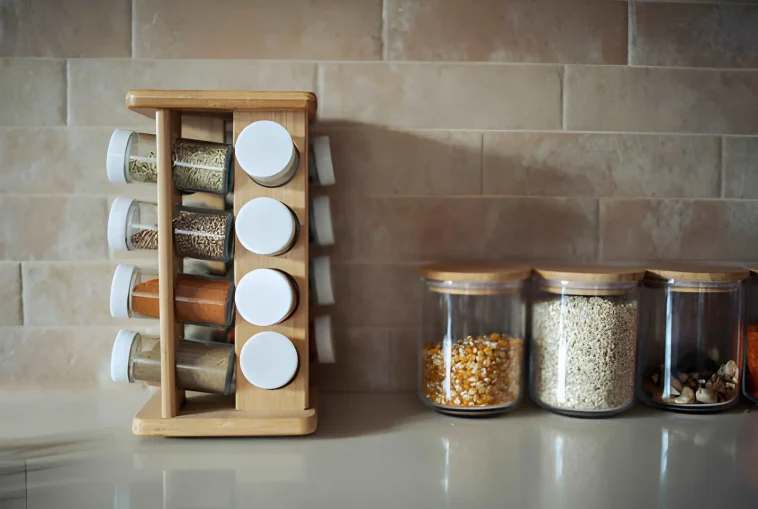
You know the moment. You’re halfway through a recipe, the pan is heating, and you’re on your knees in front of a crowded cabinet, shifting jars around to find the cumin. Behind the paprika, you find a second jar of paprika you forgot you owned.
A good spice rack ends that, and in a small kitchen, a wooden one you build yourself can do more than store jars. You can size it to the exact space you have, and you can pick a wood and finish that suits your kitchen.
The best rack depends on where you have room: a pantry door, an empty wall, a kitchen drawer, a cabinet shelf, or a small patch of countertop. This guide covers 15 DIY wooden spice rack ideas for all of those spots. Each one links to the original creator’s instructions, so you can follow their tutorial, plans, or video directly.
One tip before you pick a favorite: measure your jars first. Jar size decides almost everything about a rack, from shelf depth to spacing to whether the lid clears the shelf above. A few minutes with a tape measure now saves you from a beautiful rack that doesn’t fit your jars.
Which Spice Rack Fits Your Small Kitchen?
Start with the space you have, then jump to the projects that suit it.
| Available space | Projects to consider | Main benefit | Difficulty (general guide) | Resource type |
|---|---|---|---|---|
| Inside a cabinet | Three-tier riser (#1) or pull-out racks (#13) | Improves access inside existing cabinets | Beginner to intermediate | Written tutorial, video, plans, photos |
| Kitchen drawer | Custom angled drawer insert (#2) | Labels visible the moment you open the drawer | Beginner | Online instructions, printable option |
| Pantry door | Dowel-rail rack (#3) or brass-style rail rack (#4) | Frees up cabinet and counter space | Intermediate | Free plan with cut list, illustrated tutorial |
| Empty wall | Open shelves (#6, #7, #8) or a spice cabinet (#9) | Larger capacity, off the counter | Intermediate | Plans, videos, templates |
| Small countertop area | Compact rack (#5), cubby rack (#10), 1×6 rack (#11), or tiered display (#12) | Everyday spices within reach | Beginner to intermediate | Dimensioned plans, tutorials |
Difficulty is a rough guide only. It depends on your tools and experience, so read the original instructions before you commit.
What to Measure Before Building a Spice Rack
Most spice rack mistakes come down to one missing measurement. Before you buy any wood, check these five things.
The jars you already own. Measure the width and height of your jars, and note whether they’re all the same or a mix. Your tallest jar sets your minimum shelf height, and your widest sets your minimum compartment width.
Shelf clearance for lifting jars out. A jar has to slide out, not just fit in. Leave enough room above each jar to tilt and lift it without scraping the shelf over it. This is the detail people forget most often.
Cabinet or drawer dimensions. For riser and drawer designs, measure the interior width, depth, and height. Don’t measure the opening alone, because the door frame or hinges may reduce the usable space.
Pantry-door clearance when closed. If you’re building for a door, check that the loaded rack won’t hit the pantry shelves when the door shuts. Measure from the door surface to the nearest shelf edge, and include the rack, retaining rails, containers, and mounting hardware in that clearance check.
The installation surface and the right hardware. Drywall, a stud, a solid door, and a hollow door all need different fasteners. Know what you’re mounting to before you pick screws or anchors.
15 DIY Wooden Spice Rack Ideas for Small Kitchens
1. Three-Tier Cabinet Spice Riser
Project image: FixThisBuildThat.
Original project: FixThisBuildThat — tutorial and project details
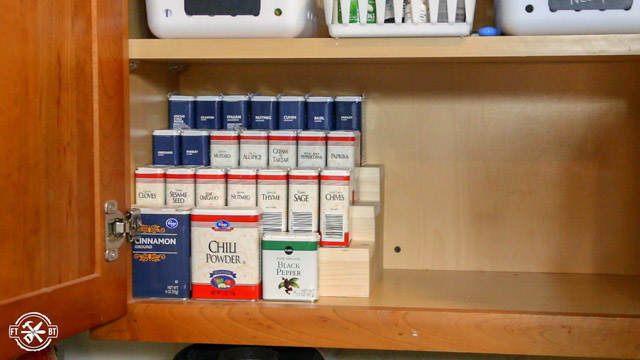
This stair-step design raises each back row a little higher than the one in front. Instead of hiding the back rows behind the front jars, it raises them into view. How much of each label you can see depends on your jar heights and the tier spacing. It’s a simple way to turn a cluttered cabinet shelf into something organized without changing the cabinet itself.
For a small kitchen, the biggest benefit is that it works with the space you already have. Build it to the width of your shelf, and check the overhead clearance so the top tier doesn’t bump the shelf above it. The builder works with a miter box, a handsaw, and a drill, which makes this a friendly option if you don’t own a full workshop.
Resource: Written tutorial, video, and linked free plans. FixThisBuildThat
View the original tutorial and plans →
2. Custom Wooden Spice Drawer Insert

Project image: Ana White.
Original project: Ana White — tutorial and project details
If you have a spare kitchen drawer, this is one of the neatest ways to use it. The inserts are angled and made from thin plywood and support strips, so jars lie tilted and the labels face up. Open the drawer and every spice is visible at once, with no digging.
The key is fitting the inserts to your drawer’s width and depth, so measure carefully and test before you glue. Check closing clearance too. The insert and jars need to sit below the opening above the drawer, so test the full arrangement before fastening anything.
Resource: Online instructions with an emailed printable option. ana-white.com
View the original tutorial and plans →
3. Pantry-Door Spice Rack With Wooden Dowel Rails

Project image: Ana White.
Original project: Ana White — tutorial and project details
The back of a pantry door is prime real estate that most people ignore. This rack uses shallow shelves, a plywood back, and wooden dowels that hold the jars in place. It pulls spices out of your cabinets and off the counter entirely.
Think about shelf spacing before you cut anything. Tall jars, short jars, and bottles all need different heights, so decide what goes where first. Pay attention to the door construction and mounting too, and check that the pantry shelves clear the rack when the door closes.
Resource: Free online plan with a cut list and diagrams. ana-white.com
View the original tutorial and plans →
4. Oak-Plywood Door Rack With Brass-Style Gallery Rails
Project image: Our Aesthetic Abode.
Original project: Our Aesthetic Abode — tutorial and project details
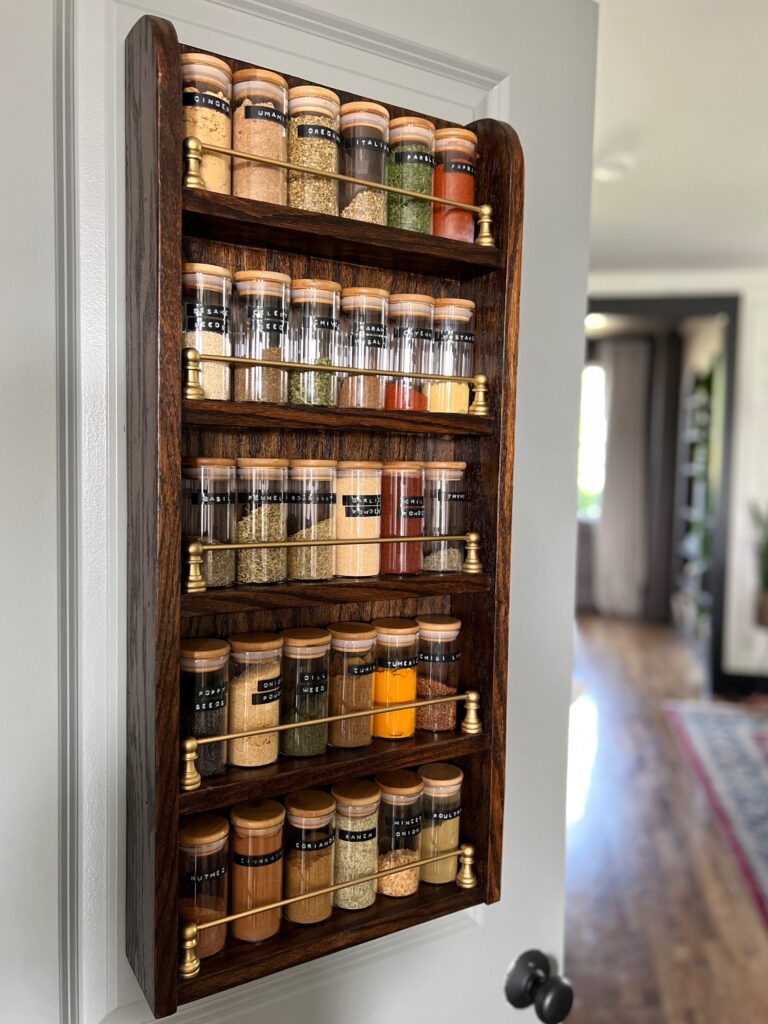
If you want a door rack with a more decorative look, this one delivers. It has an oak-plywood structure, a shaped top, and gallery rails with a brass-style finish. The result looks more like a piece of furniture than a storage fix.
The tutorial covers the stained finish and the details of making the rails. The main lesson here is that jar depth must decide shelf depth. A rack that looks lovely but pushes against your pantry shelves won’t get used, so measure first and design second.
Resource: Illustrated tutorial with a cut list. Our Aesthetic Abode
View the original tutorial and plans →
5. Compact 15-Jar Spice Rack for the Counter or Wall
Project image: Erin Spain.
Original project: Erin Spain — tutorial and project details
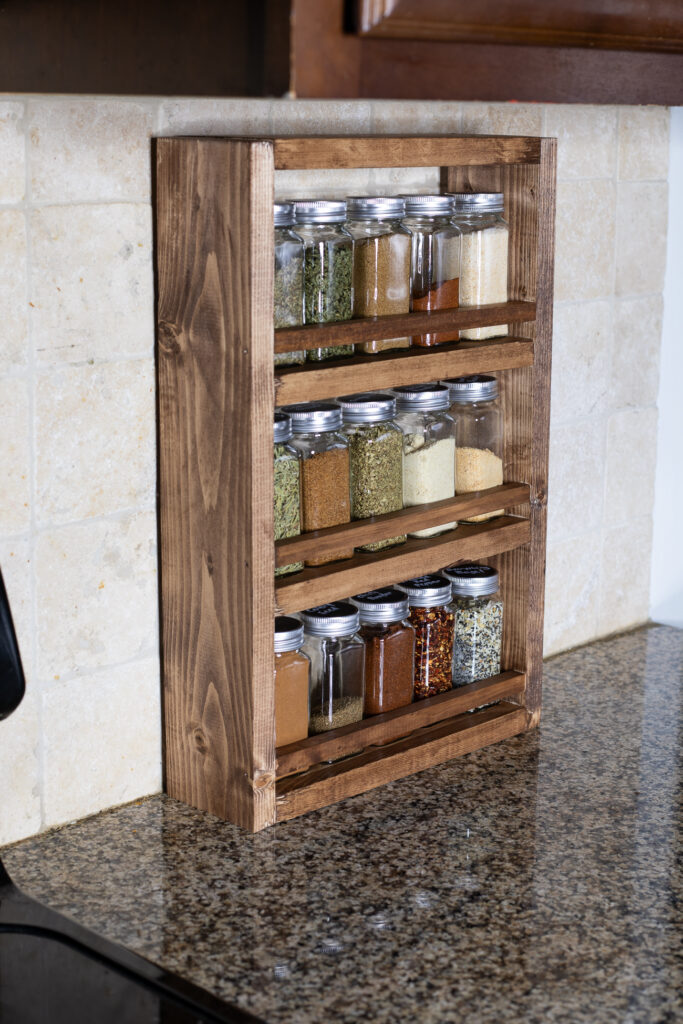
Not everyone has 40 spices. If you have a modest everyday collection, this compact design built around 15 jars may be all you need. It sits on the counter, or you can follow the builder’s optional suggestion to mount it on a wall.
Decide where it’s going before you add any hardware. A rack that’s perfect on the counter may not suit the wall you had in mind, and the other way around. Picking the location first keeps the build simple.
Resource: Project overview linking to Kreg’s complete tutorial and plans.
View the original tutorial and plans →
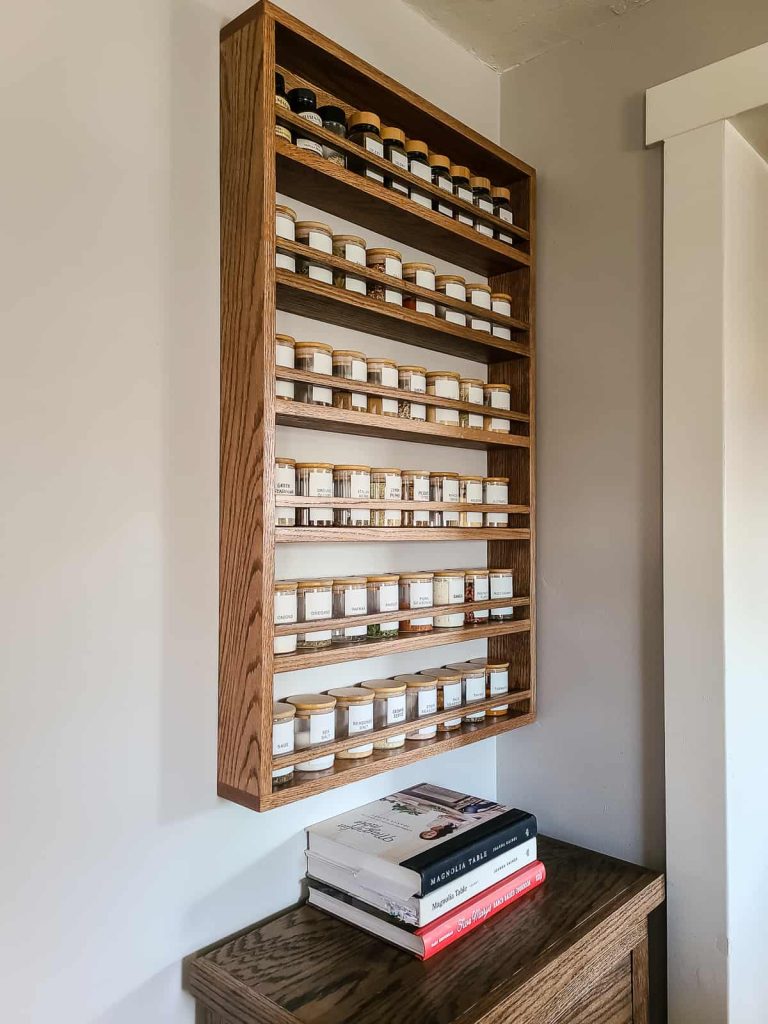
6. Six-Shelf Oak Wall Spice Rack
Project image: Making Manzanita.
Original project: Making Manzanita — tutorial and project details
When you have a bigger collection and an empty wall, this oak rack with six shelves is the larger-capacity option. Moving everything to the wall clears a lot of cabinet and counter space at once.
Plan the spacing for your larger containers, such as bulk jars and bottles, before you cut the shelves. The builder also shares a useful lesson: the mounting board reduced the usable clearance on the top shelf. If your design includes a mounting board or cleat, allow for it in your height measurements.
Resource: Project details, video, materials list, and linked plans. Making Manzanita
View the original tutorial and plans →
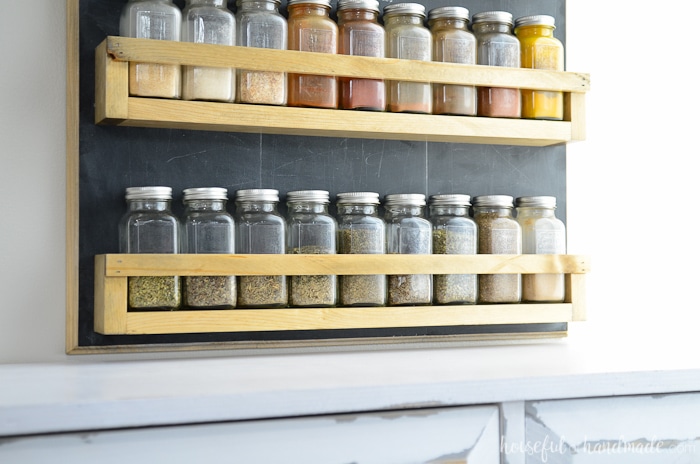
7. Farmhouse Wall Spice Rack With a Chalkboard Back
Project image: Houseful of Handmade.
Original project: Houseful of Handmade — tutorial and project details
Current plan listing: Kreg — Wall Mounted Spice Rack
This one mixes storage with kitchen decor. It has open shelves, a chalkboard-painted back, and a decorative routed edge. You can jot down a grocery reminder or a label right on the back panel.
It saves counter space, but it still needs a suitable section of wall, so check that you have a clear spot before you plan the build. The plan has been listed on Kreg as well, so look at both the builder’s overview and the current plan listing.
Resource: Builder’s overview and linked build plans. Houseful of Handmade
View the original tutorial and plans →
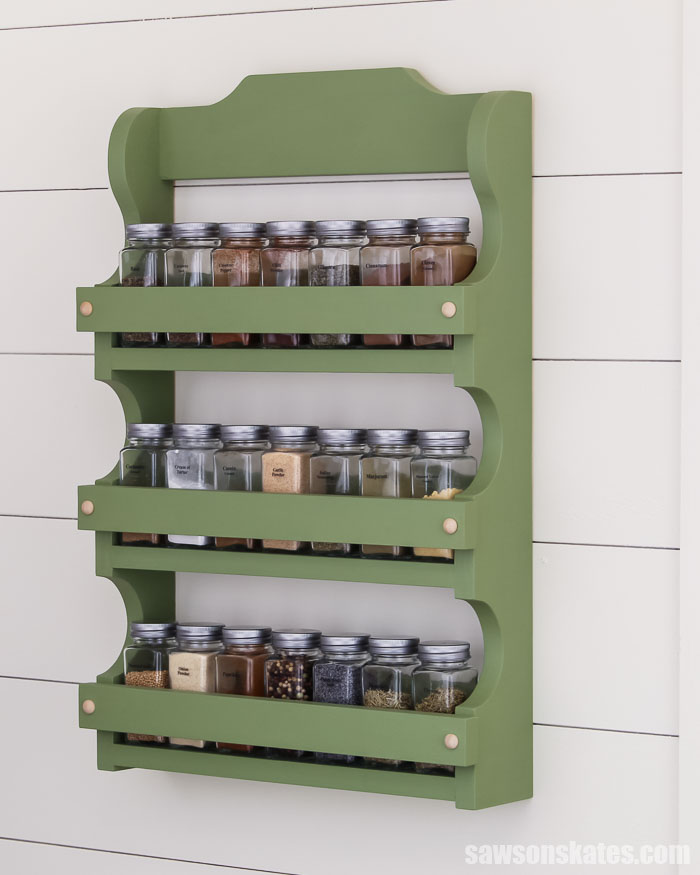
8. Antique-Inspired Wooden Wall Spice Shelf
Project image: Saws on Skates.
Original project: Saws on Skates — tutorial and project details
If you love traditional style, this wall shelf has three shelves, retaining rails, and curved details that give it an antique look. It suits a kitchen with classic or cottage character.
The build uses pocket-hole assembly, and you’ll need to cut the curves, so it’s a step up in effort. The linked templates help you lay out the decorative shapes. Read the online tutorial first, then check the creator’s page for the current printable-plan access options.
Resource: Written tutorial with linked PDF plans and templates; check the creator’s page for printable access details. Saws on Skates
View the original tutorial and plans →
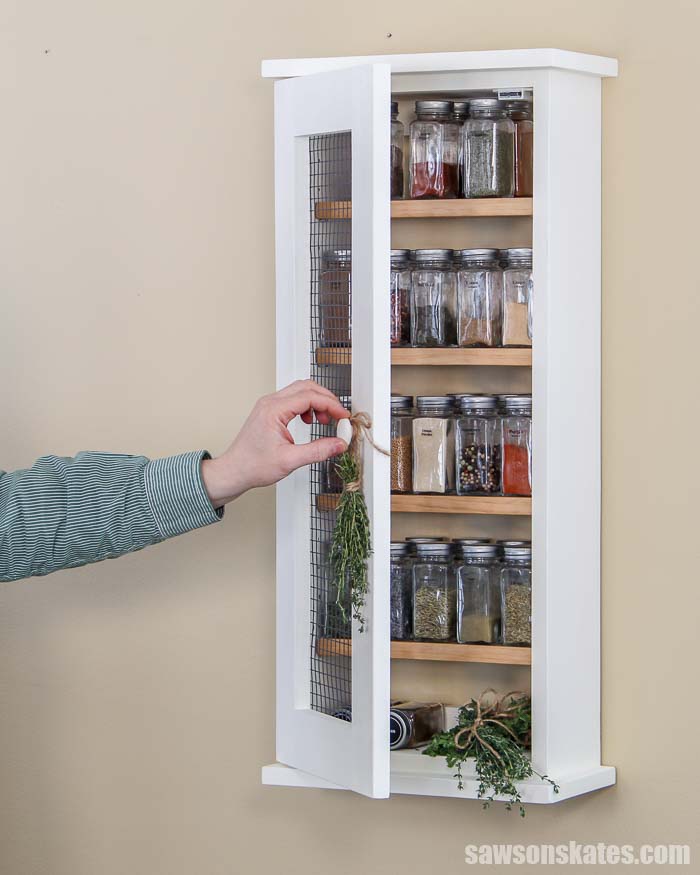
9. Wall-Mounted Spice Cabinet With a Mesh Door
Project image: Saws on Skates.
Original project: Saws on Skates — tutorial and project details
Some people prefer a cabinet to open shelves, and this one gives you that look without hiding the contents completely. It has a framed mesh door and adjustable shelves, so you can reshape the inside as your collection changes.
You’ll need to plan the hinges, shelf pins, and door clearance. One thing to clarify: the mesh door doesn’t create sealed storage. Keep the spices in closed containers; the mesh is a design feature rather than an airtight barrier.
Resource: Illustrated tutorial and linked printable plans. Saws on Skates
View the original tutorial and plans →
10. Slotted Wooden Cubby Spice Rack
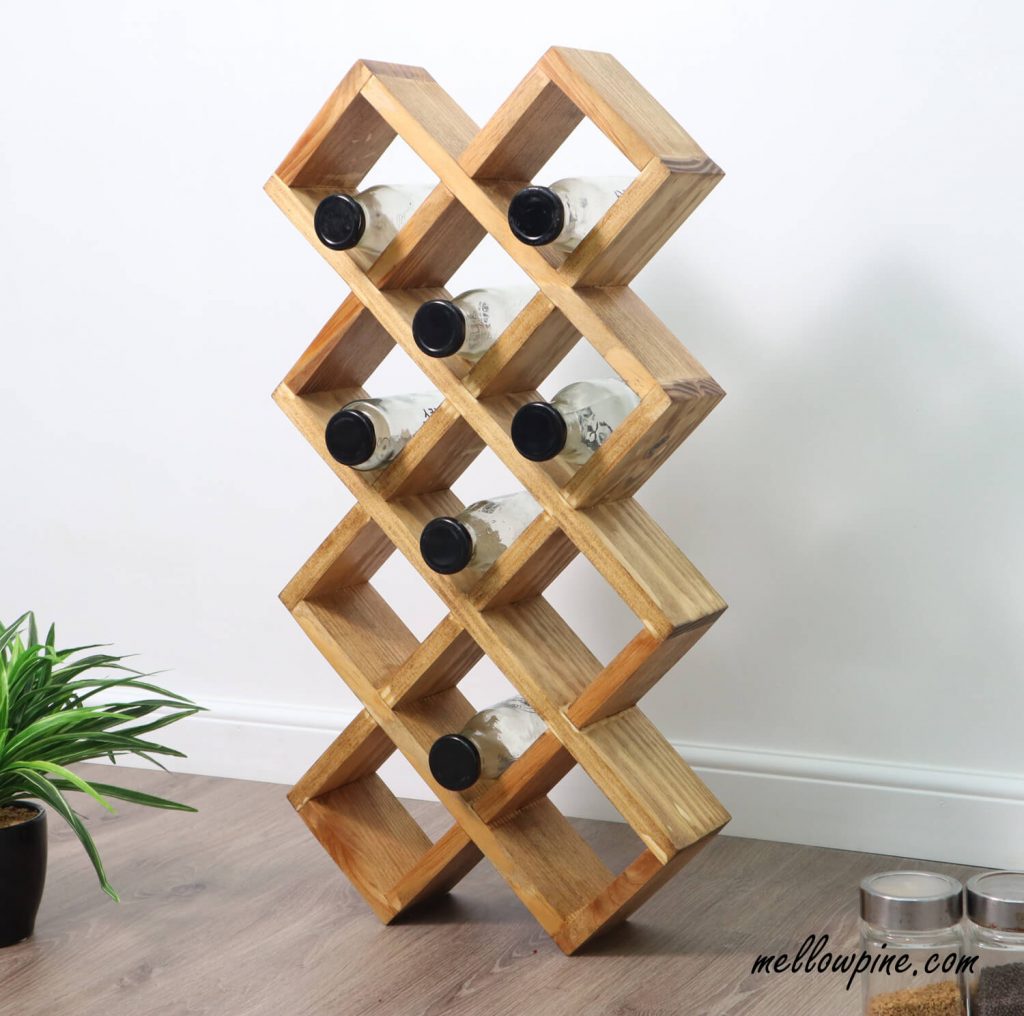
Project image: MellowPine.
Original project: MellowPine — tutorial and project details
Intersecting boards create individual compartments, so each jar gets its own cubby. The builder shows both horizontal and vertical placement, so you can adapt it to the space you have.
The success of this one depends on accurate slot cutting, so do a dry fit before any glue goes on. Leave enough space around each jar to grip it comfortably, and test the rack’s stability in your chosen orientation. The slotted joints should fit neatly without being forced together.
Resource: Written instructions, dimensioned drawings, and a build video. MellowPine
View the original tutorial and plans →
11. Simple Countertop Spice Rack Made From a 1×6 Board
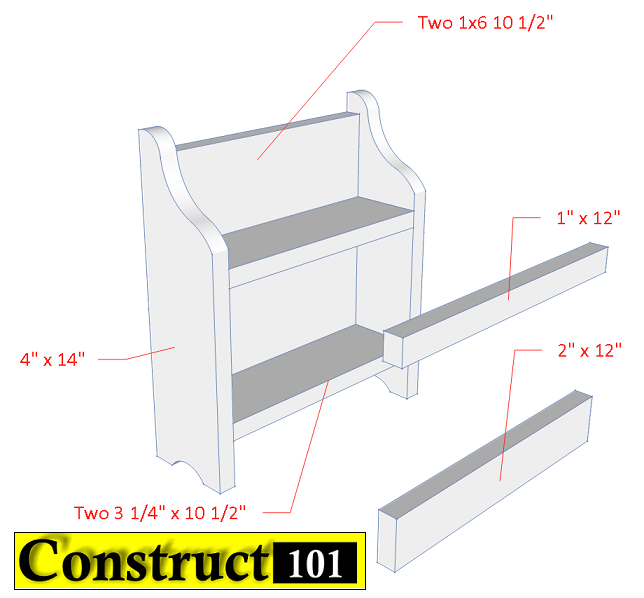
Project image: Construct101.
Original project: Construct101 — tutorial and project details
This countertop design uses a single 1×6 board and has shaped sides. The materials list is small, so it’s a good choice if you want a quick build.
Before you choose it, check the footprint on your counter, because small kitchens can’t spare much. The drawings give the actual dimensions, so rely on those instead of guessing.
Resource: Dimensioned online plans and a listed free PDF download. Construct101
View the original tutorial and plans →
12. Curved-Side Tiered Countertop Spice Rack
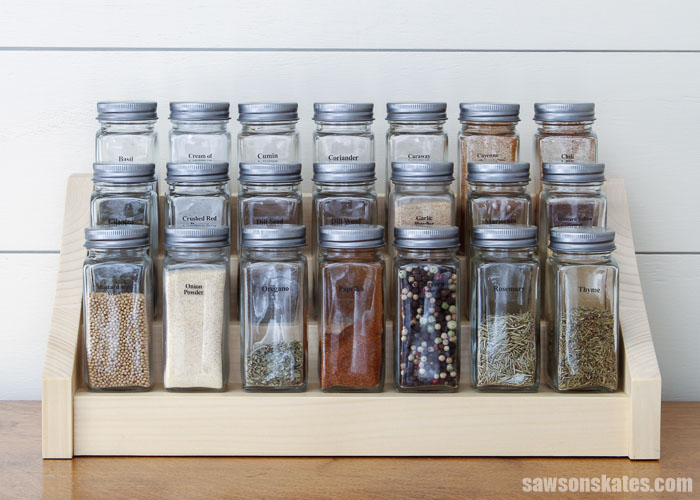
Project image: Saws on Skates.
Original project: Saws on Skates — tutorial and project details
Think of this as a decorative, freestanding alternative to idea #1. It has three levels and curved side panels, so it works as storage and as a display piece. You can put it on the countertop or on a pantry shelf.
Before you commit, check the footprint, the jar clearance between tiers, and the curve template. A tiered rack takes up more depth at the base than you might expect.
Resource: Online tutorial with linked PDF plans and a template. Saws on Skates
View the original tutorial and plans →
13. Pull-Out Wooden Spice Racks Inside a Cabinet
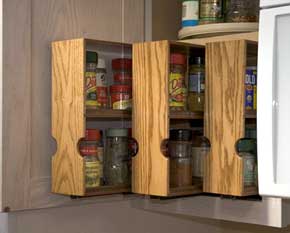
Project image: RunnerDuck.
Original project: RunnerDuck — tutorial and project details
If your spices disappear into the depths of a cabinet, pull-outs bring them to you. This build uses three sliding storage units with plywood construction and wooden fronts. Slide one out and every jar is in reach.
Accurate sizing and slide alignment matter most here. If the units are even slightly off, they’ll bind or catch. Take your time with the measurements and test each unit before you finish.
Resource: Written construction instructions and photos. runnerduck.com
View the original tutorial and plans →
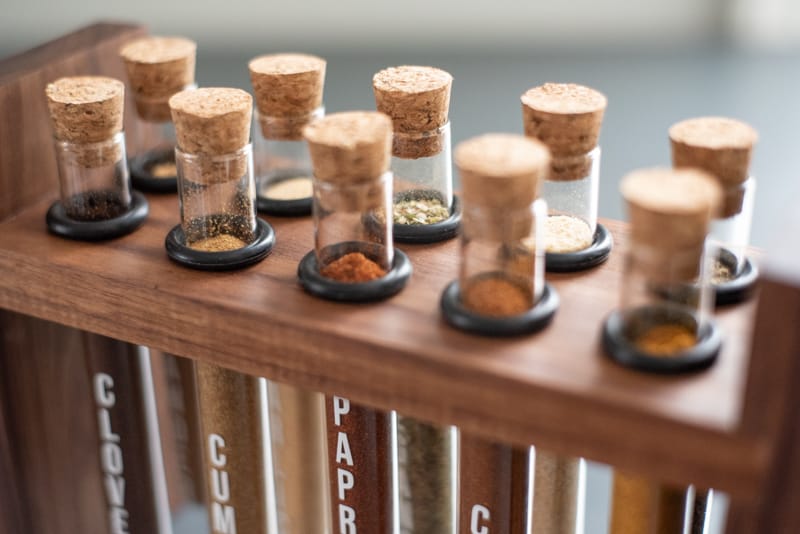
14. Walnut Test-Tube Spice Rack
Project image: The Handyman’s Daughter.
Original project: The Handyman’s Daughter — tutorial and project details
This one is a showpiece. A walnut frame holds suspended containers, and it works well as a display for a small selection of seasonings you use often.
There’s a tradeoff: smaller containers mean more refilling. It’s a lovely choice for a handful of favorites, but not for a full collection. Accurate hole spacing is the key to a clean result, and the tubes need to match the frame.
Resource: Step-by-step tutorial with linked free plans. The Handyman’s Daughter
View the original tutorial and plans →
15. Rustic Pallet-Wood Spice Rack

Project image: Sara / Make It & Love It.
Original project: Sara / Make It & Love It — tutorial and project details
This reclaimed-wood rack has the look of a small farmhouse crate, with shelf fronts that help contain the jars. The creator made the lower section taller for large spice containers and added another shelf when the smaller jars left room for it. That makes it a useful example if your collection includes mixed container sizes.
It can go on a suitable wall or pantry door, provided the loaded rack fits and can be secured properly. Rather than copying the shelf spacing blindly, line up your jars and decide which ones need the taller compartment. Pallet boards vary in thickness and straightness, so sort the pieces before cutting and remove embedded nails.
Choose clean wood of known origin and smooth the edges. If you do not have suitable reclaimed boards, use new lumber and adapt the dimensions consistently.
Resource: Illustrated written tutorial with measurements and a cut list.
View the original tutorial and plans →
How to Choose the Best Rack for Your Kitchen
With 15 options, it helps to narrow things down by what matters most to you. Think through three things: your space, your tools, and your jar sizes.
To preserve counter space
Look at the door and wall projects: #3, #4, #6, #7, #8, and #9. They move storage off the counter entirely. Doors suit people with a pantry and a little clearance, while walls suit anyone with an empty section to spare.
For hidden storage
Compare the drawer insert (#2) with the cabinet pull-outs (#13). The drawer insert is simpler and works if you have a spare drawer. The pull-outs take more precision but make better use of a deep cabinet.
For a larger collection
Consider the larger wall racks, especially the six-shelf oak design (#6). More shelves and more room for bigger containers make a difference once your collection grows past a couple of dozen jars.
For a first project
Consider the simple riser (#1) or the drawer insert (#2). Both use basic tools and straightforward cuts, so they’re a good way to build confidence before you try curves or pocket holes.
Small Details That Make a Spice Rack More Useful
A rack that fits is good. A rack that’s pleasant to use every day is better. A few small details help.
Readable labels. Whether you label lids or jar fronts, make sure the text faces you in your rack. Angled and tiered designs help here.
Room to grip jars. Leave enough space around each jar to get your fingers in. A rack that’s too tight is frustrating when you’re cooking.
Retaining rails on moving doors. If your rack is on a pantry door, rails or dowels keep jars from sliding off when the door opens and closes. Don’t skip them.
Wipeable finishes. Kitchens mean splashes and sticky fingers. A finish you can wipe clean keeps the wood looking good.
Placement away from heat and splashes. Keep spices away from the stove and sink when you can. Heat and moisture shorten the life of dried herbs and spices.
Frequently Asked Questions
1. How deep should a wooden spice rack be?
Base the depth on your jars. Measure the deepest jar you plan to store and add a little room so it’s easy to lift out. For door racks, also check how much depth your pantry shelves allow when the door is closed.
2. What wood should I use?
It depends on the project. Pine and poplar are easy to work with and affordable, which suits beginners. Oak and walnut give a richer look for display pieces. Thin plywood suits inserts and structural parts, as several of the projects above show. Whatever you pick, a wipeable finish helps in the kitchen.
3. Can I build one without a pocket-hole jig?
Yes, for many designs. Some of the projects above, such as #8, use pocket-hole assembly, but others rely on simple cuts, glue, nails, or screws. Choose a tutorial that already uses the tools you have, such as the hand-tool riser (#1) or Ana White’s drawer insert (#2). Changing a joint can affect strength, screw placement, and the cut list, so don’t assume a different fastening method is a direct swap.
4. Can I mount a rack on a hollow-core pantry door?
Sometimes, but the door and mounting hardware must be suitable for the fully loaded rack. Our Aesthetic Abode’s tutorial (#4) demonstrates a hollow-core installation using specialist anchors. That example is not a universal load rating: check your door construction, hardware instructions, attachment points, and closing clearance. Choose another location if the door cannot support the load.
5. Are all the linked plans free?
Not necessarily. Many of the tutorials and plans are free, but some use an emailed printable, and others have access conditions that may change. Check each creator’s page for the current details before you plan around a download.
6. Which design works best in a small kitchen?
It depends on where you have room. A drawer insert or cabinet riser uses space you already have. A door or wall rack frees up counters. A compact countertop rack suits a small everyday collection. Use the comparison table near the top of this guide to match each design to your space.
Choose Your Rack and Start With Your Jar Measurements
A simple riser or drawer insert is a manageable starting point; a pull-out system or cabinet needs more time and precision. Pick one design that fits your space, measure your jars and the spot where it’s going, and read the original creator’s instructions before you buy any materials. Those instructions are the best source for exact dimensions, cut lists, and hardware.
Once you’ve got a rack, you might enjoy more ways to use up leftovers and keep your workshop tidy. Browse our scrap wood crafts, reclaimed wood projects, and free woodworking plans for beginners for your next build.
Looking for Your Next Woodworking Project?
A spice rack is a useful small build, but you may already be thinking about a kitchen shelf, storage cabinet, or another piece of furniture. If you are considering a broader collection of plans, read our Ted’s Woodworking Plans review to understand the offer and decide whether it suits the projects you want to make.
The spice rack ideas in this article come from independent creators. Use the original links above for their measurements, construction instructions, and project details.