
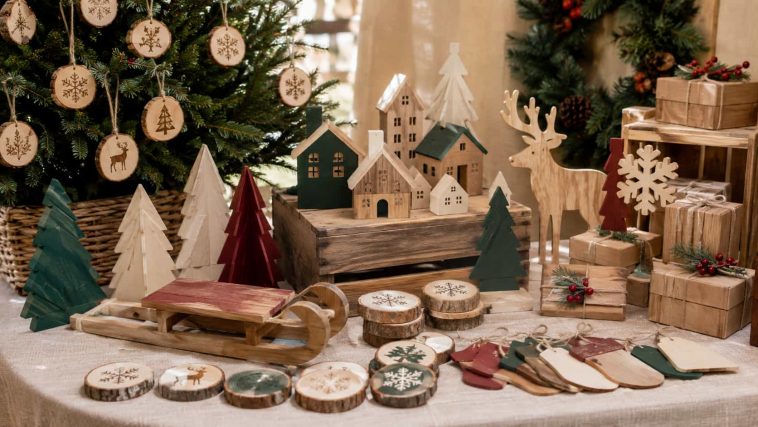
hristmas shoppers love gifts and decorations that feel personal, useful, and a little less mass-produced. That gives wooden crafts a real advantage: a simple name, date, color choice, or family detail can turn an ordinary project into something buyers happily display every December.
This list covers 25 Christmas wood crafts to make and sell in 2026, from low-cost ornaments and shelf sitters to larger porch pieces and premium advent calendars. You will find beginner-friendly ideas, personalization options, pricing logic, packaging tips, and practical safety notes. No promise of overnight riches here—sadly, the scrap bin has not learned to print money—but these projects give you a much smarter place to start.
If you want more material-saving holiday inspiration, browse these scrap wood Christmas projects before buying new lumber.
What Makes a Christmas Wood Craft Easier to Sell?
A good holiday product needs more than a cute shape. It should photograph clearly, survive normal handling, fit a recognizable decorating style, and give buyers a reason to choose yours over a store-bought version.
The strongest Christmas wood crafts usually offer at least two of these advantages:
- Personalization: Names, dates, pet silhouettes, house numbers, or family phrases.
- Easy gifting: A finished size and price that work for teachers, hosts, coworkers, and relatives.
- Simple shipping: Compact, flat, lightweight, or designed to pack without fragile parts.
- Repeatable production: One base design that you can make in small batches.
- A coordinated look: Matching ornaments, signs, tags, or shelf decor that buyers can bundle.
- Clear seasonal value: The buyer instantly understands where and how to display it.
Before you commit to twenty copies, make one complete sample. Time the entire job, including sanding, painting, personalization, photography, packing, and cleanup. The cutting may take twenty minutes while the finish decides to occupy your whole afternoon. Funny how paint never reads the schedule, right?
Plan Materials, Safety, and Product Quality First
Choose clean, dry, structurally sound wood with a known history. Avoid scraps with unknown coatings, chemical treatment, contamination, embedded metal, deep splits, or loose knots. Those “free” boards stop feeling free when they damage a tool or ruin a finished order.
A capable adult should handle all cutting, drilling, routing, powered sanding, machine setup, and electrical work. Follow every tool and finish manufacturer’s instructions, secure the workpiece, wear the recommended eye, hearing, and respiratory protection, and keep the work area stable and well lit.
For illuminated crafts, use removable battery-powered LED lights only. Never place an open flame inside or against a wooden decoration. Test every finished item for sharp edges, loose parts, rocking bases, exposed fasteners, uncured finish, and weak hanging hardware before offering it for sale.
Still building a basic setup? These beginner woodworking plans can help an adult builder practice accurate measuring, assembly, and finishing before taking paid orders.
1. Personalized Wood-Slice Ornaments
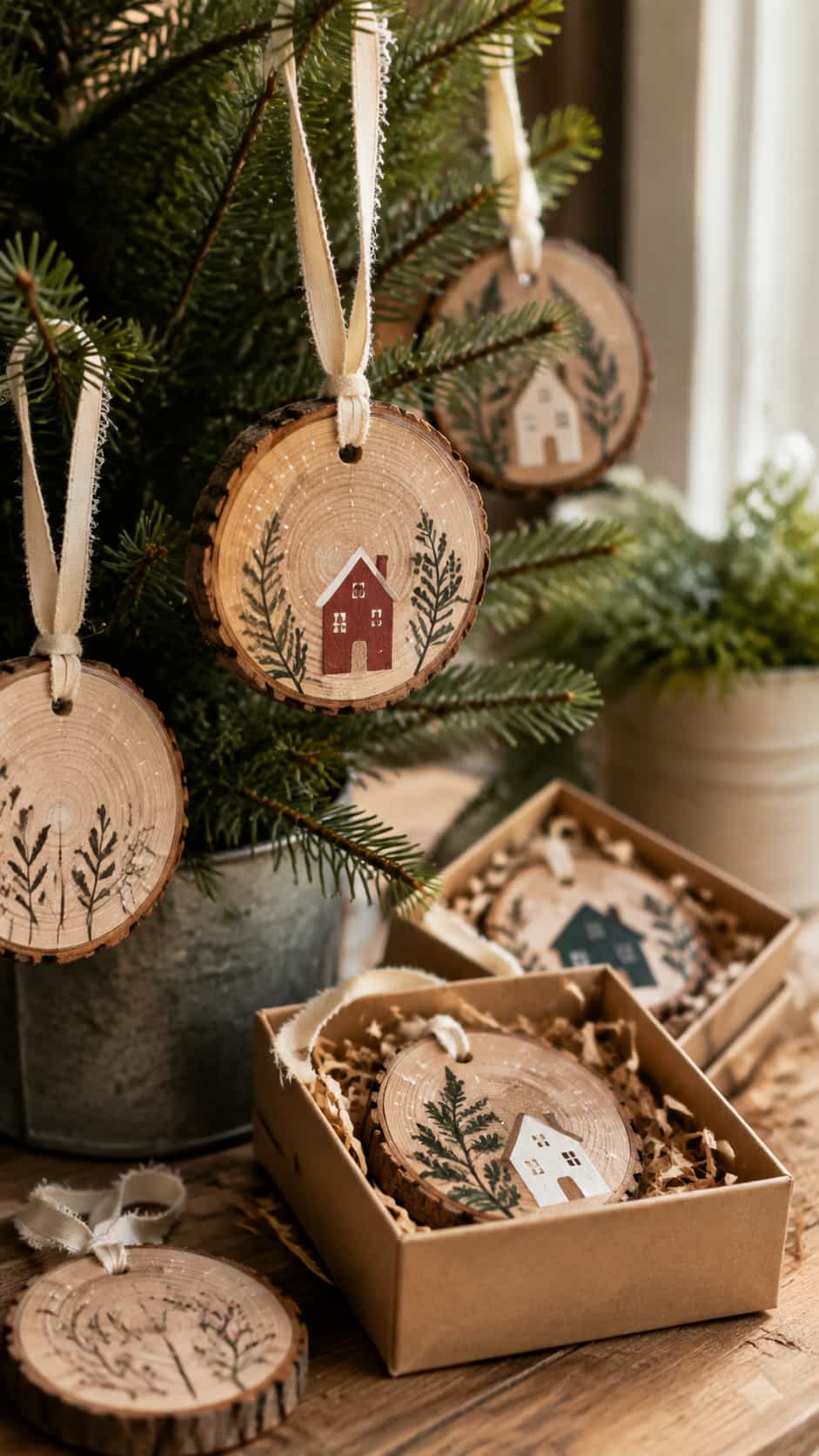
Wood-slice ornaments sit in the sweet spot between inexpensive and personal. Paint or engrave a simple family name, initial, date, tiny house, pet outline, or winter branch on each dry, stable slice. Keep the art bold because tiny details disappear quickly on a Christmas tree.
Offer a few controlled choices instead of unlimited customization. Three fonts, four icons, and two ribbon colors feel generous without turning every order into a design meeting. Sell singles for small gifts, then offer sets of four or six for families.
Use a protective sleeve or small box so bark edges do not rub against other products. Photograph one ornament close up and another hanging on a real tree; buyers need both the detail and the scale.
2. Minimalist Wooden Christmas Tree Shelf Sitters
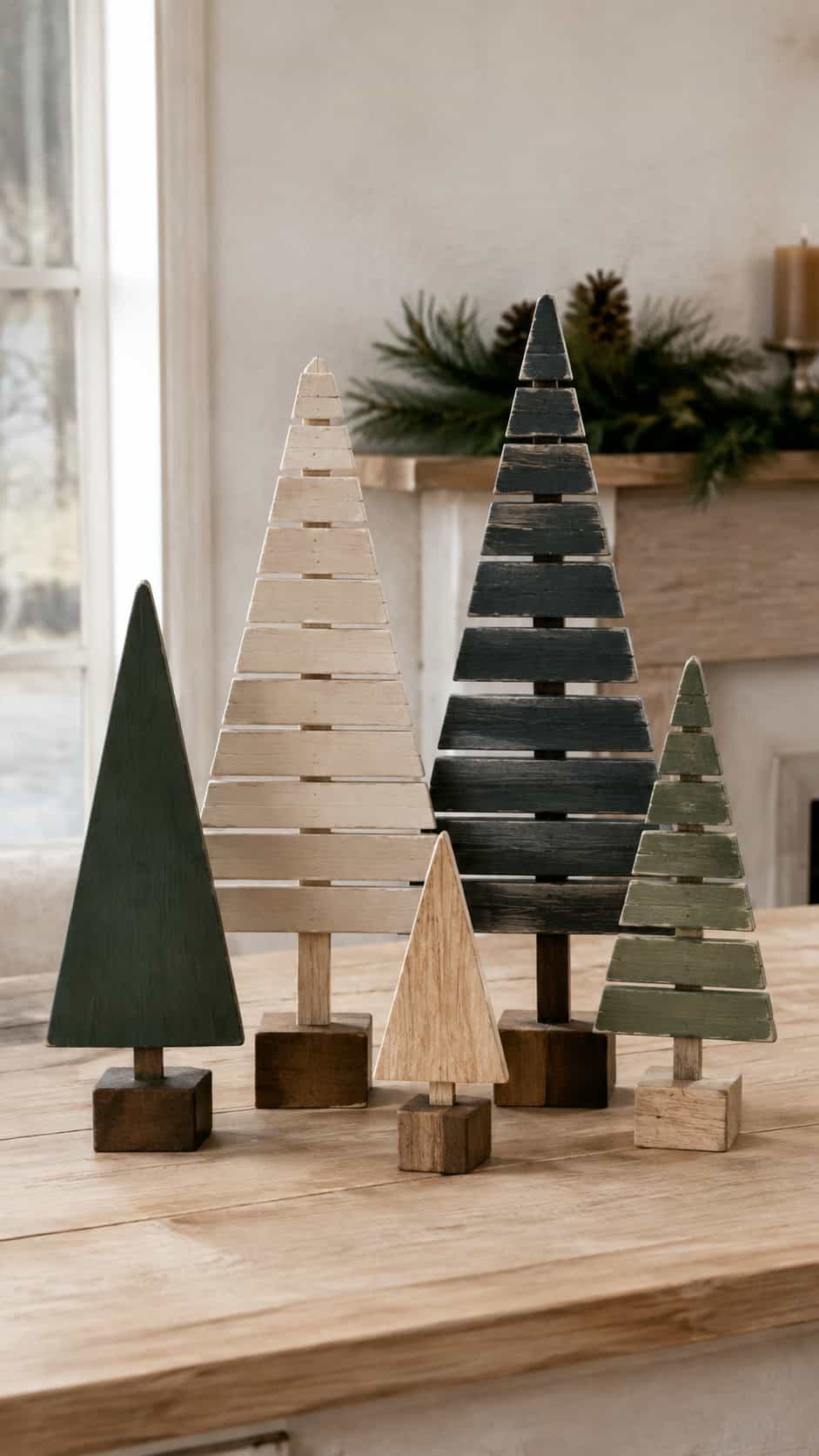
Simple triangle trees work with farmhouse, Scandinavian, rustic, and modern decor. Cut a few coordinated heights, soften the edges, and finish them in natural wood, forest green, cream, or charcoal. A set of three usually looks more complete than one lonely triangle trying to carry the entire mantel.
Create one standard collection and one premium variation with layered pieces, grooved details, or small base blocks. Flat silhouettes also pack efficiently, which helps if you plan to sell online.
Want more design directions? These DIY wooden Christmas tree ideas include tabletop, wall-mounted, porch, and shelf-style inspiration.
3. Reversible Christmas Porch Signs
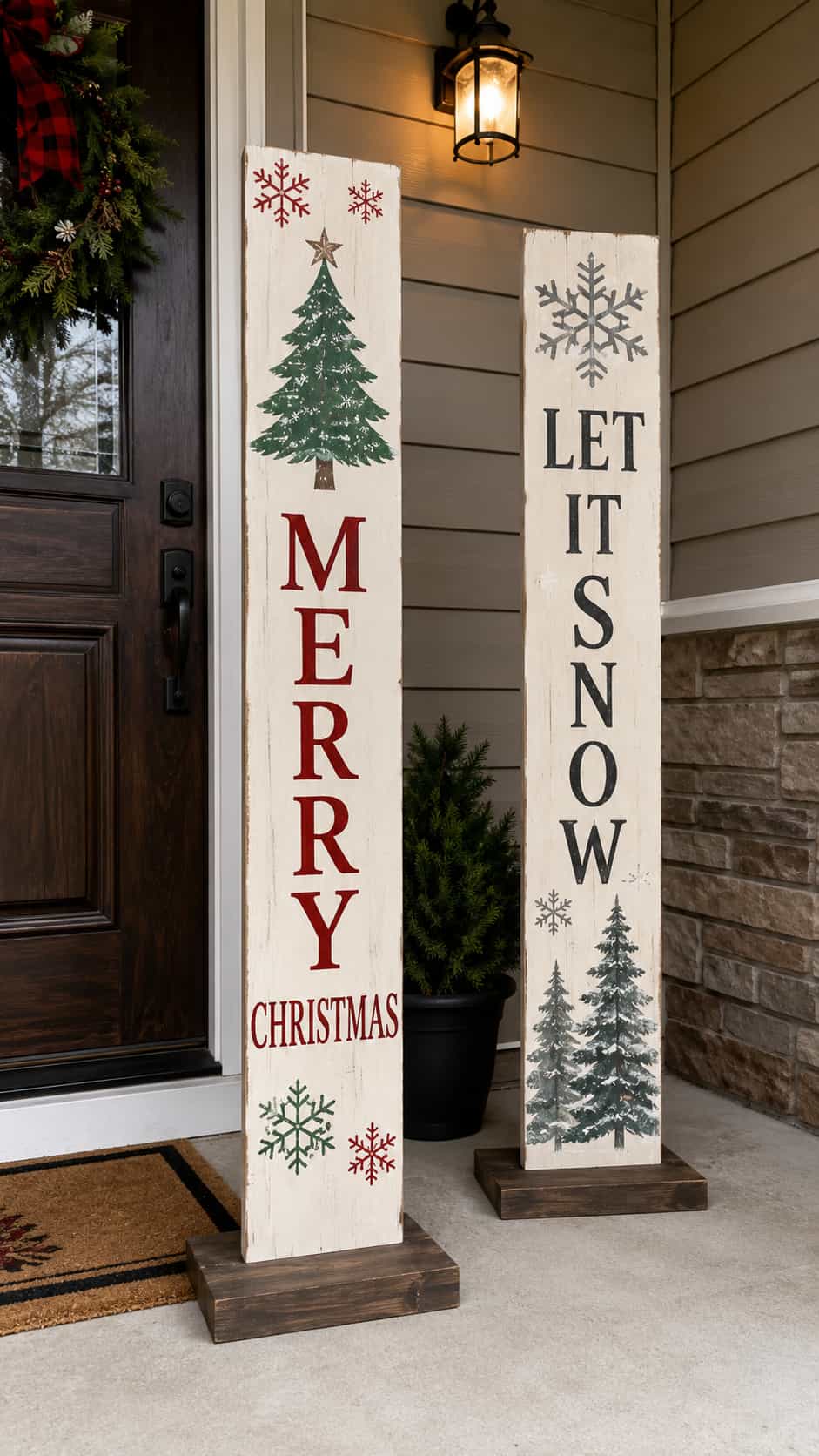
A tall porch sign gives you a higher-priced product without requiring complicated joinery. Use a stable board or properly supported panel, then place a Christmas message on one face and a winter design on the other. The reversible format extends the display season and gives buyers more value from one purchase.
Keep lettering thick, high contrast, and readable from several steps away. Snowflakes, trees, stars, and simple gift shapes support the message without making the board visually noisy.
Large signs suit local pickup better than shipping. Add the finished dimensions to every listing, show the sign beside a standard door, and remind buyers to display it on a level, protected surface away from strong wind and walking paths.
4. Engraved Stocking Name Tags
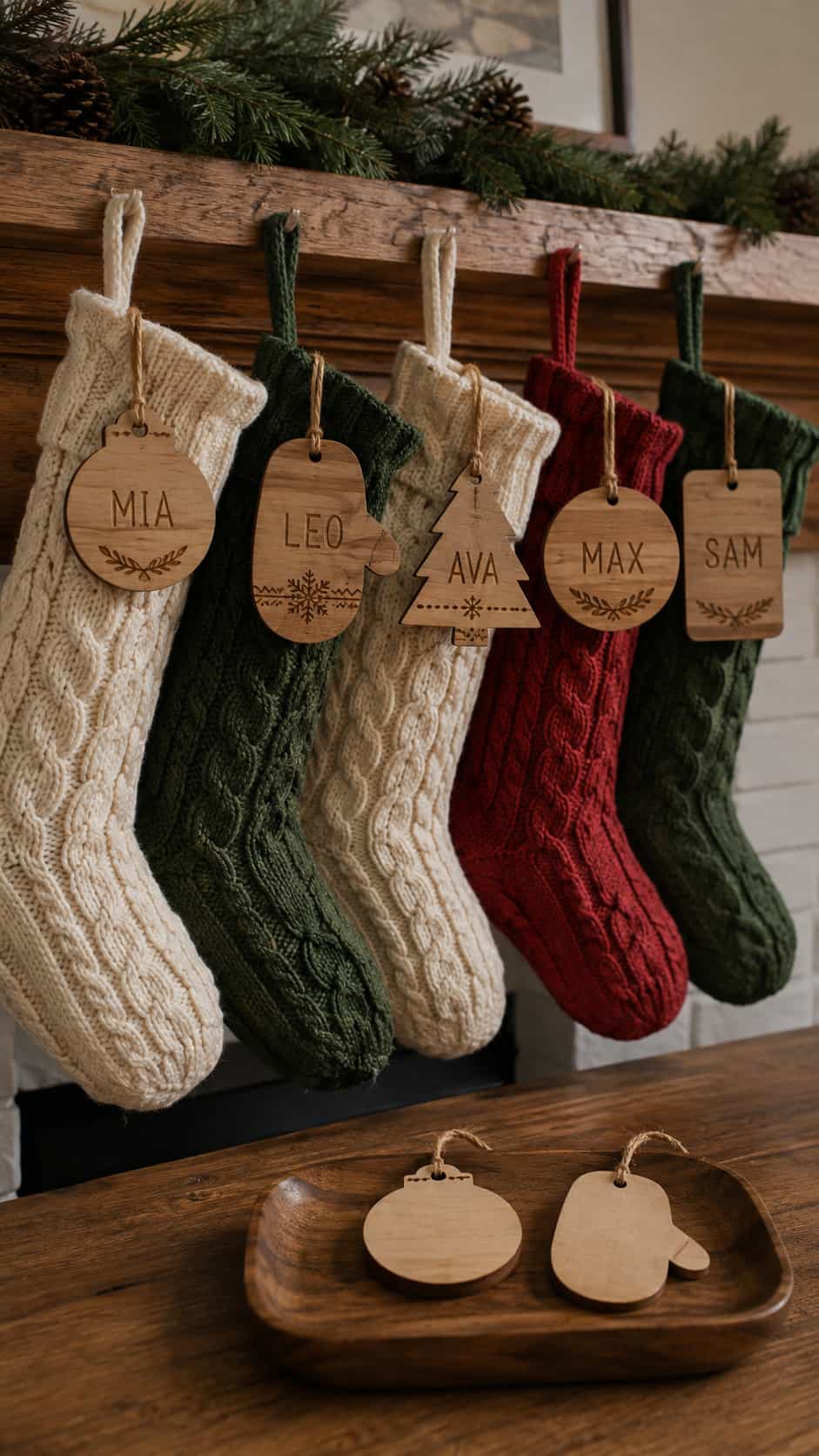
Stocking tags solve a small but obvious problem: nobody wants to negotiate stocking ownership at 7 a.m. Cut each tag as a rectangle, circle, ornament, mitten, or small tree, then add a name with paint, engraving, or an applied wood layer.
Standardize the size and attachment method so you can personalize batches efficiently. Offer matching sets for couples, families, and pets, plus a blank option for buyers who want to add their own lettering.
Keep cords and decorative attachments short, secure, and intended only for display. These pieces work well as affordable add-ons beside larger products, and they can turn a one-item order into a coordinated family set.
5. Christmas Countdown Blocks
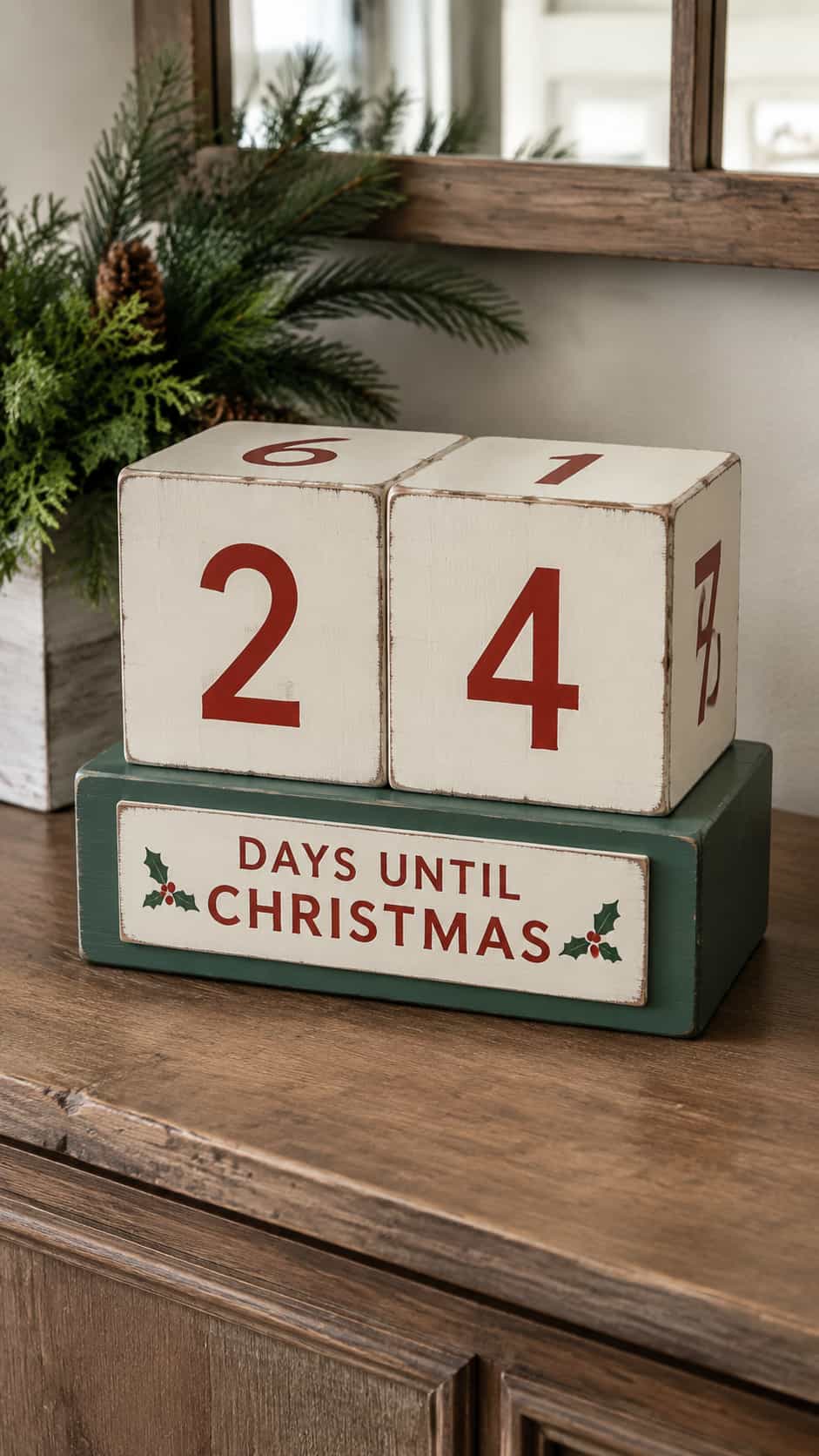
Countdown blocks create an interactive decoration without requiring a complicated mechanism. Build a stable base with two rotating number blocks and a small month or message panel. Use large numerals that remain readable across a room.
Paint the base once, then create two or three palette choices that match your other products. Buyers often appreciate a neutral version that blends with existing decor, so not everything needs to arrive wearing maximum red glitter.
Check that every number combination needed for the countdown works correctly before photographing the set. Include a short instruction card and pack the loose blocks so they cannot chip each other during delivery.
6. 2×4 Snowman Families
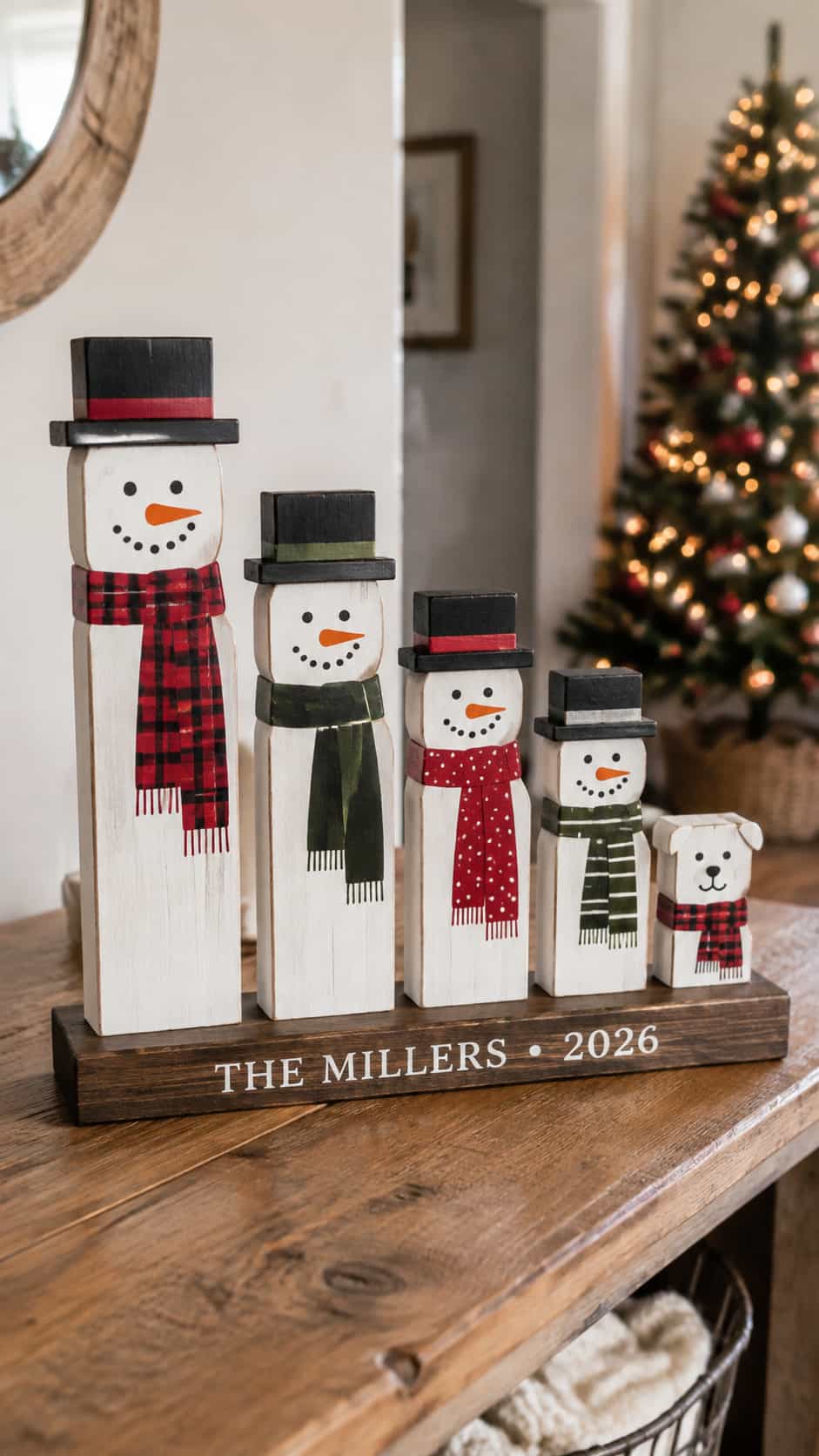
Short blocks can become a cheerful snowman family with paint, simple faces, and broad wooden hat pieces. Vary the heights to represent adults, children, or pets, but keep the bases flat and the added parts securely attached.
Personalization makes this idea far more marketable. Add first names, a family surname, or a year while keeping the body design consistent. A buyer can order three figures now and add another later if your sizing stays standardized.
Batch the sanding, base coats, faces, and hats by stage. Repeating one task across several sets saves more time than finishing each snowman from start to finish before touching the next.
7. Rustic Wooden Gift Block Sets
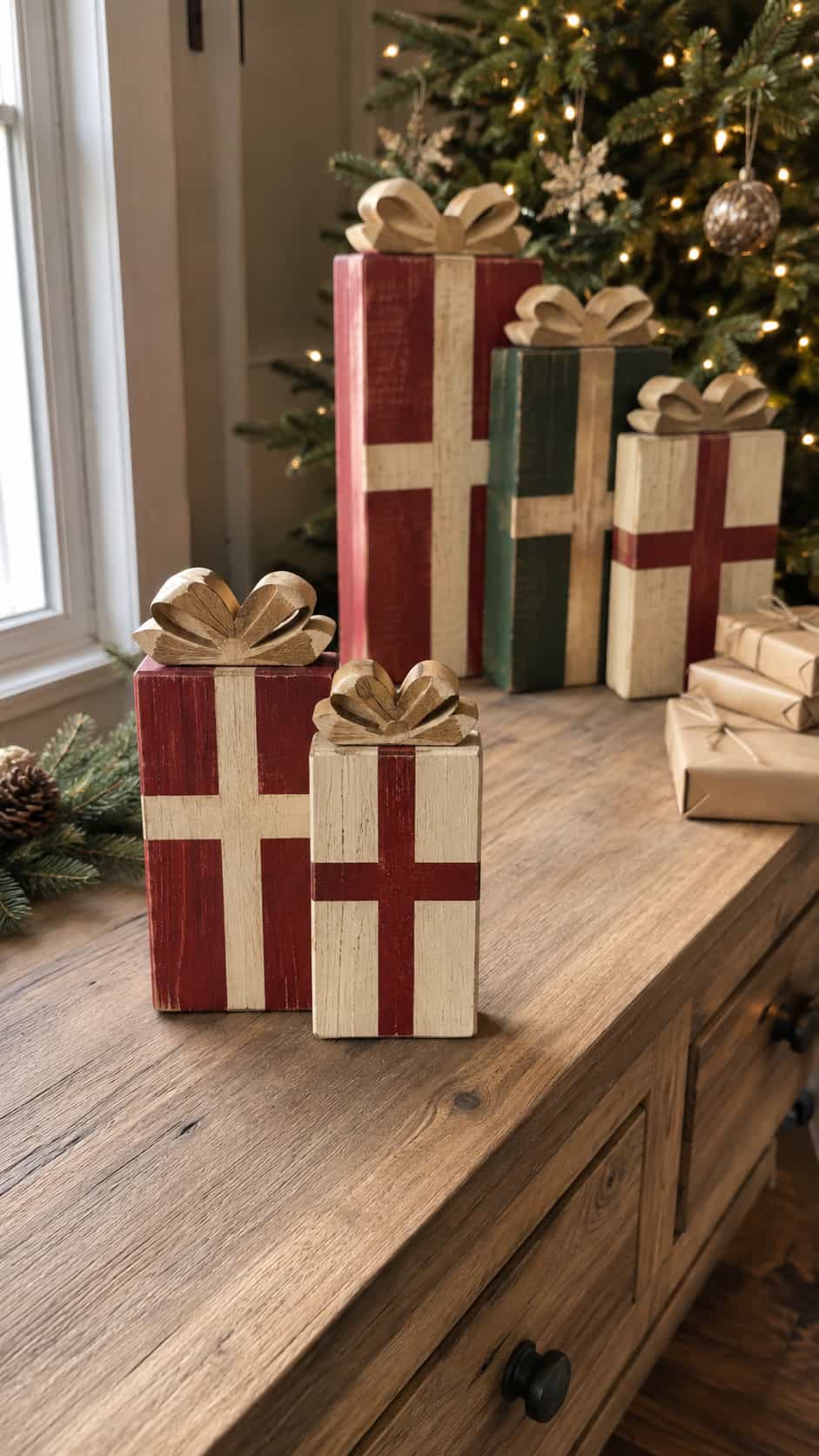
Wooden gift blocks use compact offcuts and look good in sets of three. Paint each block like a wrapped present, add a contrasting cross-band, and finish the top with a broad wooden bow or painted ribbon. Avoid thin, fragile loops that will snap the first time someone opens the storage box.
Sell small tabletop sets and larger porch-scale sets as separate products. Coordinated colors help buyers picture them beside a tree, fireplace, entry table, or shop display.
This project also makes good use of clean leftovers. For more year-round ideas, see these easy scrap wood crafts.
8. Mini Wooden Christmas Village Houses
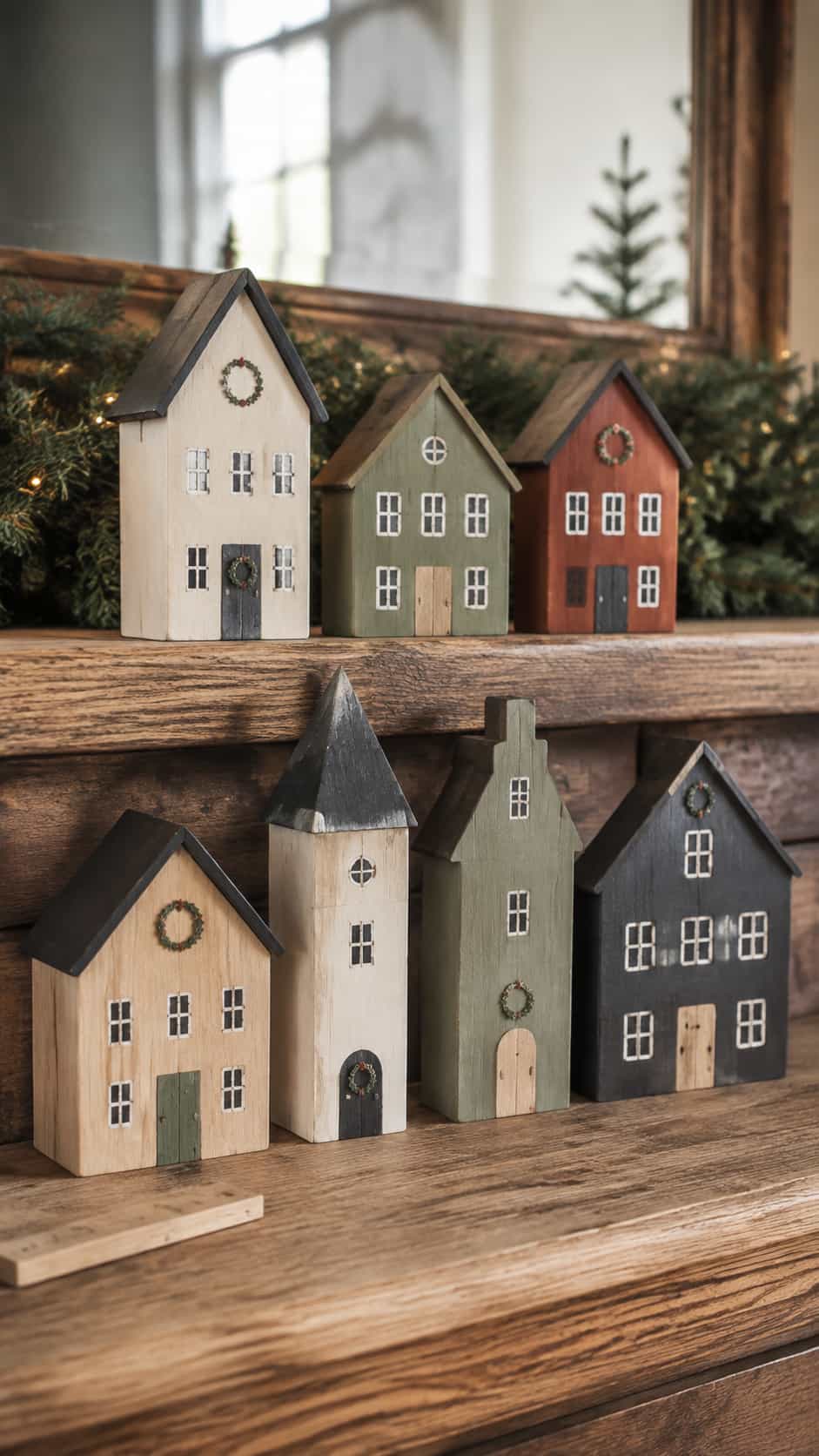
Mini village houses invite buyers to collect more than one piece. Create three to five house shapes with different rooflines, then use a shared color palette to make the group feel intentional. Painted windows, doors, and wreaths give plenty of detail without fragile cutouts.
Offer a starter trio, an expanded village, and one limited house style each season. That approach encourages repeat orders while keeping your production system familiar.
Photograph the houses in a straight lineup and in a layered mantel scene. Include measurements for the tallest and widest pieces, because “mini” means very different things to different people. Apparently rulers remain undefeated at preventing misunderstandings.
9. Wooden Reindeer Silhouettes
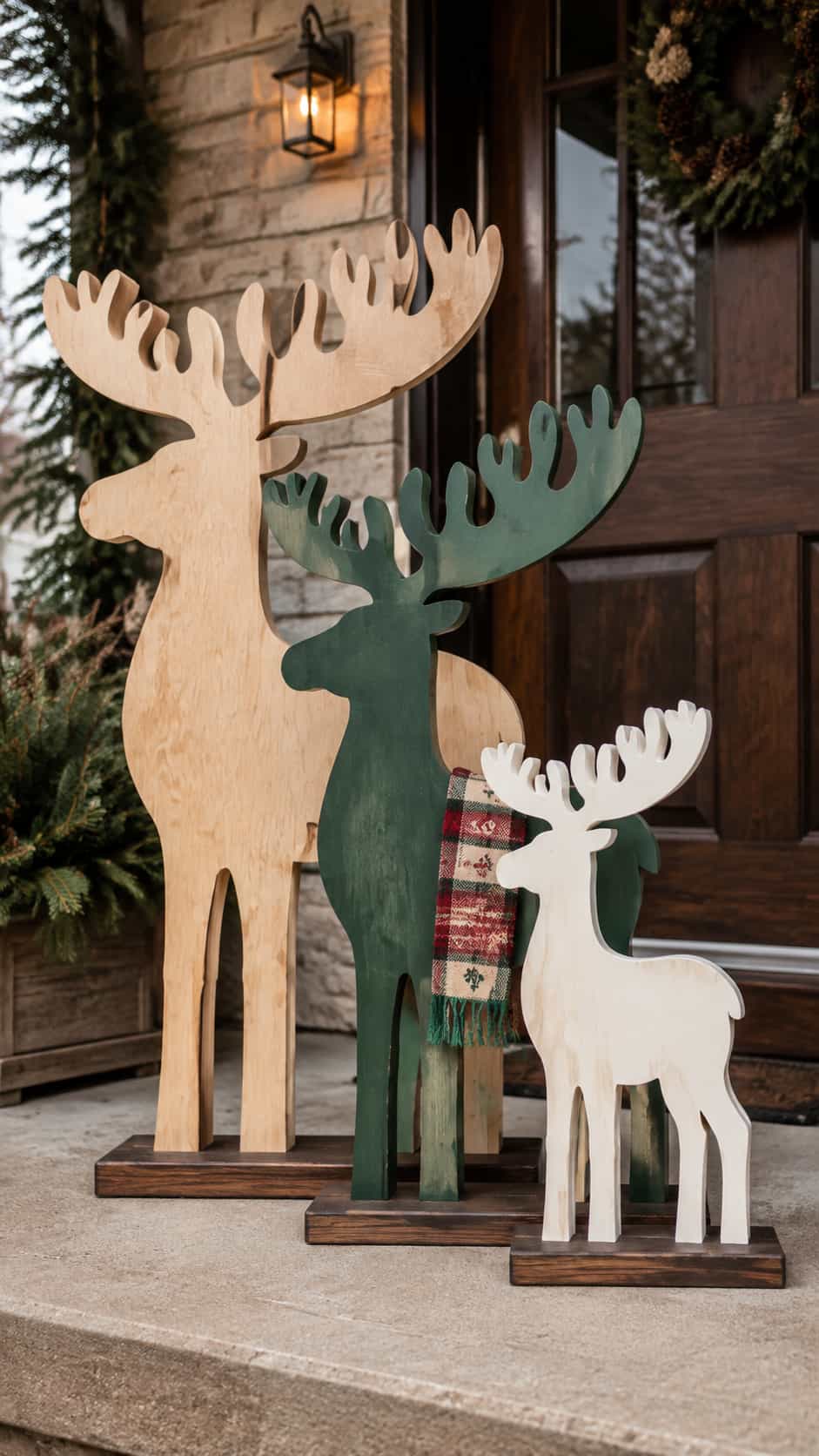
A clean reindeer silhouette works as a shelf sitter, wall accent, porch figure, or table centerpiece. Keep the antlers broad and connected wherever possible; delicate points look elegant until normal handling introduces itself.
Create a simple natural-wood version and a painted premium version with a name, patterned blanket, or metallic accent. Pairs and family groups can command more attention than single figures, especially in listing photos.
Use a wide base or another stable support system, and test the figure on a level surface. If the item will sit outdoors, choose suitable materials and a complete exterior-rated finishing system, then state the intended display conditions clearly.
10. Battery-LED Star Lantern Boxes
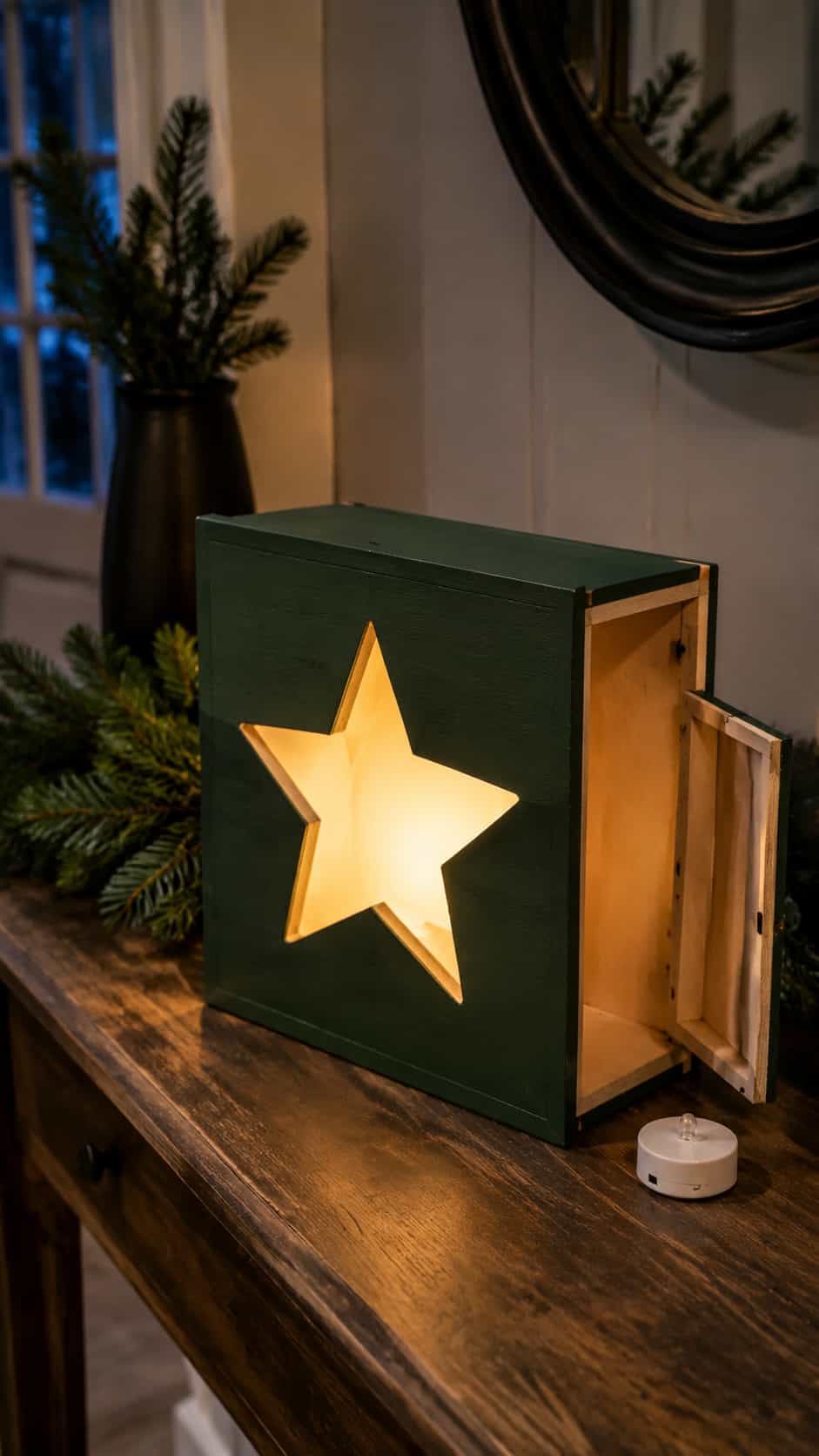
A shallow wooden box with a star-shaped opening creates a warm holiday glow when paired with a removable battery LED. Paint the interior a pale color to reflect the light, then use a darker exterior finish for contrast.
Design easy adult access to the battery light without loose panels or exposed hardware. Never include or recommend candles; flame and wood make a terrible product bundle.
Sell the lantern as decor with an optional compatible LED, depending on the product rules and shipping requirements that apply where you sell. Photograph it in daylight and after dark so buyers understand both the construction and the effect.
11. Layered Plywood Snowflakes
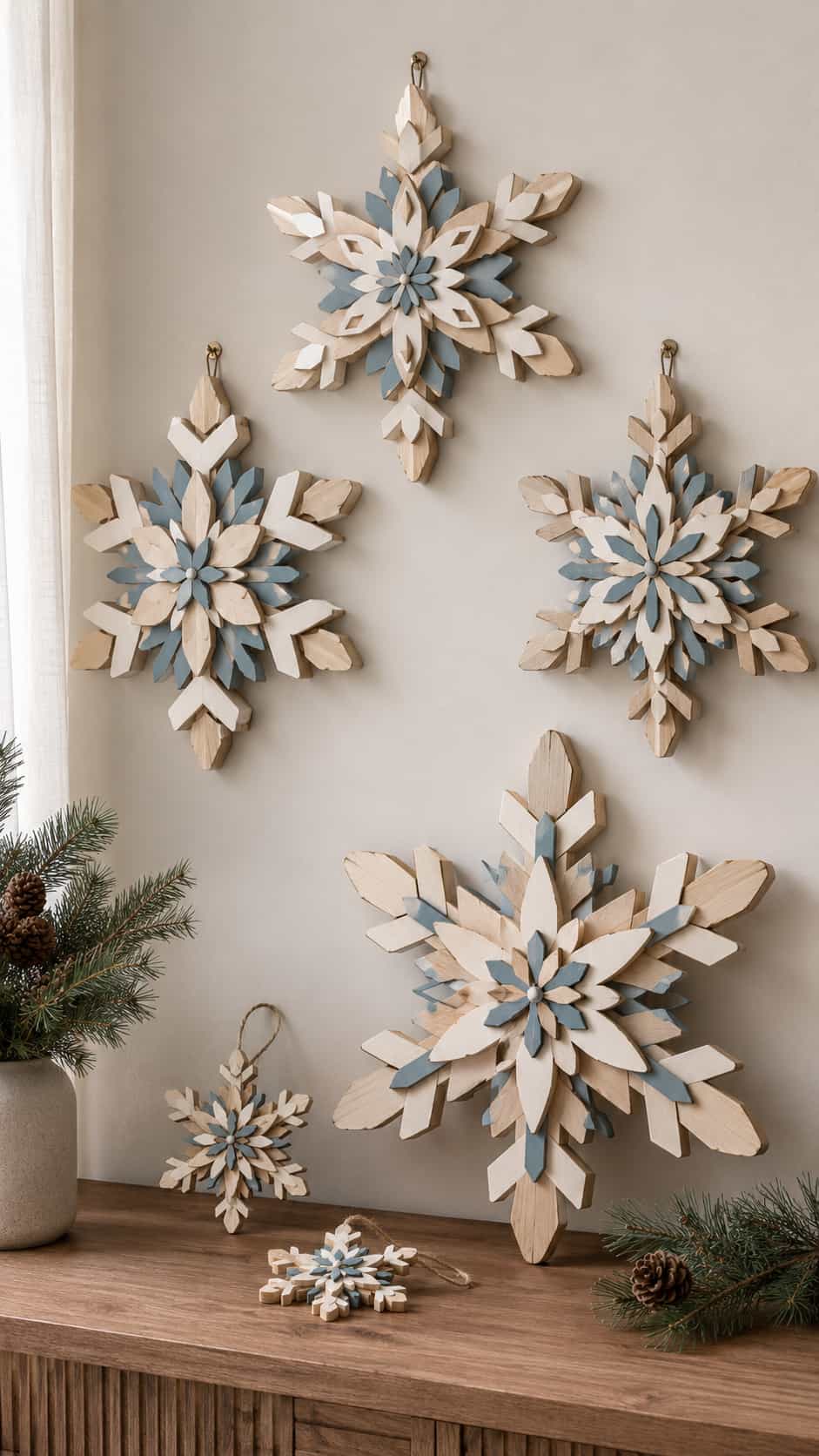
Layered snowflakes look detailed even when each individual shape stays simple. Stack two or three broad patterns, rotate the layers, and use contrasting paint or natural wood tones to create depth. Keep the tips substantial enough to survive sanding, hanging, and seasonal storage.
Offer several sizes: small ornaments, medium wall pieces, and one statement version for local pickup. A matching three-piece set can fill a blank wall without forcing the buyer to coordinate separate products.
Sand every exposed plywood edge carefully and seal the surfaces evenly. Use hanging hardware rated for the finished weight, and include that weight in the listing when the piece grows beyond ornament size.
12. Wooden Bead-and-Shape Garlands
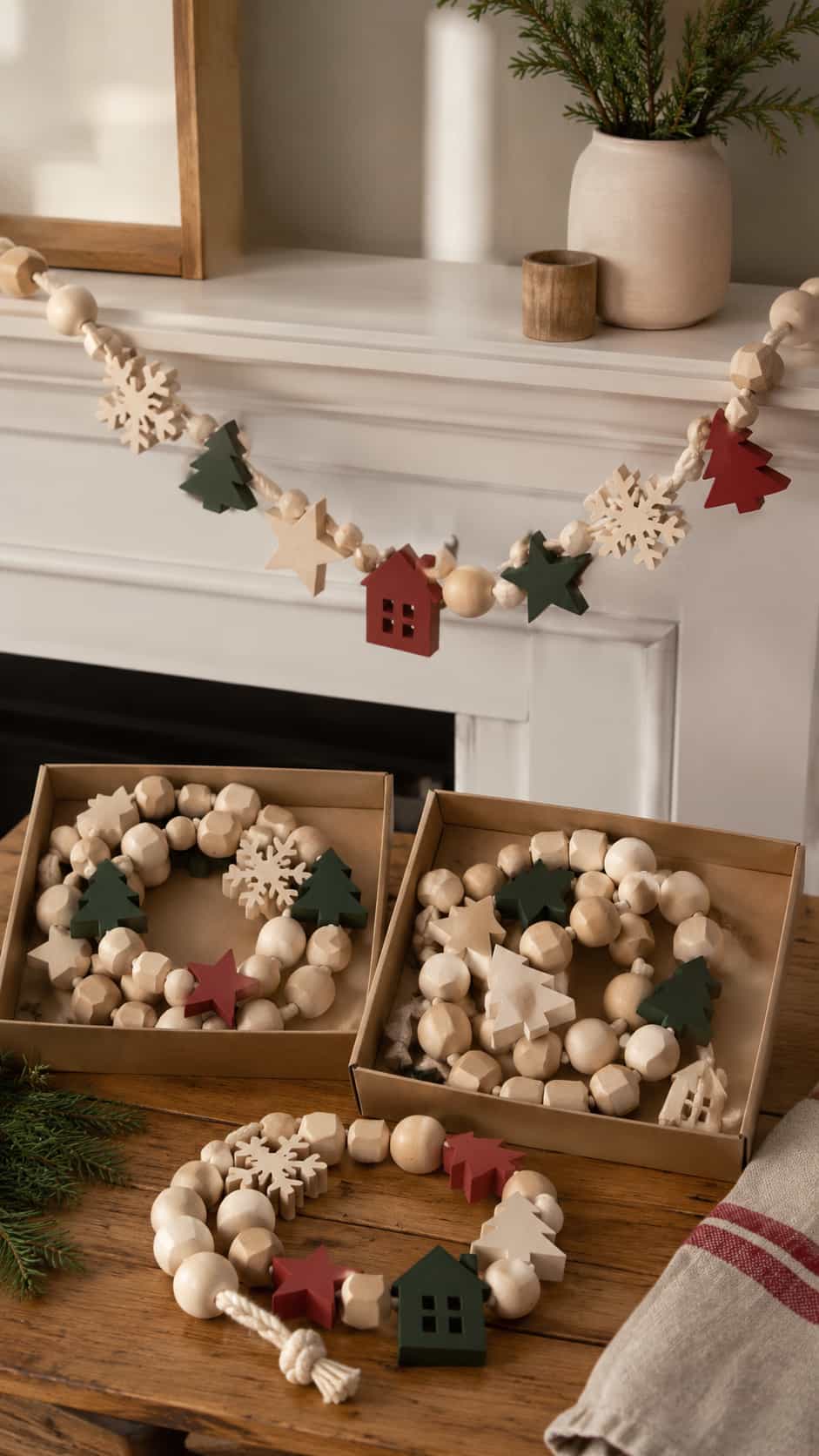
Combine broad wooden beads or blocks with flat trees, stars, houses, or snowflakes to create a mantel garland. Keep the shapes smooth and the color pattern consistent. Neutral wood, cream, green, and muted red photograph especially clearly against common holiday backgrounds.
Sell fixed lengths instead of fully custom measurements at first. Standard lengths simplify material planning, pricing, photography, and packaging. You can add a premium custom-length option later once you know how long assembly actually takes.
Treat the garland as decoration, not a toy, and state that clearly. Secure each end, inspect the cord, and keep small components out of products intended for unsupervised access by young children or pets.
13. Personalized Family Ornament Plaques
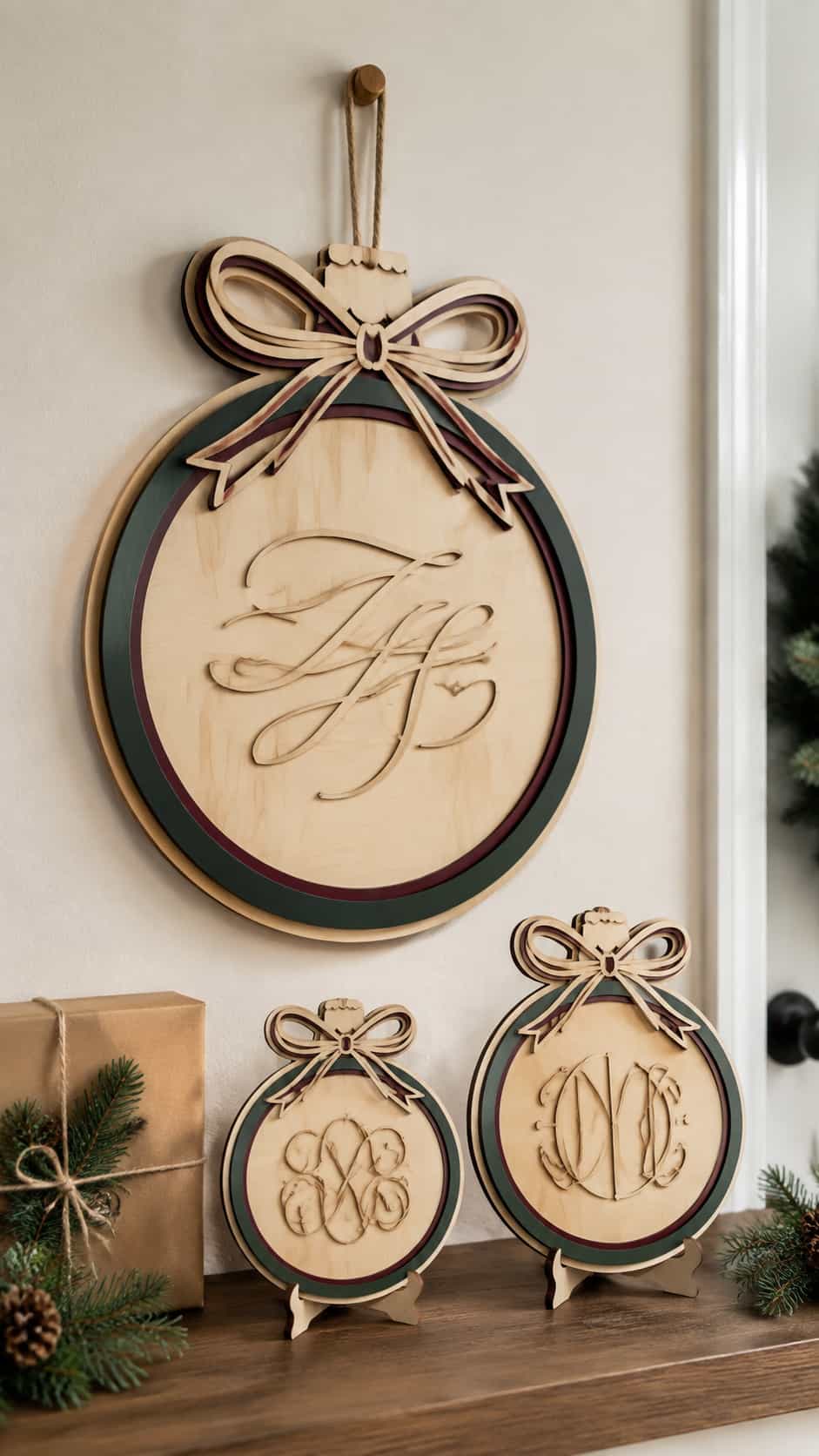
An ornament-shaped plaque gives you more room than a tree ornament while keeping the familiar Christmas look. Add a surname, first names, a year, or a short welcome message. A layered border or raised bow can increase perceived value without changing the main production process.
Create two standard sizes: one for wall or door display and one for shelf stands. Limit fonts and layouts so names remain balanced and readable.
Send a digital proof for complex personalization only when your workflow can support it. For simpler names and dates, a clear order form with character limits prevents long message chains and last-minute layout surprises.
14. Nativity Silhouette Sets
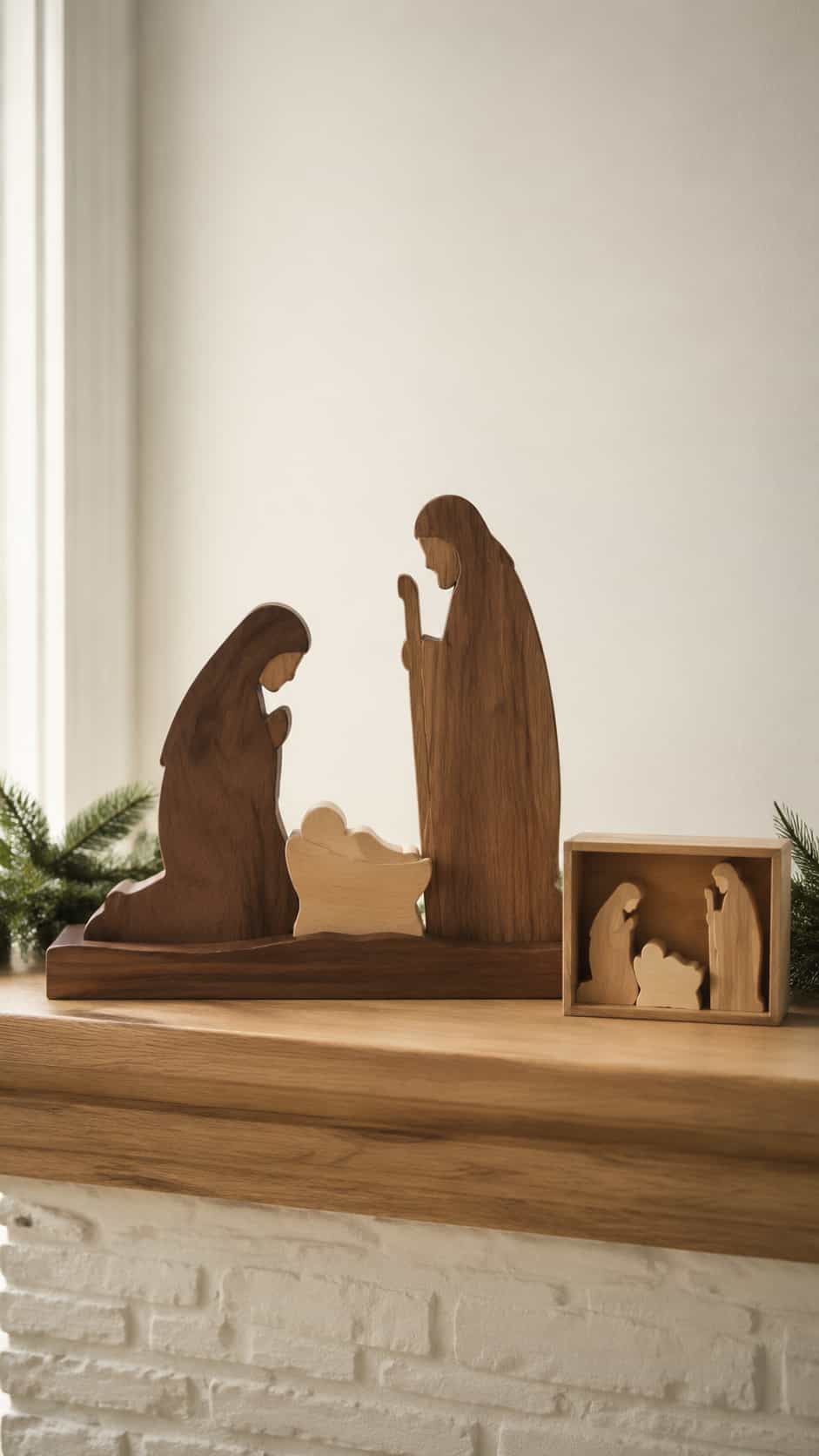
A simplified nativity silhouette can become a calm, elegant mantel or shelf display. Use broad connected shapes, smooth curves, and a stable base. Let the outline communicate the scene instead of cutting dozens of tiny interior details.
Offer natural wood, white, and dark-stained versions. A three-piece arrangement can pack more safely than one long, delicate panel, while a connected premium version works well for local markets.
Photograph the complete arrangement against a plain background and avoid overcrowding it with unrelated decor. Buyers who want a meaningful centerpiece usually respond better to a clear, restrained presentation than a listing image that resembles a holiday storage explosion.
15. Gingerbread House Shelf Decor
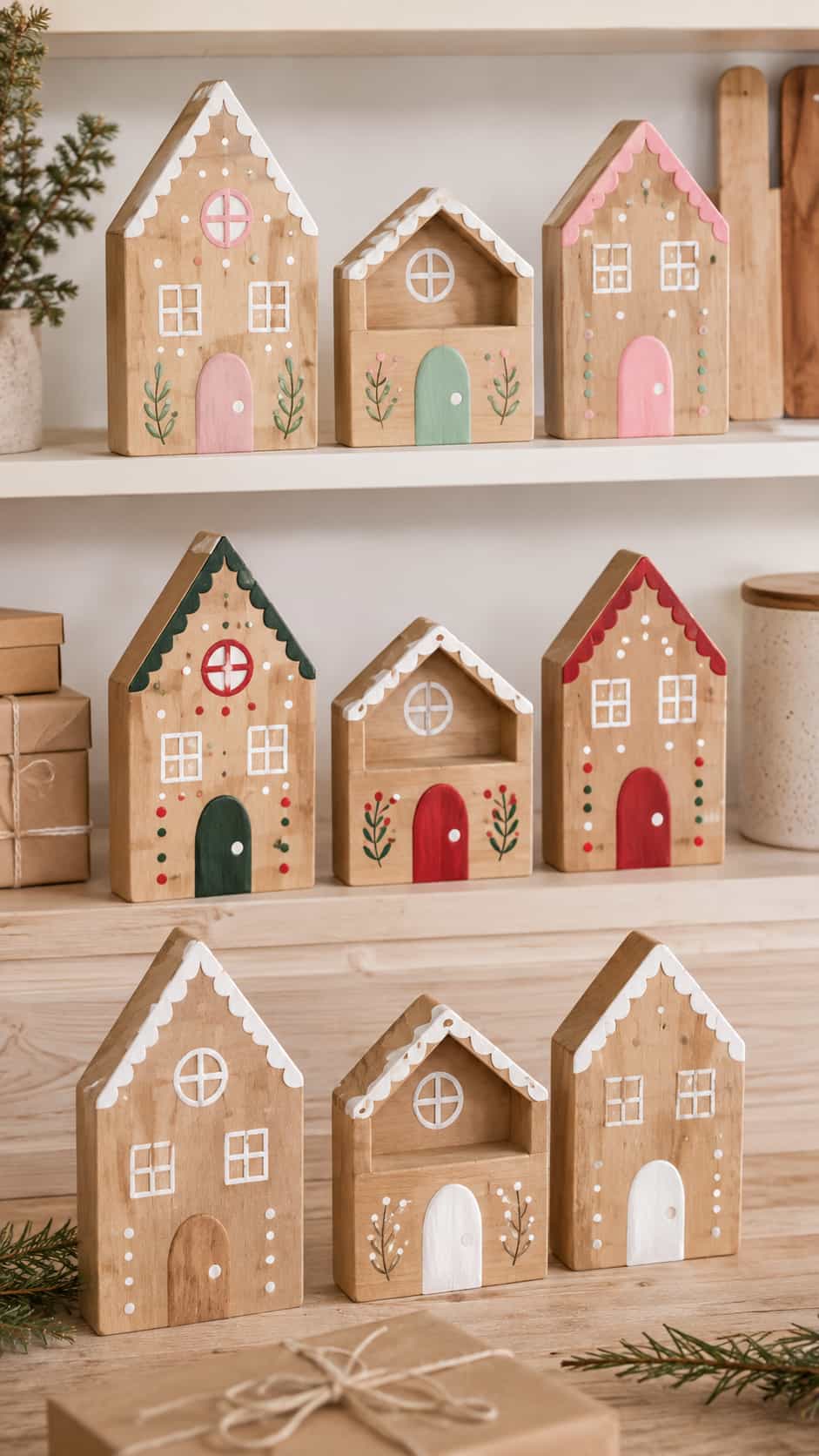
Wooden gingerbread houses give buyers the playful look without crumbs, frosting collapse, or mysterious bite marks. Cut chunky house silhouettes or assemble shallow box forms, then paint doors, windows, roof lines, and candy-style details.
Create a coordinated trio with different heights and roof shapes. Offer a pastel palette, a classic red-and-green version, and a natural neutral set if your production time allows.
Keep every applied detail broad and secure. These houses work especially well as bundle partners for mini villages, trees, and gift blocks, so repeat the same white or natural wood accent across the collection.
16. Decorative Wooden Sleds
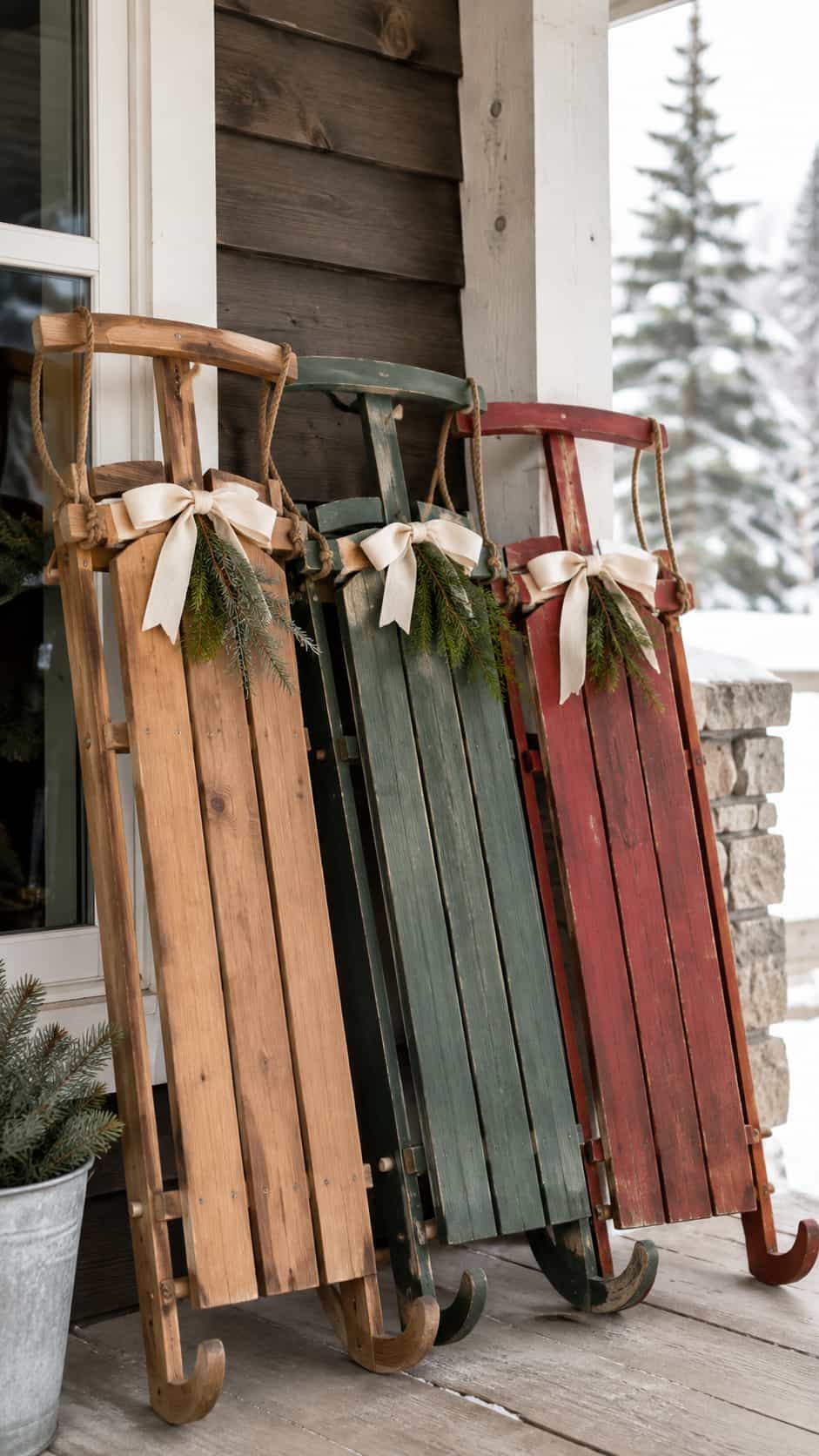
A small decorative sled makes strong porch, hearth, and entryway decor. Build a stable, non-riding display piece with broad runners, a supported seat, and a clearly decorative purpose. Add greenery, a painted message, or a removable name panel.
State plainly that the product serves as decoration and must not carry a person. Test the base for rocking, inspect every joint, and remove sharp corners or exposed fasteners.
Offer a compact tabletop version for shipping and a larger local-pickup version for higher-value orders. The two sizes can share colors and branding while serving different customers and price points.
17. Christmas Card Display Trees
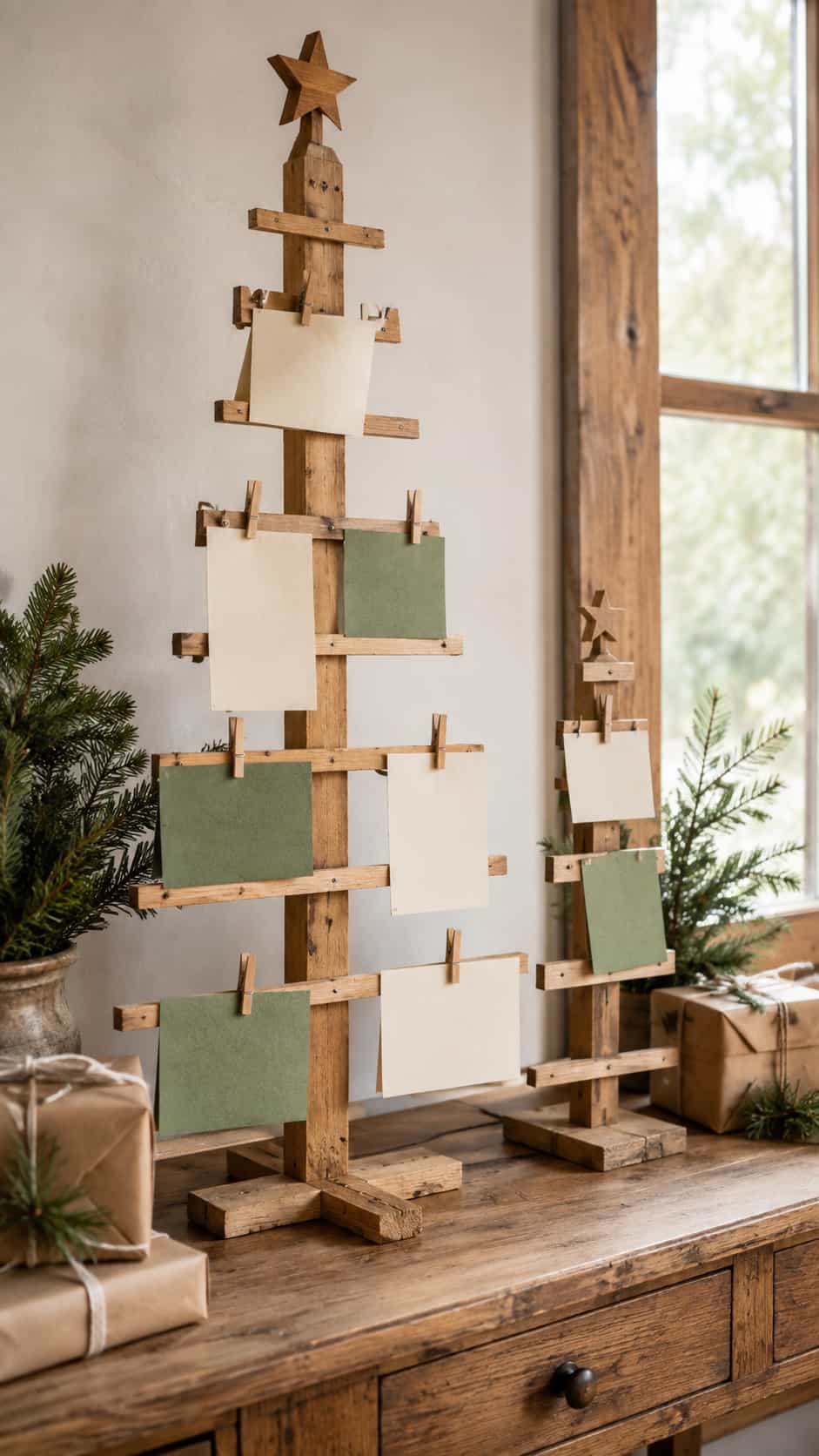
A flat tree-shaped display with clips or ledges gives holiday cards a dedicated home. Use a sturdy back panel and arrange the card positions so standard cards do not cover each other completely.
Create a wall-hanging version and a freestanding version only after testing both support systems. A personalized family name at the base turns a practical organizer into a yearly keepsake.
Show the product empty and filled with sample cards in your photos. Buyers need to see the shape, but they also need to understand the capacity. Keep personal information off the sample cards; festive placeholders do the job without sharing anyone’s address with the internet.
18. Tabletop Ornament Display Stands
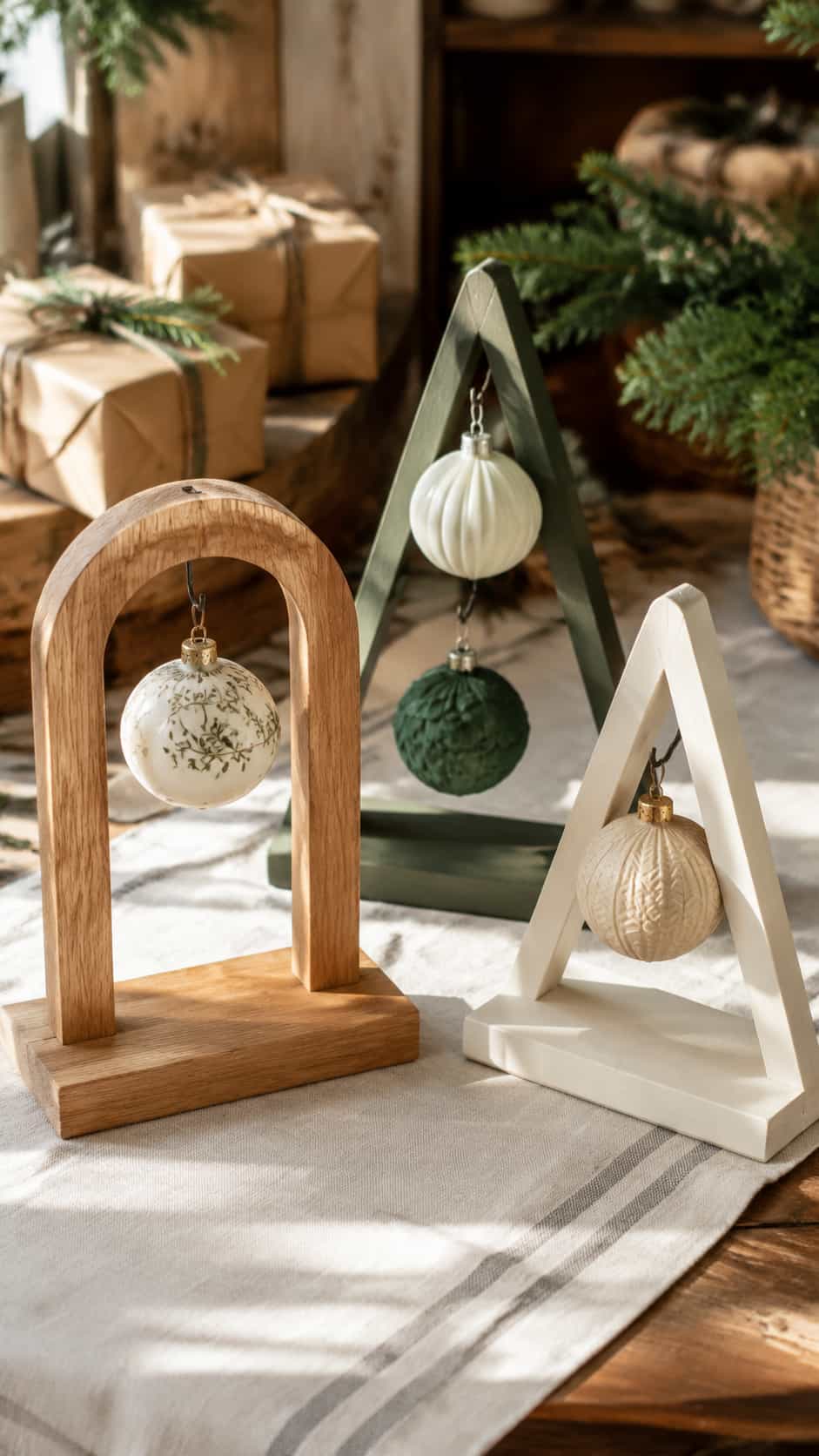
An ornament stand helps buyers display special pieces on a shelf, desk, market table, or memorial corner. Use a wide base, a strong upright, and a supported top arm with enough clearance for the ornament.
Offer single, triple, and small-tree configurations. Keep the design restrained so it supports the ornament instead of competing with it.
Test every stand with more than one ornament size and check the balance from several angles. State the maximum recommended ornament dimensions and weight based on your own testing. Pack the stand assembled only if it remains secure; otherwise design a simple, dependable assembly system and include clear instructions.
19. Holiday Tiered-Tray Mini Sets
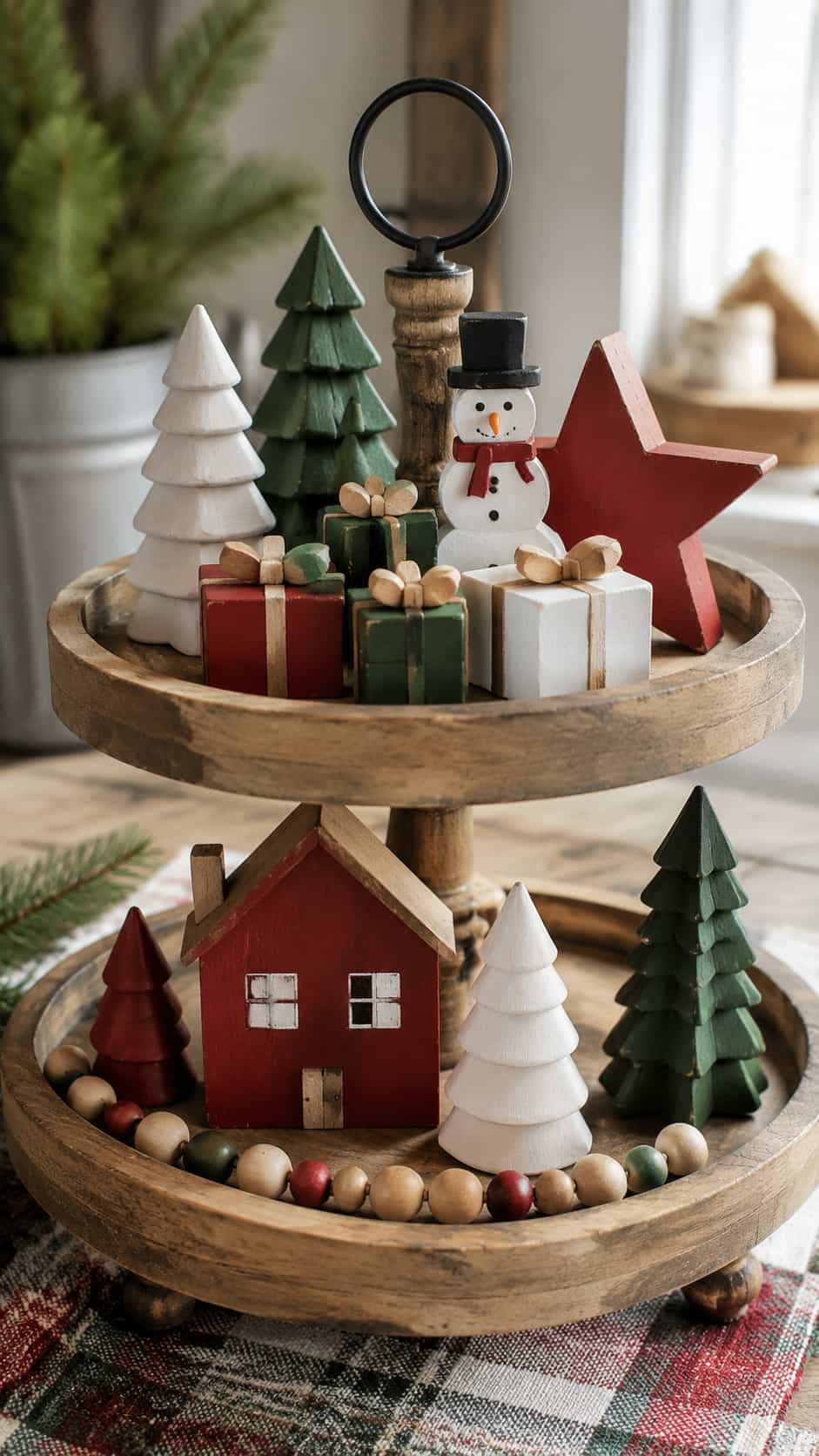
Tiered-tray minis turn tiny scraps into coordinated product bundles. Combine small trees, houses, gifts, snowmen, and word blocks in one palette. Each piece should stand securely on its own and remain large enough to handle without fragile details.
Sell themed sets rather than random assortments. “Winter Village,” “Classic Christmas,” and “Neutral Woodland” help buyers choose quickly and make your listing photos feel organized.
These sets also create an entry-level price point for shoppers who like your larger work but want a smaller gift. Keep dimensions visible in the listing; close-up photography can make a three-inch tree look ready to take over the living room.
20. Wooden Stocking Holder Stands
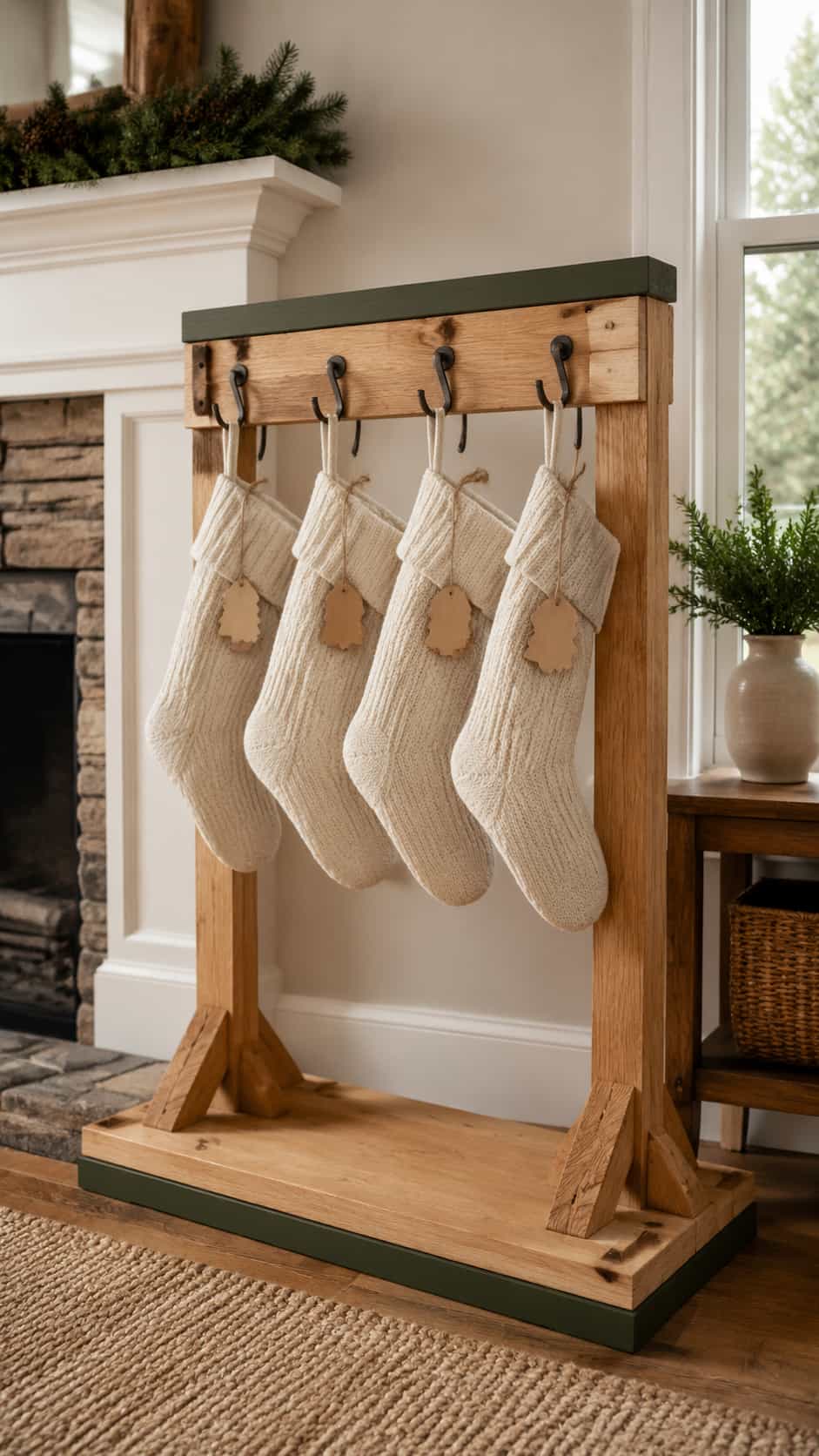
A freestanding stocking holder can serve buyers who do not have a mantel. Build it around a stable base, a strong upright or rail, and smooth hooks intended for light decorative stockings.
This product needs serious stability testing. Evaluate it empty and with evenly distributed test loads, check for tipping, and provide clear limits based on the actual design. Never imply that it can support climbing, pulling, or heavy objects.
Personalize the base with a surname or offer removable name tags. Local pickup may suit larger versions, while a compact knock-down design can reduce shipping size if the joints remain simple, strong, and easy for an adult to assemble correctly.
21. Christmas Coaster Gift Sets
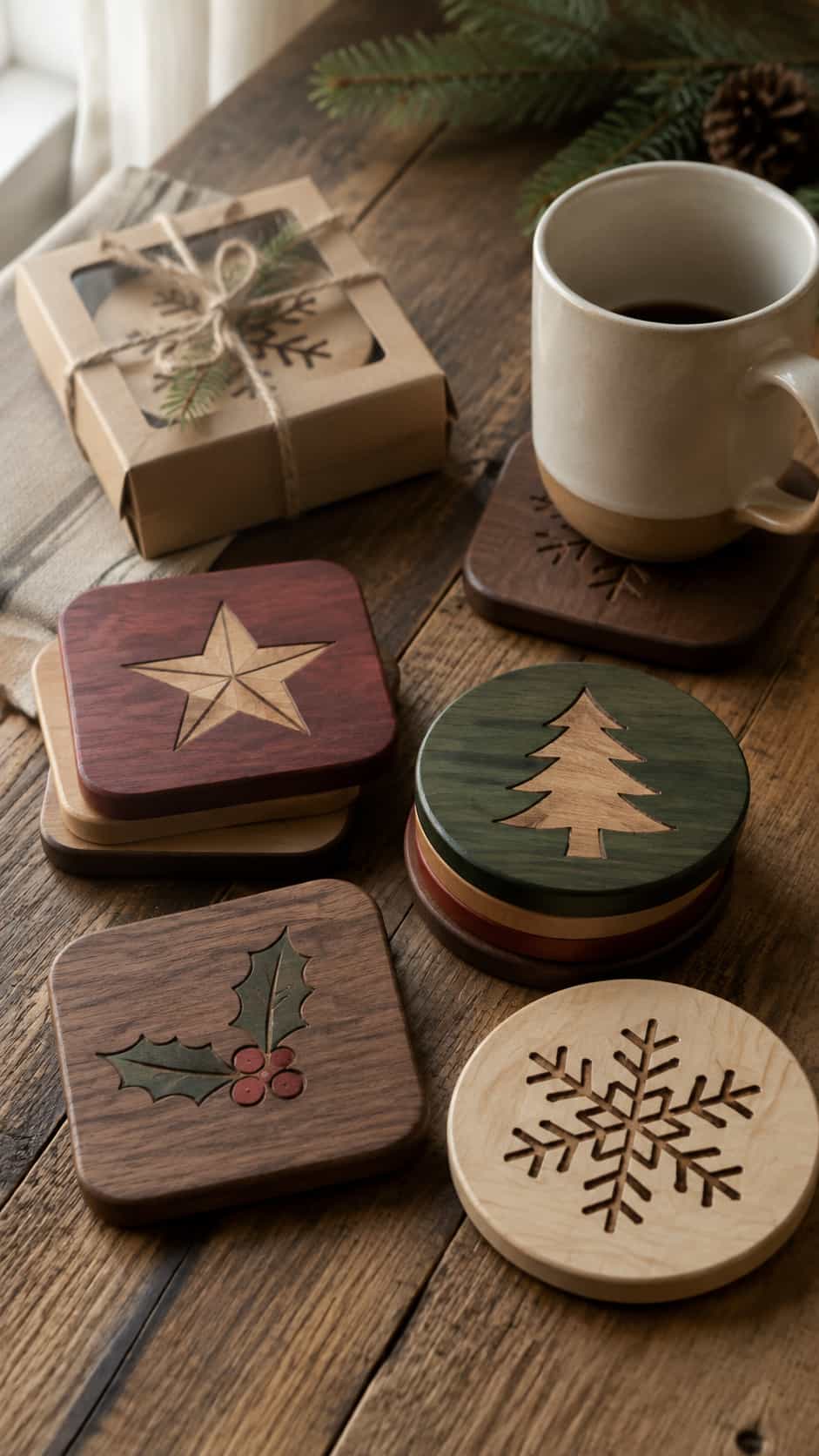
Coaster sets make practical host, teacher, and coworker gifts. Use stable hardwood or quality plywood, round the edges, and add simple trees, stars, snowflakes, or geometric holiday patterns. A small holder turns four coasters into a complete gift set.
Choose a finish suitable for the intended use and follow its full curing instructions. “Dry to the touch” does not mean ready for a mug, packaging, or a customer’s table.
Offer one classic pattern collection and one personalized option. Package the set in a snug box or band that keeps the faces from rubbing together, then show the holder and individual designs in the listing photos.
22. Layered Wooden Door Hangers
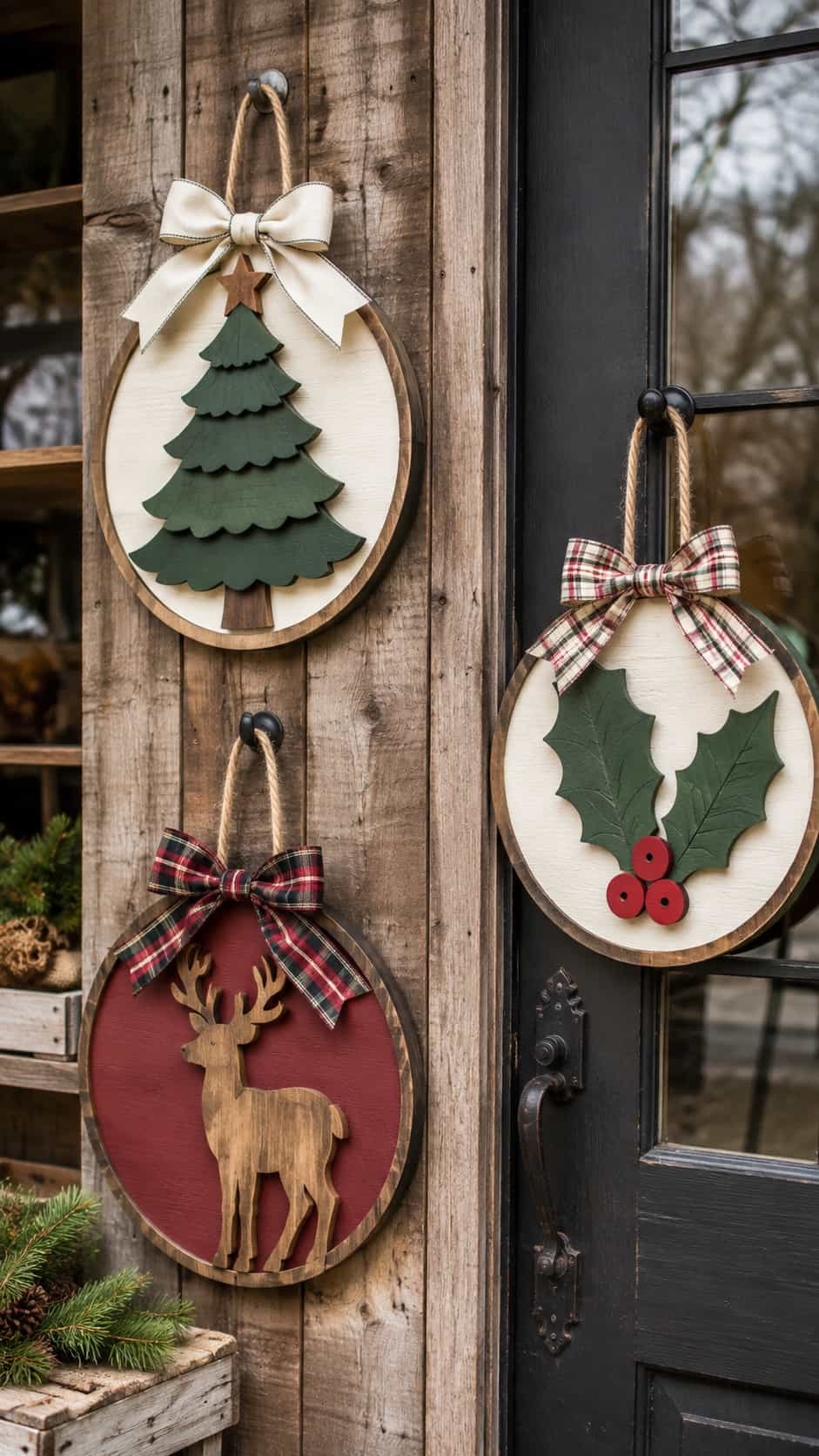
A round or shaped door hanger creates room for layered trees, gifts, snowflakes, or a family name. Use a stable backer and keep applied shapes broad enough to survive movement and storage.
Offer two or three seasonal messages with controlled color choices. A removable personalization panel can help you prepare base products before orders arrive, which shortens the final turnaround time.
Choose hanging hardware that suits the finished weight and state whether the piece belongs indoors, on a covered porch, or in another protected location. Show the diameter and depth clearly so buyers can check door clearance before ordering.
23. Wooden Advent Calendars
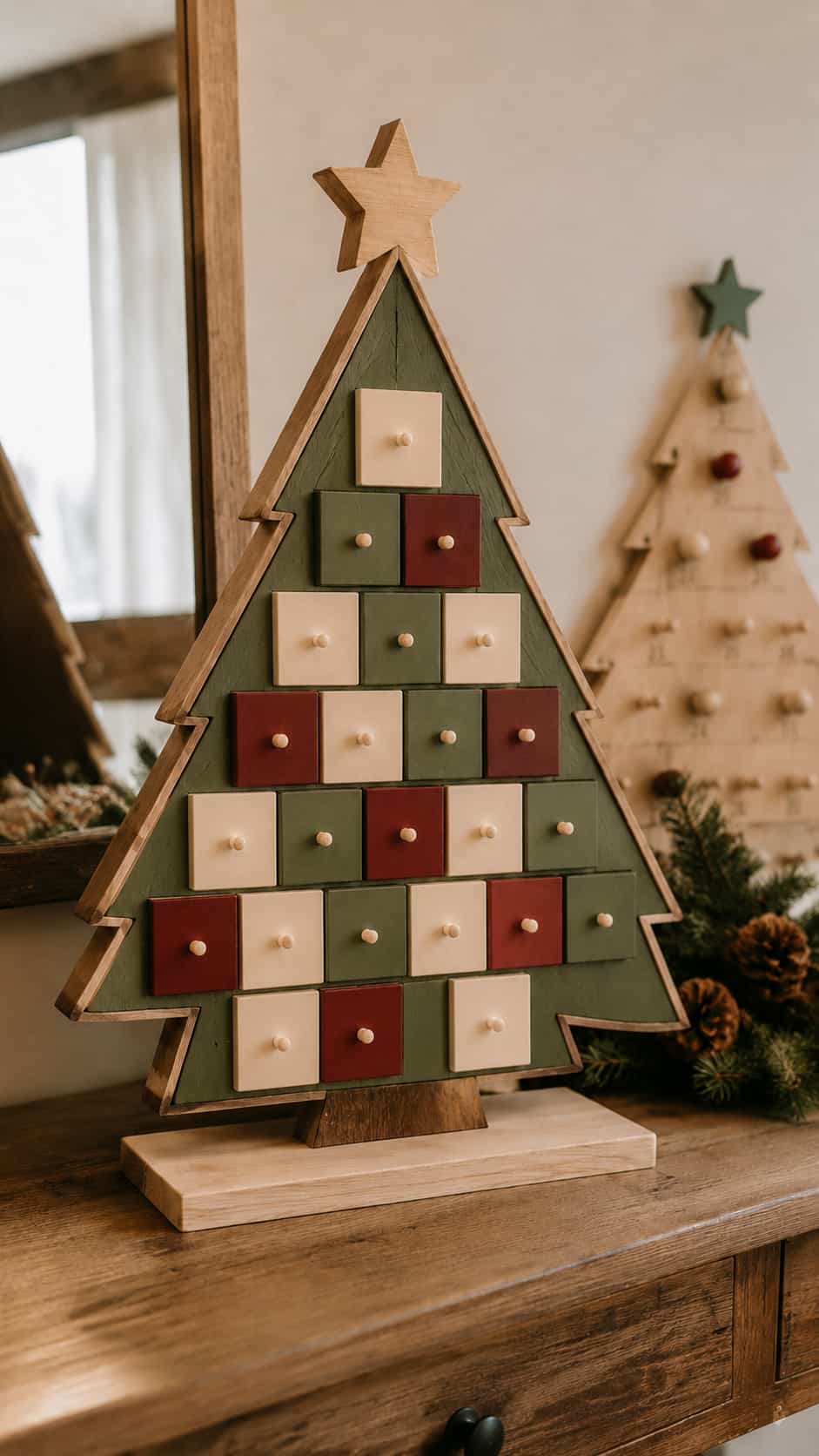
An advent calendar sits at the premium end of this list because it requires more parts, more finishing, and more quality control. Use numbered drawers, pockets, pegs, or removable blocks, but keep every opening easy to access and every component consistent.
Build and test one full prototype before accepting orders. Check number sequence, clearances, drawer movement, hardware, stability, and storage capacity. A single backwards number will develop supernatural visibility the moment a buyer unboxes it.
Offer limited annual quantities and set an early order deadline. The higher price should reflect labor, materials, personalization, packaging, and the risk of remaking a multi-part product.
24. Personalized Pet Christmas Ornaments
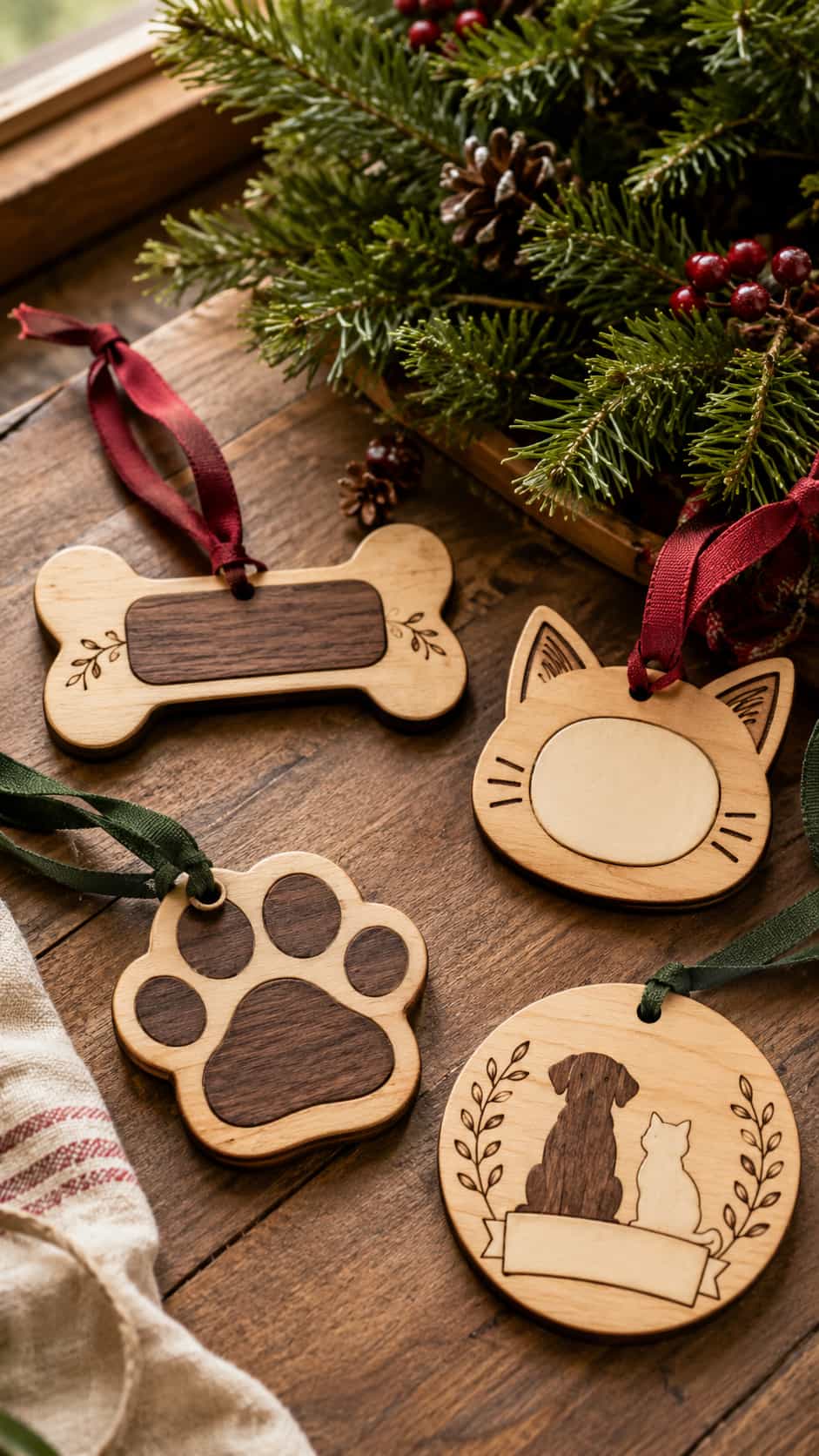
Pet ornaments give shoppers an emotional, highly giftable option. Use simple breed-inspired silhouettes, paw shapes, bone shapes, or round ornaments with a name and year. Avoid promising a perfect portrait unless you have a repeatable custom-design process.
Create a clear photo guide for any reference images you request and set reasonable revision limits. A simpler name-and-silhouette product usually moves faster than detailed custom artwork.
Offer remembrance wording as an optional layout without making the design overly ornate. Pack each ornament carefully and present it in a small gift-ready box or card, especially when buyers plan to send it directly to someone else.
25. Coordinated Christmas Gift Bundles
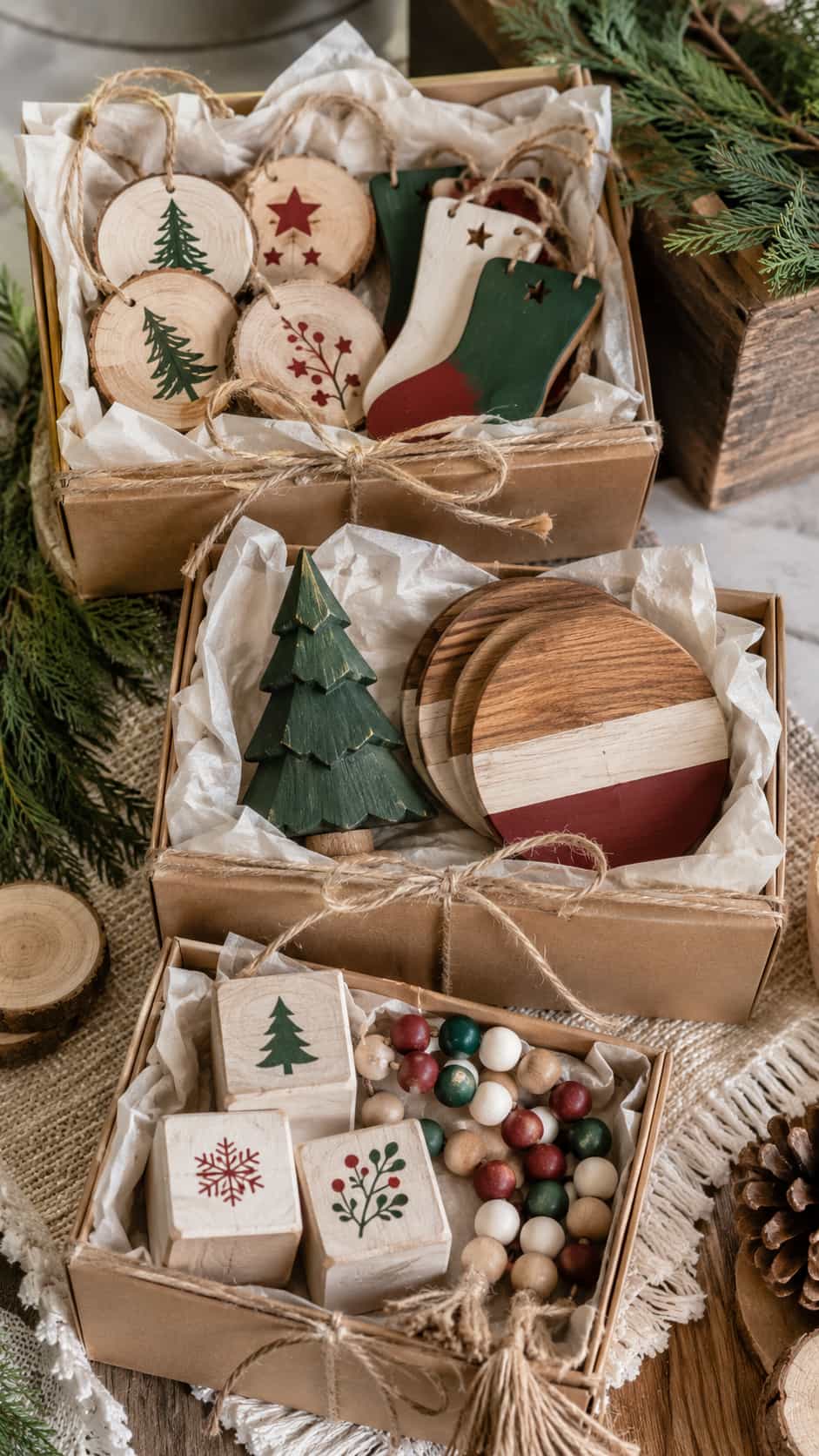
A bundle combines several small products into one higher-value offer. Pair a family ornament with stocking tags, combine coasters with a mini tree, or package a village trio with matching gift blocks. Repeating the same color palette makes separate items feel like a deliberate collection.
Build bundles from products you already make efficiently. Do not invent five new crafts just to fill a box; that strategy creates more work, more inventory, and a packaging puzzle nobody requested.
Offer good, better, and best bundle sizes with a modest savings compared with individual prices. Photograph every included piece, list the exact quantities and dimensions, and leave enough production time for personalization before the holiday shipping rush.
How to Price Christmas Wood Crafts Without Guessing
Your material receipt does not equal your product cost. Include wood, finish, adhesive, hardware, personalization supplies, packaging, selling fees, damaged samples, and the time you spend producing the order.
Use this basic planning formula:
Materials + packaging + selling costs + labor + profit allowance = target price
Then compare the result with products that serve a similar customer and use similar materials, size, and customization. If your calculated price sits far above what your intended buyer accepts, simplify the design or improve the production system. Cutting your labor value to zero only creates a busy hobby wearing a business hat.
For more product research, review these woodworking projects that sell on Etsy in 2026. Use competitors for market context, not as templates to copy.
Build a Small, Cohesive Christmas Collection
Start with five products rather than all twenty-five. Choose one low-priced add-on, two mid-priced gifts, one personalized item, and one larger statement piece. Repeat the same colors, fonts, photo background, and packaging style across the collection.
A practical starter collection could include:
- Personalized wood-slice ornaments
- Stocking name tags
- A three-tree shelf set
- A mini village trio
- One reversible porch sign for local pickup
Make a small batch of non-personalized stock, then finish customized pieces after the order arrives. This reduces unused inventory and lets you photograph real examples before the busiest part of the season.
If you want to treat the work as a real side business, this step-by-step guide to starting a small woodworking business covers planning, workspace, product selection, marketing, and day-to-day operations.
Photograph and List Your Products Clearly
Use bright, even light and a simple seasonal background. Photograph the front, back, sides, hanging hardware, base, personalization, and packaging. Add one scale photo beside a familiar object, but do not let props hide the actual product.
Every listing should explain:
- Exact finished dimensions and approximate weight
- Materials and finish
- Indoor, covered-porch, or outdoor suitability
- Personalization choices and character limits
- Processing time and order deadline
- What the buyer receives
- Display, care, and safety limitations
Write titles for humans first, then include natural search phrases such as Christmas wood crafts to sell, personalized wooden Christmas ornaments, or handmade wooden holiday decor. Repeating the same keyword twelve times does not create SEO magic; it creates a sentence that needs help.
Common Selling Mistakes to Avoid
Do not accept unlimited customization before you understand your production time. Do not photograph one beautiful sample and then replace its materials or finish without updating the listing. Do not ship paint or clear coat before it fully cures.
Also avoid copying protected artwork, characters, logos, slogans, or another maker’s original pattern. Develop your own shapes and presentation, keep proof of the materials and finishes you use, and check the product, tax, labeling, marketplace, and consumer-safety rules that apply to your location and customers.
Finally, set realistic order cutoffs. A December order cannot arrive on time through the power of festive optimism alone. Leave room for production, curing, packing, carrier delays, and corrections.
Frequently Asked Questions
What Christmas wood craft is easiest to sell as a beginner?
Personalized ornaments, stocking tags, small tree sets, and gift blocks make sensible first products. They use modest amounts of material, photograph clearly, and allow controlled customization without requiring a large build.
When should I start making Christmas crafts to sell?
Create and photograph prototypes well before buyers begin ordering. Build a small amount of non-personalized stock early, then leave space in the schedule for names, dates, finishing, curing, packaging, and delivery.
Can I make Christmas products from scrap wood?
Yes, when the wood remains clean, dry, untreated, structurally sound, and free from hidden metal or contamination. Standardize thickness and quality so finished products from different scraps still look consistent.
Should I sell individual products or bundles?
Use both. Individual items create accessible price points, while bundles raise order value and make gift buying easier. Build bundles from products that already share materials, colors, and production steps.
How many designs should I launch?
Five focused products beat twenty-five unfinished experiments. Start with a coordinated mini collection, track which products attract attention and orders, then expand the strongest styles.
Can children help make products for sale?
Children can join age-appropriate, non-powered activities under direct adult supervision, such as choosing colors or painting a fully prepared smooth blank with a suitable product. A capable adult should control all cutting, drilling, carving, powered sanding, tool setup, structural assembly, and final safety inspection.
Final Thoughts
The best Christmas wood crafts to make and sell in 2026 combine a clear purpose with dependable construction and a recognizable style. Personalization helps, but quality, accurate descriptions, strong photos, and realistic deadlines turn a cute project into a product buyers can trust.
Start with five coordinated ideas, make complete samples, calculate the real production cost, and test every detail before opening orders. Your first collection does not need to fill an entire holiday market. It only needs to look intentional, arrive safely, and give buyers a reason to bring it out again next Christmas.